
Home » Posts tagged 'Great Britain'
Tag Archives: Great Britain
A Shadow in Moscow–Cold War spies
A Shadow in Moscow
by Katherine Reay
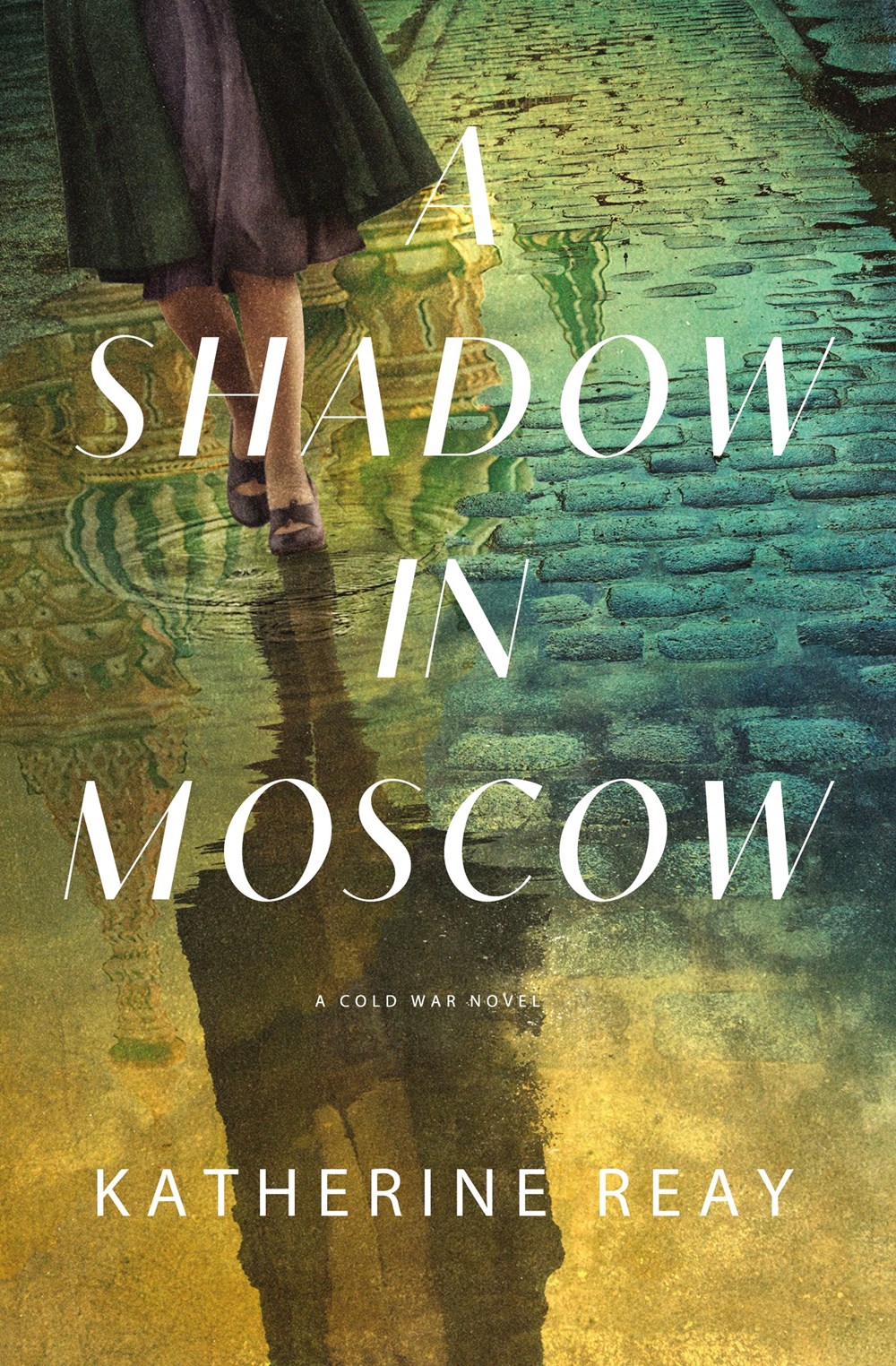
As you can guess from the title A Shadow in Moscow, this book is about spies—two women in particular—and is told in two timelines with a third included in an epilogue. I didn’t like the two timelines for a lot of the book, but by the end I understood why the author chose that style. She purposely does not reveal the connections between the two women operatives until late in the book. She, in fact, keeps a lot of clues from the reader. The whole book is interesting, but a little unsatisfying until the author reveals the relationships to the reader and to the characters themselves. At that point I was shaking my head at the courage, intelligence, and loyalty of these women.
Almost any summary of this work of historical fiction would include spoilers, so I will instead relate some of my impressions. I have read other books by Reay and appreciate her as a writer. She has researched her topic well and has shared information about the Cold War in a way that makes it understandable to the reader. It is hard to comprehend from our position in North America the length and depth of the spy organizations and culture that permeated the world during that era, especially as it involved the Soviet Union, the United States, and Great Britain. This is a story of intelligence agencies (CIA, MI6, and KGB) and counterintelligence agencies. We learn of the extent the KGB went to in their efforts to control the actions and even the thoughts of their people. We see this on an organizational level, but also a personal level as individuals and families are unable to express themselves or know who to trust. As Reay states in her notes to readers, “only in truly understanding our pasts will we be able to navigate—with empathy, humanity, and wisdom—our presents well.”
At two-thirds of the way through this book, I would have given it a moderate stamp of approval. At the end I was overwhelmed with the writer’s talent, with the way the various threads were drawn together, and with the motivations and resolutions for various characters. It will transport you to a difficult time in history when choices, whether based on ethics or on greed, led to life and death decisions.
I received a complimentary copy of this book in exchange for an honest review. Opinions expressed in this review are completely my own.
Rating: 4/5
Category: Historical Fiction
Notes: Discussion questions are included in the back of the book and Reay references other resources on her web page. If this is chosen as a book club selection, I would advise that the members read the whole book before discussing it.
Publication: June 13, 2023—Harper Muse
Memorable Lines:
Jamison’s cramped and stuffy book-lined office is my favorite spot on campus. Something about its dusty, ink-and-paper smell takes me right back to my bedroom and my all-night read-a-thons—because at home you get the best books in secret and only for one night.
Our conformity gives an illusion of power and peace as we are raised to believe our way of life is superior and virtuous. Illusions are powerful things. If you believe them hard enough, they can become one’s reality.
“They’re Americans, Sasha. They have constitutional rights agains that kind of stuff.” The memory is bright and convicting, blinding me with truth. That’s the difference, I think. Forget the bedazzled clothes, the neon colors, the malls, the plentiful vegetables. Forget it all. It’s window dressing hiding the truth. None of that matters because only one thing counts. Rights.
Maiden Voyages–Women and ocean liners
Maiden Voyages
by Siân Evans
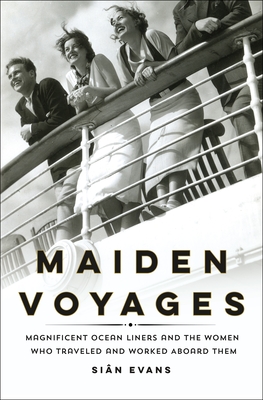
Under the overarching umbrella of History, the nonfiction book Maiden Voyages has two basic spokes—Women’s History and Nautical History. Author Siân Evans goes back to the beginnings of women’s affiliation with sea transportation which was mainly being the daughter or wife of a seaman. With a lot of research, she drives down to the first instances of women serving on ships and shows the progression of their work and social status as ships take on passengers in addition to cargo. Women book spaces to transport themselves across the ocean in uncomfortable circumstances. Gradually the concept of comfort on an ocean liner takes root and grows. More women begin to travel, and more women are hired to take care of their needs.
Most of this book focuses on the glory days of ocean liners between the two World Wars through the transition from transportation to holiday destination. Incorporated into the telling are stories about the lowliest women workers through the glamour stars who not only enjoy the trips, but use them as opportunities to see and be seen. The ship becomes a backdrop for those who have achieved or want to achieve fame and fortune.
The two World Wars affected all women in taking on jobs formerly held by men as the West saw a change in cultural expectations and increased rights for women. From a hazardous work environment for less pay than men received to breaking barriers and excelling in their chosen fields, women are the heroes of this book.
I liked Maiden Voyages, but I did not find it to be a page turner. Although it was told linearly as history progressed, there was some repetition as the author reminds the reader of facts as many of the personages’ roles continued through various eras of nautical travel. I learned a lot about the Golden Era of passenger ships, and I especially appreciated the many quotes from those actually involved. Primary sources authenticate Evans’ descriptions and conclusions. As the author researched the story of her great-great uncle, Cunard Chief Officer Stephen Grow of the Aquitania, this book emerged. It is told from a British perspective. History buffs, particularly those interested in Women’s Studies and Nautical History, will find Maiden Voyages very informative.
I received a complimentary copy of this book in exchange for an honest review. Opinions expressed in this review are completely my own.
Rating: 4/5
Category: History, Nonfiction
Publication: August 10, 2021—St. Martin’s Press
Memorable Lines:
The transatlantic ship not only provided a form of transport across the globe, it was also both the practical means and the symbol of opportunity, of new beginnings and fresh starts. From “third class” to “top deck,” from desperate women escaping financial hardship to wealthy international sophisticates hoping for romance and adventure, every transatlantic liner of this post-war era was freighted with hope.
There was a real symbiosis between Hollywood, the heart of the movie industry, which acted as a “dream factory” in the inter-war years, and the ocean liner, which on every voyage carried people full of hope and aspirations.
…working on the big ships became even more attractive as a career option for young men and women. The opportunity to leave behind the bomb sites and rubble, the poorly stocked shops, the dull and restricted food and the dismal British weather for the neon-lit, brilliantly colored, smartly dressed and culturally vibrant cities of the USA and Canada had never seemed so appealing to the restless young.
Madame Fourcade’s Secret War: The Daring Young Woman Who Led France’s Largest Spy Network against Hitler
Madame Fourcade’s Secret War
by Lynne Olson

Until I read Madame Fourcade’s Secret War, my idea of the French resistance in WWII was that it was composed of small, scattered groups of French who wanted no part of the German Nazis and fled to the forests to live in secrecy and give the Germans grief. This biography of Madame Fourcade is about her life, but also relates the amazing story of Alliance, an intricate spy network that collaborated with the British in obtaining information about German troop and ship movements that was critical to the eventual success of the Allies.
The work the resistance did was extremely dangerous from the undercover agents and their support crews to couriers and radio operators. Everyone was constantly under threat and generally on the move to avoid capture, imprisonment, torture, and execution. Yet these many brave individuals and the people who helped transport and conceal them performed their tasks voluntarily and with courage. They came from all walks of life knowing they were committing to the ultimate sacrifice in many cases.
It was amazing to read of the various situations they were involved in and the escape attempts. Fourcade, as the leader of this network, changed her identity and transferred her headquarters frequently, leaving her children in the care of others. The book makes clear how unusual and difficult it was in that time period for a woman to have a role of authority over men. She was a natural leader, however, and that quality was soon recognized by those who reported to her.
This work of nonfiction displays author Lynne Olson’s extensive research, but it reads like a novel. The reader wants to keep going to subsequent chapters to discover what happens next to the members of Alliance. There are many surprises, both good and bad.
The roles of the various countries and their agreements were at times quite infuriating. France was divided up into a northern part taken over by Germany and a southern part which became a puppet regime for Germany with their operatives everywhere. Even in exile in Britain there were two competing sides with French leaders—de Gaulle and the Free French vs. Giraud, a general the British were using to win over French forces in North Africa. There were even political pushes for dominance by the various resistance networks. Fourcade did her best to keep Alliance out of all the different political drives.
In each of the many historical fiction books popular right now, readers can learn something interesting and new about various groups in WWII. I recommend reading Madame Fourcade’s Secret War. As nonfiction, it is a slower and more difficult read, but it is well worth the effort to understand the French resistance movement and so much more about the events and major figures of WWII.
Rating: 5/5
Category: Nonfiction, Biography
Notes: 1. This would make a good selection for book clubs who want to read a work of nonfiction.
2. There are pictures of many of the agents.
3. Helpful sections of the book include Selected Cast of Characters, Author’s Note (about Fourcade’s name), Notes, Bibliography, and Index.
Publication: 2019—Random House
Memorable Lines:
Lynen, who had recently agreed to take part in a theatrical tour across France, said he would transport the transmitters and secret documents from one city to another in his costume trunk. He told Fourcade that his celebrity would be an advantage rather than a negative: No one would ever believe that the famous “Carrot Top” was a spy. It would be, he said with a grin, his finest role.
A few days before, she had gone to confession and told the priest about the poison she was taking with her and her concerns about being damned in the eyes of the church if she used it to kill herself. She hoped she would have the courage to resist torture, but she worried that she might not be able to do so and might, in the end, inform on her colleagues. The priest allayed her fears, saying her death would not be a suicide but rather a necessary means of resisting the enemy. He gave her absolution in advance.
Although they were from varied walks of life and political backgrounds, a moral common denominator overrode all their differences; a refusal to be silenced and an iron determination to fight against the destruction of freedom and human dignity. In doing so, they, along with other members of the resistance, saved the soul and honor of France.
A Certain Darkness–could WWI have ended sooner?
A Certain Darkness
by Anna Lee Huber
Lord Ardmore—a good name for an evil person. Although he is not physically present in A Certain Darkness, his influence and machinations pervade the events of this spy novel. Verity Kent and her husband Sidney are a rich and glamorous couple who are both well known in the intelligence circle for undercover work for the British during WWI. Sidney is also a war hero. In this book, they are once more called into service by their country to discover potentially damaging evidence.
In this action packed drama, Verity and Sidney don’t know whom to trust as they try to uncover how a murder occurred on a train and in a jail cell without anyone seeing either crime. Verity is a polyglot, a helpful skill as the couple interacts with French, German, Dutch, and Flemish speakers. One of my favorite scenes involves Verity speaking in their language to someone who is previously unaware that she can understand their conversations with others—rather embarrassing for the speaker.
The plot is complicated because the events that occurred during and after the war are quite complex. Just when I thought I wasn’t enjoying the book because of the intricate historical references, the action and intrigue picked up and I couldn’t wait to read what would happen next.
Both characters suffer from the horrors and stresses of the war, but there are some mental and emotional breakthroughs for both of them in this book. Whereas in the first book I read in the series (#2) I found the couple rather frivolous, I have come to like and respect both of them as I have gotten to know them better. There has also been more character development with each book. If you are interested in history or like spy mysteries, you will enjoy this series including A Certain Darkness. It closes out with a very important hook that will keep me and other readers anxious to read the next book in the series.
I received a complimentary copy of this book in exchange for an honest review. Opinions expressed in this review are completely my own.
Rating: 4/5
Category: Mystery, Historical Fiction
Notes: 1. #6 in the Verity Kent Mystery Series. I do not recommend this book as a standalone. There is just too much necessary background provided in the previous books.
2. Clean.
3. One of the themes of this book concerns the ending of WWI. I did an Internet search on this topic and found this is a concern for some historians. In her introduction, Huber lists a recently published nonfiction book on this subject that she used as a resource for her fiction book.
Publication: August 30, 2022—Kensington
Memorable Lines:
Much of intelligence gathering in general was accepting that there were few total victories, few clear choices of right and wrong. Everything was shaded in gray. One had to make judgment calls, constantly wagering possible sacrifices versus gains. Sometimes you got it right and sometimes you got it wrong. But whatever the outcome, you had to swallow the guilt and disgust such decisions and compromises at times wrought.
I recognized what game he was playing, for he’d learned it from the best. After all, Lord Ardmore didn’t simply aim to outwit his opponents, but to corrupt and demoralize them. To turn them against themselves, against their very morals.
“I’d accepted long ago that the war was utterly senseless.” His voice rasped as if being dragged from the depths of his lungs. “That I was simply stuck. Just a little cog in a great monstrous machine that couldn’t be stopped and would one day consume me as well.”
Shadow Among Sheaves–sacrifices
Shadow Among Sheaves
by Naomi Stephens
 The Biblical story of Naomi and her daughter-in-law Ruth is known and quoted as an example of devotion. Upon the death of her husband and sons, Naomi encourages her daughter-in-laws to return to their home countries, but Ruth says: “Entreat me not to leave thee, or to return from following after thee, for whither thou goest, I will go; and where thou lodgest, I will lodge: thy people shall be my people, and thy God my God.” (Ruth 1:16).
In Shadow Among the Sheaves author Naomi Stephens uses this story in a new setting. Nell (Lady Hawley) and her daughter-in-law Rene move from India back to England in the glory days of the British Empire. Rene, from the highest caste in India, has promised to take care of Nell, but because of discrimination against Indians, they are treated as outcasts and beggars. Stephens’ story follows the same general lines as the Biblical story but is fleshed out with a deeper plot and extensive character development. Using the complexities of the ethnic divide and the social and class norms in Britain at that time, Stephens weaves a riveting tale of love and conflict.
I would like to extend my thanks to netgalley.com and to Barbour Publishing (Shiloh Run Press) for giving me the opportunity to read this book in exchange for an honest review.
Rating: 5/5
Category: Christian, Romance
Notes: You do not have to be familiar with the Bible story of Ruth and Naomi to enjoy this book, but if you would like to read it, the book of Ruth is found in the Old Testament and is only four chapters long.
Publication: April 1, 2019— Barbour Publishing (Shiloh Run Press)
Memorable Lines:
An aching belly, an empty room, skin pulled tight over hungry bones—all of these sacrifices were worth it, she knew, if it meant staying with Nell, if it meant her family would be her family forever.
Thomas had never been a monster, exactly, though he had always been monstrously arrogant.
Music began tumbling across the now barren fields. The notes were thick and plucky, sticking to the window like hands pressed up against the glass.
 education pathways