
Home » Posts tagged 'Germany' (Page 2)
Tag Archives: Germany
Code Girls–The Untold Story of the American Women Code Breakers Who Helped Win World War II
Code Girls
by Liza Mundy

Nonfiction has the potential to be deadly boring or magnificently interesting. Liza Mundy’s Code Girls without a doubt falls into the latter category. It is not an easy read, but it is fascinating. Code Girls tells the tale of the essential role the code breakers, who were mostly women, played in the eventual Allied defeat of the Axis nations in World War II. If you are envisaging a handful of young women holed up in a room in D.C., think again. The Army’s code breakers numbered 10,500 with 70% of them women and most working out of the Arlington Hall campus in Virginia. The Navy’s group numbered 10,000 with half of those stationed in D.C. of which 80% were female. Both groups rose to those numbers from a mere 200 code breakers each in a short amount of time. These women came from all walks of life and backgrounds. Among the first recruited were college educated, low paid, school teachers at a time when a low priority was placed on education for women. Many of these women had a background in math and science, and all had a good memory. They were analytical and could approach problems in novel ways.
The code breakers’ stories went untold for most, if not all, of their lives because they were sworn to secrecy. They considered the work they did a duty of honor to their country and to the men in their lives. They understood that their work could literally save lives, perhaps even of their own loved ones, by intercepting and decoding enemy messages. It is a testament to their trustworthiness that Germany and Japan never knew that their transmissions had been intercepted. Even roommates and spouses could not speak of their work outside of their assigned workplace.
The author, Liza Mundy, had two hurdles to jump, both of which she accomplished with finesse. The first was her thorough research which is documented through 39 pages of notes and bibliography. Then she wove the hard facts into a narrative with a very personal touch derived from many interviews. She doesn’t just write that Washington, D.C. was inundated with uninitiated girls pouring in from all over the country needing housing, food, transportation, and training. She presents the scenario through the eyes and voices of the “girls” who lived it. Not everyone, of course, had the same experiences, and those experiences varied according to many factors including whether they were working for the Army or the Navy. They arrived with no assignments, just the promise that they would be helping their country.
The war period (1939-1945) was a time of great social upheaval. For most people, a woman’s place was in the home. Suddenly men were going overseas and their jobs needed to be filled along with positions created by the manufacturing needs of the war machine. There were many stereotypes that were broken down, and others that were not put to rest so willingly or easily.
Code Girls is masterfully written and a wonderful tribute to those women whose secrets can now be told. It should be “required reading” for all Americans who don’t want history to repeat itself, for readers who want to understand what previous generations endured to stand against tyranny, and for men and women interested in the societal changes that occurred as a result of World War II.
Rating: 5/5
Category: History, Nonfiction
Notes: The author sets the stage for the reader through her own notes as to how the book was written, information on the initial recruitment of women, and an introduction that discusses society in the U.S. at that tine and the military’s “bold” decision to recruit women. My copy of the book has an “Afterword for the Paperback Edition” in which the author shares the overwhelming response her book received from the code breakers and their families. The book also includes photographs of some of the women interviewed and more generic photographs of the code breakers at work. There is also a “Glossary of Code-Breaking Terms,” a very valuable “World War II Timeline,” and a “Reading Group Guide” of discussion questions.
Publication: October 20, 2017—Hachette Books
Memorable Lines:
Successful code breaking often comes down to diagnostics—the ability to see the whole rather than just the parts, to discern the underlying system the enemy has devised to disguise its communications. The Japanese, Agnes diagnosed, were encoding their messages and then using something called columnar transposition, which involves writing the code groups out horizontally but transmitting them vertically, aided by a grid with certain spaces blacked out, whose design changed often.
It was the first time many of the women had spent time in a bona fide workplace—apart from a classroom—and they discovered what workplaces are and have been since the dawn of time: places where one is annoyed and thwarted and underpaid and interrupted and underappreciated.
She and the other women knew that ship sinkings were the logical and desired consequence of their concerted efforts. They did not feel remorse. America was at war with Japan; Japan had started the war; the lives of American men were at stake, not to mention America itself. It really was that simple.
The Only Woman in the Room–beauty, talent, and brains
The Only Woman in the Room
by Marie Benedict
 We meet Hedy Kiesler as a young actress in Vienna, Austria, in 1933 just as munitions manufacturer Friedrich (Fritz) Mandl begins courting her. Europe is on the cusp of war, and Hitler has started his attack on Jews. Under other circumstances, Hedy’s parents might have refused permission for the courtship, but they could see the benefit of a marriage to the rich, powerful, and well connected man.
Unfortunately, Mandl’s character changes after their marriage, and he becomes abusive and controlling. Hedy’s father had encouraged her as a child in studying many subjects, especially the sciences. Hedy teams her interest in science with her position as an ornament at dinner parties to listen in on the conversations of dangerous and powerful guests in the Mandl home. Later, after escaping from Fritz, she tries to use that knowledge to save lives as Hitler continues his military advances.
The book is divided into two parts. The first part deals with Hedy, her marriage, and the entrance of the United States into the war. The second focuses on her two careers after her escape from Fritz: one as the famous Hedy Lamarr (her new, non-German sounding, stage name) and the other as an inventor. Her talents as an actress and her incredible beauty outweigh her potential contributions to the war effort in the eyes of the men in power at that time.
In The Only Woman in the Room, Marie Benedict has created a historical novel about a very complex woman living in times that were difficult for everyone, but especially for women. It is important to remember that even though the book is well researched, Benedict is basically filling in the skeleton of a plot with details, some of which are true and others that only might have occurred. In this book Hedy is overcome with guilt over hearing Hitler’s plans but not doing anything about them. She doesn’t believe in God, but she is dogged by a fear that she has not done enough to make up for her silence and inaction. Of course, as she finds out later, as a woman there was little she could contribute that would be valued. During the last part of the book, I couldn’t help but wonder whose scales she was concerned about—her own sense of morality, public opinion, or judgement by a higher being. That was never clarified and yet it appeared to be a driving force for her.
I liked this book but not as much as Benedict’s two prior books, The Other Einstein and Carnegie’s Maid. All three novels address the hidden contributions of women. All three ladies are women of talent and intellect operating under difficult circumstances. All deserve respect, but I think I can empathize more with Mileva, Einstein’s first wife, and with Clara, a lady’s maid in Andrew Carnegie’s household. Hedy was born into privilege and by virtue of her beauty moved in important social circles. Although perhaps it shouldn’t, that background erects a barrier for me.
The Only Woman in the Room is a well-written and well-researched historical novel. Benedict specializes in drawing out the stories of women whose intellectual abilities have been overlooked. It will be interesting to see whose story she will discover and share in her next historical novel.
I would like to extend my thanks to netgalley.com and to Sourcebooks Landmark for giving me the opportunity to read this book in exchange for an honest review.
Rating: 4/5
Category: Historical Fiction
Publication: January 8, 2019—Sourcebooks Landmark
Memorable Lines:
I’d become like one of the Rembrandts on the wall or the antique Meissen porcelain on the sideboard. Simply another priceless, inanimate decoration for Fritz to display, a symbol of his wealth and prowess.
It seemed that my best chance of undermining the Third Reich—and ensuring that a German submarine or ship never again harmed a ship full of refugee children—might be to somehow use the knowledge I’d gathered to capitalize on the weakness in the German torpedo systems.
“I must admit it would be hard for us to sell our soldiers and sailors on a weapons system created by a woman. And we’re not going to try.”
The Escape Artists: A Band of Daredevil Pilots and the Greatest Prison Break of the Great War
The Escape Artists
by Neal Bascomb
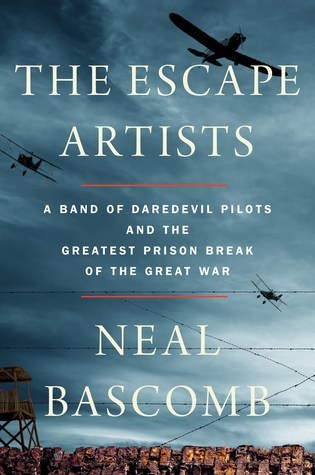 War is such a horrible thing—vicious, destructive, and despicable. It brings out the worst and the best in man. We see both in Neal Bascomb’s true recounting of the largest escape of WWI by the British at one time—twenty-nine officers of whom ten actually made it out of Germany to Holland without being recaptured.
Bascomb’s well-researched tale The Escape Artists is divided into four major sections. In the first, “Capture,” he provides a glimpse into the personalities and lives of some of the major players in the escape, their role in the military, and the circumstances of their capture.
The second section, “All Roads Lead to Hellminden,” describes a number of interment camps but focuses especially on notorious twin commandants, Karl and Heinrich Niemeyer. Both prisoners and commandants could be transferred at whim in Germany and being transferred could be positive or negative for a prisoner. This section details life in the camp and shows a better situation for officers than that experienced by enlisted soldiers who were put in labor camps. Officers, instilled with the patriotic drive to do whatever they could to hinder the enemy and return home to fight again, spent a lot of their energy devising and executing escape plans. If their attempts were unsuccessful or they were recaptured, the punishment was generally a long and uncomfortable time in a small isolation cell—dark, very hot or very cold, dirty, overrun with vermin, and little food. This trial on the body, mind, and spirit might last several days, weeks or months. Nevertheless, instead of deterring escape attempts, it prodded the officers into yet more clever tries.
“The Tunnel” describes the huge group effort spearheaded by an officer named Gray to construct a very long tunnel and plan how to proceed once outside the walls of Holzminden. All of the background material in the first two sections was essential, but at this point the story really takes off and you will want to keep reading until finished. The last section. “Breakout,” shares the actual escape attempt.
To write this book, Bascomb read a lot of books on the escape and the interment camps, interviewed descendants of the officers, and relied greatly on primary documents including memoirs and letters from the time. His narrative style is effective and the subject matter is interesting. Having read several books on labor and death camps, it was interesting to read about the British officers, drawn from all over the globe. Many of them were young pilots from exclusive schools and families. They had little training, but were very patriotic and had a honed sense of duty and honor. One surprising detail for me was that the imprisoned officers were able to write to their families and receive packages and money from them. Not everything went smoothly in that process, but they were better off than those in labor camps. They even had orderlies from the enlisted ranks of prisoners to make their beds, etc. This was not a luxury situation by any means, and the men were quite bored and frustrated whiling away time when they felt they should be fighting.
Neal Bascomb is a former journalist who turned to writing nonfiction books full-time in 2000. He is the award winning author of nine books for adults and three for young adults.
I would like to extend my thanks to netgalley.com and to Houghton Mifflin Harcourt for giving me the opportunity to read this book in exchange for an honest review.
Rating: 5/5
Category: History
Publication: September 18, 2018—Houghton Mifflin Harcourt
Memorable Lines:
The greatest resistance of all would be to escape.
None of the diplomats gathered in The Hague in 1899 or 1907 could have anticipated the vast populations of prisoners that would come out of industrialized total war—nor the challenges this would involve. In the first six months of World War I, 1.3 million soldiers became POWs across Europe.
The arrival in December of Harold Medlicott had bolstered the mood throughout the camp. The officers believed that if anybody could escape Holzminden and humiliate Karl Niemeyer, it was Medlicott. A legend even to the German guards, he had broken out of nine camps already, never using the same method twice.
Harvey might not get another chance to escape, but in aiding Cartwright, as in countless other efforts to help his fellow prisoners, he found freedom within. In his own way, he was a breakout artist.
The Tattooist of Auschwitz–tribute to human resilience and the power of love
The Tattooist of Auschwitz
by Heather Morris
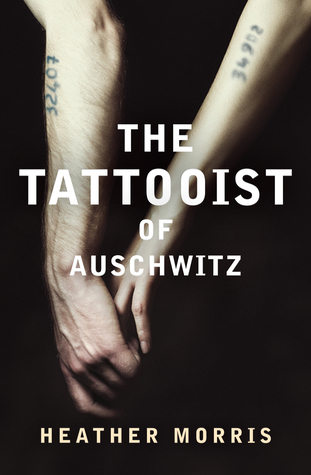 When a book reads like fiction but is a union of memories and history, it is literary work that is destined to engage and move the reader. The Tattooist of Auschwitz is such a tale, related by Lale Sokolov to Heather Morris over a three year period. It is a horrific story of desperation in the worst of circumstances and of Lale’s confidence that he would survive and marry his beloved fellow sufferer Gita.
The Tattooist of Auschwitz displays the best and worst of mankind. It shows the incredible resilience of the human spirit. Throughout, the reader witnesses people doing whatever it takes to survive as does Lale who is innovative, multilingual, charming, and determined that in the end his tormentors would not get the best of him. There are many books written about the Holocaust. Each addresses the events from a different perspective. This is another valuable contribution, adding to our understanding and reinforcing the sentiment of “never again.”
 I would like to extend my thanks to netgalley.com and to Bonnier Zaffire for giving me the opportunity to read this book in exchange for an honest review.
Rating: 5/5
Category: General Fiction (Adult), Historical Fiction
Notes: Despite the nature of the events being retold, the writing has a respectful tone without graphic descriptions of violence or swearing. I highly recommend this book.
Publication: January 11, 2018—Bonnier Zaffire
Memorable Lines:
Lale has witnessed an unimaginable act. He staggers to his feet, standing on the threshold of hell, an inferno of feelings raging inside him.
How can a race spread out across multiple countries be considered a threat?
“I know it’s a strange thing for me to say, but you will honor them by staying alive, surviving this place and telling the world what happened here.”
He knows they will never grow to be the women they were meant to be. Their futures have been derailed and there will be no getting back on the same track. The visions they once had of themselves, as daughters, sisters, wives and mothers, workers, travelers, and lovers, will forever be tainted by what they’ve witnessed and endured.
 education pathways