Home » Posts tagged 'Germany'
Tag Archives: Germany
The Berlin Letters–postwar intrigue
The Berlin Letters
By Katherine Reay

There are so many works of historical fiction that deal with World War II. Writers have explored the different countries engaged in the war and affected by the war. They have researched and examined the lives of the individuals caught up in the horrors of war from those at the top to the common citizen and from the despots and their minions to the heroes for freedom. The Berlin Letters creates a story that showcases the strange time in Germany after World War II when the West and the Soviet Union cavalierly divided the country into two power blocks and the city of Berlin into two entities. Suddenly, people who were associated with East Berlin could not cross the street into West Berlin to shop or visit with family without fear of arrest and torture.
As word spread that East Berlin was soon to be shut down, there was a mass exodus. Those remaining were subject to surveillance by the Stasi, a group that seemed to be everywhere and were admired by the KGB. They perfected “decomposition,” continuous torture and pressure from all directions that resulted in arrestees admitting to crimes they didn’t even commit.
Perhaps the worst part of living in East Berlin at that time was the presence of snitches. They could be anyone, from your friend to your neighbor or work colleague. Some monitored other citizens for money, but most to protect themselves and their families.
The Berlin Letters is a complicated web of ordinary citizens, spies, revolutionary young people who protested through their punk music and clothes, propaganda writers, and the underground. It begins with Monica passing her daughter Luisa across barbed wire to her parents, who later move to the United States. Monica’s husband Haris is a successful propaganda writer for the state newspaper and believes what he writes—at first. We meet Luisa again as an adult. She works in deciphering codes left over from World War II, a skill her grandfather taught her. Never one to pass up a puzzle, she discovers that her father and her grandfather communicated over the years even though she had been told that her parents had been killed in an automobile accident. The letters include secrets so she is obligated to involve her CIA bosses. Luisa gives up all of her and her grandmother’s savings and risks her own life to travel to East Berlin to rescue someone who is about to be transferred to one of the worst prisons in East Germany. Whom can Luisa trust? Is her CIA training from years ago enough to see her through? Will her impulsive actions cause her to lose her job and clearance?
I received a complimentary copy of this book in exchange for an honest review. Opinions expressed in this review are completely my own.
Rating: 5/5
Category: Historical Fiction
Notes: Clean historical fiction with a touch of romance
Publication: March 5,2024—Harper Muse
Memorable Lines:
Walther’s “I fought tooth and nail to stay, until the day I needed to leave” has become my rallying cry. I don’t want to leave. So I fight.
I’m surprised there are none of the neon signs or billboards so prevalent in West Berlin. Then I realize it’s a planned economy. There is no need for advertising.
Now I see when you grow up with little more than the necessities, you take care of them, and you don’t put your happiness into more.
The Watchmaker’s Daughter: the true story of World War II heroine Corrie Ten Boom
The Watchmaker’s Daughter
by Larry Loftis
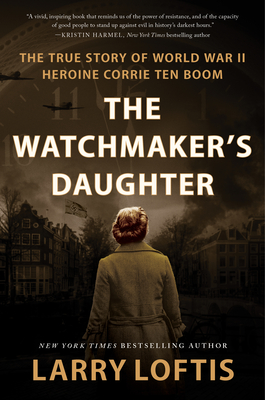
The Hiding Place, the original popular story of Corrie ten Boom, written with John and Elizabeth Sherrill, was released in 1971 and made into a movie in 1975. Corrie, skilled in watch repairs, and the rest of the ten Boom family saved many Dutch—both Jews and non-Jews—from being sent to prison, concentration camps, and labor camps by German Nazis in World War II.
Although The Hiding Place was a landmark book in telling the story of this remarkable Christian lady, Larry Loftis has gone even further in writing The Watchmaker’s Daughter. His research into the background of the World War II setting of the book sets the reader up to better understand the times culturally and politically and the invasion of Holland. His research includes examining photos and original small books by Corrie ten Boom along with memorabilia that are archived in the Billy Graham Center Archives at Wheaton College. Corrie ten Boom did not keep a diary, but Loftis sought out many other primary sources including journals and letters from survivors who had been hidden in the ten Boom home.
Corrie and her older sister Betsie were interned in Ravensbrück Concentration Camp for their crimes of hiding Jews. There these Christian sisters had a ministry within the barracks, holding secret Bible studies and encouraging the other women to hold strong despite the horrible conditions and continuous threat of execution. Upon release, Corrie began a ministry of traveling internationally with a message of forgiveness and established 3 different centers, one in a transformed concentration camp, to meet the physical and emotional needs of survivors. Betsie had a vision of the centers while they were still in the camp at a time when the fulfillment of her vision seemed impossible. Corrie’s story is an amazing one showcasing the love of God and the power of forgiveness.
Rating: 5/5
Category: Biography, Nonfiction, Christian, History
Notes: Even if you think you know the story of Corrie ten Boom, I encourage you to read this book. Corrie’s story is unforgettable, and her courageous life of dependence on God extended way past the events in Ravensbrück. Loftis’ research and writing along with Corrie’s life and faith make this book remarkable.
Publication: 2023—HarperCollins
Memorable Lines:
This was the hardest part—the hatred. Over ensuing days Corrie tried to be nice to the woman, but to no avail. “She seemed to be entirely devoid of human feeling,” Corrie recalled, “and altogether hard, hostile, and wicked…Why should they always snap and snarl at us? I always greeted them with a pleasant ‘Good morning,’ but everything seemed to glance off their impenetrable armor of hate.”
“My sister died here,” she told Tiny. “She suffered so much. I, too, have suffered. But Jesus is always with us. He did a miracle in taking away all my hatred and bitterness for my enemies.”
For more than fifty years the Beje had been her own hiding place, her refuge. But Ravensbrück had taught her that this magnificent home—with all of its memories—was but a shadow; her true hiding place was Christ.
The Paris Daughter–a story of art, women, and children in WWII
The Paris Daughter
by Kristin Harmel

World War II brings death, horror, and destruction to the civilians of Paris in this tension filled story of three women who have to make difficult decisions. They are never relieved of the agony of questioning their own judgements and actions: what would a good mother do?
Elise is the belittled wife of a famous painter whose actions put his family in danger. Juliette has the perfect charmed family life until the bombs begin to fall. Ruth Levy is a widowed mother whose Jewish religion and heritage endangers her children. As you read this novel, you will get to know these women and see how each reacts to hardships and trials. You can decide for yourself what it takes to be a good mother and whether any of these ladies are good mothers.
Alongside the main plot in The Paris Daughter, there is another that emerges; it interweaves and is essential to the first. It deals with artists at the time, how they interacted and how they were affected by the war. Elise was a wood sculptor and a painter. Art helped her through the emotional trauma of the war. Art also helped Juliette’s daughter deal with her mother’s increasing mental distress. Alongside these therapeutic benefits, we also witness the personal devastation that occurs when Elise returns home to discover her apartment has been looted of the valuable artwork she and her husband had created.
There are hints along the way as to what may have occurred personally during the war to these families. Eventually the characters and the reader learn the truth, and with the truth there is a way forward. Some of the characters are despicable, while others are noble and honorable. Some crumble morally under the stresses.
This book was a page turner for me, but was also a novel I found upsetting. The depiction of the characters is realistic so watching bad things happen to them was hard. As this book is set in World War II, not everyone is going to have a happily ever after. It is a book I recommend if you enjoy historical fiction, particularly about WWII.
I received a complimentary copy of this book in exchange for an honest review. Opinions expressed in this review are completely my own.
Rating: 5/5
Category: Historical Fiction
Notes: In the author’s notes she responds to questions about why she is drawn to history as her subject matter: “My reasons are numerous, but perhaps the most important one is that if we don’t learn from history, we run the risk of repeating it. Too often in recent years, those of us who read frequently about World War II have seen shadows of that long-ago war in current events and it’s difficult seeing versions of past horrors happening again.”
Publication: June 6, 2023—Gallery Books
Memorable Lines:
Later, Olivier snored peacefully beside Elise while she wiped tears of despair away. He only seemed to see her these days when he wanted the closeness of her; at all other times, his indifference cut her to the core. She owed Olivier everything, and perhaps that was what made it so difficult when it felt to her, sometimes, that he was trying to erase her.
“This isn’t a decision I make lightly, but being a parent is not about dong what is right for ourselves, is it? It’s about sacrificing all we can, big and small, to give our children their best chance at life.”
“There must be something we can do.” “There is,” Madame Levy said. “You can pray for my children. And you can talk to yours about never turning their back on their fellow man. Maybe one day, we’ll all live in a batter world.”
Madame Fourcade’s Secret War: The Daring Young Woman Who Led France’s Largest Spy Network against Hitler
Madame Fourcade’s Secret War
by Lynne Olson

Until I read Madame Fourcade’s Secret War, my idea of the French resistance in WWII was that it was composed of small, scattered groups of French who wanted no part of the German Nazis and fled to the forests to live in secrecy and give the Germans grief. This biography of Madame Fourcade is about her life, but also relates the amazing story of Alliance, an intricate spy network that collaborated with the British in obtaining information about German troop and ship movements that was critical to the eventual success of the Allies.
The work the resistance did was extremely dangerous from the undercover agents and their support crews to couriers and radio operators. Everyone was constantly under threat and generally on the move to avoid capture, imprisonment, torture, and execution. Yet these many brave individuals and the people who helped transport and conceal them performed their tasks voluntarily and with courage. They came from all walks of life knowing they were committing to the ultimate sacrifice in many cases.
It was amazing to read of the various situations they were involved in and the escape attempts. Fourcade, as the leader of this network, changed her identity and transferred her headquarters frequently, leaving her children in the care of others. The book makes clear how unusual and difficult it was in that time period for a woman to have a role of authority over men. She was a natural leader, however, and that quality was soon recognized by those who reported to her.
This work of nonfiction displays author Lynne Olson’s extensive research, but it reads like a novel. The reader wants to keep going to subsequent chapters to discover what happens next to the members of Alliance. There are many surprises, both good and bad.
The roles of the various countries and their agreements were at times quite infuriating. France was divided up into a northern part taken over by Germany and a southern part which became a puppet regime for Germany with their operatives everywhere. Even in exile in Britain there were two competing sides with French leaders—de Gaulle and the Free French vs. Giraud, a general the British were using to win over French forces in North Africa. There were even political pushes for dominance by the various resistance networks. Fourcade did her best to keep Alliance out of all the different political drives.
In each of the many historical fiction books popular right now, readers can learn something interesting and new about various groups in WWII. I recommend reading Madame Fourcade’s Secret War. As nonfiction, it is a slower and more difficult read, but it is well worth the effort to understand the French resistance movement and so much more about the events and major figures of WWII.
Rating: 5/5
Category: Nonfiction, Biography
Notes: 1. This would make a good selection for book clubs who want to read a work of nonfiction.
2. There are pictures of many of the agents.
3. Helpful sections of the book include Selected Cast of Characters, Author’s Note (about Fourcade’s name), Notes, Bibliography, and Index.
Publication: 2019—Random House
Memorable Lines:
Lynen, who had recently agreed to take part in a theatrical tour across France, said he would transport the transmitters and secret documents from one city to another in his costume trunk. He told Fourcade that his celebrity would be an advantage rather than a negative: No one would ever believe that the famous “Carrot Top” was a spy. It would be, he said with a grin, his finest role.
A few days before, she had gone to confession and told the priest about the poison she was taking with her and her concerns about being damned in the eyes of the church if she used it to kill herself. She hoped she would have the courage to resist torture, but she worried that she might not be able to do so and might, in the end, inform on her colleagues. The priest allayed her fears, saying her death would not be a suicide but rather a necessary means of resisting the enemy. He gave her absolution in advance.
Although they were from varied walks of life and political backgrounds, a moral common denominator overrode all their differences; a refusal to be silenced and an iron determination to fight against the destruction of freedom and human dignity. In doing so, they, along with other members of the resistance, saved the soul and honor of France.
A Certain Darkness–could WWI have ended sooner?
A Certain Darkness
by Anna Lee Huber
Lord Ardmore—a good name for an evil person. Although he is not physically present in A Certain Darkness, his influence and machinations pervade the events of this spy novel. Verity Kent and her husband Sidney are a rich and glamorous couple who are both well known in the intelligence circle for undercover work for the British during WWI. Sidney is also a war hero. In this book, they are once more called into service by their country to discover potentially damaging evidence.
In this action packed drama, Verity and Sidney don’t know whom to trust as they try to uncover how a murder occurred on a train and in a jail cell without anyone seeing either crime. Verity is a polyglot, a helpful skill as the couple interacts with French, German, Dutch, and Flemish speakers. One of my favorite scenes involves Verity speaking in their language to someone who is previously unaware that she can understand their conversations with others—rather embarrassing for the speaker.
The plot is complicated because the events that occurred during and after the war are quite complex. Just when I thought I wasn’t enjoying the book because of the intricate historical references, the action and intrigue picked up and I couldn’t wait to read what would happen next.
Both characters suffer from the horrors and stresses of the war, but there are some mental and emotional breakthroughs for both of them in this book. Whereas in the first book I read in the series (#2) I found the couple rather frivolous, I have come to like and respect both of them as I have gotten to know them better. There has also been more character development with each book. If you are interested in history or like spy mysteries, you will enjoy this series including A Certain Darkness. It closes out with a very important hook that will keep me and other readers anxious to read the next book in the series.
I received a complimentary copy of this book in exchange for an honest review. Opinions expressed in this review are completely my own.
Rating: 4/5
Category: Mystery, Historical Fiction
Notes: 1. #6 in the Verity Kent Mystery Series. I do not recommend this book as a standalone. There is just too much necessary background provided in the previous books.
2. Clean.
3. One of the themes of this book concerns the ending of WWI. I did an Internet search on this topic and found this is a concern for some historians. In her introduction, Huber lists a recently published nonfiction book on this subject that she used as a resource for her fiction book.
Publication: August 30, 2022—Kensington
Memorable Lines:
Much of intelligence gathering in general was accepting that there were few total victories, few clear choices of right and wrong. Everything was shaded in gray. One had to make judgment calls, constantly wagering possible sacrifices versus gains. Sometimes you got it right and sometimes you got it wrong. But whatever the outcome, you had to swallow the guilt and disgust such decisions and compromises at times wrought.
I recognized what game he was playing, for he’d learned it from the best. After all, Lord Ardmore didn’t simply aim to outwit his opponents, but to corrupt and demoralize them. To turn them against themselves, against their very morals.
“I’d accepted long ago that the war was utterly senseless.” His voice rasped as if being dragged from the depths of his lungs. “That I was simply stuck. Just a little cog in a great monstrous machine that couldn’t be stopped and would one day consume me as well.”
Into the Forest–A Holocaust Story of Survival, Triumph, and Love
Into the Forest
by Rebecca Frankel
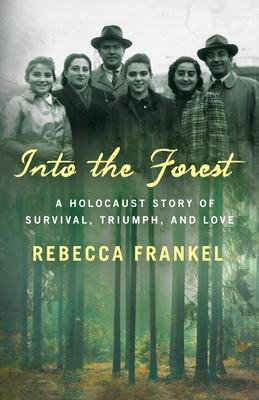
So many books have been written about World War II and, more recently, about the Nazi treatment of Polish Jews. Rebecca Frankel adds Into the Forest to the collection. It is nonfiction that in many parts the reader would wish it to be fiction, that the torture, annihilation, and deprivation should not really have happened. It is the story of the Rabinowitz family, of the many Jews who died, of the love that persisted through two years of living on the move in the cold forests, of digging holes in the ground to hide from Nazis. It is the story of survival, of triumph as the lives of some of the people in the book intersect years and thousands of miles later.
This book was emotionally difficult to read, knowing it is nonfiction, and thus was a slow read for me. The author knew first hand some of the people she wrote about. She spent five years researching and interviewing. There is a huge section of copious notes detailing where her information came from for each chapter.
The Prologue ties the tale together and is worth rereading at the conclusion of the book. There are two chapters that set the stage of what life was like in the little Polish village of Zhetel before the invasion of the Russians, followed by the occupation of the Germans. Then the focus lands on the German-created Jewish Ghetto, the Polish Resistance, and the various “selections” in which laborers and those destined for the mass graves were chosen. The “lucky” escaped to a huge forest, but many died there as hunted animals before the liberation came. The Rabinowitz family had their eyes set on a future in Palestine, but they had many more moves in their future and were caught up in the growing prosperity of the 1950’s. Into the Forest is a challenging book worth reading. It shows Jewish life and customs in the midst of both tribulation and good times. The book thankfully ends on positivity as the author stresses the various types of love woven into the book.
I received a complimentary copy of this book in exchange for an honest review. Opinions expressed in this review are completely my own.
Rating: 5/5
Category: History, Nonfiction, Memoir
Publication: September 7, 2021—St. Martin’s Press
Memorable Lines:
The forest, however, would not be exempt from the war’s brutalities or the bare-knuckled survival required to endure it. Nor would it provide ample shield for the Jews or the partisans—Russian and Jewish alike—who had taken shelter here and set up their outposts in its wilds, no matter how dark or deep. The farther they went and the safer they were, the more determined their killers became to root them out.
In some areas, the advertised reward for information on the partisans or hiding Jews was a single cup of sugar. Which was either a reflection of the paltry value of a Jewish life, or the peasants’ depth of desperation.
But Moscow’s successful onslaught had made the retreating Nazis more dangerous and, however unimaginably, even more murderous. Himmler issued an order to those in the path of the fast-moving Soviet troops: destroy all evidence.
How the West Brought War to Ukraine–understanding how U.S. and NATO policies led to crisis, war, and the risk of nuclear catastrophe
How the West Brought War to Ukraine
by Benjamin Abelow

A short book, How the West Brought War to Ukraine, presents an important but controversial view of which countries are behind the current conflict between Russia and Ukraine. To understand Benjamin Abelow’s thesis, you have to revisit history going back almost 200 years to the Monroe Doctrine. In 1823, the United States made it clear that foreign forces placed near U.S. territory are in violation of that policy and provide a reason for war. If you follow that to its logical conclusion, countries massing troops on Russia’s border, especially with weapons whose capability allows reaching within Russia’s borders, is clearly an offensive act.
For years, the U.S. and NATO have been setting up countries that border Russia with military aid to be able to fight a proxy war. Abelow explains “How the Narrative Drives the War” in his introduction in which he lists the Western provocations. The rest of the book is an amplification and explanation of each one of these. One of his most compelling arguments is asking his reader to put the U.S. in Russia’s position. What would the U.S. do? How would it react if foreign forces massed on the Mexican or Canadian border with the ability to send destructive weapon fire into the U.S.?
The author is not a Putin lover, but he does try to present the other side, the side the Western media is not showing. The author is sympathetic to both Russian and Ukrainian soldiers. Among the many leaders he quotes, he includes Chas Freeman, former Assistant Secretary of Defense for International Security Affairs. He speaks of the U.S.’s two contradictory aims which will result in many deaths. Dripping with irony, Freeman says “We will fight to the last Ukrainian for Ukrainian independence.” The author also spreads the blame around to many Western leaders (including George W. Bush, Trump, and Biden) who have reneged on promises to secure borders and have propped up regimes whose goals were to break down those borders. You may or may not agree with the author, but if you read the book, you will be able to have an informed opinion about this conflict which could potentially evolve into a nuclear war.
I received a complimentary copy of this book in exchange for an honest review. Opinions expressed in this review are completely my own.
Rating: 5/5
Category: History, Nonfiction, Politics
Notes: 1. I always try to learn from history, and there are very few politicians I trust. I have to ask why we are involved in this conflict. It is hard to convince me that it is out of concern for the common man and woman in Ukraine when there are conflicts and genocides all over the world that we ignore. It seems something more than altruism is at play.
2. I have bumped this review ahead in my queue because the book’s message is time sensitive. Recently, pipelines that are important to our world were blown up, and this morning I read that an important bridge suffered an explosion in the Crimea and apparently several people lost their lives. There has been war and conflict in that part of the world for centuries, but it seems there currently is evil afoot with a very destructive path.
3. For memorable lines for this complex topic, I am just noting one paragraph rather than 3 shorter passages. I think it presents the theme and the persuasive writing style of this book quite well.
Publication: August 31, 2022—Siland Press
Memorable Lines:
Had the United States not pushed NATO to the border of Russia; not deployed nuclear-capable missile launch systems in Romania and planned them for Poland and perhaps elsewhere as well; not contributed to the overthrow of the democratically elected Ukrainian government in 2014; not abrogated the ABM treaty and then the intermediate-range nuclear missile treaty, and then disregarded Russian attempts to negotiate a bilateral moratorium on deployments; not conducted live-fire exercises with rockets in Estonia to practice striking targets inside Russia; not coordinated a massive 32-nation military training exercise near Russian territory; not intertwined the U.S. military with that of Ukraine; etc. etc. etc.—had the United States and its NATO allies not done these things, the war in Ukraine probably would not have taken place. I think that is a reasonable assertion.
The Warsaw Orphan–survival in the Ghetto
The Warsaw Orphan
by Kelly Rimmer
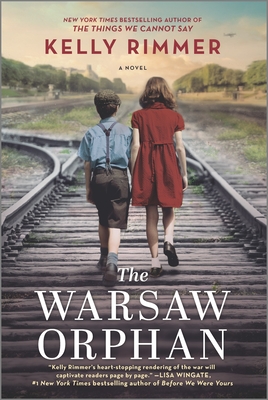
World War II is a popular subject for historical fiction. There are so many countries involved along with a variety of religions and philosophies. Lots of major political figures vie for power. Lives are turned upside down, families destroyed, and cultural icons demolished. In the midst of this upheaval, the citizens of Poland find themselves in a tug of war between Nazi Germany and the Red Army of the Soviet Union.
Roman, raised Catholic, is part Jewish. As a teenager he feels compelled to keep his Jewish family safe and later to fight from the Warsaw Ghetto with the Resistance for Poland’s freedom. Emilia (known as Elzbieta on her false identity papers) finds a way to work daily in the Ghetto under horrible conditions to help the people there who are overcrowded and sick from diseases and malnutrition. Their paths cross, and Roman and Emilia begin a friendship that lasts across the years.
In The Warsaw Orphan, Kelly Rimmer creates three dimensional characters who change and mature as a result of both growing up and experiencing the dramatic events that the war brings into their lives. They both see and endure things no one should have to—especially not teenagers. There are many characters of note and none of them see life as black and white. Many events take place in the grey area of life where one’s values and necessities do not line up perfectly. Some of the characters are Christian, some are Jewish, and others are atheists. Some are moral, decent people while others are torturing murderers.
The plot is told alternately from Roman’s and Emilia’s points of view. This is an effective way of narrating this story as it takes us on the personal journey each has to endure. There are decisions the characters have to make that affect others, not just themselves. The plot leads the reader through the many emotions that engulf the characters: grief, fear, shame, guilt, revenge. There are also moments of kindness, love, protectiveness, and generosity.
I thought The Warsaw Orphan was good, but the final fourth of the book was both surprising and riveting. You can’t expect a book about WWII to be filled with happiness and light, but I was amazed at Rimmer’s creative abilities to put her characters in desperate situations and then resolve them in a hopeful and rational way.
I received a complimentary copy of this book in exchange for an honest review. Opinions expressed in this review are completely my own.
Rating: 5/5
Category: Historical Fiction, General Fiction
Publication: June 1, 2021—Harlequin (Graydon House)
Memorable Lines:
Bystanders have allowed themselves to be convinced that the Jews are not like us, and as soon as you convince someone that a group of people is not human, they will allow you to treat them as badly as you wish.
Those agonizing weeks during the Uprising confirmed that art is not always for the viewer. Sometimes the very act of creating can mean salvation for the artist.
As punishment for our decision to rebel, our homes, our libraries, our monuments and our infrastructure would be reduced to dust. It wasn’t enough that they had taken our people and our homes—they were going to take what was left of our culture.
The Nine–despair and courage
The Nine
by Gwen Strauss

Five years of research and writing went into the creation of The Nine, a nonfiction work that focuses on a group of nine women, most in their twenties, who joined the Resistance movement in World War II at various times and places. Six were French, two Dutch, and one Spanish. They were individually captured and sent to worse than horrible Nazi internment camps.
The author was able to interview her great aunt Helène who spoke five languages and was the leader of this band who joined together to survive and escape. Strauss followed quite a maze of information and was aided by many including families of “The Nine.” The book begins with Helène’s story which for me was emotionally difficult as she provides some details of her capture and torture. There were some types of torture, however, that Helène would not discuss or even name. The rest of the account moved more quickly as we learn more about each of the young ladies in the first nine chapters along with descriptions of life in a labor camp. Each chapter moves them closer to either death or escape. Most of the rest of the book lays out their last days together and concludes with what happens after the war is over.
The ladies did not share their stories with very many people for a variety of reasons which the author relates. Several wrote about their experiences in unpublished formats to be discovered after their deaths. Many former prisoners of World War II suffered again after their presumed return to safety—homes and loved ones were gone, their bodies were physically ruined, and society turned against them. Statistically they were lucky to survive, but they bore visible and invisible scars. Most returnees were reluctant to discuss their imprisonment with even those closest to them and found that, in general, people did not want to hear about their experiences.
I highly recommend this book for the author’s insightful and thorough reporting about the brave women of the Resistance and the cruel and evil system that treated them as vermin. One of the policies that I sadly see repeated currently is those in power inciting division to weaken and control those under them. In the camps, the Poles received the best treatment from the Nazis, followed by the Reds. Every group looked down on another in the camps with the Roma (Gypsies), criminals, and homosexuals regarded as the bottom of humanity.
I received a complimentary copy of this book in exchange for an honest review. Opinions expressed in this review are completely my own.
Rating: 5/5
Category: History, Nonfiction (Adult)
Notes: 1. Subtitled: The True Story of a Band of Women Who Survived the Worst of Nazi Germany
2. At the first of the book there is a list of the women with their nicknames and a brief description
3. At the end of the book are notes about the author’s journey into the past, a bibliography, notes on each chapter, and a list of the illustrations (which sound interesting, but were not included in my Advance Reader Copy).
Publication: May 4, 2021—St. Martin’s Press
Memorable Lines:
The Jewish prisoners were given the worst rations, worst living conditions, and the hardest jobs. They were already the most traumatized group, having suffered pogroms, witnessed mass murders, and narrowly escaped the gas chambers. All of them had probably seen their loved ones die, and they may or may not have counted themselves lucky to be alive.
They were proud of how they served each other, divided food equally, and maintained their civility in such an uncivil place. It had kept them strong when others become more and more like animals, lost their sense of themselves, and fell into dark despair.
In the sea of people who seemed to have been tossed up like pebbles on a beach, the prospect of finding their loved ones felt nearly impossible.
The Woman with the Blue Star–refuge in a sewer
The Woman with the Blue Star
by Pam Jenoff
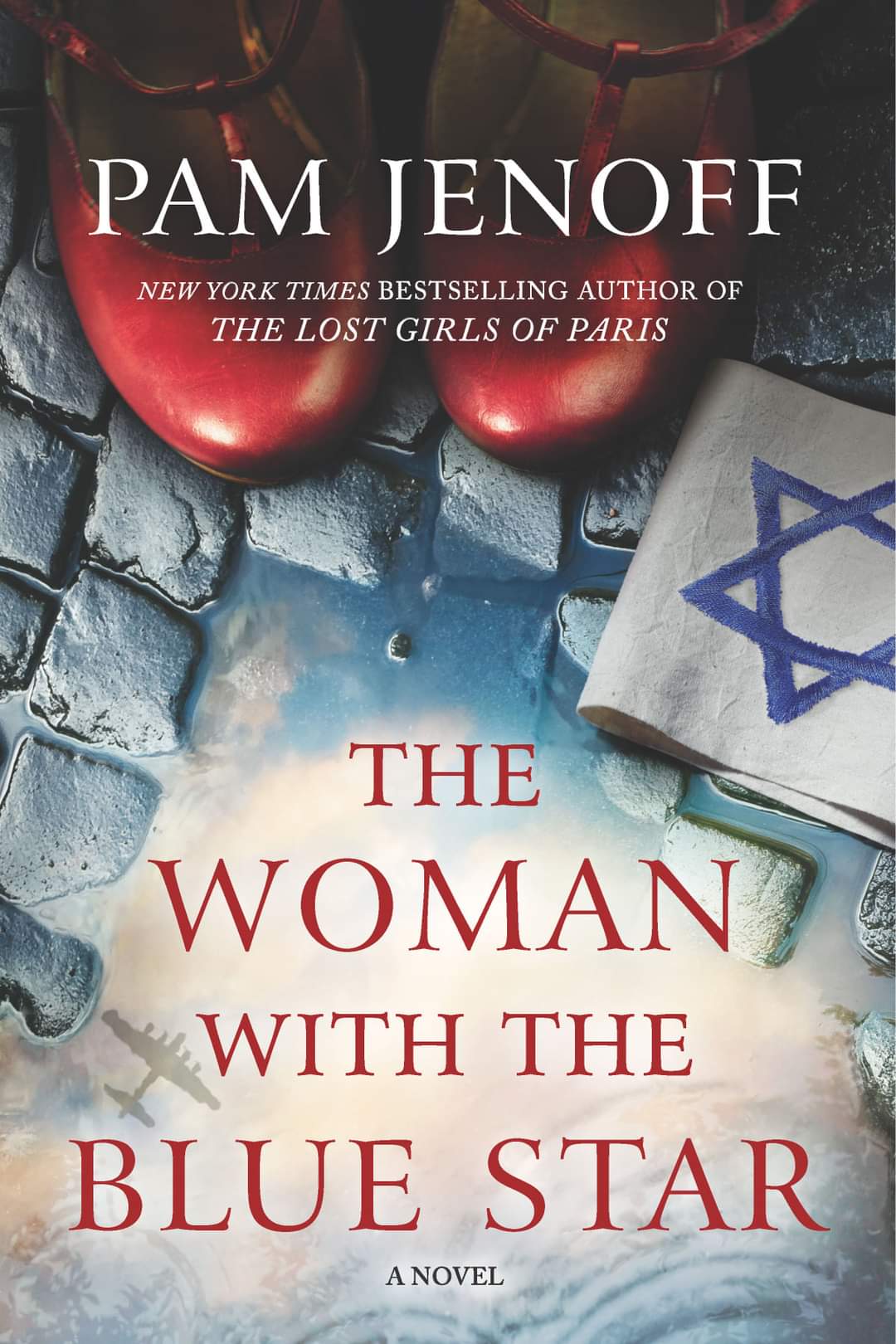
If you are an aficionado of World War II novels, you will probably like The Woman with the Blue Star, the story of Sadie and her family who are forced into a Polish ghetto and later avoid a roundup of Jews for deportation by fleeing to the dark stench and filth of the sewers. Their survival depends on the mercy of the sewer worker who leads them there and provides them with what food could be had in Krakow in 1942. The Germans leave little for the local population and ration cards are required.
Sadie’s path crosses with Ella’s at a chance glance down through a sewer grate. Ella lives with her stepmother who maintains a fairly good standard of living by acting as a mistress to various German officers.
The author describes in detail both the disgustingly putrid conditions for the Jewish family in the sewer and the better, but still precarious, lives of the Polish citizens above ground. The characters and their reactions are generally believable. There are a number of dramatic twists in the story along with some romantic threads and a look at those involved in the Polish Home Army underground movement.
Most of the story seems realistic. I do wonder about the many occasions when Ella ventures out after the government imposed curfew, once even with Sadie above ground. Given the enormous threat of German soldiers and Polish police patrolling the streets, their adventures seem foolhardy and unlikely.
I love the epilogue which confirms something I suspected, but its revelation makes a great twist. Although it is difficult to read about the enormous hardships, this book is an important reminder of a piece of history we should never forget so we will not allow it to be repeated.
I received a complimentary copy of this book in exchange for an honest review. Opinions expressed in this review are completely my own.
Rating: 4/5
Category: Historical Fiction, Women’s Fiction
Publication: May 4, 2021—Harlequin
Memorable Lines:
We had almost nothing by the end; it had all been sold or left behind when we moved to the ghetto. Still, the idea that people could go through our property, that we had no right to anything of our own anymore, made me feel violated, less human.
Once I could not have imagined staying in the sewer for so long. But there was simply nowhere to go. The ghetto had been emptied, all of the Jews who lived there killed or taken to the camps. If we went onto the street, we would be shot on sight or arrested.
Saul talked on and on through his tears, telling stories of his brother, as if pressing the memories of his brother between pages to preserve like dry flowers.
 education pathways