Home » Posts tagged 'farm'
Tag Archives: farm
Meadow Falls–trusting again
Meadow Falls
by Carolyn Brown
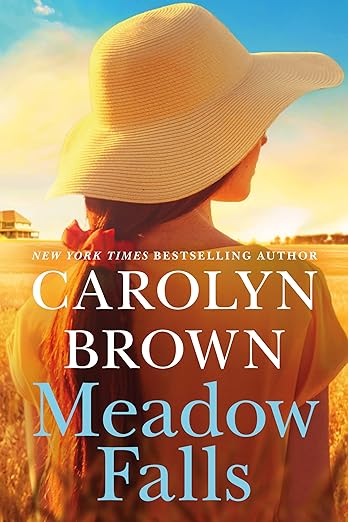
Angela Marie Duncan inherits the largest peanut farm in Texas from her father. That might be overwhelming to some, but Angela Marie has been working the peanut farm since she was a child so she knows everything there is to know from planting to harvesting to accounting.
Meadow Falls recounts Angela Marie’s blossoming after her indifferent father passes away. She depends on Mandy her 95 year old nanny and Mandy’s granddaughter Celeste for support as makes choices to shed her old life and rebuild. Celeste has been Angela Marie’s close friend from childhood. Celeste is reeling from a divorce, and Angela Marie has learned that men can be attracted to her for her money. Both have understandable trusts issues with men. Devon enters her life at just the time she needs someone to handle the many mechanical issues that arise on a peanut farm. He brings along his cousin Jesse who is an excellent carpenter who is hired to remake much of the large home. Tongues are wagging in the little town with a big gossip mill. Angela Marie and Devon encourage the rumors to keep unwanted attention away from her. This fake boyfriend trope works, but boundaries can blur.
I enjoyed the characters, plot twists, and romance in this clean novel. Mandy and her friend Polly add a welcome multigenerational vibe. If I had one criticism of this book, it would be that the characters “giggle” and “chuckle” too much. Laughing is great, but let’s pull out the thesaurus and vary the words a little! Otherwise, it was a good read, and includes a mystery of sorts—possible relationships that are suspected based on timeline and photos. It takes DNA samples to suss out the truth.
I received a complimentary copy of this book in exchange for an honest review. Opinions expressed in this review are completely my own.
Rating: 4/5
Category: Women’s Fiction, Romance
Publication: January 9, 2024—Montlake
Memorable Lines:
My thoughts kept running around and around in my head like young squirrels chasing each other around and around the tree.
“You don’t forgive to make the other person feel better. You do it to get that hard spot out of your heart. Hate and love cannot abide together. Hate is darkness, and love is light. Love produces peace. Hate eats away at you until there’s nothing left but a dark hole inside your chest that nothing will cure.”
I sat down on the top step and savored every flirty moment and every nuance. I held onto the vibes between us like I would a Fourth of July sparkler and loved every minute.
A Christmas Gift–sacrificing during hard times
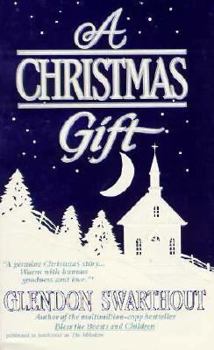
A Christmas Gift
by Glendon Swarthout
illustrated by Myles Sprinzen
The story of this novella is told from the viewpoint of James Chubb, a thirteen year old boy who is sent from his home in Pennsylvania to his grandparents’ farm in Michigan. In the Great Depression, James’ father can not find work, any kind of work, to support his family. Like many other children in that generation, James was shipped off to live with relatives he had only visited twice. His grandparents were nice, however, and James worked hard for them.
A Christmas Gift covers several generations with a special focus on James’ great-grandfather who died in the Civil War. The reader sees the effect of war on multiple generations and the impact of the Great Depression on hard-working men who feel the shame of not being able to put food on the table. Many of those people would not accept government handouts, which even if accepted were still not enough for survival.
It was certainly not a good year for Christmas gifts. Some children received one practical gift like galoshes or a handmade gift such as a scarf. Many, of course, did not get anything for Christmas. In this story we see an abundance of love in a sacrificial gift.
Swarthout describes in detail the melodeon and the OilPull tractor that play key roles in the plot. He writes about the events of this story in such a way that you feel like you are there witnessing the difficult birth of an out of season lamb and the exhaustion of his grandfather during an evening like no other. He inserts some amusement in the participation of a family of daughters and some wonder in a magical Christmas Eve rescue.
Swarthout is an award winning writer, and his expertise shows in A Christmas Gift as he takes the reader on a journey back in time and into a rural farm setting. There are terms that the modern reader will find unfamiliar as James uses slang from the day. One funny touch is the inclusion of the use of a “party line” on their telephone service.
The trip skillfully manipulates emotions so that the reader feels close to this thirteen year old. Although it is not light-hearted,there is joy and also melancholy to be found in the tale. It is a story that in many ways defies typical genre classification. It is a good read, but each reader needs to decide if it achieves the classic status some feel it deserves.
Rating: 4/5
Category: Historical Fiction, Novella
Notes: 1. This book has also been published under the name The Melodeon (Doubleday, 1977) and has been made into a movie with the title A Christmas To Remember (1978).
2. YouTube has some great videos that will help the author’s wonderful descriptions of the melodeon and the Rumely Oil Pull tractor come alive.
Publication: 1992—St. Martin’s Press
Memorable Lines:
Ella kept two hundred chickens. “Good layers,” she called them — a characteristically rural understatement. Those Leghorns of hers were cornucopias, mother-lodes, veritable volcanoes of eggs.
Our ring was three long and one short, and after five minutes I decided some of the garrulous wives in the neighborhood must be on the line, so I lifted the receiver and listened in. Universal sin absolves individuals, and since everyone did it in those days, listening in on a party line was not considered sinful.
“You have to take the vinegar with the honey. That’s marriage for you.”
My Several Worlds: A Personal Record
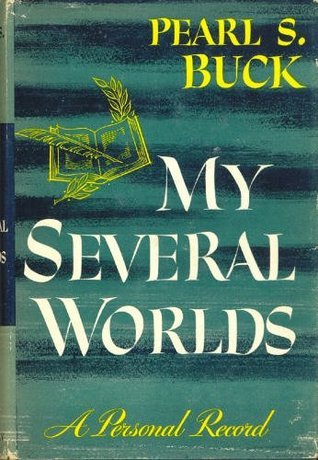
My Several Worlds: A Personal Record
by Pearl S. Buck
WHAT IS MY SEVERAL WORLDS?
It is a collection of essays integrated into a memoir. Author Pearl S. Buck, as she writes this tome, considers herself midway in her writing career. She presents it as a “record of the age in which I lived” and “as nearly an autobiography as I shall ever write.” It is not a linear book. The place she is located when she writes each section is noted, but not the date because it is such a combination of times. Although a confusing style at first, it makes sense because as she is writing about her current life in the United States, she will suddenly revert to recounting her younger years in China and historical world events or advance her opinions on a variety of subjects from practical to esoteric.
WHO WAS PEARL S. BUCK (1892-1973)?
She was a prolific author, primarily a novelist, and the winner of both the Pulitzer Prize in 1932 and the Nobel Prize in Literature in 1938. The child of Christian missionaries, she spent much of her life in China until politics forced Americans to leave. Completely bilingual, Pearl was an astute translator of Chinese and had great admiration for Chinese social structure and love for the Chinese people. When she returned to the United States, she found that she lived in two separate worlds and never felt quite at home in either. She was well-traveled and had friends from all over the world.
WHERE DID BUCK GET HER INSPIRATION?
Buck’s source material was mainly her observations of people. In her travels, she paid attention to people, listening more than talking. Her focus was more on the common man and woman than the famous people who wanted to entertain her as a celebrity.
WHAT ARE SOME OF BUCK’S “SEVERAL WORLDS”?
Buck watched various political groups attempt takeovers in China. This land she loved and which helped shape her was subject to political strife from inside the country and by forces from the outside. She was witness to Western influences on young Chinese who studied in the United States and tried to bring change to ancient Chinese customs. These endeavors were not always positives for the Chinese people.
As an American adult with Chinese training, Buck experienced disparate worlds in the United States. Looking past geopolitical issues, Buck also had several worlds on a personal level. Although equipped to mingle in high society circles, she preferred a rural lifestyle with a large household of adopted children who learned life and family skills on their farm. She had a long, unhappy marriage to an agricultural missionary in China followed by a long, happy marriage to her publisher in the U.S. Although a teacher and primarily a writer, Buck devoted her talents to social enterprises as well. She opened The Welcome Home for U.S.-born children of Asian descent whose mixed-race status made them “unadoptable” according to adoption agencies. She also advocated for appropriate care for the disabled, a cause close to her heart as her first child was unable to live independently.
WHAT IS YOUR OPINION OF MY SEVERAL WORLDS?
This is not an easy read; there is no fluff to it. In My Several Worlds you will discover a lot of Chinese history since, as Buck points out, the Chinese civilization is very old. She refers to many events in China’s past without details as she feels they have already been discussed thoroughly in books she and others have written. Her thoughts on the various subjects she examines are interesting although I do not always agree with all of them. They are informed by her unique background of living a cosmopolitan life. She was homeschooled by Christians but tutored by a Confucian. She went to college in the United States, but despite altering her clothing never felt like she fit in.
Buck is an excellent writer, but the reader needs to approach this non-fiction work with a desire to learn—to learn more about China, about adults who have grown up in more than one culture, and about the fascinating Pearl S. Buck. Having read this memoir, I think a good follow up would be to read one of her many novels.
Rating: 5/5
Category: Memoir, Nonfiction
Publication: 1954—John Day Co.
Memorable Lines:
But I had never known what hatred was. I had neither been hated nor had I ever hated anyone. I could not understand why we, who were still ourselves and unchanged, should be lumped with unknown white men from unknown countries who had been what we were not, robbers and plunderers. It was now that I felt the first and primary injustice of life. I was innocent but because I had the fair skin, the blue eyes, the blond hair of my race I was hated, and because of fear of me and my kind I walked in danger.
No people can be educated or even cultivated until books are cheap enough for everybody to buy.
I went back to my own resurrected home with a heavy heart indeed, for I knew that from that day on the new government was doomed in the end to fail. Why? Because it had failed already in understanding the people whom it purposed to govern and when a government does not rule for the benefit of those ruled, sooner or later it always fails, and history teaches that lesson to every generation whether or not its rulers can or will understand.
Healing Hearts at Bumblebee Barn–reality TV on a farm
Healing Hearts at Bumblebee Barn
by Jessica Redland
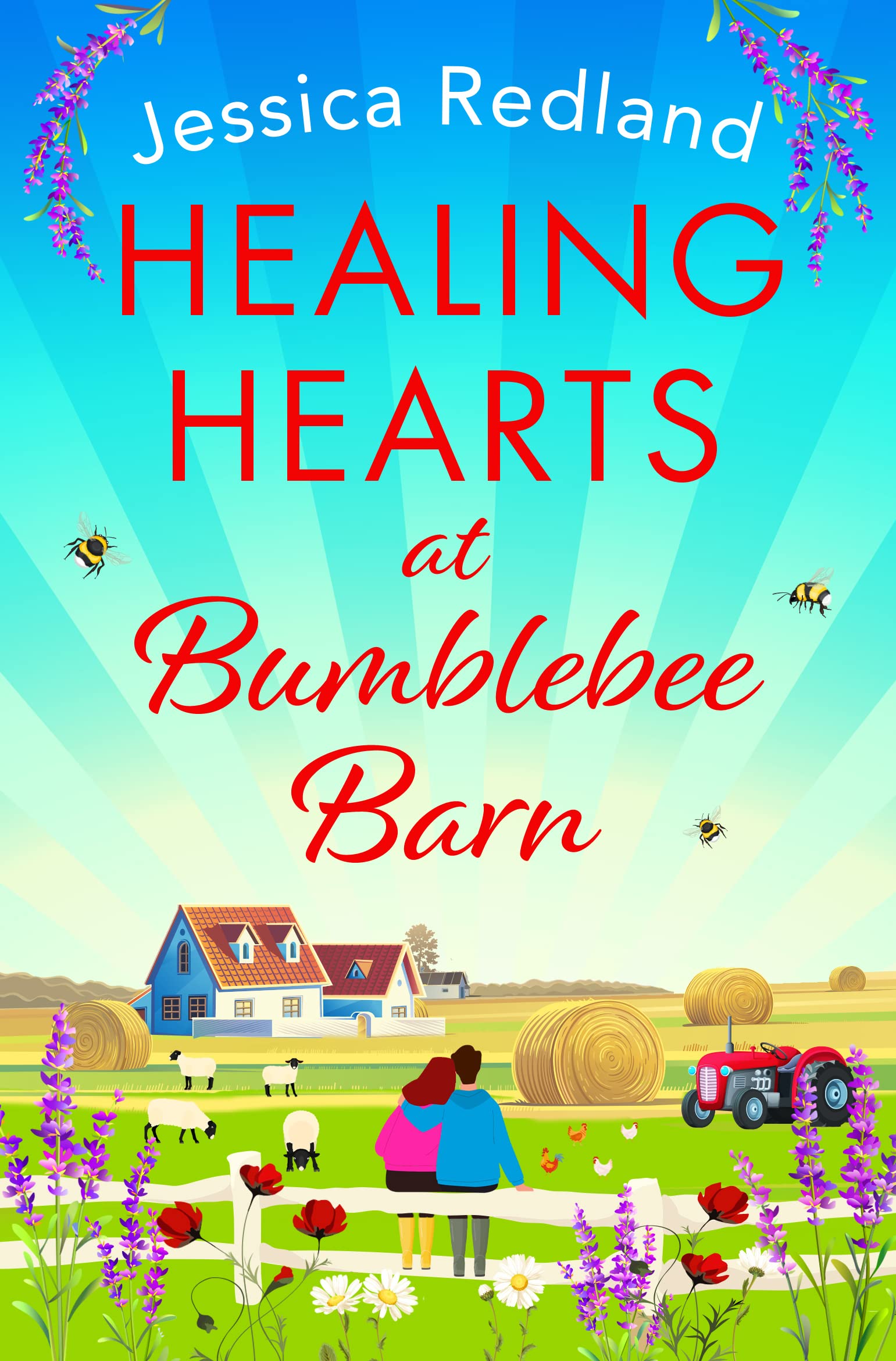
I have heard praise of the Hedgehog Hollow books, but have not read any of them. I was excited to read Jessica Redland’s Healing Hearts at Bumblebee Barn which is set in Yorkshire and incorporates the Hedgehog Hollow Rescue Center in the plot and setting.
Barney comes from a farming family and Amber from a dramatically inclined family. Barney is convinced by his sister Fizz to apply to appear on a new reality TV show which Amber is producing. Amber is not normally a fan of reality TV, but as producer of the family friendly docu-series Countryside Calendar, she is convinced to produce Love on the Farm “with genuine intentions to help farmers find love rather than putting the participants through ritual humiliation and manipulating the footage for shock value and ratings success.” As a farmer, Barney leads a fairly lonely and isolated life. This show could be an opportunity for him to attain a lifelong match.
Both Barney and Amber are really nice people, and both have been hurt in past relationships. Barney enters the show with an open mind, and Amber has a professional attitude which is hard to maintain when the company she works for changes its perspective on the show as well as hiring new directors. With a non-disclosure agreement, Amber is unable to share the changes with Barney and the chosen matches. The results are some unpleasant surprises that are intended to increase ratings.
Even with family health issues and broken hearts, the show must go on. Eventually we learn of the betrayals of various “ex’s” revealing personalities who are ruthless and self-centered. Through it all, both Amber and Barney remain true to their principles. As Amber says, “It’s not about winning…It’s about what’s right.”
I very much enjoyed the interplay of the main characters and the supportive roles of the minor characters. Amazon lists this as a standalone, but I hope it will be the first of a new series. There are so many directions the talented Redland could take these characters.
I received a complimentary copy of this book in exchange for an honest review. Opinions expressed in this review are completely my own.
Rating: 5/5
Category: General Fiction, Romance
Notes: I don’t watch reality TV, but I enjoyed this book.
Publication: January 24, 2023—Boldwood Books
Memorable Lines:
To “pull an Amber” was to either avoid a night out or to show your face and slope off to bed early.
It turned out that Parker and I weren’t just not on the same page—we weren’t even in the same library.
Every snide comment, I met with a look. Every criticism, I met with praise for the participants or crew. Every dig at me, I just laughed and walked away—far more powerful than stooping to his level.
The Library–love of reading
The Library
by Bella Osborne

Cross-generational stories hold a certain appeal that is present in Bella Osborne’s The Library. Built around characters who probably would never have met but for a library, this novel involves the reader in their lives. Tom, a lonely young man whose mother died when he was eight, intervenes when a hoodlum snatches Maggie’s purse. Maggie, a widow, lives alone on a small farm and longs for human contact. Both have issues that have isolated them from others: Tom’s father is an alcoholic, and Maggie has lost her son and husband.
There are so many interesting themes and threads woven into the bare bones scenario I have described. As the book progresses you learn to love Maggie, an intelligent, spunky lady with surprising talents and Tom, the object of her generosity of spirit, money, and time. Tom is trying to find his way through adolescence and is dealing simultaneously with poverty, a neglectful and grieving father who is edging toward abuse, a bully, a crush on a girl in his class, and studying for exams that will place him in A levels, the key to going to college. In the midst of all this drama, Tom has to convince his father that his future does not lie in a dog food factory. He and Maggie also have to keep their local library from closing.
I recommend this book for the style of narration, the gradual way the author reveals the inner workings of the characters, and the way she creates empathy in the reader. The events in the plot are well-crafted and the ending is satisfactory without being saccharine.
I received a complimentary copy of this book in exchange for an honest review. Opinions expressed in this review are completely my own.
Rating: 5/5
Category: General Fiction, Women’s Fiction
Notes: 1. There are a few uses of inappropriate language in American English and a lot of mild expletives in British English. Interestingly, Tom does try to catch himself and avoid swearing when talking to Maggie.
2. Contains lots of Britishisms.
Publication: September 2, 2021—Aria
Memorable Lines:
She’d sought peace at the library, and it had given her exactly that along with multiple worlds to hide herself in. She could disappear into a book and be gone from the harsh reality of the real world for hours.
He was lost in the no man’s land between the child he was and the man he so longed to be.
Maybe nobody was who they seemed. Apart from the animals. Rusty was beautiful inside and out; she was caring and loyal. Colin was literally the devil in sheep’s clothing. But you knew where you were with animals—they weren’t suddenly going to surprise you and tip your world upside down. They didn’t pretend to be something they weren’t and because of that they didn’t let you down. Unlike people who did it all the time.
Murder, She Edited–problematic inheritance
Murder, She Edited
by Kaitlyn Dunnett
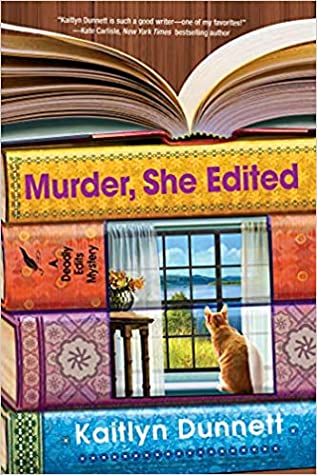
Mikki Lincoln is a character I can immediately identify with. She has retired from teaching but is earning extra money as a freelance editor. She is good at identifying punctuation and grammar errors and feels a compulsion to correct them. When running out on an errand she trades her “lightweight sweatpants and somewhat ratty T-shirt for jeans and a clean T-shirt with no holes.” Sounds good to me!
The cozy mystery opens with Mikki receiving a letter from a law firm informing her that she has inherited land from an almost forgotten friend of her deceased mother. There is an odd stipulation that to receive the inheritance she must locate some diaries in the farmhouse, edit them, post them on the Internet, and produce an e-book with them—all in a short amount of time. Finding the diaries is a difficult and eventually dangerous task.
I like Mikki. In spite of beginning her marriage in a time when a woman could not get a mortgage or other credit in her own name, she is a strong, independent woman. She is very intelligent, and she approaches this challenge with the same tenacity as a dog with a bone. The puzzle of where the diaries are and who wrote them leads to a potential cold case of murder and the uncovering of secrets from the past and present. Someone was willing to kill to prevent their discovery. Mikki has several concerned friends who help and protect her, and she achieves the grudging respect of the law authorities.
There is also a subplot about a steamy romance author who was a teaching colleague of Mikki’s. She wrote under an assumed name. A fan of this author wants to meet her and wants Mikki to make it happen. This addition to the story provides a little comic relief and distraction from the intensity of the main plot.
I liked Murder, She Edited from start to finish. A cozy with the main character in her early 70’s appeals to me, and I am looking forward to the next book in the series.
I received a complimentary copy of this book in exchange for an honest review. Opinions expressed in this review are completely my own.
Rating: 5/5
Category: Mystery
Notes: #4 in the Deadly Edits Series, but can easily be read as a standalone. I missed one of the books in the series, but it did not hamper my enjoyment of the others.
Publication: July 27, 2021—Kensington
Memorable Lines:
I bestowed what I call my “sweet but dithery little old lady smile” on him, the one I usually save for security officers at the airport and policemen who think I’m meddling where I shouldn’t.
I wondered what would happen if I didn’t correct all those silly errors. Would the Friends of the Library vote to replace me as editor? I doubted it. No one else wanted the job. Besides, I didn’t think I had it in me to spot a grammar, punctuation, or usage error and not fix it.
Ordinarily, I don’t like to badger people, but I was fed up with the runaround I’d been getting. I leveled my best former teacher’s glare at the young woman and waited for her to cave. She burst into tears.
Love in Plain Sight–learning to trust again
Love in Plain Sight
by Kathleen Fuller
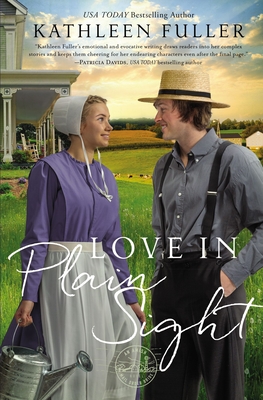
Although Love in Plain Sight is an Amish romance, it is not a sugar coated love story. It addresses two cases of physical and verbal abuse in two different Amish communities—how it affected the victims and how they reacted to it. Along the way though, the reader meets some noble and likable characters. They are people with standards, people you would want to meet. The book does not address abuse from a community standpoint, but from an individual one. The abusers have other character flaws or sins that are intertwined with their abuse—a hunger for money and power. They abound in self-interest and don’t care who gets hurt.
The plot is complex as Katharine decides to flee her abusing fiancée and lies to everyone to protect herself and her parents. She is Amish and finds a job at an Amish inn in a distant town where she is surrounded by loving people. One of them was abused by her husband who has been missing for nine years and is presumed dead. The two women recognize the backgrounds they see in each other. It is difficult for both to move on with their lives. Rhoda is still legally married, and Katharine has major self-esteem issues compounded by the stress of never being able to do anything the way her fiancée wants it done. As a result, she gains weight and her acne worsens causing even more criticism from him.
I started the book one evening and couldn’t wait to resume it the next day. The plot moves quickly, and both plot lines have dramatic conclusions. One of the major themes is forgiveness. Another is trusting God to work out things for good.
There is an amusing thread in the story. An ad has appeared in a number of Amish newspapers inviting young Amish women looking for bachelors to come to the little town of Birch Creek. Katharine chooses to “disappear” in that town, not because she wants a husband, but because there will be so many Amish women arriving that no one will question why she is there. The big question locally is the identity of the ad writer, and the surprising answer emerges at the end of the book.
Kathleen Fuller is not a new author, but this book is a first of her works for me. I recommend this book and look forward to reading more in this series and others by this author.
I received a complimentary copy of this book in exchange for an honest review. Opinions expressed in this review are completely my own.
Rating: 5/5
Category: Romance, Christian
Notes: 1. #3 in the Amish Mail-Order Brides of Birch Creek Series. Although I have not read the first books in the series, I had no problem reading this as a standalone.
- The abuse is not described graphically.
Publication: May 3, 2022—Zondervan Fiction
Memorable Lines:
Despite decades of practice stuffing down her thoughts and feelings to the point where she was numb, fighting the bitterness edging her heart was getting harder.
To cope with his verbal abuse she disappeared into herself until there was nothing but silence in her head replacing his voice. Blissful silence—
“Make sure that the man you marry is gut, kind, and true. Don’t let love blind you to his faults, and don’t compromise yourself to please him. If you do, you’ll lose the person you are, and you’ll live to regret it.”
Little Heathens–Hard Times and High Spirits on an Iowa Farm During the Great Depression
Little Heathens
by Mildred Armstrong Kalish
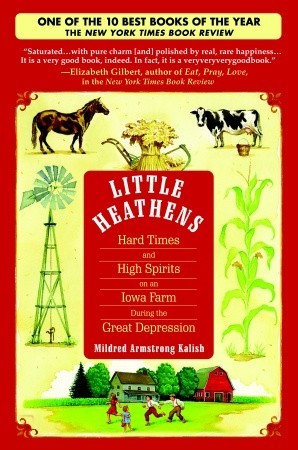
There are a variety of tales and anecdotes about life during the Great Depression, yet many who survived don’t want to talk about it. The experiences of those in the cities were quite different from those living in the country. Regardless of location, however, all but the very wealthy suffered and their lives and perspectives were formed or altered by their experiences.
In Little Heathens, Mildred Armstrong Kalish shares what life was like for herself and her extended family. It is somewhat difficult to distinguish between the normal trials of endless farm work and the efforts needed to reuse and repurpose items because of deprivation of money and resources. “Thrown away” was a foreign concept during this time and thrift was the champion of the day. Kalish shares the many saving and “make-do” tricks that were common during the Depression and some that were uncommon. Many of those have fallen out of use, but are still handy to know and good examples of the resourcefulness of our predecessors.
Kalish lays her memories out forthrightly, not concealing or varnishing the stories. Many are humorous and several are gasp-worth. Children worked alongside adults learning by example and experience. Farm life required the whole family to pitch in. Chores were divided by age and gender, but not strictly. For example, Monday Wash Day was a very physical, all-day task for which preparations began on Sunday night. Children and adults wore the same set of clothes all week, and everyone participated in wash day. The need for everyone to work together is apparent in the book over and over again.
Kalish addresses the many aspects of life at that time as seen through the eyes of a child who was an active participant. She has an incredible memory for detail right down to how to catch, kill, and prepare a snapping turtle for consumption. She also discusses the social aspects of community inside and outside the family unit. Her life was unique in that she lived in town during the winter and on a farm during the growing season because of her family situation. Her life was very different in each place, but the expectations of a good work ethic and attitude never changed.
The author viewed the hardships of her childhood as instrumental in her many achievements later in life. From success as a “hired girl” to working her way through college to her happy marriage and career as a professor, Kalish gives credit to her family, especially her mother: “Mama’s ability to meet challenges head-on and with a positive attitude created in us kids a sense of confidence that there was a way to solve every problem—just find it.” Although her life was hard, it was not unhappy and she prizes the memories of her past. I enjoyed her writing style, learned from the information she shared, and relived some of my past as I have memories of my Depression-era parents handing down wise sayings and thrifty values. Well done, Mildred Armstrong Kalish!
Rating: 5/5
Category: Memoir
Publication: May 29, 2007—Random House (Bantam)
Memorable Lines:
Mama, Aunt Hazel, Uncle Ernest, Grandma, and Grandpa had a real gift for integrating us children into farm life. Working alongside us, they taught us how to perform the chores and execute the obligations that make a family and a farm work.
An Old Maid (that’s what we called unmarried women in those days) was asked why she didn’t try to find a husband. Her reply was, “I have a dog that growls, a chimney that smokes, a parrot that swears, and a cat that stays out all night. Why do I need a husband?”
After our chores and household duties were done we were given “permission” to read. In other words, our elders positioned reading as a privilege—a much sought-after prize, granted only to those goodhardworkers who earned it. How clever of them.
She kept all of her needles stuck into a red felt pincushion which she had owned since just before God.
Killed on Blueberry Hill–murder at the Blueberry Blowout
Killed on Blueberry Hill
by Sharon Farrow
 Oh, yes! I have a new series to add to a favorites list for cozy mysteries. Although I jumped into Sharon Farrow’s Berry Basket Mystery Series with the third book, I had no trouble following the storyline of Killed on Blueberry Hill. At first, given the theme of the book and the series, I was afraid blueberries would be overdone in this book. While they do take center stage as a motif, the emphasis is not forced because the setting is Oriole Point’s Blueberry Blow Out festival. It is, in fact, integral to the plot. Although blueberries are found all through the book, their inclusion is not repetitious because of the variety of ways the theme is used—food, drinks, atmosphere, businesses, costumes, and carnival fun.
The plot of Killed on Blueberry Hill has lots of threads that tie together well…in the end. Along the way they seem contradictory and confusing, pointing a finger at many suspects with plausible motives. This cozy mystery contains a wonderful assortment of characters, but many are not who they seem to be. Secrets and deceptions underlie the festive atmosphere. Marlee is the owner of The Berry Basket, a store in town that sells blueberry products, so she knows the three major producers, all family-run businesses. Her fiancé Ryan is a member of the close-knit Zellar family. Why is he pushing Marlee so hard on the wedding date, selling her family home, and just about every other decision in her life? When the owner of another blueberry farm is murdered on his own carnival ride, who will get the blame? There are several deaths in Oriole County. Who is set to inherit the wealth? This cozy has an exciting, action packed ending and major surprises. Along the way we meet Natasha, the recently widowed Miss Russia, with her delightful accent and choice of words. Not only does she add humor to the book, but she is instrumental in helping Marlee. I don’t know if Natasha will be included in future books in the series, but I hope so. She ramped up the book from 4 stars to 5 for me.
I would like to extend my thanks to netgalley.com and to Kensington Books for giving me the opportunity to read this book in exchange for an honest review.
Rating: 5/5
Category: Mystery
Notes: #3 in the Berry Basket Mystery Series, but works well as a standalone. Added to the book are three delicious sounding recipes that were featured in the story—blueberry, of course.
Publication: October 30, 2018—Kensington Publishing
Memorable Lines:
When I came to a stop in front of the yellow farmhouse, I could almost see my younger pigtailed self on the bottom porch step, eating fresh-picked blueberries from a pail. It seemed a lifetime ago. But also as recent as last month.
“Don’t be such a snob. Not everyone was born with an entire set of silver spoons in their mouth.”
I threw myself into work with such single-minded dedication, Ebenezer Scrooge himself would have given me a raise. And he wouldn’t have needed any visits from ghosts to prompt it.
 education pathways