
Home » Posts tagged 'family' (Page 6)
Tag Archives: family
Two to Tango–clean romance
Two to Tango
by Kathleen Fuller
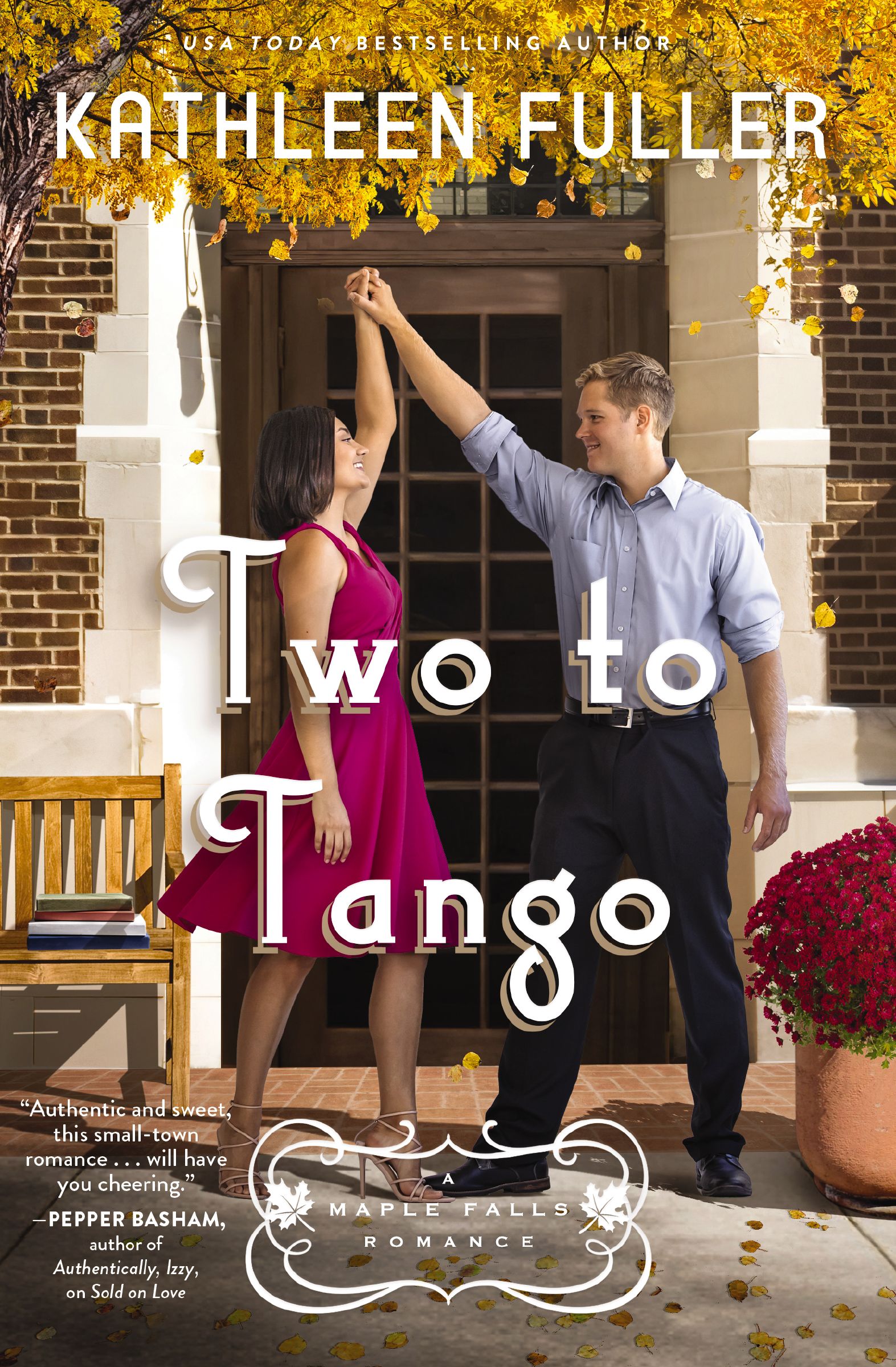
Join the residents of Maple Falls, Arkansas, for a romance between highly organized librarian Olivia Farnsworth and over scheduled pediatrician Kingston Bedford. It takes quite a while for them to get together because Kingston promises to contact Olivia and then can’t find the time to do it between his busy practice and his volunteer activities. He is filled with guilt, and she has a hard time trusting him.
A group of older women, including Kingston’s domineering mother, decide to play matchmaker. Comedy shows up in the situation when the pair decides to have a pretend relationship to get the ladies to back off. Of course, things don’t go exactly by plan. Others become involved as the matchmaking extends to some older residents. The couple’s contemporaries are excited for them, and the new dance teacher could be a potential match.
This is the fourth book in the Maple Falls Romance Series. Each one focuses on a different couple, but in Two to Tango all of the couples from the various books play a role.
I received a complimentary copy of this book in exchange for an honest review. Opinions expressed in this review are completely my own.
Rating: 4/5
Category: Women’s Fiction, Romance
Notes: 1. #4 in the Maple Falls Romance Series. I don’t recommend this as a standalone. There are a lot of characters assembled from previous books. If you are interested in this clean, character-driven series, I suggest you start with the first one.
Publication: July 11, 2023—Thomas Nelson
Memorable Lines:
Aunt Bea was right. It was easier to hide behind the familiar and benign than to face the elephant in the room—life was changing, and she didn’t like it. While her life was staying routinely the same, the relationships she’d depended on had altered.
His mother was putting on her best social smile, but he could see she was simmering underneath the ruse. The woman considered punctuality the eleventh commandment.
But his mother’s expectation was clear. Being good wasn’t enough. He had to be the best.
The Lucky Shamrock–working together
The Lucky Shamrock
by Carolyn Brown
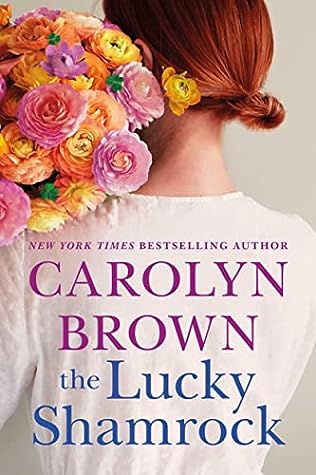
This contemporary romance is set in Shamrock located in west Texas. Nana Irene calls three cousins back to the town they couldn’t wait to get away from to work the summer in her flower shop The Lucky Shamrock when Irene’s best friend Ruby breaks her hip. The three cousins couldn’t be more different, but Nana Irene wants them to see the value of being united as a family. None of the girls are happy to work with each other and live together so it is interesting to watch what happens when they are put in situations that require them to cooperate with each other. Taryn is former Air Force and works with computers. Straight laced Jorja is a Kindergarten teacher in a Christian school. Anna Rose is looking for happiness in cowboy bars. All of their parents have relocated out of Shamrock.
Clinton is a nice man who has been hired by Nana Irene to work in the shop when he is not busy counseling vets with PSTD. Local ladies have a contest going to try to snare him into marriage even though he has made it clear that he is not interested. He is supposed to be quite a catch as he comes from a rich family and is a war hero. As he lives in an apartment above The Lucky Shamrock, everyone at the shop benefits from the foods the ladies bring to try to win him over.
One of the vets Clinton is counseling has a baby, but is in no condition to care for her. Little Zoe is adorable. Clinton gets temporary custody of Zoe, and Taryn falls in love. But now she has to figure out if she is in love with Clinton or just Zoe.
Along the way in this romance there are some bombshells as the girls work through traumas they have experienced. Former “mean girls” who have not changed are after Clinton. Aging residents see what happened in the past and is recurring. They have ways of influencing those situations.
Although some serious subjects are addressed, the book in general is light. It would make a good summer read.
I received a complimentary copy of this book in exchange for an honest review. Opinions expressed in this review are completely my own.
Rating: 4/5
Category: Women’s Fiction, Romance
Notes: 1. The Lucky Shamrock includes humor and a sprinkling of swearing.
Publication: July 4, 2023—Montlake
Memorable Lines:
“You are right. Confidence is mostly bluff with a little ego and fear thrown into the mix.”
“Hey, we’ve all got a past,” Clinton said “But we have a million futures in front of us, and it’s up to us to choose which path is right.”
“We may fight and argue amongst ourselves, but Lord help anyone who tries to come between us.”
A Cowboy’s Fourth of July–love you can count on
A Cowboy’s Fourth of July
by Melinda Curtis

I enjoy Harlequin Heartwarming books, and I favor books by Melinda Curtis. The Cowboy Academy series combines what I like in A Cowboy’s Fourth of July. In the prologue, the reader gets a peek at Allison Burns, a talented singing cowgirl, and Dixon Youngblood (Dix), her math tutor guarding a heavy crush on her, in high school. The rest of the novel focuses on them as adults, however. Allison is a single mom trying to manage a ranch floundering in debt, and Dixon has returned to his roots in Clementine, Oklahoma, working with his grandmother as a banker. Both characters have trust issues and long for the love found in a stable family. Most of the characters in this book have cowboy/rodeo connections and values rooted in family and the land. Dix, however, was abandoned by his parents and then his grandparents. He was taken in by a loving ranch couple who fostered lots of boys who chose to call them “mom and dad.” The ranch was their home, and they became brothers with all the teasing and support that comes with that relationship.
In his banking job, Dix has to work with people who are under water financially. They fear him because, despite his cowboying abilities, he dresses like a city slicker and has the power to foreclose on their loans. Allison inherited many loans when her parents died and doesn’t have the financial skills to get herself out of debt. Besides the obvious challenges of running a ranch and raising a child, Allison feels pressure to win out over “Pilates Queen” Evie in the yearly fair baking competitions continuing the Graces versus Burns feud, another family inheritance of sorts.
Dix has always been attracted to Allison and steps up as her fake boyfriend to help her in a difficult social situation. As might be expected in a Harlequin Heartwarming romance, sparks fly even as the two work on their own issues. Dix helps Allison discover why she is so far in debt and inspires her to recall the joy she once found in music. Throw into this plot Dix’s uncaring parents and sick grandmother, and Allison’s daughter’s self-obsessed baby daddy. The result is a fun romance with 4th of July fireworks.
I received a complimentary copy of this book in exchange for an honest review. Opinions expressed in this review are completely my own.
Rating: 4/5
Category: Romance
Notes: 1. Allison’s daughter is Piper. She is 10 years old and enthusiastic about so many interests, especially as they relate to being “the best cowgirl ever.” Allison has never told her anything about her father and that comes to a head in this book when he appears in Clementine to sing. He is also unaware he has a child. Piper is a fun character, sweet but manipulative.
2. #2 in The Cowboy Academy series, but works well as a standalone because each book focuses on a different cowboy. There are four books so far in this series.
Publication: July 25, 2023—Harlequin Heartwarming
Memorable Lines:
“Even if you opened branches of the Clementine Savings & Loan across the state of Oklahoma, your mother would still look at you and see the boy she failed because she had to give you up. And until she can look at you without that filter, your relationship with your reals is going to be strained.”
“At some point, Dix, you’re going to have to make choices about your life based on what makes you happy, not what might mend that dysfunctional family of yours….Maybe then, you’d look around and find yourself a good woman, one who understands you’re always going to be watching for signs she’s leaving you to find a happier place in the world, because that’s what most fosters do.”
“If you wait until she’s worked through her issues and you’ve worked through yours, you might just be waiting forever…instead of finding your forever.”
A Shadow in Moscow–Cold War spies
A Shadow in Moscow
by Katherine Reay

As you can guess from the title A Shadow in Moscow, this book is about spies—two women in particular—and is told in two timelines with a third included in an epilogue. I didn’t like the two timelines for a lot of the book, but by the end I understood why the author chose that style. She purposely does not reveal the connections between the two women operatives until late in the book. She, in fact, keeps a lot of clues from the reader. The whole book is interesting, but a little unsatisfying until the author reveals the relationships to the reader and to the characters themselves. At that point I was shaking my head at the courage, intelligence, and loyalty of these women.
Almost any summary of this work of historical fiction would include spoilers, so I will instead relate some of my impressions. I have read other books by Reay and appreciate her as a writer. She has researched her topic well and has shared information about the Cold War in a way that makes it understandable to the reader. It is hard to comprehend from our position in North America the length and depth of the spy organizations and culture that permeated the world during that era, especially as it involved the Soviet Union, the United States, and Great Britain. This is a story of intelligence agencies (CIA, MI6, and KGB) and counterintelligence agencies. We learn of the extent the KGB went to in their efforts to control the actions and even the thoughts of their people. We see this on an organizational level, but also a personal level as individuals and families are unable to express themselves or know who to trust. As Reay states in her notes to readers, “only in truly understanding our pasts will we be able to navigate—with empathy, humanity, and wisdom—our presents well.”
At two-thirds of the way through this book, I would have given it a moderate stamp of approval. At the end I was overwhelmed with the writer’s talent, with the way the various threads were drawn together, and with the motivations and resolutions for various characters. It will transport you to a difficult time in history when choices, whether based on ethics or on greed, led to life and death decisions.
I received a complimentary copy of this book in exchange for an honest review. Opinions expressed in this review are completely my own.
Rating: 4/5
Category: Historical Fiction
Notes: Discussion questions are included in the back of the book and Reay references other resources on her web page. If this is chosen as a book club selection, I would advise that the members read the whole book before discussing it.
Publication: June 13, 2023—Harper Muse
Memorable Lines:
Jamison’s cramped and stuffy book-lined office is my favorite spot on campus. Something about its dusty, ink-and-paper smell takes me right back to my bedroom and my all-night read-a-thons—because at home you get the best books in secret and only for one night.
Our conformity gives an illusion of power and peace as we are raised to believe our way of life is superior and virtuous. Illusions are powerful things. If you believe them hard enough, they can become one’s reality.
“They’re Americans, Sasha. They have constitutional rights agains that kind of stuff.” The memory is bright and convicting, blinding me with truth. That’s the difference, I think. Forget the bedazzled clothes, the neon colors, the malls, the plentiful vegetables. Forget it all. It’s window dressing hiding the truth. None of that matters because only one thing counts. Rights.
Jayber Crow–Life Story
Jayber Crow
by Wendell Berry

Some books are hard to encapsulate in a book review. Jayber Crow is one of those books. I am grateful to have book club members willing to share their insights and perspectives and give me opportunities to reflect on my own.
Author Wendell Berry is a Kentuckian through and through as is demonstrated in his Port Williams series of 11 novels and additional short story collections with a Kentucky setting. A novelist, poet, agrarian, activist, essayist, and farmer, Berry tells the story of Port William through the lives of his characters. Not a lot “happens” in Port William, but individuals like Jayber Crow are on display for the reader to understand how their experiences determine their strength of character. Jayber Crow has a series of rough circumstances as a child and as a young man; but never viewing himself as a victim, he develops the mental, emotional, and even physical fortitude to become a strong and introspective person. As is often the way in small towns, he is still considered an outsider even after many years of residing in Port William. With the goal of never being under the control of “the man across the desk,” Jayber, who considers himself the town’s most “ineligible bachelor,” has his own business as the town’s barber with side jobs as grave digger and church sexton.
Jayber was born in 1914, so he and all of Port William were affected by both World Wars and the Depression. He was witness to the technological changes that some called progress and others perceived as movements away from self-sufficiency and a difficult, but very satisfying way of life. In the process, they replaced a slower existence powered by manual labor with a more stressful one with a never-ending cycle of debt.
Jayber’s spiritual life is explored in the novel as he was placed in an unloving church orphanage where he thought he was called by God into the ministry. He was given a college scholarship to that end, but had a change of heart as he progressed through his studies. Jayber’s story shows the hand of God working behind the scenes as events from his early days help him as an adult. He is quiet, doing a lot of listening as a barber. As you read this book, you will watch Jayber navigate literal and metaphysical floods. There is a lot of symbolism in the book as related to water and course of direction. His relationships with women are interesting as he finally comes out of his shell by visiting a neighboring town where he will be subject to less town gossip. His marriage covenant is a most unusual one and may leave the reader with more questions than answers.
There is so much to think about in Jayber Crow that it is not a quick or easy to read book. I did enjoy it and recommend it. It takes the reader on a journey across Jayber’s lifetime, but never far from Port William.
Rating: 5/5
Category: Historical Fiction
Notes: 1. #6 in the Port William Series, but works well as a standalone
2. Contains a map and a genealogy of the families of Port William featured in the series.
Publication: 2000—Counterpoint (Berkeley)
Memorable Lines:
Back there at the beginning, as I see now, my life was all time and almost no memory. Though I knew early of death, it still seemed to be something that happened only to other people, and I stood in an unending river of time that would go on making the same changes and the same returns forever. And now, nearing the end, I see that my life is almost entirely memory and very little time.
The talk went the way I love it, so quiet and unhurried I could hear the dampened fire fluttering in the stove.
Her hearing was as sharp as Miss Sigurnia’s was dull. Aunt Beulah could hear the dust motes collide in a sunbeam; she could hear spiders chewing on flies.
The Branches seemed uninterested in getting somewhere and making something of themselves. What they liked was making something of nearly nothing.
Why is hate so easy and love so difficult?
The Secret Garden–delightful classic
The Secret Garden
by Frances Hodgson Burnett
Illustrated by Tasha Tudor
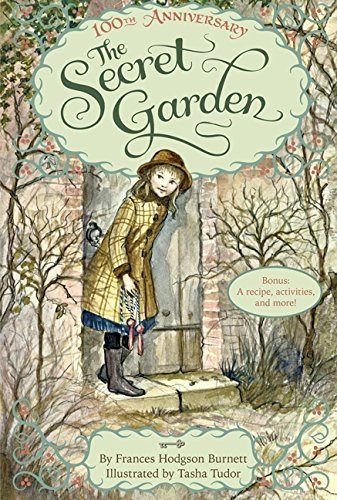
An avid reader as a child, I am surprised that I somehow missed out on the classic children’s tale The Secret Garden written by Frances Hodgson Burnett. For this reading with my book club, I chose an edition with delightful illustrations added to this 1911 book by Tasha Tudor in 1962. The Secret Garden is recommended by the publisher for ages nine and up, but I strongly recommend it for all readers. Please don’t relegate it to the “kiddie lit” genre.
The Secret Garden is the kind of book that instructs the reader in positivity without being preachy. Ten year old Mistress Mary (as in “quite contrary”) is a child who is both spoiled and neglected in her upbringing in India where she does not experience love. Things are not much better for her when her parents die, and she is shipped to Yorkshire to be under the care of her uncle. There she is still not loved as her uncle, Mr. Craven, has not dealt well with the death of his wife ten years prior and the illness of his son Colin who is physically cared for but also is not loved.
When Mary discovers that the mysterious crier in the night is Colin, she gradually creates a bond with her cousin. She is a curious girl who is given little freedom in the house, but almost total freedom in the gardens. She discovers the benefits of fresh air, sunshine, and natural exercise, and she explores the grounds looking for a secret garden that has been hidden away since Colin’s mother died.
Mary and Colin meet so many interesting people during the spring and summer. Dickon is a twelve year old who can converse with animals and plants. His older sister Martha is a sweet young lady who works at Misselthwaite Manor as a housemaid and helps take care of Mary. She has one day a month off, and she travels home by foot to help her kindly mother with laundry and baking. She gladly gives her mother her earnings to help support her large family of twelve happy siblings. Ben Weatherstaff is an elderly gardener who knew Colin’s mother and is eager to help restore the secret garden. While this tale is not full of goody two-shoes, it does have characters the reader will enjoy getting to know and in the cases of Mary and Colin watching their physical and emotional growth.
The Secret Garden is a pleasant read that begins with difficulties for the characters but progresses to a magical time in their lives. The author’s descriptions are wonderful to read as spring approaches in the garden. It is a book I would reread for the pleasure of the story and the language of the author.
Rating: 5/5
Category: Children, Fiction, Classics
Publication: 1911—Harper Collins
Memorable Lines:
The rainstorm had ended and the gray mist and clouds had been swept away in the night by the wind. The wind itself had ceased and a brilliant, deep blue sky arched high over the moorland. Never, never had Mary dreamed of a sky so blue. In India skies were hot and blazing; this was of a deep cool blue which almost seemed to sparkle like the waters of some lovely bottomless lake, and here and there, high, high in the arched blueness floated small clouds of snow-white fleece. The far-reaching world of the moor itself looked softly blue instead of gloomy purple-black or awful dreary gray.
“Half-witted!” said Colin angrily. “Who thought that?” “Lots o’ fools,” said Ben. “Th’ world’s full o’ jackasses brayin’ an’ they never bray nowt but lies.”
He had made himself believe that he was going to get well, which was really more than half the battle, if he had been aware of it.
Where Lilacs Still Bloom–a talent with plants
Where Lilacs Still Bloom
by Jane Kirkpatrick
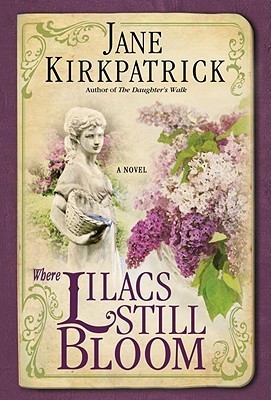
Hulda Klager was a hardworking German immigrant with an eighth grade education and a burning desire to implement changes in plants. She started with wanting a crisper, easier to peel apple for her apple pies. Her father had inspired her to follow her dreams, so while taking care of a large family and garden, she began exploring plant hybridization. She was successful and expanded her efforts to other plants. Her passion was lilacs, and her goal was to develop a creamy white lilac with 12 petals. In the process she developed over 250 varieties of lilacs. Her husband supported her interest in growing hybrids even in the face of those who initially condemned her for wanting to change nature as God had created it or for overstepping bounds as a housewife.
Although Kirkpatrick did a thorough job of researching the life of Hulda Klager, she had to rely on second hand sources. Despite Kirkpatrick being a very talented writer, Hulda Klager did not emerge from the pages as someone the reader could identify with. She was strong, persistent, and resilient but not portrayed as personable. Based on the number of people that committed to helping her with her lilacs throughout her life, however, she must have been an admirable and likable woman. In her almost 97 years, she influenced a lot of people and gave away many of her lilac starts. When the house and gardens were in disrepair and the famous Lilacs Days at the house had gone by the wayside, dedicated volunteers restored it all using contributions of Klager starts donated from gardens all over the country.
Where Lilacs Still Bloom is not a page turner in the traditional sense, but it did hold my interest as I watched Hulda Klager overcome many personal tragedies and fight against the flood waters time and time again that threatened her family, her garden and farm, and her huge collection of lilac plants. Kirkpatrick fills this book with descriptive passages that help the reader visualize the setting and circumstances. There are also many selections that can be read multiple times for the sheer beauty of the writing.
Rating: 4/5
Category: Historical Fiction
Notes: 1. The book includes a Reader’s Guide of discussion questions and notes from the author.
2. Klager kept detailed notes about her work, but most were lost in the various floods.
Publication: 2012—Waterbrook
Memorable Lines:
Melancholy seeped in like water filling footprints on a soggy lawn. It was always there beneath the surface that year but didn’t assert itself until pressure was applied…Maybe the sadness began with thinking of my parents too much. They were everywhere in that house, memories like cobwebs catching me unsuspecting.
“Beauty matters, Bertha; it does. God gave us flowers for a reason. I think so we’d pay attention to the details of creation and remember to trust Him in all things big or little, no matter what the challenge. Flowers remind us to put away fear, to stop our rushing and running and worrying about this and that, and for a moment have a piece of paradise right here on earth. God offers healing through flowers and brings us closer to Him.
“Yes, I pamper my lilacs. They remind me of the woman who kept them blooming and how she dug them up when high water came and floated them on rafts tied to trees so they weren’t ruined by standing river water. She taught me about persevering and trusting that providence would provide.”
The Boys in the Boat: Nine Americans and Their Epic Quest for Gold at the 1936 Berlin Olympics
The Boys in the Boat
by Daniel James Brown

Are you a big sports fan? Do you love rowing competitions? Do you know what makes a good coxswain? If your answers, like mine, are “no,” I guarantee that you will love The Boys in the Boat anyway!
Daniel James Brown is a masterful writer. His research is the backbone of the story, but that is just the beginning. He focuses his story of nine young Americans and their coaches on one amazing young man, Joe Rantz. In the process of rolling out this tale, Brown gives the reader a deep look at Joe, who despite terrible odds survived desperate times and the abandonment of his family. With sacrifices and persistence, he struggled through the Depression to earn his way through college and a place on the University of Washington eight-oar crew.
Holding down several jobs and living in tiny, dank quarters, Joe was bullied by his teammates for always wearing the one ragged sweater he owned and for being perpetually hungry. Despite World Wars, the collapse of Wall Street, the Great Depression, flooding, the Dust Bowl, and record unemployment, there were still students who were of a “privileged” class. Many students in the West were from tougher, more humble circumstances, but few of Joe’s teammates had backgrounds comparable to Joe’s. The rowers in the East generally went to elite schools and reflected British roots in their rowing.
Although the book focuses on Joe, partly because of Joe’s unique story and partly because the author was able to interview Joe himself and Joe’s daughter, Brown also includes the backgrounds and activities of each of the other boys in the boat.
The descriptions of the qualifying race in Poughkeepsie and the Olympic competition in Berlin will immerse you in the races to the point of feeling like you are there. There are so many factors that play important roles in rowing. The coaches are key in bringing the boys along, eliminating those who do not have extreme desire and persistence. They have to motivate them to work as a team, teach them how to row, and strategize which students will work best in each position on the boat.
Each chapter starts with a philosophical rowing quote by boat builder George Yeoman Pocock. He hailed from a line of boat builders and prided himself on the quality of his boats. He also had a talent for both seeing how a rower could improve and effectively sharing that with the young man.
Leading into the Olympic competition is fascinating information about Hitler’s motivations with the Olympics and what he did to achieve world-wide acclaim. His public relations efforts portraying Nazis as accepting and culturally sensitive were quite successful internationally.
The Boys in the Boat is one of those books that will stay with me for a long time. Joe’s strength of character and physical endurance are inspirational. I am thankful that the author included an epilogue that shares what happened to each of the rowers in their adult lives. There are also a few pages that give insight into how Brown learned so much about this “epic quest.” The crew endured practices in cold and rain, in heat and rough waves. The success of the nine was well-deserved and merited recording in this outstanding book.
Rating: 5/5
Category: Nonfiction, History, Sports
Publication: 2013—Penguin
Memorable Lines:
To defeat an adversary who was your equal, maybe even your superior, it wasn’t necessarily enough just to give your all from start to finish. You had to master your opponent mentally. when the critical moment in a close race was upon you, you had to know something he did not—that down in your core you still had something in reserve, something you had not yet shown something that once revealed would make him doubt himself, make him falter just when it counted the most. Like so much in life, crew was partly about confidence, partly about knowing your own heart.
“It takes energy to get angry. It eats you up inside. I can’t waste my energy like that and expect to get ahead. When they left, it took everything I had in me just to survive. Now I have to stay focused. I’ve just gotta take care of it myself.”
The wood, Pocock murmured, taught us about survival, about overcoming difficulty, about prevailing over adversity, but it also taught us something about the underlying reason for surviving in the first place. Something about infinite beauty, about undying grace, about things larger and greater than ourselves, About the reasons we were all here. “Sure, I can make a boat,” he said, and then added quoting poet Joyce Kilmer, “ ‘But only God can make a tree.’ “
As the observation train drew back upriver again for the start of the varsity race, the atmosphere grew electric, the dusky sky crackling with static. The crowd began to buzz. Boat whistles shrilled. Alumni draped arms over one another’s shoulders and sang fight songs. Somebody was about to win big; somebody was about to lose big.
Counter Attack–chess game of revenge
Counter Attack
by Patricia Bradley

Alexis (a.k.a. Alex) has a multi-step plan to achieve her goal of becoming a Police Commissioner. She works hard as a detective, keeps her head down, and is known to be skilled and reliable. Just as she is about to reach her intermediate goal of homicide detective, she is injured on the job and her grandfather who raised her has a heart attack. As county sheriff he appoints her to be Chief Deputy Sheriff during his recuperation. Her first week on the job she has to deal with officers who resent her appointment, a serial killer who has followed her from Chattanooga to her new job in a neighboring county, and a bomb threat. She has to keep on her toes to try to find the murderer who seems to delight in taunting her using mysterious messages as if they were in a chess game. Alexis has the cooperation of the Pearl Springs Chief of Police who was her high school flame. He not only “has her six,” but to her dismay she is still attracted to him.
Both Alexis and the reader will be running at top speed to keep up with all of the events, injuries, deaths, and possible motivations. The serial killer aspect is especially troubling as this murderer could be one of many people (even someone in the police department), has lots of 21st century tech skills, and puts Alexis’ life in danger as he or she enjoys employing near misses to keep her off balance. As if that isn’t enough to keep Alexis up late, the killer uses the dark web and it is creepy.
I grew up in Chattanooga, Tennessee, so I particularly enjoyed the setting. Although it has grown in size since I lived there, I could easily picture both the city and the rural areas near the Chattanooga. Watching Alexis handle the deputies and detectives working under her, especially when they challenge her, is inspiring. She grows a lot too as she comes to realize what is truly important to her. Although the book is not in any way preachy, it does have the theme of trust in God and His plan woven through. This is a clean book with a flow of attraction between Alexis and Nathan, but the mystery is always the central focus. The challenge for Alexis, Nathan, and the reader is to discover and stop the serial killer before death comes to Alexis’ doorstep.
I received a complimentary copy of this book in exchange for an honest review. Opinions expressed in this review are completely my own.
Cold Sassy Tree–Southern novel
Cold Sassy Tree
by Olive Ann Burns
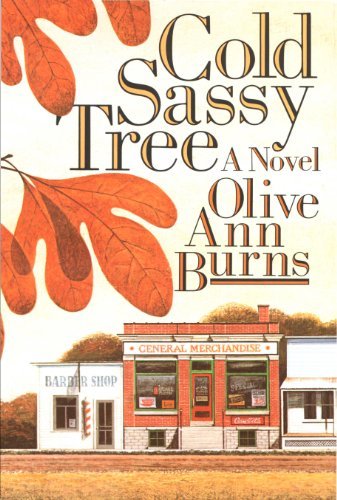
Cold Sassy, Georgia, is the setting for Cold Sassy Tree, a novel very successfully written by a woman with the point of view of a fourteen year old boy, Will Tweedy. The year is 1906. The town is small and populated with unforgettable characters. Many of the anecdotes are drawn from tales Burns heard as a child. The dialect rings through loud and clear. There is no doubt you are in turn of the century South where the Confederacy is still honored and people are starting to turn to indoor bathrooms, electricity, and telephones.
The patriarch of the central family, Grandpa Blakeslee, is the dominant force in the town. What he says, goes. He owns the store where everyone does business and finds out the latest news. His two son-in-laws work for him in what has become a family business. Will Tweedy has a close relationship with his grandpa and thus is often privy to his decisions before others. When his beloved wife of many years, Granny Blakeslee, passes away, Grandpa surprises everyone by remarrying in three weeks at a time when one year is considered the appropriate mourning period. One of his daughters is worried about what others will think and say, and both daughters are concerned about their inheritance. His new bride and the resulting family conflicts play a major role in the story.
Another theme is the coming of age of Will Tweedy, a young man who is given a lot of responsibility, but still struggles through his early teens getting into a lot of mischief. He engages in some dangerous escapades, has his first kiss, and does a lot of eavesdropping.
A serious thread throughout the book is religion. The town has Presbyterians, Baptists, and Methodists. Each church has strict rules, and a lot of hypocrisy comes to light as the members can be very judgmental. Grandpa doesn’t fit well into any of these groups, and he has his own ideas about God. Grandpa and Will Tweedy sort through the big theology questions together.
I like Cold Sassy Tree and recommend it. Although it takes place in a former time period, its themes resonate through the ages. They include greed, racial and social divides, jealousy, family, faith, and trust. All of the characters have traits and actions that make them admirable though flawed. The last quarter of the book is darker than the rest, but it ends on notes of hope.
Rating: 5/5
Category: Fiction, Historical Fiction
Notes: Sassy Tree refers to a Sassafras Tree.
Publication: 1984—Ticknor & Fields
Memorable Lines:
“Don’t she care at all if folks talk? Hadn’t she done enough already, without acceptin’ an expensive gift like that from a man with a reputation so bad it rides ahead of him?”
“Now, Lightfoot, with yore pa dead ’n’ all, I cain’t keep you no more less’n you go in the mill full time an’ pay yore part. Fast as you learn things, you’ll be a-workin’ both sides of the aisle in no time.” “Will, I begged her and begged her, ‘Please’m, let me git one more year a-schoolin’.’ But she said her chi’ren got two year apiece in school, and it ain’t holped them a bit in the mill. Said if they’d a-been borned with books for brains, they’d be makin’ bottom wages just the same.”
“Two elephants tied out yonder wouldn’t draw customers to the store as good as them artermobiles.” That was the Lord’s truth. Cold Sassy never had been a whirlpool of excitement. If the preacher’s wife’s petticoat showed, the ladies could make that last a week as something to talk about. …It’s easy to see why not even the scarlet of the Cold Sassy tree in autumn could equal our big shiny automobiles as something to rave about, especially with the open invite to come sit in them and take a ride.
 education pathways