
Home » Posts tagged 'Dust Bowl'
Tag Archives: Dust Bowl
The Four Winds–Historical Fiction about The Great Depression and the Dust Bowl
The Four Winds
By Kristin Hannah
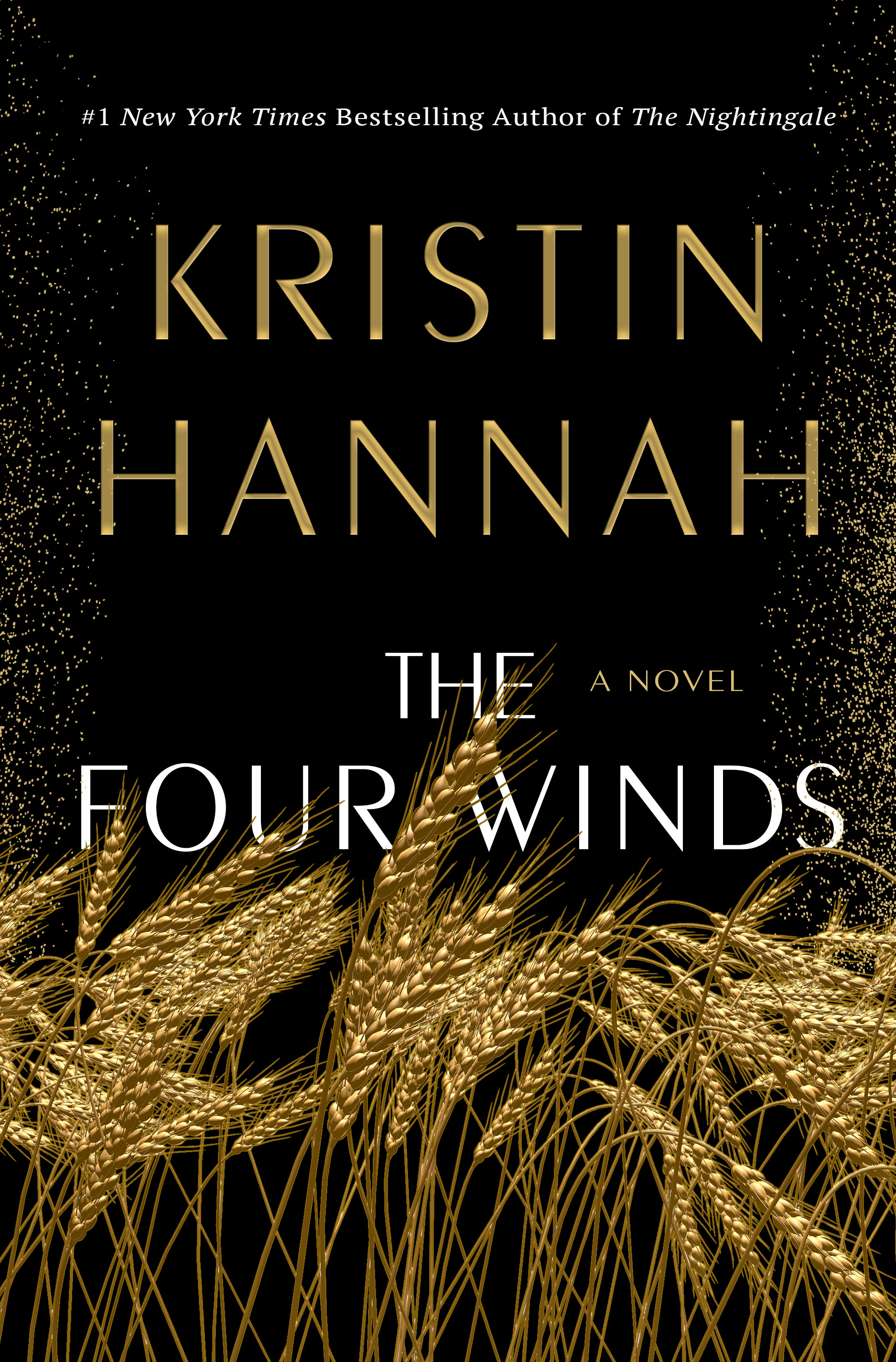
From prosperity to devastating poverty, The Four Winds takes the reader on a journey across time and across the United States. Since childhood, Elsa has been told she is unattractive, physically weakened by an illness, and ineligible for marriage. Her brief search for adventure and love in her small town leads her to Italian immigrants Tony and Rose and their son Rafe. The Martinellis take Elsa under their wing, connect her to the land, and love her as their own.
The Great Depression rips away the hopes and dreams of the generations who endured the struggle, but Tony and Rose are strong and refuse to give up their land. Then come years and years of drought and dust storms. The government says the farmers are to blame and provides minimal help. Millions of citizens leave Texas and surrounding states to find what is billed as a “land of milk and honey” where they will surely find work so they can support their families. Instead they find difficult work on large farms if they are lucky. They live in filthy conditions on subsistence wages or less. Each day they have to walk miles both ways from muddy tent cities to the fields where there is no guarantee of a job. Those seeking work are maligned by the residents who view them as dirty and lazy. If they manage to get on at a farm that supplies housing, a few toilets, and some running water and electricity, they soon discover that they are paid with credit at the expensive company store. There is a fee for everything, even obtaining pay in cash. When they dig deeper, the workers find that the whole setup, including where they live and when they work is completely set up to satisfy the greed of the owner. A worker is always indebted to the company.
Communists, at physical danger to themselves, work to organize the farm workers to strike for better working conditions. It is an uphill battle because the workers have safety concerns if they protest in addition to the possibility of losing their opportunity for work—such as it is. California is not the “Promised Land” after all.
Elsa is not just the main character of The Four Winds: she is the heroine. She is a strong, strong woman living out a difficult life with perseverance and determination. Come what may, she would do her best for her children whether eking out survival in a formerly rich land where cattle died with bellies full of sand or traveling across the desert in an unreliable vehicle praying that there was enough water and gas to get the family to their destination. She proves to be a good friend to others in need. She compromises when necessary for the sake of her children, but she reaches a limit where she stands up to greedy business people who deserve to be shamed.
The Four Winds exposes a sad part of our history showing a period in time that was devastating to people. Through no fault of their own they found themselves unable to care for their families. Many were proud and refused government aid. Some of that help from the government was commendable putting men to work in respectable jobs, but some was too little, too late and unreliable in execution. The people of California were depicted as mean-spirited and unwilling to help those who needed help. They looked down on the laborers with contempt. The one exception that stood out for me was an understanding librarian who checked out books to Elsa’s daughter and then gave Elsa a library card which Elsa presented to her daughter as her Christmas gift. It was treasured.
This work of historical fiction concludes nicely, but there is not a happy ending for everyone. The book is more realistic than that. Overall it is well written and kept me wanting to read more. It is a sad book, however. It has to be—it is about sad times.
Rating: 5/5
Category: Historical Fiction
Publication: March 14, 2023—St. Martin’s Griffin
Memorable Lines:
“Believe me, Elsa, this little girl will love you as no one ever has…and make you crazy and try your soul. Often all at the same time.” In Rose’s dark, tear-brightened eyes. Elsa saw a perfect reflection of her own emotions and a soul-deep understanding of this bond—motherhood—shared by women for millennia.
“Girls like that, unkind girls who think it’s funny to laugh at another’s misfortune, are nothing. Specks on fleas on a dog’s butt.”
Once, Elsa would have said, God will provide, and she would have believed it, but her faith had hit the same hard times that had struck the country. Now, the only help women had was each other. “I’ll be here for you,” Elsa said, then added, “Maybe that’s how God provides. He put me in your path and you in mine.”
Winter hit the San Joaquin Valley hard, a frightening combination of bad weather and no work. Day after day, rain fell from steel-wool-colored skies, fat drops clattering on the automobiles and tin-can shacks and tents clustered along the ditch bank. Puddles of mud formed and wandered, became trenches. Brown splatter marks discolored everything.
Poverty was a soul-crushing thing. A cave that tightened around you, its pinprick of light closing a little more at the end of each desperate, unchanged day.
The Boys in the Boat: Nine Americans and Their Epic Quest for Gold at the 1936 Berlin Olympics
The Boys in the Boat
by Daniel James Brown
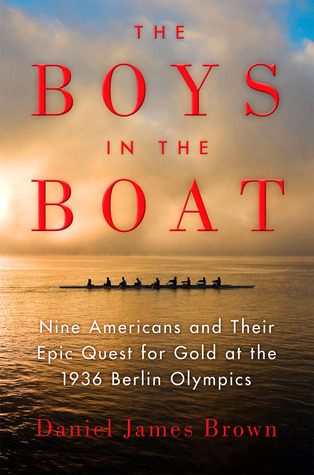
Are you a big sports fan? Do you love rowing competitions? Do you know what makes a good coxswain? If your answers, like mine, are “no,” I guarantee that you will love The Boys in the Boat anyway!
Daniel James Brown is a masterful writer. His research is the backbone of the story, but that is just the beginning. He focuses his story of nine young Americans and their coaches on one amazing young man, Joe Rantz. In the process of rolling out this tale, Brown gives the reader a deep look at Joe, who despite terrible odds survived desperate times and the abandonment of his family. With sacrifices and persistence, he struggled through the Depression to earn his way through college and a place on the University of Washington eight-oar crew.
Holding down several jobs and living in tiny, dank quarters, Joe was bullied by his teammates for always wearing the one ragged sweater he owned and for being perpetually hungry. Despite World Wars, the collapse of Wall Street, the Great Depression, flooding, the Dust Bowl, and record unemployment, there were still students who were of a “privileged” class. Many students in the West were from tougher, more humble circumstances, but few of Joe’s teammates had backgrounds comparable to Joe’s. The rowers in the East generally went to elite schools and reflected British roots in their rowing.
Although the book focuses on Joe, partly because of Joe’s unique story and partly because the author was able to interview Joe himself and Joe’s daughter, Brown also includes the backgrounds and activities of each of the other boys in the boat.
The descriptions of the qualifying race in Poughkeepsie and the Olympic competition in Berlin will immerse you in the races to the point of feeling like you are there. There are so many factors that play important roles in rowing. The coaches are key in bringing the boys along, eliminating those who do not have extreme desire and persistence. They have to motivate them to work as a team, teach them how to row, and strategize which students will work best in each position on the boat.
Each chapter starts with a philosophical rowing quote by boat builder George Yeoman Pocock. He hailed from a line of boat builders and prided himself on the quality of his boats. He also had a talent for both seeing how a rower could improve and effectively sharing that with the young man.
Leading into the Olympic competition is fascinating information about Hitler’s motivations with the Olympics and what he did to achieve world-wide acclaim. His public relations efforts portraying Nazis as accepting and culturally sensitive were quite successful internationally.
The Boys in the Boat is one of those books that will stay with me for a long time. Joe’s strength of character and physical endurance are inspirational. I am thankful that the author included an epilogue that shares what happened to each of the rowers in their adult lives. There are also a few pages that give insight into how Brown learned so much about this “epic quest.” The crew endured practices in cold and rain, in heat and rough waves. The success of the nine was well-deserved and merited recording in this outstanding book.
Rating: 5/5
Category: Nonfiction, History, Sports
Publication: 2013—Penguin
Memorable Lines:
To defeat an adversary who was your equal, maybe even your superior, it wasn’t necessarily enough just to give your all from start to finish. You had to master your opponent mentally. when the critical moment in a close race was upon you, you had to know something he did not—that down in your core you still had something in reserve, something you had not yet shown something that once revealed would make him doubt himself, make him falter just when it counted the most. Like so much in life, crew was partly about confidence, partly about knowing your own heart.
“It takes energy to get angry. It eats you up inside. I can’t waste my energy like that and expect to get ahead. When they left, it took everything I had in me just to survive. Now I have to stay focused. I’ve just gotta take care of it myself.”
The wood, Pocock murmured, taught us about survival, about overcoming difficulty, about prevailing over adversity, but it also taught us something about the underlying reason for surviving in the first place. Something about infinite beauty, about undying grace, about things larger and greater than ourselves, About the reasons we were all here. “Sure, I can make a boat,” he said, and then added quoting poet Joyce Kilmer, “ ‘But only God can make a tree.’ “
As the observation train drew back upriver again for the start of the varsity race, the atmosphere grew electric, the dusky sky crackling with static. The crowd began to buzz. Boat whistles shrilled. Alumni draped arms over one another’s shoulders and sang fight songs. Somebody was about to win big; somebody was about to lose big.
 education pathways