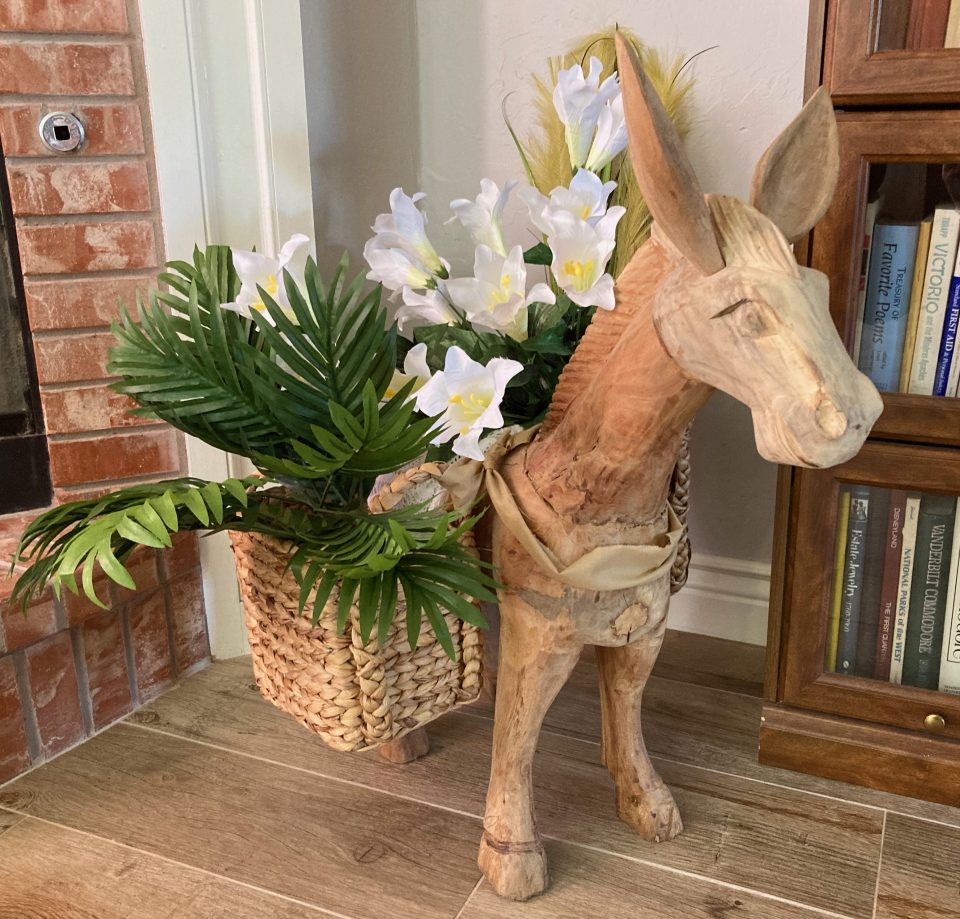
Home » Posts tagged 'donkey'
Tag Archives: donkey
Christmas in the Scottish Highlands–feel good Christmas romance
Christmas in the Scottish Highlands
by Donna Ashcroft

Join Belle Albany as she tries to fulfill the elderly, lonely Edina’s Christmas wishes. Edina has separated herself from people and life in Evergreen Castle. It takes an accident to show her what she has been missing. Not only has she distanced herself from the townspeople, but she also needs to finally meet an adult grandson Jack and see her daughter Tara more often. Christmas in the Scottish Highlands is character generated and propelled. The stories that motivate the main characters are key, but the supporting characters are vital to the plot too. A surprising and important character is Bob, a delightful donkey that lives at Evergreen Castle.
Christmas is critical to the plot, not just a backdrop. You can anticipate lots of Christmas traditions. Belle’s students at Christmas Village Primary School put on the annual Nativity program. A lot of effort is devoted to reviving the tradition of a huge Christmas party at the castle—enough that you might coin a new saying: “it takes a village to celebrate Christmas properly.”
Front and center next to the frivolity are deep and sometimes painful relationship issues: abandonment, estrangement, and communication. There are also three romantic threads and one other disclosed third hand as Jack is a divorce lawyer, better at splitting assets than at mending relationships. Several characters need to learn that there are often two sides to a story and author Donna Ashcroft does an excellent job of helping her readers understand that.
I enjoyed my visit to the Scottish Highlands in this book with its snow, castle, small village feel, and Christmas Cairn. Ashcroft sprinkles the text with just enough Scottish dialect (nae, dinnae, wee, lass/lassie, lad/laddie) that as I read dialogue I heard a Scottish brogue.
I received a complimentary copy of this book in exchange for an honest review. Opinions expressed in this review are completely my own.
Rating: 5/5
Category: Romance
Notes: There is one scene in the book where the sex could have been implied. It was not terribly graphic, but I prefer romances with closed bedroom doors.
Publication: October 11, 2021—Bookouture
Memorable Lines:
Belle said his name slowly, layering it with a dollop of irritation. Kenzy quirked an eyebrow. “Is Pollyanna having an off day? I know you weren’t that sure about him, but I thought your mantra was “there’s good in everyone”. Not that I’m complaining. You could do with toughening up—the world’s filled with sharks, it’s good to have your harpoon sharpened when you meet them.”
“Ah, lass, it’s been a lot of years since anyone’s said anything so nice. The last compliment I got was from my dentist—and she just admired that I still had my own teeth.” Edina’s face lit with mirth and Kenzy snorted. The older woman had a wicked sense of humour and often had Belle belly laughing.
He’d had a quiet few days in Evergreen Castle, feeling slightly more popular than an axe murderer, but less welcome than someone with a really contagious cold.
The Last Battle–the end
The Last Battle
by C.S. Lewis
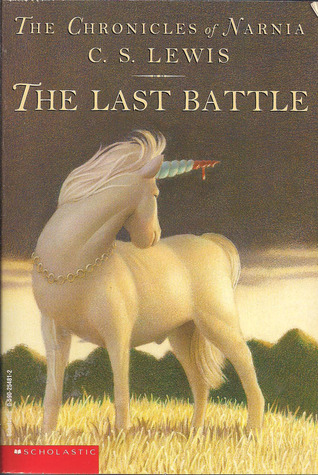
The final installment of The Chronicles of Narnia is as interesting, exciting, and thought provoking as the other six books. I read the last part slowly, eager to know what would happen next but not wanting to arrive at the end of the magnificent tale by C.S. Lewis, the consummate storyteller.
There are many important and timely themes including freedom vs. socialism, manipulation, deception, power and control, sacrifice, good vs. evil, and seeking God. Lewis brings together the characters and elements of all the books into a grand and surprising, but satisfying finale.
There are new characters added to the series. Shift is an ape who keeps Puzzle the donkey controlled by undermining his self-confidence. Old characters are present too as King Tirian calls out to Aslan the lion for help and “the seven friends of Narnia” from our world are whooshed into Narnia where they prepare to do battle against Shift, the Calormenes led by Rishda, and Tash the Calormene god. Shift devises elaborate schemes to deceive the Narnians and convince them that Puzzle, dressed in a lion’s skin and only appearing in the dark, is Aslan. This false Aslan through Shift’s directives is a cruel ruler, unlike the real Aslan. He enslaves the Dwarfs and Talking Horses making them work to accrue wealth for himself. Shift and Rishda convince the Narnian Talking Animals that Tash and Aslan are the same god and that they should now worship “Tashlan.”
Speaking further of the plot would disclose too many events that readers will surely want to discover on their own. The Last Battle is an adventure story replete with easy to understand symbolism and ageless themes. Quoting the last paragraph of the book would be the ultimate spoiler, but don’t fly to it first when you read the book. When you reach the ending, having experienced adventures alongside the characters and learned more of the attributes of the real Aslan, you will smile and savor the thoughts in that last beautifully composed paragraph.
Rating: 5/5
Category: Fiction, Christian
Notes: 1. #7 in The Chronicles of Narnia series. This is the final book in the series and should be read last.
2. This series is often listed as Children’s Fiction, but is really appropriate for all ages with adults reading it on a different level from children. It is perfect for a read-aloud.
3. I can’t believe I had never read the full series. If you are in a similar position, I urge you to delve into this treasure of a series. You will not regret it.
Publication: Original copyright is 1956. My copy was printed by Scholastic in 1995.
Memorable Lines:
“I was with him in his last hour and he gave me this message to your Majesty: to remember that all worlds draw to an end and that noble death is a treasure which no one is too poor to buy.” “So,” said the King, after a long silence “Narnia is no more.”
And then she understood the devilish cunning of the enemies’ plan. By mixing a little truth with it they had made their lie far stronger.
“They will not let us help them. They have chosen cunning instead of belief. Their prison is only in their own minds, yet they are in that prison; and so afraid of being taken in that they cannot be taken out.”
The First Christmas–Eastern philosophical take on the Nativity story
The First Christmas
by Stephen Mitchell
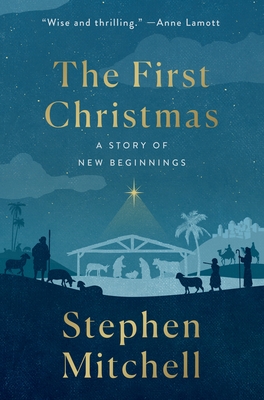
While I am not a theological scholar, I have been a Christian for over sixty years. Those are years in which I have studied the Bible, and God has grown my faith. When the author of this book gives an interpretation that I disagree with, I can accept that as a difference of opinion. An example in Stephen Mitchell’s The First Christmas is the angel Gabriel’s appearance to Mary. In the Bible this event is reported in chapter one of Luke. I believe this account literally, that the angel Gabriel appeared to Mary in a physical form and spoke to her in an audible voice. In fact, there is a dialogue recorded there. The author wants to interpret the appearance as a bright light (“the best I could come up with,” he says) and its communication as “empathy and telepathy,” nothing “so gross as speech.” Based on the writings in Luke, the author is creating a fiction that, though unconfirmed, could have happened. Many describe near death experiences as a comforting, blinding, white light. So, here, the author is using his imagination within the context of an angel visiting Mary.
What is more believable in his telling of the story are the extensive thought processes that Mary must surely have engaged in during the days and months following the angel’s announcement that she had been chosen to bear the Son of God as He comes to Earth in human form. The Bible doesn’t give details of all of her thoughts and feelings, but it does record her song of praise often called The Magnificat (Luke 1:46-55). Luke also shows us that her response is meditative.
There were shepherds who had an angelic visitation. After that they came to worship the baby Jesus, explaining how they found the little family in Bethlehem filled with visitors paying their taxes. “Mary treasured up all these things, pondering them in her heart” (Luke 2:19). Using common sense and based on Biblical evidence that Mary was a reflective person, the inner dialogue the author creates is believable, even if you don’t agree with all the fictional details.
There are some larger issues with this novel, however, that bother me. Mary says “No one had ever prophesied that the Messiah would never die.” This statement skirts the issue that there were many Old Testament prophecies which predict the Messiah would be resurrected to reign in His eternal kingdom. Her statement feels like a deliberate distraction in the text. Author Mitchell is clear that Mary would know the Jewish teachings. Therefore, she would have been aware of the many prophesies that Jesus would be resurrected and sit on the right hand of God the Father (Psalm 110:1). Psalm 49:15 says “But God will redeem my soul from the power of the grave, for He shall receive me.” Interpretations are acceptable, but contradictions are not.
The format of the book is interesting. The author states “my only agenda was to inhabit the characters.” He tries to put himself into an ancient time and experience it as each of the characters in the Nativity story might have. As he looks at the role each person or animal had in this pivotal moment, the author makes the decision to tell the story in the third person for the people and first person for the animals. He separates the chapters with an “Interlude” which is his opportunity to reveal his thoughts as an author and provide some background information. This format (which he explains in an Interlude is based on “the glorified sestet of an Italian sonnet) is a good choice for this book. Unfortunately, the author deviates in the second part of Mary’s story and interrupts the tale as he inserts his “authorial I” into her story rather than waiting for the Interlude. This happens again in Joseph’s story. In general I found Joseph’s tale more convincingly told. Oddly though, Mary and Joseph were approached in the book by angels who were totally different in appearance with Joseph’s angel not even culturally appropriate to the time period.
The section of The First Christmas that tells of the visit of the wise men is an elaborate fictional tale of two Jewish scholars who travel to the East studying Buddhism and other mystic philosophies that concentrate on meditation and finding the god within. It deviates from Scripture in many ways, most notably in the visions of the future of Jesus and his family that the men have as they sit with Mary, Joseph, and baby Jesus. (In the book, they visit the family in the stable whereas most Christians believe this visit occurred somewhat later as the Bible says the wise men or magi went to a house.) If you believe that Jesus is the Son of God and He was with God from before the creation of the world, as set forth in John 1:1-3, then much of this chapter is disturbing. They envision a confused young man, estranged from His family, and perhaps mentally deranged. A reading of any one of the four gospels shows anything but what they see for His future. He was fully man and fully God. Their supposed vision is not in character. They even shortcut and omit important parts of His death, fantasize his burial in a mass grave, and totally neglect His resurrection.
The last major section focuses on the donkey and is my favorite. The donkey tell the Nativity story from his perspective. Recalling ancient donkey traditions, he retells the Biblical story of Balaam’s donkey who could both see angels and could talk. He points out the good qualities of donkeys—intelligence, honesty, service, dignity, and trustworthiness.
I have an admiration for the author as a multi-lingual translator, well-versed in many Eastern religions and philosophies. He possesses a great imagination and makes connections from various works of literature. I hope that he will return to the Bible to connect with Jesus in a personal relationship. I don’t regret reading The First Christmas as an intellectual exercise, but I don’t recommend it as an Advent activity or as a pleasure read.
I would like to extend my thanks to NetGalley and to St. Martin’s Press for giving me the opportunity to read this book in exchange for an honest review.
Rating: 2/5
Category: Religion & Spirituality, General Fiction (Adult)
Publication: November 9, 2021—St. Martin’s Press
Memorable Lines:
[From the chapter Yosef (Joseph)] Where was the Lord now? Not here, not amid this swirling chaos. But if the Lord was not with him, it was his own fault. He knew that. God had not left him; he had left God. It could be no other way.
[From the chapter Yosef—speaking of Maryam (Mary)] She was graced with a quality he had been striving for all his life, ever since he had realized what his purpose, what the purpose of every Jew, was: to love God with all his heart and to fulfill His commandments as impeccably and with as much joy as he could summon.
[From the chapter The Donkey] …throughout the day angels from every order of the hierarchy descending to take a peek at the new little visitor. They don’t knock or announce themselves; they just fly in through the roof or the walls, without so much as a by-your-leave, and nobody greets or even notices them. When they see me, though, they nod to acknowledge my presence and to let me know that they know I know.
 education pathways