
Home » Posts tagged 'disguise'
Tag Archives: disguise
A Moment’s Shadow–Danger in Ireland
A Moment’s Shadow
by Anna Lee Huber
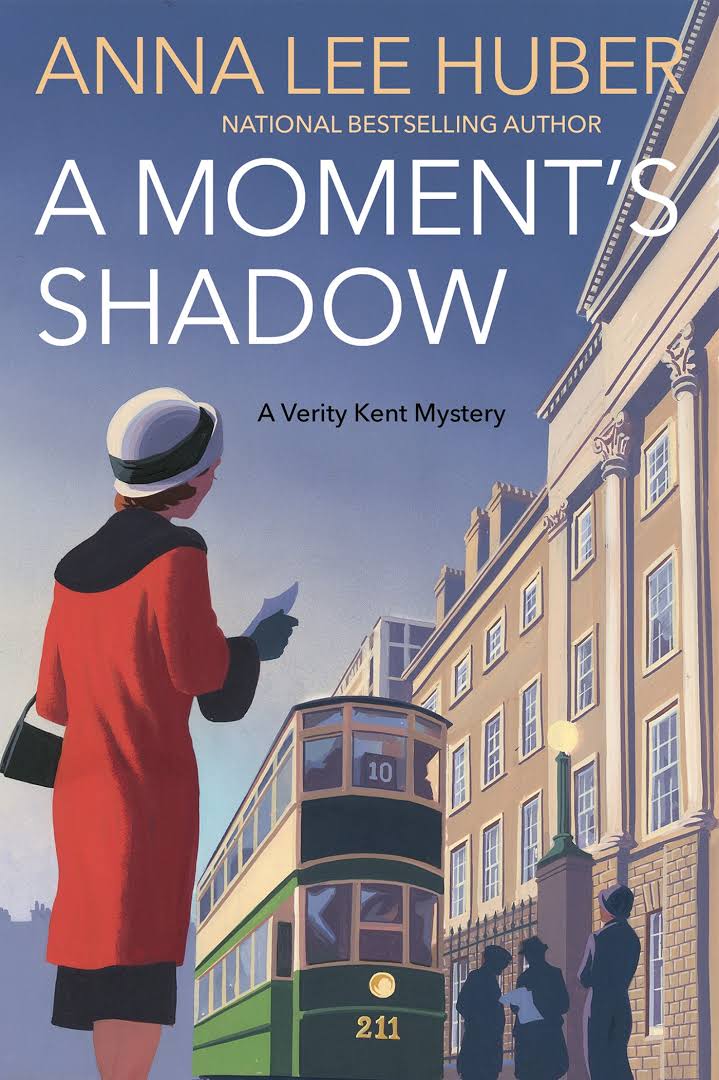
Having finished The Cold Light of Day, I was delighted to find that although I had missed getting A Moment’s Shadow as an ARC, my library had copies of this book in various formats. I grabbed the ebook to dive right in. It is even more interesting than the previous book which set the stage for Verity and Sidney Kent’s informal assignments in Ireland. They have several goals. Verity wants to find Alec, her former colleague during the Great War, who seems to have disappeared in Ireland. The pair has also been asked to investigate some missing phosgene cylinders, and they have determined that Verity’s nemesis, Lord Ardmore, who is always two steps ahead of them, is responsible. While they are in Ireland, a jewel thief visits one posh house after another. How he can accomplish these daring heists is baffling, but as Verity and Sidney already move in the social circles of the victims and have a reputation for solving mysteries, they are pulled into the investigation.
As the story progresses, it is difficult to know which side characters are on, and by the end the Kents are not sure which group they identify with. Both sides are committing heinous acts of murder, destruction, and torture. Both sides use deeply embedded spies to accomplish their goals. Verity disguises herself to pass as an Irish worker when needed and then as the socialite she is when that is appropriate to her sleuthing. Other than the social events they attend, nothing is glamorous about their lives in Dublin. Many of the wealthier class have escaped the turmoil by fleeing to their country homes, to England, and even abroad. Verity is “recalled” as some powerful person is unhappy with her inquiries. Since she is not working as a spy anymore, the government doesn’t really have the power or authority to demand her return. The people in charge, however, make it plain that they have been providing her with a measure of safety and can withdraw that protection if she does not return. A Moment’s Shadow has plot action that crescendos at the book’s conclusion with a hook that leaves the reader hanging and ready to devour the next book in the series.
Rating: 5/5
Category: Historical Fiction, Mystery
Notes: 1.#8 in the Verity Kent Mystery Series. The author reintroduces characters from #7 and previous books in the series but I think it would be hard to jump in with #8. If you really want to read just the ones dealing with the Irish Revolution, then start with #7 and plan on reading at least two more—#8 and #9.
2. A good plan for reading books #7-9 would be to list the characters and acronyms along with a basic note about each. There are a lot of characters, and you might find it helpful to comment on where you think their alliances lie.
3. The book ends with a teaser chapter from the next book in the series, The Bravest Hour, with a projected publication date of August 25, 2026!
Publication: 2025—Kensington
Memorable Lines:
These sights were always discomforting to me, for instinctively I wanted to cheer on our Tommies, and yet the Crown Forces’ behavior reminded me painfully of the Germans lording over the Belgians when they’d occupied their country during the war.
Everyone was trying to avoid the notice of the Black and Tans, to survive in a place where affordable housing was scarce, sanitation was abominable, and a stray bullet could end your life at any moment.
With all the dry and sunny weather we’d enjoyed in September, it was easy to forget how damp Ireland could be. October elected to remind us of this with a vengeance. It lashed, it bucketed, it showered, it drizzled, it misted—but at all times some sort of precipitation was falling from the sky.
The Cold Light of Day–the Irish Revolution
The Cold Light of Day
By Anna Lee Huber
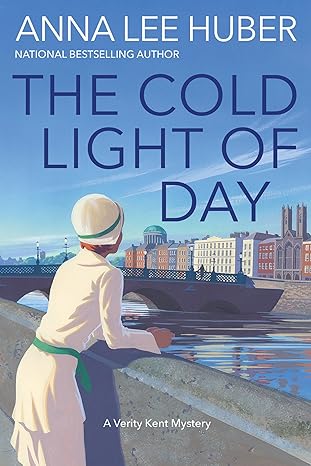
Told in the first person by Verity Kent, the reader is quickly informed that Verity had served as a spy during The Great War with dangerous assignments in Europe. Her husband also did undercover work, but he emerged as a well recognized hero. Despite needing to recover from their war experiences, including Verity’s belief that her husband Sidney had died, they quickly became a power couple invited to the very best homes in Britain. Money never seems to be a limitation for them.
The plot of The Cold Light of Day is tortuously twisted. Neither Verity nor Sidney knows which characters can be trusted as they work through unofficial assignments in Ireland where the two main branches of Irish rebels (Irish Republican Army and Sinn Féin) are resisting British rule. In talking about Irish resentment, she says “The Irish might be considered British citizens, but always second or third class.” The author researched the conflict well and is able to give the reader both sides of the revolution with Britain promising certain rights and then never fulfilling them. Both sides resorted to violence during this period.
The Kents live a double life in Ireland. They assume their natural role as socialites with their peers. Verity is a talented linguist so she also poses as an Irish house cleaner to be able to go places she can not visit as a glamorous Brit. Meanwhile, Sidney mixes with the males, some of whom were undercover or military during the war. They discuss current and past events after a few pints, and Sidney follows up on some of the things they divulge. They also bond over horse racing and riding.
The couple’s focus is on locating some missing phosgene cylinders so that this poisonous gas can not be used against either population. Also missing is Alec who formerly worked with Verity during her undercover years. In the middle of these searches, while trying to not trigger an enemy from either side, Verity is asked to solve the mystery of a young woman who has committed suicide. Even that effort becomes very complicated. When Verity confronts the British officials, she finds them very condescending; but when Nimble, her husband’s “batman” during the war and now his trusted valet, is brutalized and arrested, she stands up to those powerful men and makes them release him. She occasionally falls back on feminine wiles to manipulate men, using tricks she had to employ during the war.
The Cold Light of Day showed me how little I know about Irish history—especially the more recent Irish Revolution. Huber brings to light what people at that time experienced and how and why their loyalties were sometimes influenced by their humanity and often by their upbringing. The British in charge politically and militarily in Ireland were often motivated by greed, power, and career potential. There were many on both sides of the conflict who were willing to give up their lives for what they saw as the right thing to do.
I have read a few books in this well-written series, and I think it has just gotten better as it progressed. The author is skilled at creating believable characters from all classes—villains, heroes, and everyday workers. A thread that runs through the series is the character, actions, and motivations of Lord Ardmore. Almost everything bad can be traced back to his manipulations behind the scenes. I am not a fashionista, but I do like Huber’s descriptions of Verity’s clothes from the disguises as a “care woman” to her exquisite designs that attract both male and female attentions.
I received a complimentary copy of this book in exchange for an honest review. Opinions expressed in this review are completely my own.
Rating: 5/5
Category: Mystery
Notes: #7 in the Verity Kent Mystery series. I would not recommend it as a stand alone as there is so much critical background about the protagonists in the previous books.
Publication: October 24, 2024—Kensington
Memorable Lines:
But for every upstanding soldier there seemed to be another who took pleasure in the task of bullying and belittling those they were supposed to be protecting, not just policing.
Curse these men who had decided cutting women’s hair was a justified action. And curse the society who colluded in the weaponizing of shearing women’s hair by dint of the fact that somehow its length was an indication of virtue.
But while I’d failed to give chase, I had noted one particular thing about Collins’s bicycle. Its chain rattled like old Marley’s shackles from Dickens’s A Christmas Carol. That was something I was certain I would recognize if I heard it again.
The Ways We Hide–“escapologist extraordinaire”
The Ways We Hide
by Kristina McMorris

Admittedly it is hard to write a “happy” book about World War II. The Ways We Hide is definitely not a cheerful book. While she avoids graphic descriptions of the violence of the war, author Kristina McMorris excels at conveying the overwhelming sadness of the personal tragedies, even those that occurred pre-war, early in the orphaned protagonist Fenna’s life. When she escapes from an orphanage in the U.S., she is taken in by her best friend Arie’s family despite their religious differences. The parents in both families are Dutch immigrants. As young adults they discover their romantic love for each other, but Fenna suddenly leaves her adoptive family without explanation.
Taking her love of magic to the stage, Fenna becomes a self-made illusionist in the style of Houdini. She is recruited by the British in World War II to devise gadgets and conceal them in support of Allied troops in Europe. The British ask her to go to Holland on a dangerous rescue mission to find Arie, but more more is involved than her handlers are telling her.
The story is well played out with unexpected twists around every corner. This work of historical fiction is well written and extremely well researched. I can’t say that it is a page turner for me because it is so sad. The characters have little hope for positive outcomes, but pursue their noble goals against all odds. The work is undercover, classified, and occurs in Nazi controlled areas. Therefore, it is hard to know who can be trusted.
The author explains at the end of the book her framework for inserting the fictional Fenna into the mostly historically accurate backdrop with some slippage of time. She has researched her subjects well which include not only the war efforts but also an anti-labor strike event that changed Fenna’s life forever.
The ending is not a happily ever after with the protagonists riding off into the sunset, but how could it be when so many people have died? Despite the reality of the situation, the author does manage to conjure up a “lemons into lemonade” scenario for Fenna that is satisfying and actually sweet. I am glad I read this book which reveals a lot about undercover work, dangers, and relationships in World War II.
I received a complimentary copy of this book in exchange for an honest review. Opinions expressed in this review are completely my own.
Rating: 4/5
Category: Historical Fiction, Women’s Fiction
Notes: 1. There are author notes at the end which explain in detail how McMorris got her inspiration for the various parts of the book. It is followed by suggestions for further reading for those who would like to learn more about the topics in the book.
2. Online there is posted a Book Club Guide on the author’s website (kristinamcmorris.com). While I do recommend this book for book clubs, individual readers will also find this guide helpful in visualizing the setting and the culture. It includes Dutch inspired recipes plus a recipe for invisible ink (not the lemon juice type). There are questions designated as a Reading Group Guide. Perhaps most importantly to me, there are fifteen photographs that will transport the reader back in time. There are also QR codes for videos and other additional resources online. In addition, there are suggestions for group activities to enhance book club meetings.
Publication: September 6, 2022—Sourcebooks Landmark
Memorable Lines:
Traveling in clusters pallbearers carried pure-white caskets low at their sides. The dimensions of each befitted a child, the weight minuscule compared to the burden.
In this instant I consider a potential reason my life has been repeatedly spared. Could it be to attain justice for the victims of a cruel and callous enemy?
He offers his hand with a caring look. “May our paths cross again,” he says, “in a better world.” It’s impossible to envision any future beyond the immediate challenges ahead. Still, I accept his handshake, grateful for the notion.
 education pathways