
Home » Posts tagged 'death' (Page 2)
Tag Archives: death
Evergreen Christmas–a place to call home
Evergreen Christmas
by Janet Dailey

Tucked away in the Appalachians is Noel, North Carolina, known as “America’s Christmas Tree Capital.” In Evergreen Christmas, Jordyn moves to Noel looking for a home in a small town with big community feels. She spent most of her life bouncing from one home to another in foster care—no real home, no love, and certainly no Christmas trees. Jordyn establishes herself as a winning barrel racer and earns enough to buy a small house with acreage. Her goal is to breed horses and teach barrel racing.
A group of four women, known affectionately in the community as “The Nanas” immediately take her under their collective wing to help her get established and fit in. They also encourage her and mentor her with the goal of defeating her neighbor Nate in Noel’s annual Christmas Competition. He has won the Christmas Crown nine years in a row, but the Nanas think Jordyn could change that by entering “Fabio Fraser,” a fir tree on her property in the contest. There are actually 12 Christmas themed contests involved in winning the crown.
Nate is a handsome tree farmer who sells Christmas trees and has a gift and decorations shop on his property with his brother Tucker, a bull rider. Together they are raising Nate’s daughter Roxie. She is an adorable, polite, and kind six year old. Her mother died in childbirth and Nate has made himself “unavailable” to local women to protect his own heart and Roxie’s.
The story is a delightful adventure through many of the Christmas contests. Jordyn and little Roxie develop a friendship. Jordyn and Nate struggle with their attraction for each other, both wanting to do what is best for Roxie. The Nanas are in charge of the Christmas Competition which they champion to encourage town spirit. Except for one family who only appears in a few of the contests, all of the characters are people you would want to know making this a fun, clean Christmas romance.
I received a complimentary copy of this book in exchange for an honest review. Opinions expressed in this review are completely my own.
Rating: 5/5
Category: Romance
Notes: #1 in the Frosted Firs Ranch series. Evergreen Christmas gives a hint at the end of the book that the next book in the series will probably feature Nate’s charming, handsome brother, Tucker.
Publication: September 24, 2024—Kensington
Memorable Lines:
She smiled full blast, her worries melting away like a mini marshmallow tossed into a blazing bonfire.
Life can be scary and painful—but the unexpected gifts it gives us along the way, especially when we’re not looking for them, make it all worth it in the end.
“The Nanas care about people. They help them when they’re in need, look for ways to make other people’s lives better. They fuss over you, bring welcome baskets if you’re new to town and”—she winked—“knit wool caps for your head so your ears don’t get cold.”
The Sisters at the Last House Before the Sea–recreating yourself
The Sisters at the Last House Before the Sea
by Liz Eeles
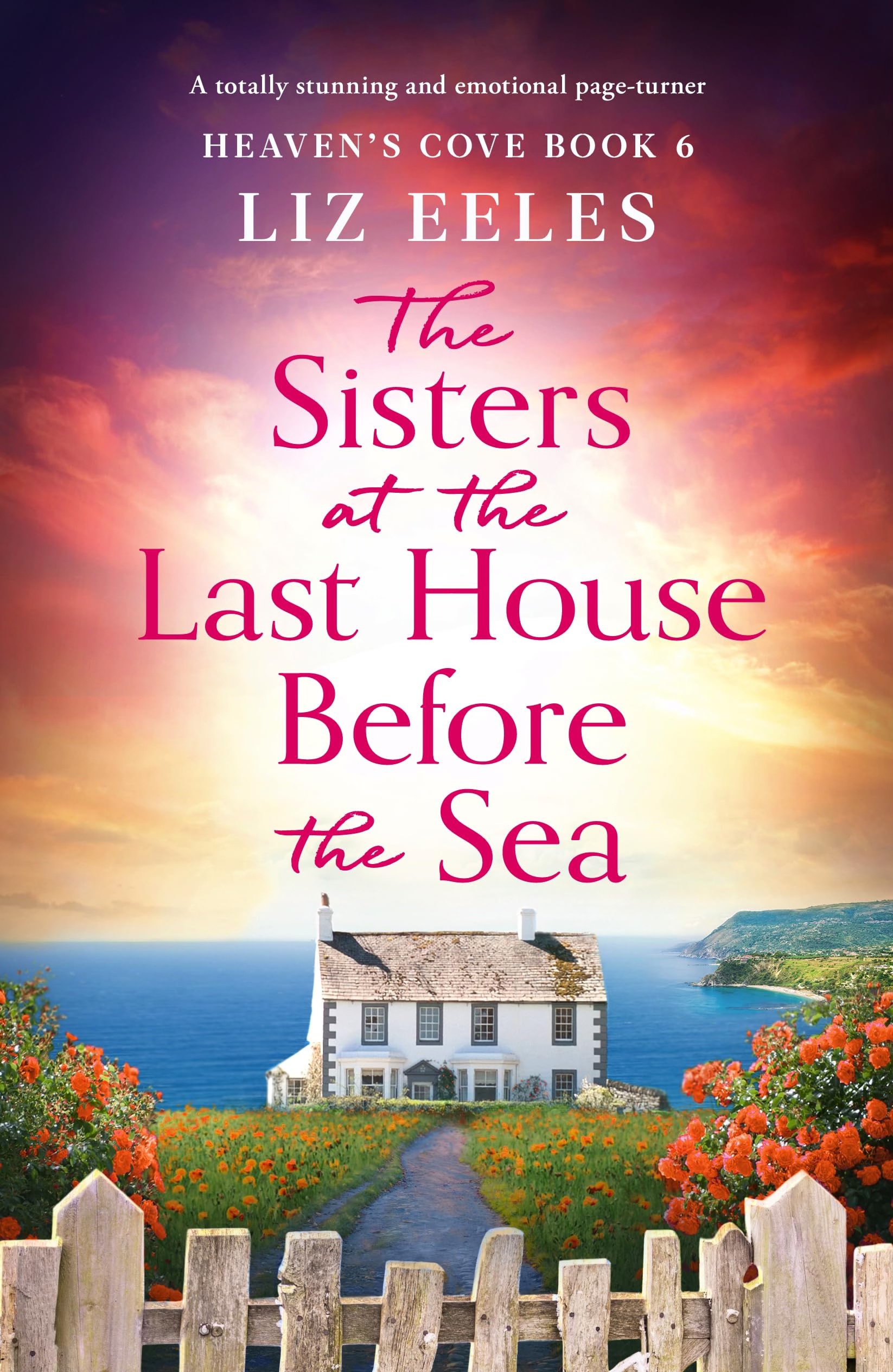
Heaven’s Cove is tucked away from the hustle and bustle of cities like London. It is a place of peace, calm, and community. The downside is everybody knows everybody’s business. The upside is having people who genuinely care and will help when a neighbor is in need. Isla and Caitlyn are sisters who due to family problems have been shuffled around. Their grandmother Jessie, a resident of Heaven’s Cove, is their last carer. Caitlyn had to fill in the “mother” gap for her ill mom and then her younger sister. She was anxious to escape from Heaven’s Cove and those extra responsibilities and she did, leaving Isla to care for their grandmother.
In The Sisters at the Last House Before the Sea life does not turn out well for either sister, and they do not maintain the close relationship of their youth. When their grandmother, always a riddle and puzzle lover, passes away she gives her granddaughters a final riddle to solve as part of their inheritance. The book includes romances, broken relationships, a dip into history, and teenage angst. Isla, Caitlyn, and Maisie (Caitlyn’s stepdaughter) all have issues to work through from their pasts. Most of the characters are likable. The unlikable ones are intentionally written as mean, narcissistic, and overbearing. Liz Eeles is a good writer, and I hope she will create more books for this series.
I received a complimentary copy of this book in exchange for an honest review. Opinions expressed in this review are completely my own.
Rating: 5/5
Category: Fiction,Women’s Fiction
Notes: 1. Heaven’s Cove Book #6 can be a standalone. I have read all of the published books in this series and have enjoyed each one of them. There are a few characters who make cameo appearances in subsequent books, but the town itself is the backdrop that holds the series together. You really can jump into the series at any point.
2. Clean with a little mild swearing.
Publication: October 19, 2023—Bookouture
Memorable Lines:
Once upon a time, they were so close you could hardly have passed a piece of paper between them. Whereas now they were separated by a chasm of difference and resentment.
Paul definitely would not be happy. She usually did what he wanted. To be honest, she usually didn’t mind, and it avoided him sinking into a sulk. He was a champion sulker.
It must be nice being a robin, Maisie thought, watching its bright yellow beak bob up and down: no family dramas to deal with, no scary school, nothing on your mind except finding the next juicy worm.
Día de los Muertos–Day of the Dead
Ajijic, Jalisco, México–2014








The Frozen River–Remarkable midwife
The Frozen River
by Ariel Lawhon
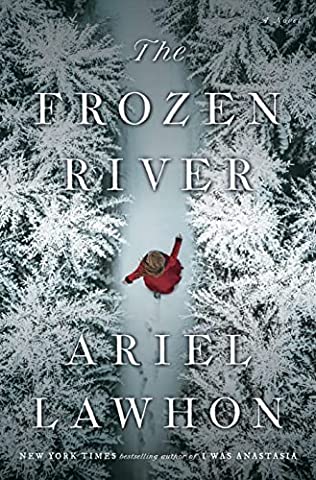
Martha Ballard is a historical figure, a midwife who also had other medical skills. She is an unusual figure for her time—literate (a rarity) and a wife and the mother of a large brood who traveled the area quite independently to deliver babies. In Ephraim, she had a strong, trusting, industrious, and helpful husband. He was a man of faith. He saw his wife’s potential and taught her how to read. He also helped her overcome trauma she had suffered as a young lady.
The setting of The Frozen River is the winter of 1789-1790 (actually 1785 in historical records) and was known as “the year of the long winter” in Hallowell, Maine. Martha is called to document a body found in the river, caught by ice. Thus begins a murder mystery that is so much more. A pastor’s young wife is the victim of multiple violent rapes. In the process of disclosing the truth of the events, the author also reveals much about women’s rights at that time. In summary, they had few. To even give testimony in court a woman had to be accompanied by a husband or father. It was clear that a man’s testimony had greater weight than a woman’s. Premarital sex was fairly common, but if a pregnancy was the result, the woman could be jailed or fined. The man incurred no consequences.
Pre-Bill of Rights, the court system was very different than what we have in America today. It was similar to what is commonly referred to as “frontier justice.” Townsfolk flocked to a local trial where the jury was composed solely of men and the judge was likely to be biased. There were other levels of courts depending on the accusations and the findings of a lower court. In some cases it was clear that justice would not be done, and so men would take action on their own following the dictum of “an eye for an eye.”
Death from natural causes, sickness, childbirth, or accidents was something the people of that time had to live with. Although expected, accepting it was still very difficult, especially for mothers. Life was not easy, and circumstances often left people bereft of material needs and emotional support.
The author, Ariel Lawhon, makes the characters come alive. Without being melodramatic, she presents the characters as real people with flaws and strengths, individuals that the reader will really like despite some weaknesses or truly detest because of the evilness they harbor in their hearts. There were many secrets to be revealed, but those were skillfully hidden until the author chose to disclose them. Even then, the motivation for the matter might remain unknown for a time. Because of the rapes and other types of violence found in the book, it is a hard book to read and certainly not a book to read right before bedtime. It is a page turner that is not for the faint of heart, but reveals so much about a remarkable woman and a time of history that required much of people.
Rating: 5/5
Category: Historical Fiction
Notes: 1. The Author’s Notes at the end delve into the historical accuracy of the book and the author’s resources. She estimates that about 75% of the book “closely follows the historical record.” The rest is “what could have happened.” As all works of historical fiction, the author had to flesh out events and characters to create a story of interest that flows.
2. I do recommend this book, but I would be remiss if I did not include a warning of violence and rape for any potential readers for whom those topics are triggers. There is also some swearing.
3. This book is excellent for book club discussion. Our group engaged in topics that covered the many themes found in the book extending past the regulars of characters and setting to symbolism of a silver fox and the all important river.
Publication: 2023—Doubleday
Memorable Lines:
Memory is a wicked thing that warps and twists. but paper and ink receive the truth without emotion, and they read it back without partiality. That, I believe, is why so few women are taught to read and write. God only knows what they would do with the power of pen and ink at their disposal.
The act of mothering is not limited to the bearing of children. This is another thing that I have learned in all my long years of midwifery. Labor may render every woman a novice, but pregnancy renders every woman a child. Scared. Vulnerable. Ill. Exhausted. Frail. A pregnant woman is, in most ways, a helpless woman. Her emotions are erratic. Her body betrays her.
“No baby is conceived apart from the will of God, May. If you are pregnant, it means that you have been touched by Providence, and you will never hear me say an ill word about the child you carry. Nor will I let anyone do so in my presence.”
This is a new thing I’ve discovered about myself in recent years. The noises. Stand and groan. Sit and grunt. Some days it seems that I can hardly take a step without some part of my body creaking or cracking and this—even more than the gray hairs and the crow’s-feet at my eyes—makes me feel as though I am racing down the final stretch of middle age.
Letters of Comfort–grieving and depression
Letters of Comfort
by Wanda E. Brunstetter
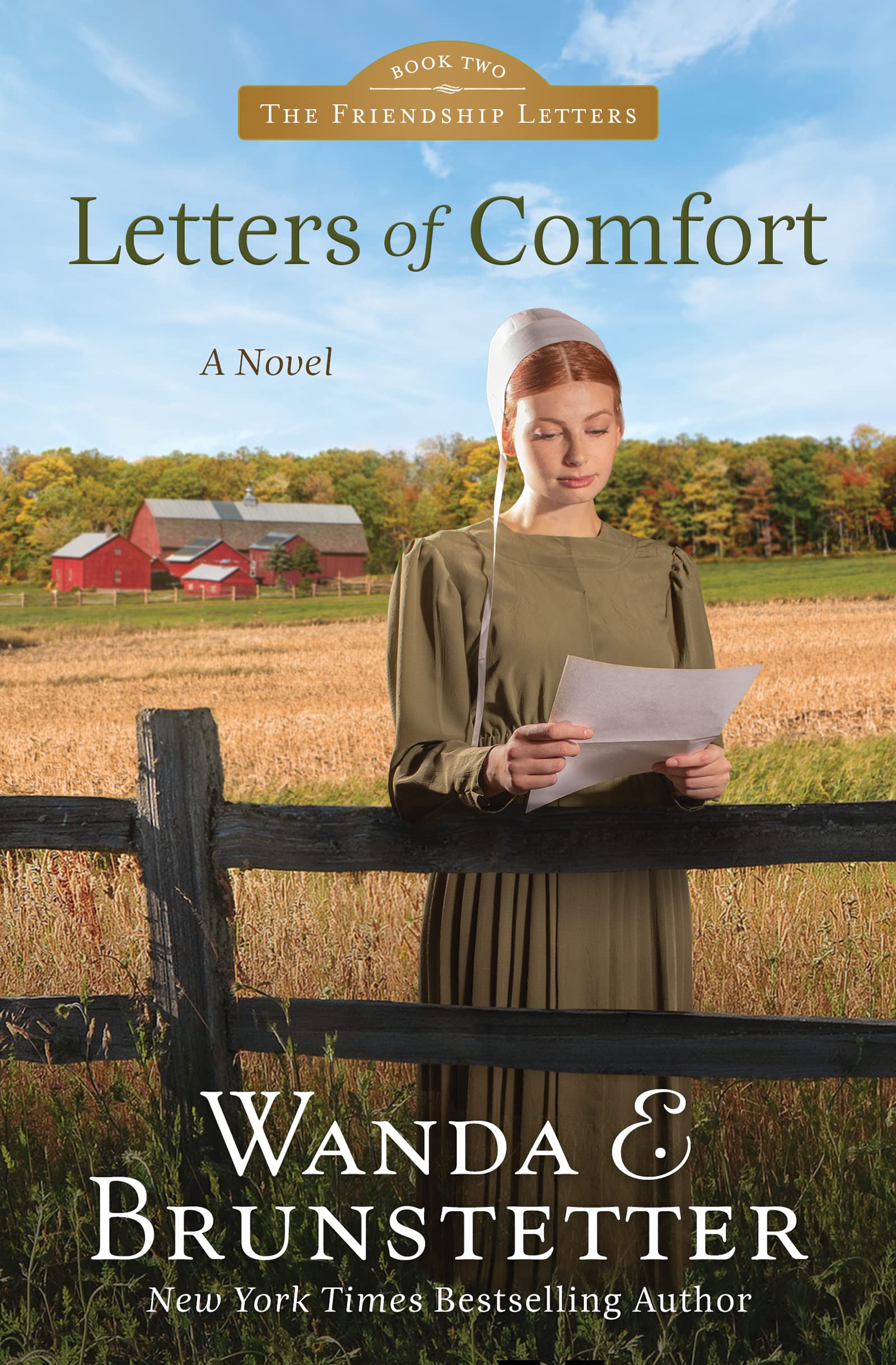
In Letters of Trust, Doretta encouraged her friend Eleanor through a difficult time in Eleanor’s marriage when her husband Vic sought relief from grief and guilt by turning to alcohol. In Letters of Comfort, Eleanor tries to support Doretta when her fiancé William passes away shortly before their marriage from an accident in which Doretta is also very badly injured. In her grief, Doretta draws away from God, friends, and family.
In her first book in the Friendship Letters Series, author Wanda E. Brunstetter addresses a more serious subject than is typical of her novels—alcoholism. In this second book, Letters of Comfort, Brunstetter attacks another difficult issue, depression. In a letter to the reader at the end of the book, she explains that her own mother suffered from bipolar disorder. Thus Brunstetter is all too familiar with depression and its symptoms. She encourages readers to seek help in a variety of ways from lifestyle changes to professional guidance.
In this book, Doretta’s life is complicated by a promise to her fiancé to never love anyone else. Will she change her resolve to keep that promise? Can William’s identical twin brother Warren move on from his grief? Both Warren’s and Doretta’s families have known each other since their children were little and all of them are grieving. Eleanor, pregnant with a second child, wants to help Doretta and encourages her as best she can from afar while Doretta is rejecting any efforts of help. Along the way there are complications as Warren tries to open the nutritional supplements store he and William were establishing and as Margaret, Warren’s girlfriend, struggles with priorities as her attachment to horses with behavioral problems increases.
This book is a little slow at times, perhaps to demonstrate that one does not “snap out” of grief and depression. It takes time. There are some key events towards the end that propel the plot forward more quickly. I did not have a strong emotional attachment to any of the characters, but I did appreciate the author’s conclusion. She provides appropriate and satisfactory closure for all. This is not a page turner, but I enjoyed it; and I do look forward to the next book in the series, Letters of Wisdom.
I received a complimentary copy of this book in exchange for an honest review. Opinions expressed in this review are completely my own.
Rating: 3/5
Category: Christian, Romance
Notes: The book concludes with a recipe for apple muffins and a very well-written and thought provoking set of discussion questions.
Publication: August 1, 2023—Barbour Publishing
Memorable Lines:
“To be honest, I do not appreciate it when someone says a bunch of positive things that are supposed to cheer me up. It makes me feel like I don’t have the right to grieve.”
…since she didn’t have a job anymore and had been replaced by another school teacher, Doretta had no purpose in life—no reason to get up in the morning—and nothing to look forward to doing each day. She did not want to feel like this or entertain such negative thoughts, but thinking positive thoughts seemed to be an impossible task.
Doretta’s hope for marriage had been snatched away, as easily as a hawk pouncing on some poor unsuspecting little bird.
Christy–Appalachian teacher
Christy
by Catherine Marshall

Christy, who lived a protected childhood in Asheville, NC., was nineteen years old when she answered God’s call through the head of a missionary society to move to Cutter Gap, Tennessee, in the Great Smoky Mountains in 1912. Her job was to teach 67 mountain children who had not had steady opportunities for “book learning.” In fact, the one room school house held only a few much used texts for the students. Christy had to take on the additional duty of procuring books and other needed supplies as donations for her students.
In entering Cutter Gap by foot on a cold, snowy day that had finally thawed out enough for the postman to get through, Christy was crossing into another world with its own customs and unique phrases passed down from Scottish heritage. She was startled by the poverty, unsanitary living conditions, and firm adherence to superstitions. Christy was a witness to feuding and its deadly consequences, but she also discovered in the people kindness, grace, and a heart-felt joy in music.
Christy is the story of author Catherine Marshall’s mother as a teenage teacher. As historical fiction, it is more factual than imaginative. Marshall weaves the many tales she heard from her mother into a story that pulls the reader into a culture struggling for survival in the Appalachian mountains. The descriptions in the book paint a picture of the beauty and the harshness of nature in the mountains.
The characters in the book are well developed. One of my favorites is Miss Alice, a Quaker lady admired by all. She travels among three communities on horseback doing everything from administrative work to nursing the sick. She has deep spiritual insights born of experience. The author also reveals traumatic events in Miss Alice’s past that help her understand the tragedies the mountain folk have to cope with on a daily basis. If there ever was a nonjudgmental character, it would be Miss Alice.
This classic deserves a read or reread; a visit to Cutter Gap is one you will enjoy!
Rating: 5/5
Category: Historical Fiction, Christian, Classic
Publication: 1967—McGraw-Hill
Memorable Lines:
Surely one of the chief differences between the veteran teacher and the recruit must be that the experienced can never find enough time, whereas the ingénue struggles to fill the hours, looks forward to dismissal time as a reprieve.
“…if we will let God, He can use even our disappointments, even our annoyances to bring us a blessing. There’s a practical way to start the process too: by thanking Him for whatever happens, no matter how disagreeable it seems.”
I realized something else…there was more to this gracious offer than met the eye. Fairlight Spencer was not just volunteering to do some washing and ironing for me; she was also holding out to me the gift of her friendship. Among the mountain people, this was the most cherished gift of all. It was a breakthrough of those walls of reserve that had so far seemed impenetrable.
“And as for religion being vague—well, it isn’t. It’s been the delight of my life to find God far more commonsense and practical than any human I know. The only time I ever find my dealing with God less than clear-cut is when I’m not being honest with Him. The fuzziness is always on my side not His.”
Joe Nuthin’s Guide to Life–not a mean bone in his body
Joe Nuthin’s Guide to Life
by Helen Fisher
Joe Nuthin’s Guide to Life is the story of a neurodiverse young man whose mother’s goal is to support him into being a happy person able to live independently and hold down a job. He is a man of routines and anything that deviates from that routine or is out of place makes Joe very uncomfortable. Joe has a job at a grocery store called The Compass where his favorite activities are to stack items for display and to return mislaid items to where they belong. His mother is writing a book, a manual, for him in case he gets confused or forgets how to do something. He is quite literate, reading and retaining so many facts, but he can’t make the connections necessary for functioning easily in settings with other people. He has an understanding boss Hugo. Joe’s friend Chloe is a foul-mouthed co-worker who is not afraid to stand up to “Mean Charlie” who bullies Joe unmercifully.
The first part of Joe Nuthin’s Guide to Life is well-written, and I really cared about Joe and the other characters. There is a major event which happens in Joe’s life (spoiler if I included it) after which the book went downhill for me. The plot and the characters became more negative. Joe’s life goal is to prove his mom right that he “doesn’t have a mean bone in his body.” While that is a positive attribute, because Joe doesn’t understand anything that is not literal or is nuanced, he unintentionally causes a lot of physical pain in a relational situation. The reader has to cringe and inwardly say, “No, Joe! Stop!” several times.
Joe’s mother has beautiful handwriting. In this book the author quotes from the manual when Joe reads passages in it. This style and format (italics in place of cursive) are effective ways to demonstrate the difficulties faced by neurodivergent children and adults and how Joe’s mom clearly tries to address all of his present and future concerns. People who are neurodivergent are open to bullying, and their parents face huge challenges in preparing them for life as adults, especially after the parents have died.
Rating: 3/5
Category: Literary Fiction, Fiction, Women’s Fiction
Notes: 1. I am probably in the minority in not loving this book. I really liked the character of Joe, and I understood the author’s portrayal of him. I even both sympathized and empathized with Joe, but the negative events were too strong and outweighed the positives for me.
2. There was a lot of inappropriate language from Chloe who is actually one of my favorite characters because she is someone Joe can rely on and she has no agenda. Even Joe didn’t like her swearing; he made a box for her to put money in when she swore.
3. One of Joe’s favorite things to do with and without his mom was to watch episodes of the TV show “Friends.” It was part of his routine and relaxed him. I just don’t think that show has good role models and would have too many jokes and situations that Joe would not understand.
4. A minor detail: the author used a mask in a scene and the usage was OK in terms of the plot. Joe understandably doesn’t like masks because he can’t tell what expression the person has and match it up with the expressions he has learned from a chart. The mask in this case was worn by an insensitive bully and was the face of an American president. My problem with this scene is that the author slipped in a slur about the president. It was not funny and it did not further the plot in any way. It was clearly politically motivated and unnecessary, and I would not have appreciated it regardless of which president was depicted.
5. The book includes “Topics and Questions for Discussion” and a section of activities to “Enhance Your Book Club.” Both of these were well done.
Publication: May 28,2024—Gallery Books (Simon and Schuster)
Memorable Lines:
Making sure that her son had a secure job with a nice manager somewhere that was walking distance from home was one of the most important things on Janet’s list to help Joe-Nathan prepare for independent life.
Janet knew that assumptions were lazy; a simple way of filling in the blanks when there wasn’t enough information Assumptions were a way of connecting the dots to give you a picture that worked, but not necessarily the right picture. Not necessarily the truth.
He wished it was Monday morning so he could go to work and feel completely comfortable knowing how he fitted into the world.
Must Love Flowers–revival for a widow
Must Love Flowers
by Debbie Macomber
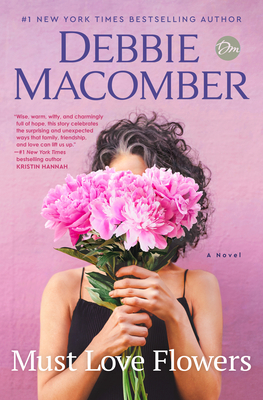
As may know, Debbie Macomber, after forty years of writing, put aside her pen for a well deserved retirement. That lasted for four months before she picked up her pen to compose Must Love Flowers, a sweet romance about a widow who is in her fifties and needs to move on with the grieving process and can’t seem to do so. I’m glad Macomber decided to tell this tale.
I don’t normally read anything about the Covid fiasco, but I could tolerate it in this book because it is not set during the restrictions, but shows the negative effects on someone who maintains feelings of being “safe” and “protected” by continuing to cut herself off from people and activities—life, in short. Family members want to help her, but are at a loss as she is in denial that she has a problem.
This novel tells Joan’s story as she takes a few steps at a time to rejoin the world and find her new place in it. Joan was pushed into these changes by threats from her HOA because in four years she has let the yard she was once proud of become an overgrown mess. Enter Phil Harrison, a former lawyer, who is currently a landscaper and a really nice person. She even decides to take in a boarder, Maggie, who needs to get out from under her alcoholic father. Along the way she joins a grief therapy group, which she had said she would never do. The ramifications of Joan’s decisions reach out to affect the lives of her two grown sons and their relationships with others.
I enjoyed this novel which contains several romantic threads. When one of the twists occurred, I was sad because it potentially meant good things for some characters and bad for others, but Macomber works the situations out for her characters in a way that is both realistic and satisfying for me.
I received a complimentary copy of this book in exchange for an honest review. Opinions expressed in this review are completely my own.
Rating: 5/5
Category: Romance
Publication: July 11, 2023—Random House (Ballentine)
Memorable Lines:
It used to be… That was what her life had become: a series of all the things that once were but were no longer.
As silly as it sounded, she recognized deep down with a certainty that she didn’t question that she was meant to help Maggie Herbert. For whatever reason, God had put Maggie in her path.
“It didn’t take me long to realize it didn’t matter how much money I had in the bank, or what my career goals were; if I didn’t have someone to share life with, they meant nothing.
The Lucky Shamrock–working together
The Lucky Shamrock
by Carolyn Brown
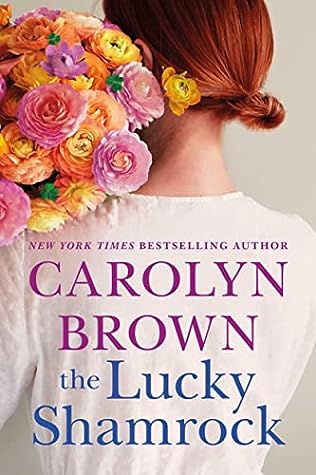
This contemporary romance is set in Shamrock located in west Texas. Nana Irene calls three cousins back to the town they couldn’t wait to get away from to work the summer in her flower shop The Lucky Shamrock when Irene’s best friend Ruby breaks her hip. The three cousins couldn’t be more different, but Nana Irene wants them to see the value of being united as a family. None of the girls are happy to work with each other and live together so it is interesting to watch what happens when they are put in situations that require them to cooperate with each other. Taryn is former Air Force and works with computers. Straight laced Jorja is a Kindergarten teacher in a Christian school. Anna Rose is looking for happiness in cowboy bars. All of their parents have relocated out of Shamrock.
Clinton is a nice man who has been hired by Nana Irene to work in the shop when he is not busy counseling vets with PSTD. Local ladies have a contest going to try to snare him into marriage even though he has made it clear that he is not interested. He is supposed to be quite a catch as he comes from a rich family and is a war hero. As he lives in an apartment above The Lucky Shamrock, everyone at the shop benefits from the foods the ladies bring to try to win him over.
One of the vets Clinton is counseling has a baby, but is in no condition to care for her. Little Zoe is adorable. Clinton gets temporary custody of Zoe, and Taryn falls in love. But now she has to figure out if she is in love with Clinton or just Zoe.
Along the way in this romance there are some bombshells as the girls work through traumas they have experienced. Former “mean girls” who have not changed are after Clinton. Aging residents see what happened in the past and is recurring. They have ways of influencing those situations.
Although some serious subjects are addressed, the book in general is light. It would make a good summer read.
I received a complimentary copy of this book in exchange for an honest review. Opinions expressed in this review are completely my own.
Rating: 4/5
Category: Women’s Fiction, Romance
Notes: 1. The Lucky Shamrock includes humor and a sprinkling of swearing.
Publication: July 4, 2023—Montlake
Memorable Lines:
“You are right. Confidence is mostly bluff with a little ego and fear thrown into the mix.”
“Hey, we’ve all got a past,” Clinton said “But we have a million futures in front of us, and it’s up to us to choose which path is right.”
“We may fight and argue amongst ourselves, but Lord help anyone who tries to come between us.”
A Shadow in Moscow–Cold War spies
A Shadow in Moscow
by Katherine Reay

As you can guess from the title A Shadow in Moscow, this book is about spies—two women in particular—and is told in two timelines with a third included in an epilogue. I didn’t like the two timelines for a lot of the book, but by the end I understood why the author chose that style. She purposely does not reveal the connections between the two women operatives until late in the book. She, in fact, keeps a lot of clues from the reader. The whole book is interesting, but a little unsatisfying until the author reveals the relationships to the reader and to the characters themselves. At that point I was shaking my head at the courage, intelligence, and loyalty of these women.
Almost any summary of this work of historical fiction would include spoilers, so I will instead relate some of my impressions. I have read other books by Reay and appreciate her as a writer. She has researched her topic well and has shared information about the Cold War in a way that makes it understandable to the reader. It is hard to comprehend from our position in North America the length and depth of the spy organizations and culture that permeated the world during that era, especially as it involved the Soviet Union, the United States, and Great Britain. This is a story of intelligence agencies (CIA, MI6, and KGB) and counterintelligence agencies. We learn of the extent the KGB went to in their efforts to control the actions and even the thoughts of their people. We see this on an organizational level, but also a personal level as individuals and families are unable to express themselves or know who to trust. As Reay states in her notes to readers, “only in truly understanding our pasts will we be able to navigate—with empathy, humanity, and wisdom—our presents well.”
At two-thirds of the way through this book, I would have given it a moderate stamp of approval. At the end I was overwhelmed with the writer’s talent, with the way the various threads were drawn together, and with the motivations and resolutions for various characters. It will transport you to a difficult time in history when choices, whether based on ethics or on greed, led to life and death decisions.
I received a complimentary copy of this book in exchange for an honest review. Opinions expressed in this review are completely my own.
Rating: 4/5
Category: Historical Fiction
Notes: Discussion questions are included in the back of the book and Reay references other resources on her web page. If this is chosen as a book club selection, I would advise that the members read the whole book before discussing it.
Publication: June 13, 2023—Harper Muse
Memorable Lines:
Jamison’s cramped and stuffy book-lined office is my favorite spot on campus. Something about its dusty, ink-and-paper smell takes me right back to my bedroom and my all-night read-a-thons—because at home you get the best books in secret and only for one night.
Our conformity gives an illusion of power and peace as we are raised to believe our way of life is superior and virtuous. Illusions are powerful things. If you believe them hard enough, they can become one’s reality.
“They’re Americans, Sasha. They have constitutional rights agains that kind of stuff.” The memory is bright and convicting, blinding me with truth. That’s the difference, I think. Forget the bedazzled clothes, the neon colors, the malls, the plentiful vegetables. Forget it all. It’s window dressing hiding the truth. None of that matters because only one thing counts. Rights.
 education pathways