Home » Posts tagged 'culture'
Tag Archives: culture
Beneath a Turquoise Sky–educating the Navajos
Beneath a Turquoise Sky
By Kiersti Giron
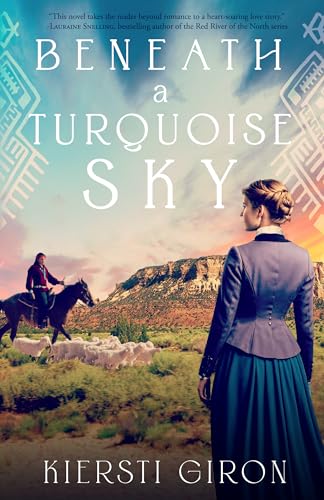
As Beneath a Turquoise Sky begins, the author introduces Caroline Haynes, a young lady in 1910 in Pennsylvania. After five years of playing the role of mother to her two younger brothers, she feels replaced by her father’s new wife Lillian. Her best friend’s brother, whom she had long adored, moved to China to be a missionary, without Caroline, and later married. Recognizing that she really doesn’t have a home or is needed in Pennsylvania, Caroline follows up on an article in the Home Mission Monthly seeking a teacher for the younger students at the Hebron Navajo Mission. She was drawn to “children in need of schooling, of the light of Jesus.”
When she arrives at the Territory of New Mexico after a long, arduous journey, she is shown to her tiny room attached to the girls’ dormitory and meets the handsome, but rigid, Rev. Willis Abernathy and his aunt Miss Spencer. Both have their own strict ways of running a school which are typical of schools set up for Native Americans at that time. The goal is conversion, but not just spiritual conversion. The white men wanted to get rid of Navajo culture and replace it with European customs all while making it clear that the Navajos are second class people. The motto of some was: “Kill the Indian, save the man.” To this end, the Navajo students were often punished if they spoke their own language. Haircuts were forced on them. Their traditional clothes were taken away, and they were supplied with uniforms.They were assigned Anglo names and removed from their families. The parents were told this was “all for their own good.”
Caroline’s interactions with the students and the other staff is a major part of the story, but just as important is Willis’ relationship with Tse, a Navajo two years younger. They grew up together and were friends for many years, but that all changed and we see it play out as Tse needs a job to help support his parents. Willis gives it to him but treats him in a very condescending way. As was typical of that time period, he seems to have no concept of the value of cultural differences. Tse is a Christian, but because he has reverted to Navajo dress and culture, Willis feels that he has turned his back on God.
Caroline “disobeys” Willis in her efforts to teach the children and give them the emotional support they need. Tse is her “accomplice” and both of them are chastised by Willis.
There are a number of well-executed plot twists that culminate in decisions these characters have to make that will affect their future and the future of the mission. Although I had a hard time liking Willis, I could understand him as a product of his time. That does not excuse most of his behavior, however. The story concludes with many loose ends tied up, but there are still systemic problems that are not worked out regarding how the Navajos and the white men interact with each other. Caroline and Tse are both very likable characters portrayed with some depth. They live out the kindness of Jesus in their everyday lives. Willis thinks he is doing the right things, but is missing the mark in his goals and how he treats others. All of the characters experience growth and positive change, and Tse especially comes to understand how he can honor his Navajo heritage and also be a follower of Jesus.
Rating: 5/5
Category: Historical Fiction, Christian, Romance
Notes: 1. The book includes a Glossary of Navajo Words, Historical Notes, and Acknowledgements of people and organizations that have contributed to the author’s understanding of the complicated historical and cultural background of this story.
2. Giron states that she has “shown only the milder side” of the trauma children experienced under this “education” system, but it is certainly sufficient to expose the reader to the damage even well meaning individuals caused in imposing Euro-American culture and customs in the name of religion.
Publication: April 14, 2025—Story Architect
Memorable Lines:
Perhaps being set apart did mean rejecting all that was Navajo and taking on the white man’s ways. But where was that ordained in Scripture? Not like the people of ancient Israel were European, after all.
But no, the bilagáanas were always right—government officials, Indian agents, or missionaries. No matter how many broken treaties, broken promises, broken families. Broken children’s hearts.
He sang as he bridled his horse, praising Jesus in his language, letting the tune follow the natural pattern of the tones, as in the chants. It sounded genuinely Navajo, yet the truth of the words lent a wholeness to his tongue he’d never heard before.
Abscond–more than a coming of age story
Abscond
by Abraham Verghese

If you have heard of award winning Abraham Verghese’s books, but are not sure you want to invest the amount of time that it would take to read The Covenant of Water, for example, then I encourage you to sample Verghese’s work by reading the short story “Abscond” which features a thirteen year old boy. It is amazing what Verghese can do with either a full length novel or a short story. You will meet fascinating characters that you care about and visit a culture that is probably different from your own.
This short story focuses on resilience and rituals that help get us through times of grief. We learn to just sit with someone who is grieving. Although “Abscond” is about the death of a character, because of its themes and the author’s approach, it is not a sad book.
Rating: 5/5
Category: Short Story, Fiction, Multicultural
Publication: July 1, 2025—Amazon Original Stories
Memorable Lines:
He wanted to retreat to a time before he knew his father, a time when he was buffered from the world and its sorrows by his mother, spared any sound but the drumbeat of her heart, a time when memory had not existed, and so loss could not.
Billy had offered Ravi the thing he most needed: his quiet, silent presence.
“…maybe all these rituals are to help me figure out how to go on. Because right now, I have no clue.”
A Dream Called Home–search for happiness
A Dream Called Home
by Reyna Grande

Torn between two countries, immigrant Reyna Grande seeks to find herself. Is she Mexican or American? Will she ever fit into either culture? Is she destined to metaphorically straddle the border for a lifetime? When her first book was published in 2006, one of her dreams had come true and she had begun “a lifelong quest to advocate for the Mexican immigrant community by sharing our stories with the world.” What she found in the aftermath of its publication, however, is that her story resonates with other immigrant communities as well and even with Native Americans who feel the same struggles to maintain a dual identity, language, and culture.
Reyna’s difficult, abusive childhood is discussed at various points in her memoir A Dream Called Home as it plays a strong and recurrent role in her efforts to work through the emotions of her turbulent past through her writing. She makes mistakes along the way as a college student and as a young adult, but she learns from them and decides to experience them as a part of the growth that shaped her into “a unique individual with a unique voice.”
The memoir is filled with stories of her personal relationships. She realizes that she is subconsciously seeking out the love of her father that she never felt under his roof or when he left his family in poverty to earn money in the United States. Reyna and her siblings wrestle with so many decisions in the U.S., and Reyna has to accept that the pathway to healing and success for her is not the right one for them. Fortunately, she has Chicana professors that become lifelong mentors. Even though Reyna is a talented writer, she also has to learn the difficult business end of publication.
Her stint as an untrained middle school teacher in Los Angeles is both sad and predictable for those familiar with teaching in that climate. She experiences unsupportive parents, disrespectful students, and ever changing assignments and curriculum. A bright light for Reyna is her introduction to folklórico. It revives her own interest in her Mexican heritage and renews an enthusiasm in Mexican culture for her students, many of whom, like Reyna, feel displaced and unsettled.
Reyna’s story can not be summarized in a review. My job is to tell you that A Dream Called Home is a book you should read; it should be a part of your mental catalogue. Regardless of your position on the influx of immigrants currently overwhelming the U.S. and its broken political system, you will find Reyna Grande’s perspective both informative and enlightening if you want to understand the struggles of people desperate to emerge from poverty who are clinging to the hope of the American dream.
Rating: 5/5
Category: Memoir
Notes: Includes pictures that personalize Grande and her experiences
Publication: 2018—Atria
Memorable Lines:
My biggest virtue and my biggest flaw was the tenacity with which I clung to my dreams, no matter how futile they might seem to others. The dream of having a true relationship with my parents was the one I had clung to the most because it was the first dream I’d had, and the farthest from my reach.
“Being in a new country, learning a new language, a new culture, takes time. You will learn. It doesn’t feel that way now, but one day you will be just as comfortable speaking English as you are speaking Spanish. But no matter what, don’t ever forget where you came from, and don’t ever be ashamed of who you are.”
I was finally beginning to understand that it takes as much courage to leave as it does to stay, and that being a parent was way more complicated than I had ever imagined.
Why God Calls Us to Dangerous Places–taking the Good News around the world
Why God Calls Us to Dangerous Places
by Kate McCord
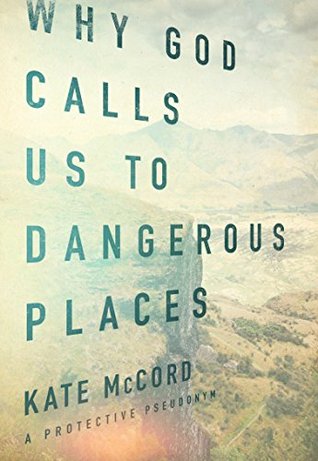
If you have ever wondered what it is like to be a missionary or why people would answer the call of God to go live in a hostile environment, then read Why God Calls Us to Dangerous Places. Author Kate McCord was a “business process consultant in global biopharmaceuticals.” She had a comfortable life and enjoyed her material blessings, friends, and church. In 2000, God started a process in her heart that led her four years later to Afghanistan to work for an NGO (nongovernmental organization). She became a project manager working to improve the lives of the people around her and share Jesus with her neighbors. She learned the language and the culture and relied on God through the Holy Spirit to help her negotiate the minefields of talking about Jesus in such a way that it would not result in her expulsion or execution.
Chapter by chapter McCord helps us dive deeper and deeper into an understanding of God’s calling and how it affects the person feeling the pull to devote themselves and their talents solely to the work of God. She describes how these decisions also affect their friends, families, and churches. McCord explores the kinds of people who are called, the places where they minister, and the difficulties and stress of living in a different culture under uncomfortable living conditions along with spoken and implied threats of violence. She relates all of this through descriptions of her own experiences and testimonies of others living in various countries. She backs up her discussion with stories from the Bible and with Scriptural references to support her theological underpinnings.
It is one thing to write about the missionary life; it is another to live it. McCord has done both and is able to share the calling and journey in a way that draws the reader into her story. I recommend this book for Christians who want to explore the call of Jesus on them personally or those they care about. I also recommend it for non-Christians seeking to understand what it is about this Jesus that makes people want to follow Him through the good times and the bad, enjoying an abundant life on earth with the assurance of an eternal life with Him in heaven.
Rating: 4/5
Category: Christian, Nonfiction
Publication: September 1, 2015—Moody Publishing
Memorable Lines:
We ask our question from the experiences of living in places of chronic stress, sporadic trauma, and brutal martyrdom. Both we who go, and those who love those who go, face the deep evil in the world and turn to God with all our human fragility. We ask the question: why does God call us to dangerous places?
Jesus calls us to dangerous places because He loves people who live in dangerous places. he loves the perpetrators of violence and the victims of violence. he loves the children and the old, the men and the women, the rich and the poor.
Yet they had heard those warnings, just as we, before we boarded airplanes to dangerous places, understood that we were walking into a darkness so deep it might someday overwhelm us. We counted the cost, at least as well as we could. We each said, “He’s worth it. Jesus is worth it.”
In the Land of Blue Burqas–eye opening view of the women behind the blue veils
In the Land of Blue Burqas
by Kate McCord
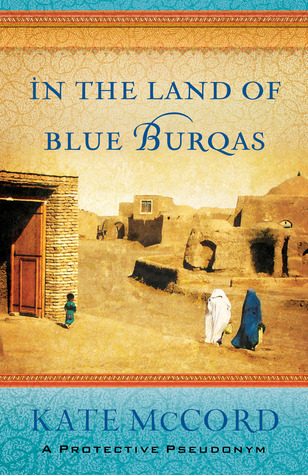
What would it be like to live in a country where the language, religion, and culture are extremely different from your own, a country like Afghanistan? Kate McCord raised support from friends and embarked on what was destined to be a five year adventure as a project manager, arranging for and supervising programs to help the local people. In the process, she found ways to interact within the cultural norms which, if violated, could result in penalties including physical abuse, expulsion, or execution.
Although she could not openly evangelize, she spent much time there having tea with women, and sometimes men, sharing stories to illustrate the teachings of the Honorable Jesus who is regarded as a prophet in Islam. Those stories included parables Jesus himself shared with His followers. In recounting tales they could relate to and by the way she lived her life, Kate was able to show her Muslim neighbors and friends a God who loves them, unlike Allah, who is never associated with love. Allah’s followers obey him according to the interpretations of the local mullah in a most legalistic fashion.
Kate spent time learning the language and culture. Led by the Holy Spirit, she developed culturally sensitive ways to share difficult concepts like the Trinity. She lived as an Afghan woman, learning clothing requirements and social rules such as where to sit on a bus and when to make eye contact. Clearly a foreigner with her own religion, she adapted their customs to her own in a way that respected both traditions. Kate faced challenges in deciding whom to help in the most culturally appropriate way and looked to the locals to ascertain their attitudes toward individuals seeking aid. Knowing she could not revolutionize a society in which none of her many female friends said their husband had never beaten them, she nevertheless planted seeds of generosity, good attitudes, and kindness which helped the women in their relationships as well as showed them a side of the Honorable Jesus that they did not know thus drawing them to Him.
In the Land of Blue Burqas is the canvas on which Kate McCord paints a remarkably positive picture of Afghanistan and its citizens in spite of their dislike of most foreigners and regardless of the many brutal aspects of their culture. I came away with a clearer understanding of why the country vehemently resists change and is so hostile to non-Muslims. I also emerge from this enlightening book grateful that I live in a country where I am free to choose to worship a loving God.
Rating: 5/5
Category: Evangelism, Christian Missions
Notes: I had a difficult time choosing the memorable lines I wanted to share. Sound bites and even longer quotes don’t do this story justice. I urge you to read the book to get a more complete understanding. It is a fascinating read. It also stimulates me to want to read about how Islam plays out in other countries.
Publication: May 1, 2012—Moody Publishing
Memorable Lines:
Still, my greatest fear in the country has always been that I would be kidnapped and sold to some warlord as a fourth or fifth wife, relegated to household and sexual slavery behind a twelve-foot, mud-brick wall and locked gate. Even the mildest stories of Afghan women’s lives haunt me.
Our very presence challenges the power of the mullahs and the worldview of our neighbors. It’s one thing to hate and reject the voiceless, faceless masses of pig-eating, alcohol-drinking sons of Satan from the other side of the world—mythic caricatures interpreted by the mullahs through history and religion.
But we Christian foreigners are flesh and blood with eyes and voices, laughter and tears, stories and faith. When Afghans meet us, see our lives, hear our stories, and recognize our humanness, conflicting worldviews collide. The safe box of well-defined ideological fortress-orthodoxy trembles, walls collapse, and doors open.
Stowing Away with the Vikings–learn history from a graphic novel
Stowing Away with the Vikings
written by Linda Bailey
illustrated by Bill Slavin
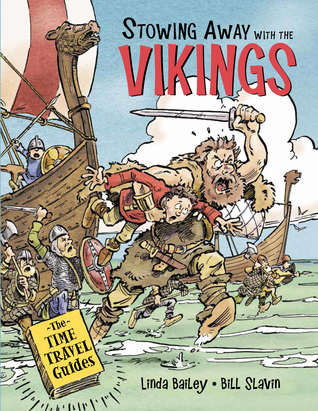 Author Linda Bailey takes us back in time to the Age of the Vikings in her graphic novel Stowing Away with the Vikings. The Binkerton children have been avoiding the Good Times Travel Agency ever since their surprise trip to Ancient Egypt, but a hailstorm leads young Libby to shelter near the shop door, owner Julian T. Pettigrew offers a guidebook to the Vikings, and the rest, as they say, is history. Stowing Away with the Vikings is a delightful way to learn things about the Vikings that Hollywood will never tell you. Part fiction (the Binkerton storyline) and part nonfiction (clearly delineated explanations accompanying the storyline), this graphic novel is all fun and fascination. Bill Slavin’s pictures in comic style are perfect for entertaining, moving the story along, and illustrating the facts.
This book will delight children as they immerse themselves in history. Just as children reread comic books until the covers fall off, kids will want to reread this book absorbing the information about a culture that no longer exists but has affected our own. Although the author honestly discusses the violence of the Viking way of life, there is no depiction of murder. The Binkerton storyline contains a lot of humor that children and adults will appreciate. I learned a lot from this graphic novel and had a great time reading it. I recommend it for homes, classrooms, and libraries.
I would like to extend my thanks to netgalley.com and to Kids Can Press for giving me the opportunity to read this book in exchange for an honest review.
Rating: 5/5
Category: Children’s Fiction, Comic & Graphic Novel
Notes: Grade level—3-7
Age Range—8-12 years
The Time Travel Guides as a series is being republished by a new publisher. Upcoming books to be released are: On the Run in Ancient China and Game on in Ancient Greece
Publication: October 2, 2018—Kids Can Press
Memorable Lines:
Does it seem a bit smoky in here? Hazy? Dark? Look around. There are no windows—just a hole in the thatched roof to let out the smoke. The only light comes from oil lamps. P.S. I hope you like fishy smells. The oil in those lamps comes from fish or whales.
Viking laws aren’t written down, so somebody has to remember them. That’s why they have the law-speaker, a man who memorizes all the laws and shouts them out loud for everyone to hear.
The word “berserk” means bearskin. Berserkers are the most feared of all Viking warriors. Before going into battle, they get into a fighting rage. They howl like wolves. They leap like dogs. They grind their teeth and bite the edges of their shields…Have you ever heard the expression “going berserk”? Where do you think it came from?
 education pathways