
Home » Posts tagged 'courtship'
Tag Archives: courtship
The Importance of Being Earnest : A Trivial Comedy for Serious People
The Importance of Being Earnest
by Oscar Wilde
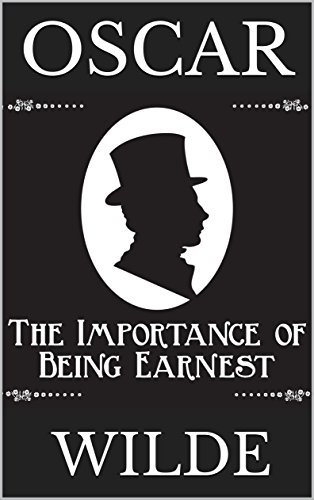
There is probably no better work to evoke book club discussion than Oscar Wilde’s famous satirical play The Importance of Being Earnest. The extreme characters as well as the situation are the source of humor as Wilde mocks the customs and manners of Victorian England. In our discussion we examined parody, satire, and sarcasm, when each is appropriate, and their potential hurtful nature. We also talked about what constitutes humor.
Wilde’s characters border on the absurd. The women are fluff, the men are profligates who nevertheless think highly of themselves, and no one tells the truth. In fact, the lies that both male protagonists have told are the basis of the humorous confusions in the story. Jack lives in the country, but pretends to need to go frequently to the city because of a younger brother named Ernest who gets into scrapes. When he is in the city, Jack goes by the name of Ernest. Jack’s friend Algernon wants to meet Jack’s ward so he goes to Jack’s house as Ernest. It just happens that Cecily, Jack’s ward, and Gwendolen, Jack’s fiancee agree that they could only love someone whose name is Ernest. The two young ladies’ diaries are a source of amusement as the events in the diary are fictional. For example, Cecily records the marriage proposal of Algernon as Ernest, their breakup, and subsequent reunion even though they have never met.
The Importance of Being Earnest was first presented on February 14, 1895. It continues to amuse audiences today in live theater presentations and in a number of video productions.
Rating: 5/5
Category: Drama, Satire
Publication: February 14, 1895—original production
March 1, 1997—Project Gutenberg
Memorable Lines:
The amount of women in London who flirt with their own husbands is perfectly scandalous. It looks so bad. It is simply washing one’s clean linen in public.
I never travel without my diary. One should always have something sensational to read in the train.
Cecily: That certainly seems a satisfactory explanation, does it not? Gwendolen: Yes, dear, if you can believe him. Cecily: I don’t. But that does not affect the wonderful beauty of his answer. Gwendolen: True. In matters of grave importance, style, not sincerity is the vital thing.
Pride and Prejudice–courtship in the early 1800’s
Pride and Prejudice
by Jane Austen
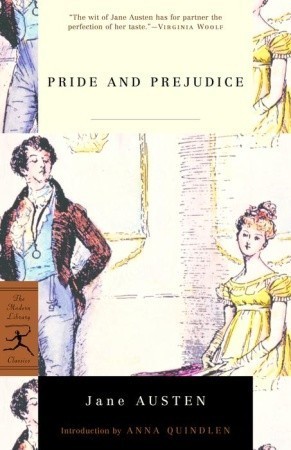
In preparation for reading Pride, a modern day version of Jane Austen’s Pride and Prejudice, with my book club, I decided to reread the original. I knew I could watch a video of the story, but I decided to aim for authenticity and read the actual book. I was glad I did as there is so much to be appreciated in Austen’s words, style, and depiction of characters. In retrospect, I believe my younger self had seen one of the several videos, but had never actually read the novel. I would still like to view one of the movies for an opportunity to better envision the costumes and settings of this period piece, but there is much value to be gained from the reading experience.
Pride and Prejudice is a romance particularly focusing on Jane and Elizabeth Bennet as they navigate the difficult waters of courtship in the early 1800’s in England. Their courses are made more murky by the family’s financial and social status. They are not part of the old monied class that is full of prejudice, but they have standards and they and their suitors are driven at least in part by pride. From a twenty-first century viewpoint, the courtship and rules of engagement seem stilted, but the reader can see in a younger sister’s impetuous disregard for the rules and assumptions of the time, that there are real societal and personal consequences for ignoring the standards of any time period.
I enjoyed the book which is as much about social issues as it is a romance. Pride and prejudice are, of course, themes throughout the book. Most of the characters of the novel grow and develop through the events of the story. Some remain stuck in their ways of thinking, and those continue to be persons the reader won’t like. You may find yourself rereading Pride and Prejudice for love of the characters, the joy of the language, or the journey towards a known ending—happy for some, less so for others.
Rating: 5/5
Notes: Edited by R. W. Chapman. Distributed by Gutenberg Press
Category: General Fiction, Romance
Publication: 1813—T. Egerton Military Library, Whitehall
Memorable Lines:
“Affectation of candor is common enough;—one meets it every where. But to be candid without ostentation or design—to take the good of every body’s character and make it still better, and say nothing of the bad—belongs to you alone.”
Without thinking highly either of men or of matrimony, marriage had always been her object; it was the only honorable provision for well-educated young women of small fortune, and however uncertain of giving happiness, must be their pleasantest preservative from want. This preservative she had now obtained; and at the age of twenty-seven, without having ever been handsome, she felt all the good luck of it.
“You mean to frighten me, Mr. Darcy, by coming in all this state to hear me? But I will not be alarmed though your sister does play so well. There is a stubbornness about me that never can bear to be frightened at the will of others. My courage always rises with every attempt to intimidate me.”
 education pathways