Home » Posts tagged 'confession'
Tag Archives: confession
Lent: The Season of Repentance and Renewal
Lent: The Season of Repentance and Renewal
by Esau McCaulley
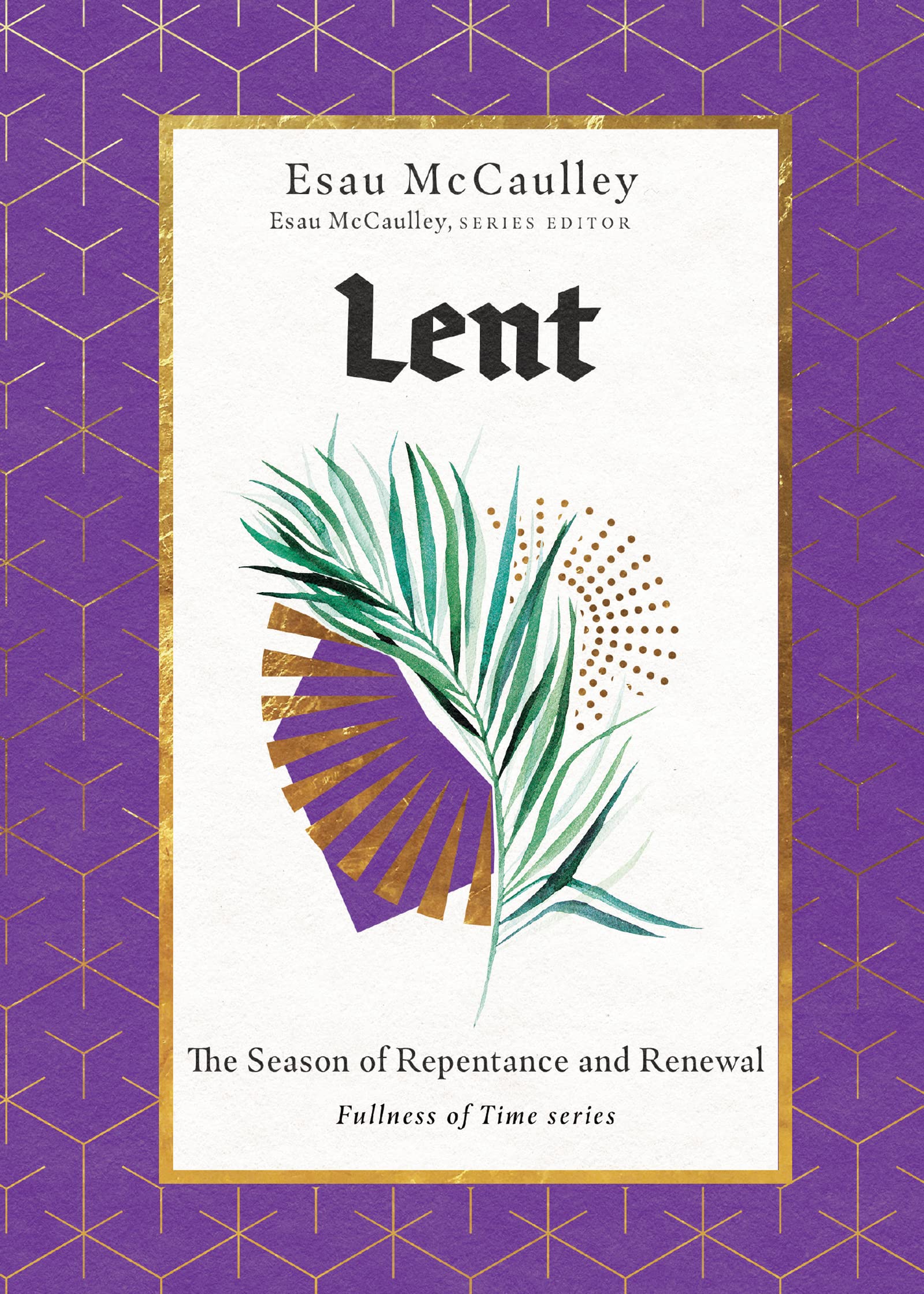
Ash Wednesday is the “kick off” event of Lent for Christians. There are many of us who, like the author, did not grow up in a church that participated in Lenten practices. In fact, my first exposure was a coworker who fasted and upped her walking every year for Lent. Colleagues who had worked with her for years said smirkingly that although she made sure everyone knew she was fasting, the effort was not really aimed at a closer relationship with God, but at attaining the beach body she wanted for spring vacation. Her motivation is between her and God; discerning it is not my job.
Over the years I have worshiped God in Baptist churches and independent mega-churches. Currently a part of the traditional liturgical movement, I am learning about Lent as practiced in the Book of Common Prayer. To that end, my book club has read Lent: The Season of Repentance and Renewal. It is part of the Fullness of Time series of which author McCaulley is the editor. The series is composed of short books written by various authors. They explain the various customs practiced by early Christians extending through our contemporary age. It is physically a beautiful series as the book covers are decorated with symbols and colors appropriate to each church season. The pages inside are incredibly smooth and slightly off-white. It is so elegantly designed that I can not bring myself to mark the many special passages or make notes in the margins.
Lent examines our need for repentance, the certainty of death, and the promise of eternal life in Jesus. McCaulley examines the rituals of Lent explaining how Christians can decide on a personal level what practices might be most useful with an emphasis on fasting. Fasting for food can be done in a variety of ways or not at all. Fasting might be giving up something else that is a distraction from devotion to God. Above all, I would say that the author’s approach is spiritual, not legalistic. There is no one right or wrong way to “do Lent.”
This little book also examines the collects (prayers) and the Scriptures associated with Lent in the Book of Common Prayer. It should be noted that McCaulley refers to the 1979 Book of Common Prayer. Most of the prayers found in my 1928 version and perhaps in other earlier or later editions are different from the ones he quotes. He chose that version because that is the one he was using when he began to practice Lent and therefore the one he is most comfortable providing discourse on. The differences don’t distract, but can provide more depth to the study of the season of Lent.
The last chapter deals with Holy Week, the last week in the life of Jesus Christ. This little tome details the various days such as Maundy Thursday, an important day because of the institution of the Lord’s Supper (Holy Communion or Eucharist). Less well known is the continuing practice of feet washing as set by the example of Jesus. Although Jesus’ message is clear and plain, “follow me and you will be saved,” there are many mysteries and much symbolism in the Bible. Perhaps McCaulley’s discussion of Lent will clarify for you the traditions that have emerged over the centuries.
Rating: 5/5
Category: Christian, Religion, Nonfiction
Notes: There are a few typos (probably generated by auto-correct) in this book which will hopefully be corrected in future printings. The other two books I read from this series did not have this problem.
Publication: 2022—InterVarsity Press
Memorable Lines:
Fasting then is not about us earning God’s forgiveness; it is about reminding ourselves through our fasting of our radical dependence on God.
Too often, Christians believe the lie that we have to dig down deep and discover in ourselves the strength and resolve to defeat our foes. Instead, we must realize that if we dig down to the bottom of ourselves, we’ll find a wounded soul in need of healing.
All these rituals, prayers, and ceremonies are simply doorways into the thing itself: God in all his splendor. May we find him afresh every year until we see him face-to-face.
Liturgy of the Ordinary: sacred practices in everyday life
Liturgy of the Ordinary
by Tish Harrison Warren

Liturgy is the form or pattern that a church service follows. It may be a general and loose sequence or it may be highly structured as followed by Anglicans and other denominations that use The Book of Common Prayer. In Liturgy of the Ordinary, Tish Harrison Warren connects our daily routines to the rituals and patterns of the Christian life from our waking in the morning to our rest at the end of the day. Along the way she examines our search for lost objects and ties it into confession and repentance. She discusses quarrels within the family and how as Christians we are called to extend peace or shalom. Warren dissects how we look at time and at community. She suggests savoring the good gifts of God in our everyday life, but discourages overindulgence in pleasure lest it become an addiction, trapping us in the cycle of wanting more.
Liturgy of the Ordinary is a wonderful book for individual enjoyment and study or for sharing with a group. It is a book that takes simple concepts and invites a deeper dive. Warren is an excellent writer. The book is full of wisdom from both Warren and those she has studied. She invites the reader to look at everyday routines in a new way. The book is replete with anecdotes and quotes. Above all, Warren is open and honest; readers will see themselves in her struggles and her revelations. She makes the mystery of living out the Christian life in this broken world both real and accessible.
Rating: 5/5
Category: Christian, Nonfiction
Notes: Includes Discussion Questions, Practices, and a Bibliography
Publication: 2016—InterVarsity Press
Memorable Lines:
Waiting, therefore, is an act of faith in that it is oriented toward the future. Yet our assurance of hope is rooted in the past, in the person of Jesus of Nazareth and in his promises and resurrection. In this way, waiting, like time itself, centers on Christ—the fulcrum of time.
Christian friendships are call-and-response friendships. We tell each other over and over, back and forth, the truth of who we are and who God is…My best friendships are with people who are willing to get in the muck with me, who see me as I am, and who speak to me of our hope in Christ in the midst of it. These friends’ lives become a sermon to me.
The words of the liturgy felt like a mother rocking me, singing over me, speaking words of blessing again and again. I was relaxing into the church like an overtired child collapsing on her mom. When my husband and I would get into the car after church each week and talk about the service, I would say to him, “It feels like chamomile tea.”
 education pathways