Home » Posts tagged 'communists'
Tag Archives: communists
The Four Winds–Historical Fiction about The Great Depression and the Dust Bowl
The Four Winds
By Kristin Hannah
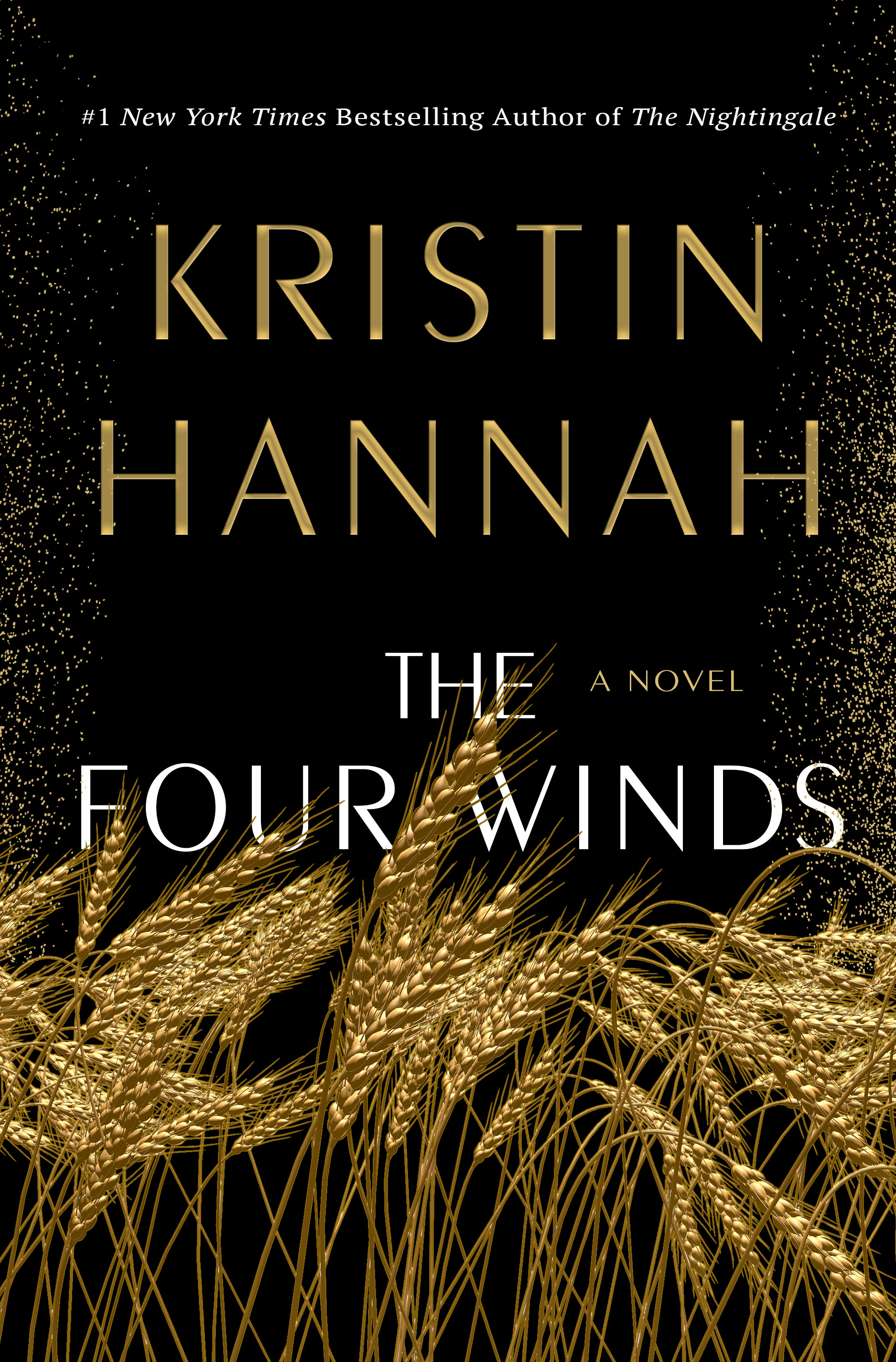
From prosperity to devastating poverty, The Four Winds takes the reader on a journey across time and across the United States. Since childhood, Elsa has been told she is unattractive, physically weakened by an illness, and ineligible for marriage. Her brief search for adventure and love in her small town leads her to Italian immigrants Tony and Rose and their son Rafe. The Martinellis take Elsa under their wing, connect her to the land, and love her as their own.
The Great Depression rips away the hopes and dreams of the generations who endured the struggle, but Tony and Rose are strong and refuse to give up their land. Then come years and years of drought and dust storms. The government says the farmers are to blame and provides minimal help. Millions of citizens leave Texas and surrounding states to find what is billed as a “land of milk and honey” where they will surely find work so they can support their families. Instead they find difficult work on large farms if they are lucky. They live in filthy conditions on subsistence wages or less. Each day they have to walk miles both ways from muddy tent cities to the fields where there is no guarantee of a job. Those seeking work are maligned by the residents who view them as dirty and lazy. If they manage to get on at a farm that supplies housing, a few toilets, and some running water and electricity, they soon discover that they are paid with credit at the expensive company store. There is a fee for everything, even obtaining pay in cash. When they dig deeper, the workers find that the whole setup, including where they live and when they work is completely set up to satisfy the greed of the owner. A worker is always indebted to the company.
Communists, at physical danger to themselves, work to organize the farm workers to strike for better working conditions. It is an uphill battle because the workers have safety concerns if they protest in addition to the possibility of losing their opportunity for work—such as it is. California is not the “Promised Land” after all.
Elsa is not just the main character of The Four Winds: she is the heroine. She is a strong, strong woman living out a difficult life with perseverance and determination. Come what may, she would do her best for her children whether eking out survival in a formerly rich land where cattle died with bellies full of sand or traveling across the desert in an unreliable vehicle praying that there was enough water and gas to get the family to their destination. She proves to be a good friend to others in need. She compromises when necessary for the sake of her children, but she reaches a limit where she stands up to greedy business people who deserve to be shamed.
The Four Winds exposes a sad part of our history showing a period in time that was devastating to people. Through no fault of their own they found themselves unable to care for their families. Many were proud and refused government aid. Some of that help from the government was commendable putting men to work in respectable jobs, but some was too little, too late and unreliable in execution. The people of California were depicted as mean-spirited and unwilling to help those who needed help. They looked down on the laborers with contempt. The one exception that stood out for me was an understanding librarian who checked out books to Elsa’s daughter and then gave Elsa a library card which Elsa presented to her daughter as her Christmas gift. It was treasured.
This work of historical fiction concludes nicely, but there is not a happy ending for everyone. The book is more realistic than that. Overall it is well written and kept me wanting to read more. It is a sad book, however. It has to be—it is about sad times.
Rating: 5/5
Category: Historical Fiction
Publication: March 14, 2023—St. Martin’s Griffin
Memorable Lines:
“Believe me, Elsa, this little girl will love you as no one ever has…and make you crazy and try your soul. Often all at the same time.” In Rose’s dark, tear-brightened eyes. Elsa saw a perfect reflection of her own emotions and a soul-deep understanding of this bond—motherhood—shared by women for millennia.
“Girls like that, unkind girls who think it’s funny to laugh at another’s misfortune, are nothing. Specks on fleas on a dog’s butt.”
Once, Elsa would have said, God will provide, and she would have believed it, but her faith had hit the same hard times that had struck the country. Now, the only help women had was each other. “I’ll be here for you,” Elsa said, then added, “Maybe that’s how God provides. He put me in your path and you in mine.”
Winter hit the San Joaquin Valley hard, a frightening combination of bad weather and no work. Day after day, rain fell from steel-wool-colored skies, fat drops clattering on the automobiles and tin-can shacks and tents clustered along the ditch bank. Puddles of mud formed and wandered, became trenches. Brown splatter marks discolored everything.
Poverty was a soul-crushing thing. A cave that tightened around you, its pinprick of light closing a little more at the end of each desperate, unchanged day.
The Paris Daughter–a story of art, women, and children in WWII
The Paris Daughter
by Kristin Harmel

World War II brings death, horror, and destruction to the civilians of Paris in this tension filled story of three women who have to make difficult decisions. They are never relieved of the agony of questioning their own judgements and actions: what would a good mother do?
Elise is the belittled wife of a famous painter whose actions put his family in danger. Juliette has the perfect charmed family life until the bombs begin to fall. Ruth Levy is a widowed mother whose Jewish religion and heritage endangers her children. As you read this novel, you will get to know these women and see how each reacts to hardships and trials. You can decide for yourself what it takes to be a good mother and whether any of these ladies are good mothers.
Alongside the main plot in The Paris Daughter, there is another that emerges; it interweaves and is essential to the first. It deals with artists at the time, how they interacted and how they were affected by the war. Elise was a wood sculptor and a painter. Art helped her through the emotional trauma of the war. Art also helped Juliette’s daughter deal with her mother’s increasing mental distress. Alongside these therapeutic benefits, we also witness the personal devastation that occurs when Elise returns home to discover her apartment has been looted of the valuable artwork she and her husband had created.
There are hints along the way as to what may have occurred personally during the war to these families. Eventually the characters and the reader learn the truth, and with the truth there is a way forward. Some of the characters are despicable, while others are noble and honorable. Some crumble morally under the stresses.
This book was a page turner for me, but was also a novel I found upsetting. The depiction of the characters is realistic so watching bad things happen to them was hard. As this book is set in World War II, not everyone is going to have a happily ever after. It is a book I recommend if you enjoy historical fiction, particularly about WWII.
I received a complimentary copy of this book in exchange for an honest review. Opinions expressed in this review are completely my own.
Rating: 5/5
Category: Historical Fiction
Notes: In the author’s notes she responds to questions about why she is drawn to history as her subject matter: “My reasons are numerous, but perhaps the most important one is that if we don’t learn from history, we run the risk of repeating it. Too often in recent years, those of us who read frequently about World War II have seen shadows of that long-ago war in current events and it’s difficult seeing versions of past horrors happening again.”
Publication: June 6, 2023—Gallery Books
Memorable Lines:
Later, Olivier snored peacefully beside Elise while she wiped tears of despair away. He only seemed to see her these days when he wanted the closeness of her; at all other times, his indifference cut her to the core. She owed Olivier everything, and perhaps that was what made it so difficult when it felt to her, sometimes, that he was trying to erase her.
“This isn’t a decision I make lightly, but being a parent is not about dong what is right for ourselves, is it? It’s about sacrificing all we can, big and small, to give our children their best chance at life.”
“There must be something we can do.” “There is,” Madame Levy said. “You can pray for my children. And you can talk to yours about never turning their back on their fellow man. Maybe one day, we’ll all live in a batter world.”
My Several Worlds: A Personal Record
My Several Worlds: A Personal Record
by Pearl S. Buck
WHAT IS MY SEVERAL WORLDS?
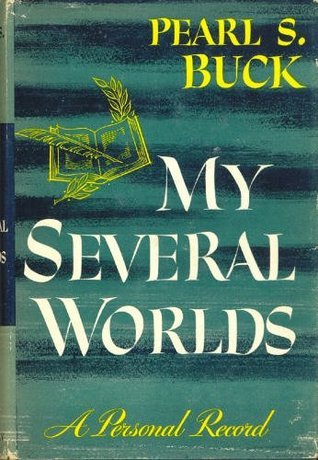
It is a collection of essays integrated into a memoir. Author Pearl S. Buck, as she writes this tome, considers herself midway in her writing career. She presents it as a “record of the age in which I lived” and “as nearly an autobiography as I shall ever write.” It is not a linear book. The place she is located when she writes each section is noted, but not the date because it is such a combination of times. Although a confusing style at first, it makes sense because as she is writing about her current life in the United States, she will suddenly revert to recounting her younger years in China and historical world events or advance her opinions on a variety of subjects from practical to esoteric.
WHO WAS PEARL S. BUCK (1892-1973)?
She was a prolific author, primarily a novelist, and the winner of both the Pulitzer Prize in 1932 and the Nobel Prize in Literature in 1938. The child of Christian missionaries, she spent much of her life in China until politics forced Americans to leave. Completely bilingual, Pearl was an astute translator of Chinese and had great admiration for Chinese social structure and love for the Chinese people. When she returned to the United States, she found that she lived in two separate worlds and never felt quite at home in either. She was well-traveled and had friends from all over the world.
WHERE DID BUCK GET HER INSPIRATION?
Buck’s source material was mainly her observations of people. In her travels, she paid attention to people, listening more than talking. Her focus was more on the common man and woman than the famous people who wanted to entertain her as a celebrity.
WHAT ARE SOME OF BUCK’S “SEVERAL WORLDS”?
Buck watched various political groups attempt takeovers in China. This land she loved and which helped shape her was subject to political strife from inside the country and by forces from the outside. She was witness to Western influences on young Chinese who studied in the United States and tried to bring change to ancient Chinese customs. These endeavors were not always positives for the Chinese people.
As an American adult with Chinese training, Buck experienced disparate worlds in the United States. Looking past geopolitical issues, Buck also had several worlds on a personal level. Although equipped to mingle in high society circles, she preferred a rural lifestyle with a large household of adopted children who learned life and family skills on their farm. She had a long, unhappy marriage to an agricultural missionary in China followed by a long, happy marriage to her publisher in the U.S. Although a teacher and primarily a writer, Buck devoted her talents to social enterprises as well. She opened The Welcome Home for U.S.-born children of Asian descent whose mixed-race status made them “unadoptable” according to adoption agencies. She also advocated for appropriate care for the disabled, a cause close to her heart as her first child was unable to live independently.
WHAT IS YOUR OPINION OF MY SEVERAL WORLDS?
This is not an easy read; there is no fluff to it. In My Several Worlds you will discover a lot of Chinese history since, as Buck points out, the Chinese civilization is very old. She refers to many events in China’s past without details as she feels they have already been discussed thoroughly in books she and others have written. Her thoughts on the various subjects she examines are interesting although I do not always agree with all of them. They are informed by her unique background of living a cosmopolitan life. She was homeschooled by Christians but tutored by a Confucian. She went to college in the United States, but despite altering her clothing never felt like she fit in.
Buck is an excellent writer, but the reader needs to approach this non-fiction work with a desire to learn—to learn more about China, about adults who have grown up in more than one culture, and about the fascinating Pearl S. Buck. Having read this memoir, I think a good follow up would be to read one of her many novels.
Rating: 5/5
Category: Memoir, Nonfiction
Publication: 1954—John Day Co.
Memorable Lines:
But I had never known what hatred was. I had neither been hated nor had I ever hated anyone. I could not understand why we, who were still ourselves and unchanged, should be lumped with unknown white men from unknown countries who had been what we were not, robbers and plunderers. It was now that I felt the first and primary injustice of life. I was innocent but because I had the fair skin, the blue eyes, the blond hair of my race I was hated, and because of fear of me and my kind I walked in danger.
No people can be educated or even cultivated until books are cheap enough for everybody to buy.
I went back to my own resurrected home with a heavy heart indeed, for I knew that from that day on the new government was doomed in the end to fail. Why? Because it had failed already in understanding the people whom it purposed to govern and when a government does not rule for the benefit of those ruled, sooner or later it always fails, and history teaches that lesson to every generation whether or not its rulers can or will understand.
Green Leaf in Drought–a missionary story
Green Leaf in Drought
by Isobel Kuhn
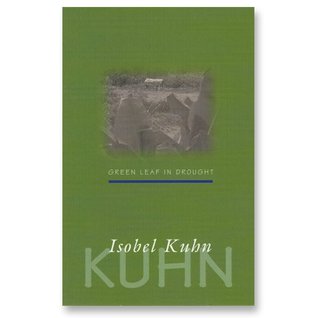
Arthur and Wilda Mathews and their baby spent a frustrating two years trying to discern and follow God’s will as missionaries for the China Inland Mission, a group spread widely over mainland China. Under the Communist regime, they were not allowed to witness to people about Jesus or to help people in need. They were eventually confined to their meager and uncomfortable quarters and socially isolated. Their living situation was desperate as the authorities tried to starve them and forced them to live in unhealthy conditions. Why had God brought them to this place? Why wouldn’t the authorities allow them to leave? Having arrived with enthusiasm, they eventually suffered through round after round of seeking God’s will in the midst of despair. Their little girl was a bright note as she absorbed and repeated the songs and Scriptures that sustained her parents during the difficult times.
If you are inspired by missionary stories or want to read about God working in the hearts of His children when times are hard, then you would probably find Green Leaf in Drought to your liking. The content is very interesting. Stylistically speaking, this book is not in the excellent category. Author Isobel Kuhn had very difficult resource materials to work with, mainly the writings of Arthur and Wilda Mathews. Their compositions were letters intended for family and recordings on paper of their thoughts, prayers, and poetry, which we would refer to today as journaling, often written in tiny script on thin airmail paper. Others were involved in deciphering and organizing the events which Kuhn then transformed into a readable narrative. As Kuhn tries to translate the couple’s thoughts into dialogue, the result is somewhat stilted. The descriptions, however, are well executed. Kuhn maintains the integrity of a biography. She does not veer off into historical fiction and is to be commended for that. Readers who want a more in depth character study will not find that because it was not provided in the source materials.
Rating: 4/5 (3/5 for writing style, 4/5 for interest and historical veracity)
Category: Christian, Biography
Publication: January 1, 2007—OMF International (first published in 1957)
Memorable Lines:
The bamboo curtain shouts and bellows as it descends, boasts and preens itself. The Feather Curtain of God falls silently. It is soft and comforting to the sheltered one; but intangible, mysterious and baffling to the outsider.
Amazing how we plan everything so carefully and then God walks sovereignly right across the lot with something far better.
The slow wearing down of the human spirit is a species of torture which the communists delight to use and have found very productive for their purposes.
 education pathways