
Home » Posts tagged 'classes'
Tag Archives: classes
Maiden Voyages–Women and ocean liners
Maiden Voyages
by Siân Evans
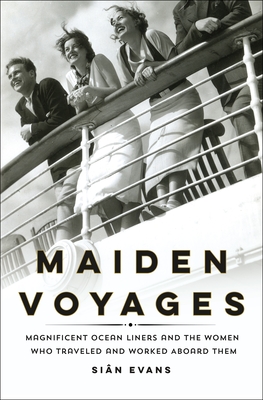
Under the overarching umbrella of History, the nonfiction book Maiden Voyages has two basic spokes—Women’s History and Nautical History. Author Siân Evans goes back to the beginnings of women’s affiliation with sea transportation which was mainly being the daughter or wife of a seaman. With a lot of research, she drives down to the first instances of women serving on ships and shows the progression of their work and social status as ships take on passengers in addition to cargo. Women book spaces to transport themselves across the ocean in uncomfortable circumstances. Gradually the concept of comfort on an ocean liner takes root and grows. More women begin to travel, and more women are hired to take care of their needs.
Most of this book focuses on the glory days of ocean liners between the two World Wars through the transition from transportation to holiday destination. Incorporated into the telling are stories about the lowliest women workers through the glamour stars who not only enjoy the trips, but use them as opportunities to see and be seen. The ship becomes a backdrop for those who have achieved or want to achieve fame and fortune.
The two World Wars affected all women in taking on jobs formerly held by men as the West saw a change in cultural expectations and increased rights for women. From a hazardous work environment for less pay than men received to breaking barriers and excelling in their chosen fields, women are the heroes of this book.
I liked Maiden Voyages, but I did not find it to be a page turner. Although it was told linearly as history progressed, there was some repetition as the author reminds the reader of facts as many of the personages’ roles continued through various eras of nautical travel. I learned a lot about the Golden Era of passenger ships, and I especially appreciated the many quotes from those actually involved. Primary sources authenticate Evans’ descriptions and conclusions. As the author researched the story of her great-great uncle, Cunard Chief Officer Stephen Grow of the Aquitania, this book emerged. It is told from a British perspective. History buffs, particularly those interested in Women’s Studies and Nautical History, will find Maiden Voyages very informative.
I received a complimentary copy of this book in exchange for an honest review. Opinions expressed in this review are completely my own.
Rating: 4/5
Category: History, Nonfiction
Publication: August 10, 2021—St. Martin’s Press
Memorable Lines:
The transatlantic ship not only provided a form of transport across the globe, it was also both the practical means and the symbol of opportunity, of new beginnings and fresh starts. From “third class” to “top deck,” from desperate women escaping financial hardship to wealthy international sophisticates hoping for romance and adventure, every transatlantic liner of this post-war era was freighted with hope.
There was a real symbiosis between Hollywood, the heart of the movie industry, which acted as a “dream factory” in the inter-war years, and the ocean liner, which on every voyage carried people full of hope and aspirations.
…working on the big ships became even more attractive as a career option for young men and women. The opportunity to leave behind the bomb sites and rubble, the poorly stocked shops, the dull and restricted food and the dismal British weather for the neon-lit, brilliantly colored, smartly dressed and culturally vibrant cities of the USA and Canada had never seemed so appealing to the restless young.
Jane Eyre–a classic
Jane Eyre
by Charlotte Brontë
with a Guide to Reading and Reflecting
by Karen Swallow Prior

Occasionally I will read a sentence plugging a newly released book that describes it as a “classic.” For me, a book has to not only be of high quality or a good example of a type of literature, but most importantly has to have stood the test of time to be considered a classic. Charlotte Brontë’s Jane Eyre is one of these books. Karen Swallow Prior, a professor of English literature, is editing a series of classical books and has chosen Jane Eyre as one of her subjects. In her introduction, she discusses the author and provides background of the work and its publication. She also addresses the themes found in the book and how to read Jane Eyre through a current Christian perspective. Prior includes footnotes on archaic or unfamiliar terms and references to other works both secular and religious at the bottom of the pages where they occur. The novel is divided into three volumes; each is followed by insightful discussion questions. Also there are questions for reflection at the end which are appropriate for addressing overarching themes and issues.
Jane Eyre is a long and complex book; straight summarizing would not do it justice and would certainly contain spoilers. The volumes progress chronologically through Jane’s life, and she is the narrator. She includes the struggles she as endured that have formed her into an intellectual woman of strong moral character. She frequently quotes people as referring to her as “plain” in her physical attributes.
The novel includes social themes regarding the treatment of the poor and of women. Neither of these groups had great expectations of rising above their current status. At its heart, Jane Eyre is a romance, but it has aspects of mystery, adventure, and theology. Brontë’s treatment and development of the various characters are excellent, and there is liberal use of foreshadowing and symbolism. This is truly a classic that can be read for pure enjoyment or studied as a work of art.
Rating: 5/5
Category: Fiction, Christian, Classic, Romance
Notes: Manuscript used by editor was published in 1848
Publication: 2021—B & H Publishing
Memorable Lines:
I regained my couch, but never thought of sleep. Till morning dawned I was tossed on a buoyant but unquiet sea, where billows of trouble rolled under surges of joy. I thought sometimes I saw beyond its wild waters a shore, sweet as the hills of Beulah; and now and then a freshening gale, wakened by hope, bore my spirit triumphantly towards the bourne: but I could not reach it, even in fancy—a counteracting breeze blew off land, and continually drove me back. Sense would resist delirium; judgment would warn passion. Too feverish to rest, I rose as soon as day dawned.
This was very pleasant; there is no happiness like that of being loved by your fellow-creatures, and feeling that your presence is an addition to their comfort.
Laws and principles are not for the times when there is no temptation: they are for such moments as this, when body and soul rise in mutiny against their rigor; stringent are they; inviolate they shall be. If at my individual convenience I might break them, what would be their worth?
 education pathways