Home » Posts tagged 'class differences'
Tag Archives: class differences
Tess of the d’Urbervilles–new look at a classic
Tess of the d’Urbervilles
by Thomas Hardy (and Karen Swallow Prior)
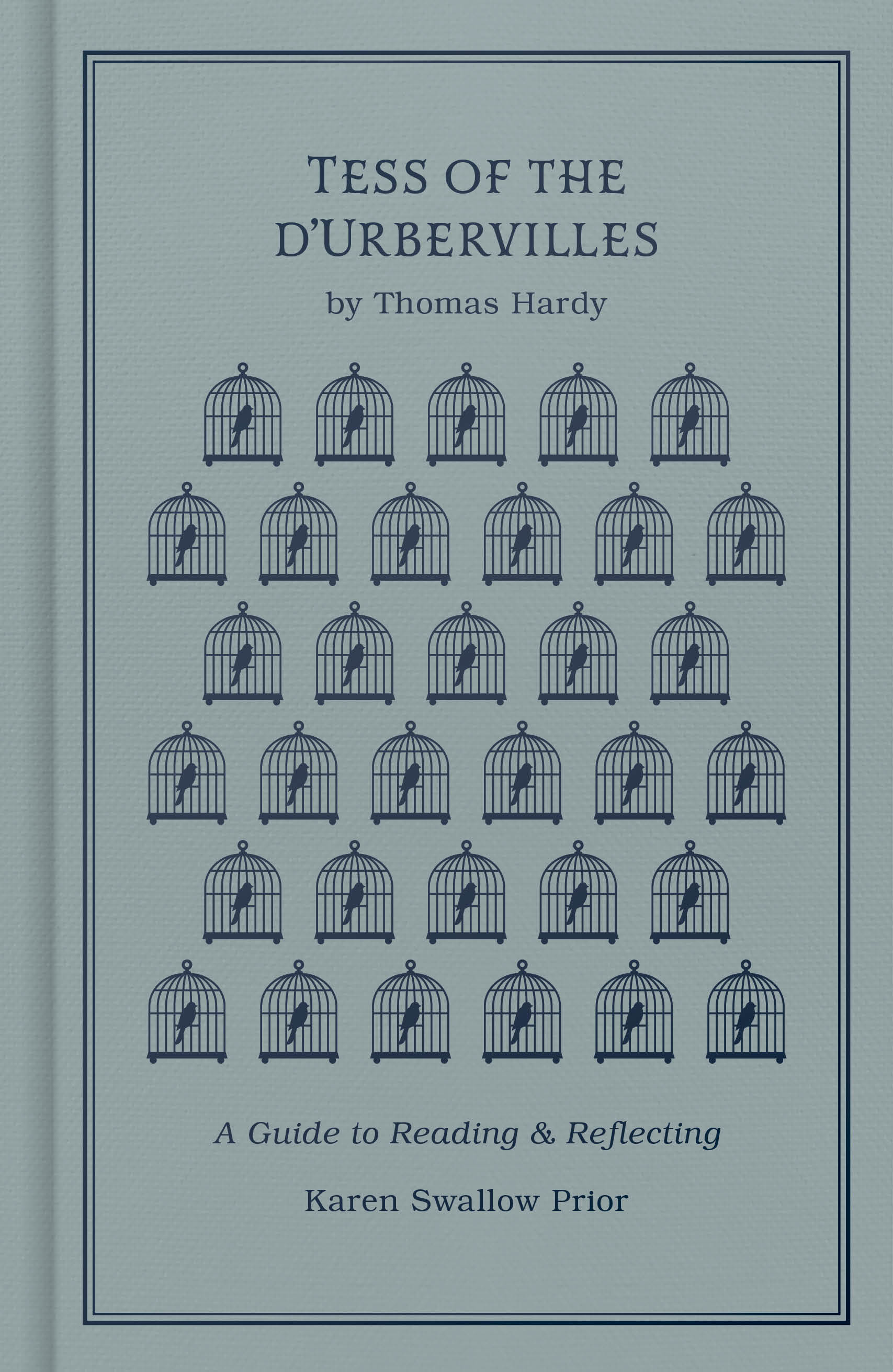
First published in serialized form in 1892, this classic has been read and studied over the years. Summaries are available everywhere on the Internet, so I want to share with you the particular edition I read this summer with my book club. It includes “A Guide to Reading and Reflecting” by Karen Swallow Prior who is a literature professor and author herself. We have read other books that include her notes, but I think this is the best one of the series that we have read.
Prior gives a lot of background on Thomas Hardy and the times in which he lived that are essential for understanding Tess of the d’Urbervilles. Born to a working class family, he longed for a scholarly life which at times seemed out of his reach. For example, he desired ordination but was unable to afford the university costs and so became a draftsman for a church architect. He studied on his own, and this book is full of classical and Biblical references. He also read books that are contradictory to traditional Christianity. He became an agnostic who attended church all his life. These are a few of the conflicts that show up thematically in Tess of the d’Urbervilles along with sexual purity being essential to women, but not to men. The plight of agricultural workers can not be missed as well as the difficulties of overcoming class rules and status. Nature itself and self-determination are also central themes.
In this edition, Prior helps the reader delve into the deeper meanings of the book. Hardy creates interesting characters and a solid plot, but also a certain line to destruction and despair for Tess. Prior points out Hardy’s use of literary techniques but also how to read this novel from a Christian worldview. I think her comments would also be interesting to those with a secular point of view.
Prior does not change anything in the original text. She does include brief, helpful footnotes that explain words that might be unfamiliar to a modern reader as well as classical allusions. Hardy divided the book into seven sections called “Phases.” Prior ends each phase with reflection questions which are valuable in pointing out aspects the reader might miss and in demanding deeper introspection. Prior concludes the book with questions “For Further Reflection” which apply to the text as a whole.
Rating: 5/5
Category: Classic, Fiction
Notes: There are currently 6 classics in this series.
Publication: 2022—B&H Publishing Group
Memorable Lines:
From Prior: Tess of the d’Urbervilles is not merely dark and pessimistic but is tragic—tragic in the true literary sense.
From Hardy: The clock struck the solemn hour of one, that hour when fancy stalks outside reason, and malignant possibilities stand rock-firm as facts.
From Hardy: It is Tess Durbeyfield, otherwise d’Urberville, somewhat changed—the same, but not the same; at the present stage of her existence living as a stranger and an alien here, though it was no strange land that she was in. After a long seclusion she had come to a resolve to undertake outdoor work in her native village…
Carnegie’s Maid–sacrificing for family
Carnegie’s Maid
by Marie Benedict
 Carnegie’s Maid, a work of historical fiction, attempts to explain what could have caused Andrew Carnegie, a ruthless businessman, to become a philanthropist and founder of the Carnegie Libraries. As a former impoverished Scottish immigrant, he fights his way to the top echelons of America’s monied, sometimes stepping on the backs of other immigrants to get there. Author Marie Benedict has created a lady’s maid from Ireland who is on a mission to support her Irish Catholic Fenian family. Her Clara is hard-working, smart, and focused. An opportunist, she takes the place of another Clara becoming a lady’s maid rather than a scullery maid making herself privy to the family’s secrets and business machinations.
As seen in Benedict’s other excellent work of historical fiction, The Other Einstein, the novel Carnegie’s Maid demonstrates the author’s intensive research and attention to detail. As I read I found myself wishing for a main character based on an actual person as in The Other Einstein. I assume the details and records of Carnegie’s life are just too sketchy to provide such a character. Benedict has taken the immigrant culture of the times, the certainty that Carnegie’s mother would have had a lady’s maid, the mystery of Carnegie’s altruism, and his delay in marriage as the basis for her fictional Clara. There is much more supposition in this book, but it is well written and not outside the realm of possibility.
I enjoyed the tale with its details about the difficult lives of the Irish both in Great Britain and in the United States. It paints a picture of the U.S. as a very difficult land of opportunity, with no handouts, and even fewer options for women. Gender, ethnic background, religion, money, family, and education all play a role in the highly stratified, unofficial class systems of the time.
I would like to extend my thanks to netgalley.com and to Sourcebooks Landmark for giving me the opportunity to read this book in exchange for an honest review.
Rating: 5/5
Category: Historical Fiction
Notes: by the author of The Other Einstein
Publication: January 16, 2018—Sourcebooks Landmark
Memorable Lines:
“These Catholic Irish running from the havoc wreaked by their famine and pouring onto American shores are not like the hard-working Protestant Irish who immigrated in earlier years. This new Catholic crop is rough and uneducated, and they’ll destroy the fabric of this country’s shaky democracy if we let them, especially in these days of Civil War unrest, just like they did back home in Scotland when they stole factory jobs away from Scottish men and women. An Irish Catholic servant might suffice as a scullery maid but not as my personal maid.”
For whom was I crying? for all the immigrants like the Lambs, who came to America seeking a better life but settled instead for a soot-infested home and dangerous work in the mills and gave thanks for it?
For the first time, I realized how alike my situation was to that of Mr. Carnegie. Although the scale was quite different, the stakes were not. The well-being of both our families rested on our success.
 education pathways