Home » Posts tagged 'Children'
Tag Archives: Children
Merry Murder Season–motive for murder
Merry Murder Season
by Lynn Cahoon
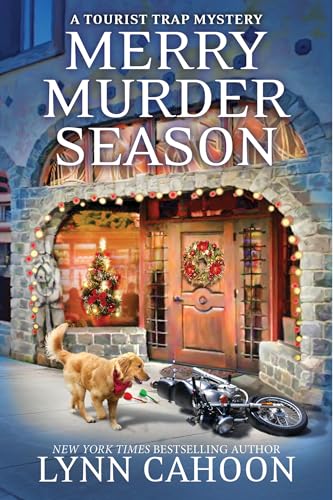
When Greg and Jill attend a fund raiser to support needy families at Christmas time, they never expect that the dart tournament would result in the torture death of the bar owner across the street. Money was not taken so the motive for the torment is veiled in mystery. Jill becomes involved in investigating the murder. At the same time, she tries to stay out of the conflict between Greg’s brother Jim and his fiancée Beth. Beth is a wonderful person, and Jill promises to consider her a sister even if the wedding plans blow up. Jim is insistent that Beth should be a full-time homemaker while Beth has her eyes set on a professorship when she finishes her degree.
The plot is also complicated by a motorcycle gang that attended the tournament. Dom, its leader, is interested in reforming the gang, keeping the motorcycles but dropping the drugs and rivalries. He is also dating Lille who owns the only restaurant in town and for some unknown reason despises Jill. Also popping up in this book are Jill’s surfing friend Amy and the town dispatcher and psychic Esmeralda. Jill never knows quite what to think of Esmeralda who always seems to vaguely know more about the town happenings than anyone else. Jill’s dog Emma is ever present in this story, but does not play an important role.
Another subplot is concerned with Matty, a newcomer to South Cove, who is hateful to all except Josh, the one man she wants to use in an illegal scheme. Josh has never been very likable himself, but his new wife Mandy is bringing out the best in him. Jill and others circle around him as “South Cove takes care of its own.”
Like all of Lynn Cahoon’s cozy mysteries, this one is full of action and likable characters. The setting is Thanksgiving leading into Christmas, a busy time in the tourist town. I always enjoy a visit with the characters in South Cove and Merry Murder Season is no exception.
Rating: 5/5
Category: Mystery, Fiction
Notes: 1. #18 in the Tourist Trap Mystery Series. There are a lot of recurring characters in this series. You could read the books as standalones, but might enjoy them more if you read several to have more background.
2. Includes a recipe for Ribbon Cookies which is a variation on Pinwheel Cookies.
3. Somehow I missed posting this review back in December when I read the book and wrote the review. It is a good cozy mystery and deserves to be discovered–especially by fans of author Lynn Cahoon and those who like mysteries with a Christmas setting.
Publication: November 4, 2025—Kensington
Memorable Lines:
What do you get when you mix a gangster, a cop, a grumpy aunt, a fighting couple, and the angst of a family holiday together? I didn’t know, but I was about to find out. And I didn’t think it was a joke.
He was a people watcher and could tell who was responding to his banter, changing it up when it wasn’t working. He knew what people want most. To be seen. He saw everyone.
“I didn’t understand how we could have gotten on not only two different pages, but I think we’re in two different libraries in two different countries. Okay, he’s probably reading a magazine at a ball game and I’m in a library.”
The Forgotten Names—forever a timely reminder
The Forgotten Names
by Mario Escobar
translated by Gretchen Abernathy
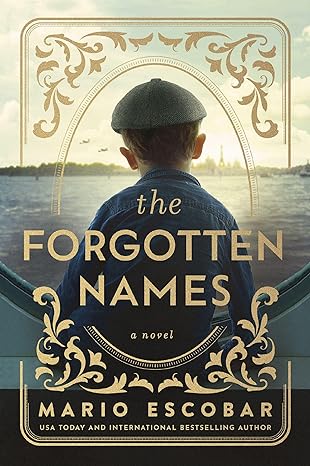
Many historical novels focus on one particular character and develop a story around that character. If it is a dual timeline, then the focus is on one character in each timeline. Escobar’s The Forgotten Names does, in the current timeline, focus on a nonfictional French historian and law student, Valérie Portheret. She spent 25 years identifying at least 90 of the 108 children whose identities were deliberately and necessarily abandoned in the rescue attempt from the Vénissieux internment camp near Lyon. Had their brave parents not signed release forms giving up their parental rights, the children would certainly have been killed by the Nazis who issued mandates for the number of Jews to be “processed.” The Vichy government was theoretically in control of France, but the reality was that they answered to the Nazis who disregarded both the legalities and moralities of the French.
A diverse coalition of Catholics, Protestants, and Jews, including social workers and Resistance organizations, found a loophole in the law. Orphaned minors could obtain an exemption from the roundup that sent the occupants of Vénissieux to their deaths. Escobar tells of the harrowing days and nights spent getting parents to agree, separating the children from their parents, arranging for new homes, transporting them to Lyon, and keeping them until the new parents arrived. All very secretive and all very dangerous for everyone involved in any way.
Escobar is a historian, but he also knows how to tell a story. The chapters are short, encouraging the reader to jump from the end of one into the beginning of the next chapter. The escape story of 1942 is framed by the research story which begins in 1992 when it was still difficult to find a sympathetic advisor. Sadly, the research was hampered by continuing anti-Semitism, rising fascism, and a reluctance to open up wounds of the past. Portheret persisted in locating the children for twenty-five years. The novel is personalized with the backgrounds and experiences of various children and families as imagined by Escobar. In this way, a sad part of history is brought to life with the goal of societies not repeating the horrific tragedies so many suffered through. Portheret originally planned her thesis to examine the life of the infamous Klaus Barbie, known as “the Butcher of Lyon.” As she began her work, however, she found herself drawn to the plan to “exterminate innocent children” and preferred to focus on the victims rather than the barbaric individuals who perpetrated the crimes.
There are so many books about World War II and the Nazis, but this is a new take on the crimes committed in that war. As hard as it is to read about the suffering of innocents whose only crime is to be Jewish, I am glad I read this book. Some of the Christian characters connect various events to Christian theology such as the birth of Jesus who was a Jew, God given Christian/human morality “which imposes duties and recognizes rights,” and the “demands of charity [love] made by Christ to be the distinctive mark of his disciples.” Above all is the emphasis that the human heart rebels against the cruel and painful measures enacted on Jews and certain groups of foreigners.
I received a complimentary copy of this book in exchange for an honest review. Opinions expressed in this review are completely my own.
Rating: 5/5
Category: Historical Fiction, Multicultural
Notes: The book contains references and something I always look for in historical fiction—a discussion of what is real and what is fictional. What follows is a World War II timeline beginning with the invasion of Poland by Germany in 1939 and continuing through the surrender of Nazi Germany to the Allies in 1945. The book concludes with Discussion Questions, information about the author who is Spanish and the translator.
Publication: June 11, 2024—Harper Muse
Memorable Lines:
“Have you noticed how the executioners often end up as celebrities? There are books and books about them. But so few write about their victims. The victims are mere numbers, faceless statistics, figures on the yellowed pages of history.”
The land of Mozart, Goethe, and Immanuel Kant had become a nation of barbarians, of heartless warriors whose driving desire was to control the human race and conquer the world.
“But now everybody—at least in the West—knows that it’s wrong to sacrifice humans. Maybe war will teach us a lesson we can’t learn any other way: the lesson that killing one another for our ideas, beliefs, or flags is absurd, because we all belong to the only human race there is, and we’re all brothers and sister of one another.”
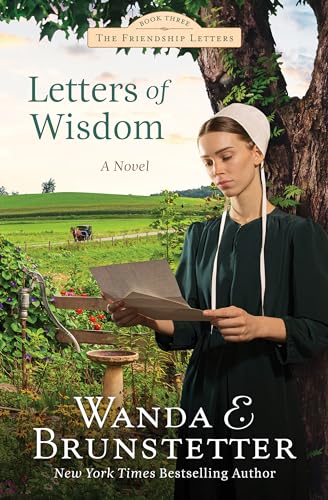
Letters of Wisdom–forgiveness
Letters of Wisdom
By Wanda E. Brunstetter
Long known as a writer of Amish themed novels, Wanda E. Brunstetter has recently turned her hand to writing some books with very serious themes. Although they still focus on the Amish and how characters face situations, the problems are consequential with multi-generational results. Sadly, the stories such as this one originate in Brunstetter’s personal experiences.
Irma Miller suffered traumatic physical and emotional abuse inflicted by her stepfather on her only, not on his biological children. She is reluctant to share these experiences until she sees herself morph into the monster her stepfather was. Her surprised husband insists she get help in the form of therapy with a Christian counselor. Her mother-in-law and the bishop’s wife also provide childcare for her children. Healing is not an instant process. Letters from her friends helped. She had not been able to deal with her three children rationally and a fourth is on the way. Irma finds she has to confront the trauma head-on, granting and accepting forgiveness. Her mother and step brothers and sisters needed to be a part of that process too.
The characters, other than the stepfather, are likable. They are all caught up in a web of pain. The extent of the abuse is not evident in the first part of Letters of Wisdom, but becomes apparent later. Prayer and forgiveness are essential parts of the healing process, but Irma’s path is a difficult one and hard to witness.
I received a complimentary copy of this book in exchange for an honest review. Opinions expressed in this review are completely my own.
Rating: 5/5
Category: Christian, Romance, Women’s Fiction
Notes: 1. #3 in the Friendship Letters Series, but can be read as a standalone.
2. This book has a frank and realistic view of abuse in the family. If that is a trigger for you, you might want to give it a pass.
Publication: March 1, 2024—Barbour
Memorable Lines:
She sensed the real emotions that remained in this house from Homer’s cruel treatment of Irma while she’d lived here, but none of the other children had ever talked about it.
She’d grown to hate him over the years. And even now, knowing he was dead, her soul filled with animosity thinking about all the terrible things he’d done to her.
“…it’s in the past and we must live in the now and do better in the future. We have all made mistakes that we can not erase. So, in order to live a happy, fulfilled life, we must confess our sins, turn our fears over to God, forgive our own shortcomings, and make every effort to behave in such a way that others will see Christ living in us. Only then will our hearts be filled with peace.”
Dating Can Be Deadly–quilts and goats at the county fair
Dating Can Be Deadly
by Amanda Flower
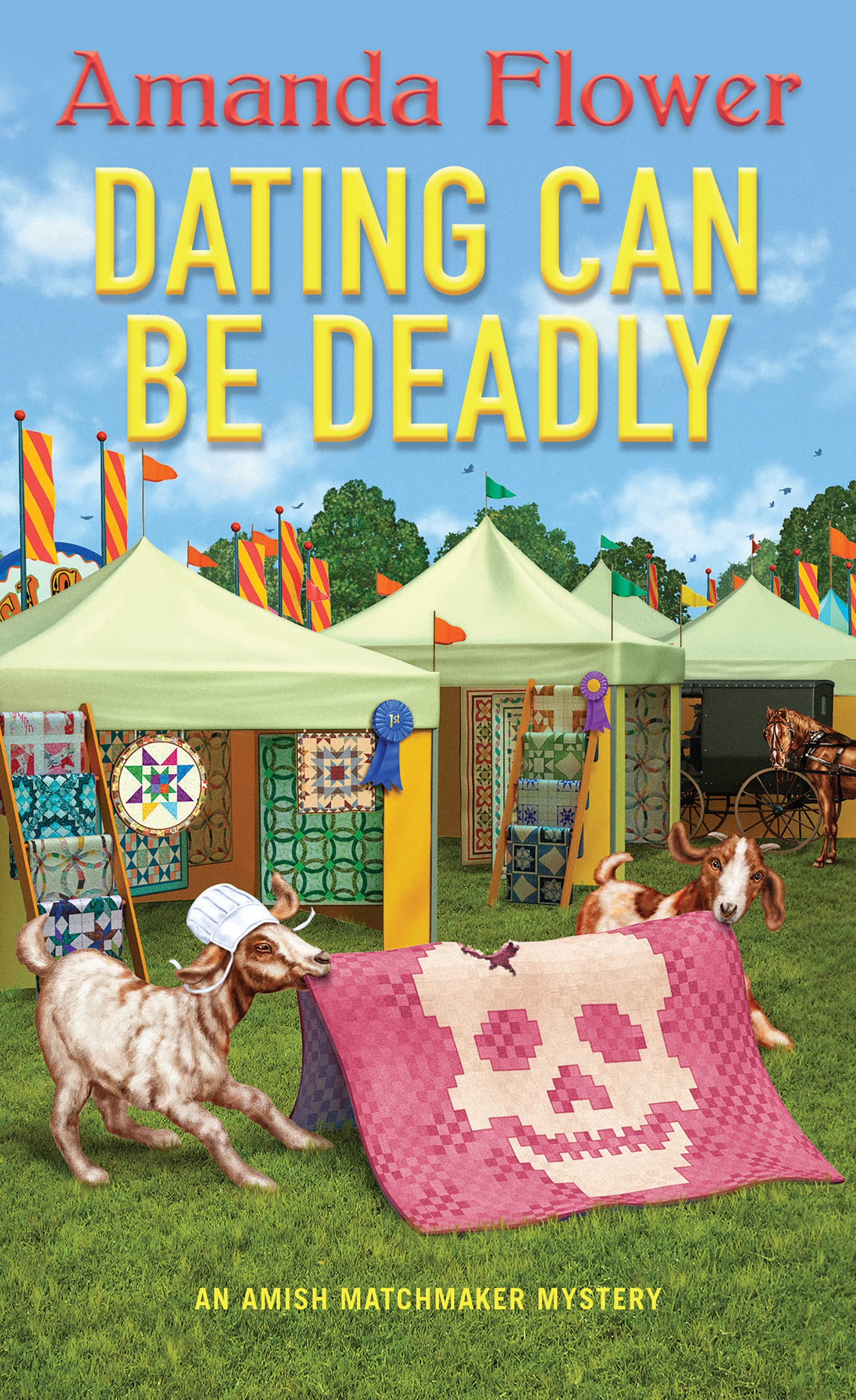
In Holmes County, the Amish and the Englisch have their own traditions, but in general they get along well. The Holmes County Fair draws both groups in. Protagonist Millie Fisher, known to her friend and sidekick Lois Henry as the “Amish Marple,” has been widowed for a number of years and has gradually become comfortable with that role. So, this year, Millie enters a special quilt in the fair and allows her grandson to show her two mischievous goats Phillip and Peter in the goat competition. With the fair as the background, there are many threads in the plot of this amusing cozy mystery. When Millie and Lois discover the body of one of the quilting judges and the shredded quilt of the inimitable bishop’s wife, Ruth, the two sleuths are compelled to investigate.
There are lots of ups and downs in the plot as suspects are found in the most unlikely places. There are romances for both ladies. The most compelling part of the plot for me deals with a little abandoned Amish boy whose grandfather doesn’t want anything to do with him. Millie’s heart goes out to the sweet, fearful child, and she is stuck in the middle of a legal, moral, and Amish cultural dilemma.
As always, Englischer Lois with her colorfully dyed, spiky hair and her best childhood friend Millie, a faithful Amish widow are as different from each other as they can be. They remain devoted to each other. They find themselves involved in a case that leads them into lots of adventures. Lois is famous for her tote bag in which she carries something for every emergency. Millie’s investigative skills are top notch as are her matchmaking skills. This is another fun book in the Amish Matchmaker Mystery Series.
I received a complimentary copy of this book in exchange for an honest review. Opinions expressed in this review are completely my own.
Rating: 5/5
Category: Mystery
Notes: #5 in the Amish Matchmaker Mystery Series. Amanda Flower brings new readers into the series quite well, but I recommend reading the previous books in the series because they are good and they make the humor more predictable.
Publication: October 24, 2023—Kensington
Memorable Lines:
As soon as she said that, my guard went up. Lois had said to me once that any time an Englischer said something was very simple, it was the opposite, and they typically spoke in a way that was meant to be ambiguous.
“Sometimes when a person turns their passion into an occupation, they begin to resent it. I don’t want that to happen to me.”
You are only poor when you want more than you have.
The Book Club Hotel–reconnecting
The Book Club Hotel
by Sarah Morgan

The title The Book Club Hotel certainly prepares the reader for a bookish read. Indeed, Sarah Morgan’s clean romance does have a book theme as a trio of college friends reunite yearly to relax, catch up, have fun, and discuss a chosen book. They are turning forty this year, and each is at a personal crossroad. Erica, who teaches crisis management to businesses all over the world has never managed to commit in a relationship. Her father had walked out of her life the day she was born. Her bitter mother raised her on the necessity of being independent. Claudia has just been abandoned by her boyfriend of ten years and has lost her job. Anna, known for her homemaking skills and perfect relationship with her husband Pete, is dealing with the impending departure of her twins as they prepare to leave the “nest” to fly off to college.
The story is set at the Maple Sugar Inn in Vermont, an idyllic setting at Christmas time. Claudia and Anna are puzzled by Erica’s choice of a rural Christmasy locale for this year’s getaway. It is very out-of-character for the unromantic Erica. There must be some secret agenda behind her selection.
The lives of these three women intersect with that of the owner of the Maple Sugar Inn. Hattie, a young widow, is the mother of a sweet and precocious little five year old girl Delphi. Their dog Rufus adds fun to the tale which revolves around the trio’s friendship, Erica’s draw to the inn, drama over two bad tempered employees who try to control the inn and its owner, and a handsome, kind Christmas tree and organic food farmer who lives next door. It’s a good read!
I received a complimentary copy of this book in exchange for an honest review. Opinions expressed in this review are completely my own.
Rating: 5/5
Category: Fiction, Women’s Fiction
Notes: An unexpected bonus for me is that the book has a strong
Christmas theme with decorations, snow, hot chocolate, and traditions.
Publication: September 19, 2023—Harlequin
Memorable Lines:
“It’s hardly a gift at all. It’s a book, and my sister and I think of a book as a necessity rather than a luxury.” “A necessity is something you need,” Gwen said, “like food or water.” …”Books can take you to a different world.”
Books were her hobby. Reading kept her going. …all Anna had to do to relax was pick up a book and she was immediately transported to another world.
“What do you think of this dress?” “It’s too black. It needs more glitter. Or maybe feathers. I have some in my art box. We could stick them on.” Glitter? Feathers? That was what happened when you asked a five-year-old for fashion advice.
Positively, Penelope–theater and community
Positively, Penelope
by Pepper Basham
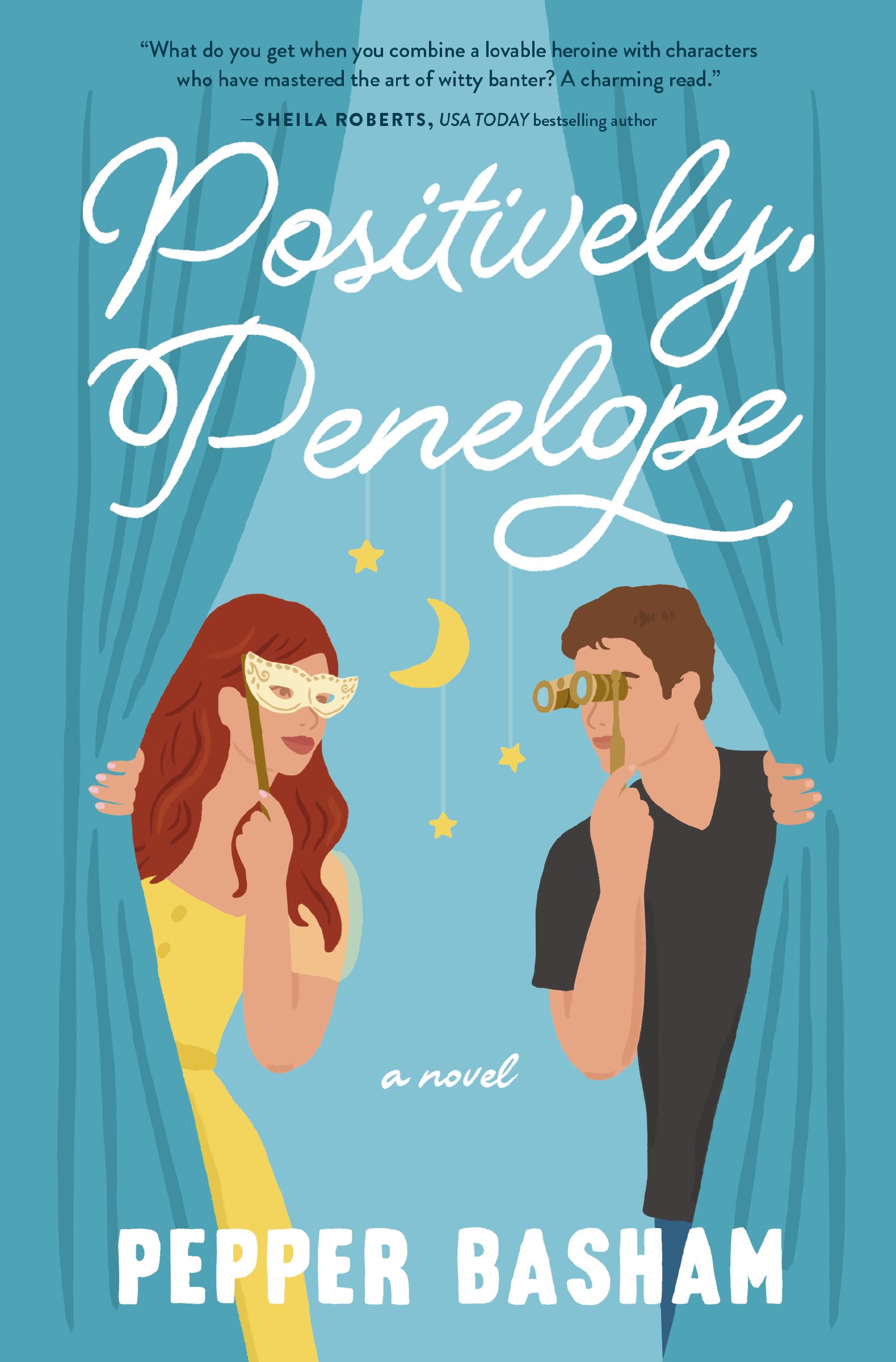
I wondered if Pepper Basham would follow up the very bookish epistolary novel Authentically, Izzy with another epistolary novel. If so, could it be as good, as fun, as the first? How do you write an epistolary novel in the twenty-first century anyway, a time when letter writing for personal reasons is rare? Basham continues her humorous style with Positively, Penelope told mainly in emails and text messages between Penelope who has taken a job as an intern helping the marketing team in the country of Skymar and her brother and two sisters who live in the Appalachians. There is also some third person narration thrown in. As a drama major, a very dramatic teacher of elementary age children, and a lover of storytelling and princesses, I can identify so much with Penelope who attacks life with more gusto than I can dream of mustering!
Penelope is trying to rescue the dying Darling House, a theater whose owners and managers lost their spirit with the deaths of the mother and grandmother over a short span of time. Penelope with her positive attitude spreads joy wherever she goes with her smiles, singing, and creativity. Two brothers, Matt and Alec, are grumpy but could make romantic heroes in the story as they fall under Penelope’s spell along with their father, Grandpa Gray. Matt’s daughter Iris who has not been allowed to enjoy fairy tales blooms under Penelope’s friendship as they share a love of pink and princesses. While Penelope seems like cotton candy fluff, she is actually quite bright. Unfortunately, every idea she comes up with is stolen by a rival theater; it seems a mole has invaded the Darling House team.
Silliness, suspicion, fear of sea monsters, a cute seven year old, costumes, royalty, creativity, and clean romance make Positively, Penelope a fun novel; I’m packing my bag for Skymar right now.
I received a complimentary copy of this book in exchange for an honest review. Opinions expressed in this review are completely my own.
Rating: 5/5
Category: Romance, Fiction, Christian
Notes: 1. #2 in the Skymar series. It could be read as a standalone, but I wouldn’t want you to pass up the very bookish first novel, Authentically, Izzy.
2. a lot of humor as the siblings banter with each other
3. Christian undertones woven subtly into the book
4. #3 has already been published about the flannel wearing, bachelor brother in the family, Loyally, Luke
Publication: August 1,2023—Thomas Nelson
Memorable Lines:
But no wonder he’s grumpy. Anyone who is against fairy-tale talk, singing in public, dancing on the sidewalk, and general hat-wearing has to be a sad sort of person.
Because story is the key to what we bring to the stage, how we present ourselves online, and even how we engage with one another. We all have stories, but in our hearts, we all LOVE stories (even if it takes some of us longer to admit it…kind of like a smile. Some people need more encouragement to smile than others, but you should really know a smile makes all the difference).
He came up to me, dismounted, and shot me this dazzling smile before saying, “I’ve always wanted to rescue a damsel in distress, but I never realized one would be so lovely in the rain.” Heaven HELP ME! Who says stuff like that? Only Skymarian men who ride on white horses in the rain????
Maiden Voyages–Women and ocean liners
Maiden Voyages
by Siân Evans
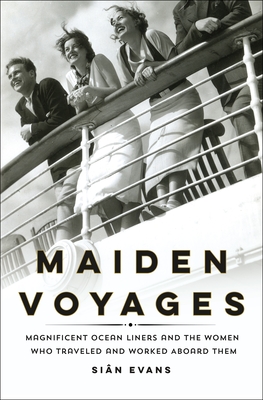
Under the overarching umbrella of History, the nonfiction book Maiden Voyages has two basic spokes—Women’s History and Nautical History. Author Siân Evans goes back to the beginnings of women’s affiliation with sea transportation which was mainly being the daughter or wife of a seaman. With a lot of research, she drives down to the first instances of women serving on ships and shows the progression of their work and social status as ships take on passengers in addition to cargo. Women book spaces to transport themselves across the ocean in uncomfortable circumstances. Gradually the concept of comfort on an ocean liner takes root and grows. More women begin to travel, and more women are hired to take care of their needs.
Most of this book focuses on the glory days of ocean liners between the two World Wars through the transition from transportation to holiday destination. Incorporated into the telling are stories about the lowliest women workers through the glamour stars who not only enjoy the trips, but use them as opportunities to see and be seen. The ship becomes a backdrop for those who have achieved or want to achieve fame and fortune.
The two World Wars affected all women in taking on jobs formerly held by men as the West saw a change in cultural expectations and increased rights for women. From a hazardous work environment for less pay than men received to breaking barriers and excelling in their chosen fields, women are the heroes of this book.
I liked Maiden Voyages, but I did not find it to be a page turner. Although it was told linearly as history progressed, there was some repetition as the author reminds the reader of facts as many of the personages’ roles continued through various eras of nautical travel. I learned a lot about the Golden Era of passenger ships, and I especially appreciated the many quotes from those actually involved. Primary sources authenticate Evans’ descriptions and conclusions. As the author researched the story of her great-great uncle, Cunard Chief Officer Stephen Grow of the Aquitania, this book emerged. It is told from a British perspective. History buffs, particularly those interested in Women’s Studies and Nautical History, will find Maiden Voyages very informative.
I received a complimentary copy of this book in exchange for an honest review. Opinions expressed in this review are completely my own.
Rating: 4/5
Category: History, Nonfiction
Publication: August 10, 2021—St. Martin’s Press
Memorable Lines:
The transatlantic ship not only provided a form of transport across the globe, it was also both the practical means and the symbol of opportunity, of new beginnings and fresh starts. From “third class” to “top deck,” from desperate women escaping financial hardship to wealthy international sophisticates hoping for romance and adventure, every transatlantic liner of this post-war era was freighted with hope.
There was a real symbiosis between Hollywood, the heart of the movie industry, which acted as a “dream factory” in the inter-war years, and the ocean liner, which on every voyage carried people full of hope and aspirations.
…working on the big ships became even more attractive as a career option for young men and women. The opportunity to leave behind the bomb sites and rubble, the poorly stocked shops, the dull and restricted food and the dismal British weather for the neon-lit, brilliantly colored, smartly dressed and culturally vibrant cities of the USA and Canada had never seemed so appealing to the restless young.
My Several Worlds: A Personal Record
My Several Worlds: A Personal Record
by Pearl S. Buck
WHAT IS MY SEVERAL WORLDS?
It is a collection of essays integrated into a memoir. Author Pearl S. Buck, as she writes this tome, considers herself midway in her writing career. She presents it as a “record of the age in which I lived” and “as nearly an autobiography as I shall ever write.” It is not a linear book. The place she is located when she writes each section is noted, but not the date because it is such a combination of times. Although a confusing style at first, it makes sense because as she is writing about her current life in the United States, she will suddenly revert to recounting her younger years in China and historical world events or advance her opinions on a variety of subjects from practical to esoteric.
WHO WAS PEARL S. BUCK (1892-1973)?
She was a prolific author, primarily a novelist, and the winner of both the Pulitzer Prize in 1932 and the Nobel Prize in Literature in 1938. The child of Christian missionaries, she spent much of her life in China until politics forced Americans to leave. Completely bilingual, Pearl was an astute translator of Chinese and had great admiration for Chinese social structure and love for the Chinese people. When she returned to the United States, she found that she lived in two separate worlds and never felt quite at home in either. She was well-traveled and had friends from all over the world.
WHERE DID BUCK GET HER INSPIRATION?
Buck’s source material was mainly her observations of people. In her travels, she paid attention to people, listening more than talking. Her focus was more on the common man and woman than the famous people who wanted to entertain her as a celebrity.
WHAT ARE SOME OF BUCK’S “SEVERAL WORLDS”?
Buck watched various political groups attempt takeovers in China. This land she loved and which helped shape her was subject to political strife from inside the country and by forces from the outside. She was witness to Western influences on young Chinese who studied in the United States and tried to bring change to ancient Chinese customs. These endeavors were not always positives for the Chinese people.
As an American adult with Chinese training, Buck experienced disparate worlds in the United States. Looking past geopolitical issues, Buck also had several worlds on a personal level. Although equipped to mingle in high society circles, she preferred a rural lifestyle with a large household of adopted children who learned life and family skills on their farm. She had a long, unhappy marriage to an agricultural missionary in China followed by a long, happy marriage to her publisher in the U.S. Although a teacher and primarily a writer, Buck devoted her talents to social enterprises as well. She opened The Welcome Home for U.S.-born children of Asian descent whose mixed-race status made them “unadoptable” according to adoption agencies. She also advocated for appropriate care for the disabled, a cause close to her heart as her first child was unable to live independently.
WHAT IS YOUR OPINION OF MY SEVERAL WORLDS?
This is not an easy read; there is no fluff to it. In My Several Worlds you will discover a lot of Chinese history since, as Buck points out, the Chinese civilization is very old. She refers to many events in China’s past without details as she feels they have already been discussed thoroughly in books she and others have written. Her thoughts on the various subjects she examines are interesting although I do not always agree with all of them. They are informed by her unique background of living a cosmopolitan life. She was homeschooled by Christians but tutored by a Confucian. She went to college in the United States, but despite altering her clothing never felt like she fit in.
Buck is an excellent writer, but the reader needs to approach this non-fiction work with a desire to learn—to learn more about China, about adults who have grown up in more than one culture, and about the fascinating Pearl S. Buck. Having read this memoir, I think a good follow up would be to read one of her many novels.
Rating: 5/5
Category: Memoir, Nonfiction
Publication: 1954—John Day Co.
Memorable Lines:
But I had never known what hatred was. I had neither been hated nor had I ever hated anyone. I could not understand why we, who were still ourselves and unchanged, should be lumped with unknown white men from unknown countries who had been what we were not, robbers and plunderers. It was now that I felt the first and primary injustice of life. I was innocent but because I had the fair skin, the blue eyes, the blond hair of my race I was hated, and because of fear of me and my kind I walked in danger.
No people can be educated or even cultivated until books are cheap enough for everybody to buy.
I went back to my own resurrected home with a heavy heart indeed, for I knew that from that day on the new government was doomed in the end to fail. Why? Because it had failed already in understanding the people whom it purposed to govern and when a government does not rule for the benefit of those ruled, sooner or later it always fails, and history teaches that lesson to every generation whether or not its rulers can or will understand.
The Wind in My Hair–compulsory hijab
The Wind in My Hair
by Masih Alinejad with Kambiz Foroohar

In her memoir The Wind in My Hair, Masih Alinejad, in exile first in Great Britain and later in America, tells the struggles she had and all Iranian women still endure with laws in Iran that make wearing the hijab compulsory from age seven. The “morality police” in that country take this law over what women wear to the extreme. Women can be beaten, flogged, and jailed if even a strand of hair escapes the hijab. Women who have resisted this compulsory law have had acid splashed in their faces and have been incarcerated, tortured, and sometimes raped.
Masih tells her personal story of an impoverished, but mostly happy, rural childhood with conservative parents. Always a bit of a rebel, Masih was expelled from high school in her final semester and jailed for belonging to a small anti-government secret society. Later as a parliament reporter, she was banned from the parliament building for asking the wrong questions.
In exile Masih worked tirelessly and sometimes under threats of violence for the rights of women in Iran. There are more issues involved than compulsory hijab, but that is a visible sign of the control men have over women in Iran. Masih used the tools of social media, especially Facebook and Twitter, to broadcast her positions in Iran where the government controls television and newspapers. The movements she started were given exposure internationally via the Internet.
Masih is highly critical of female politicians and government employees who visit Iran but are unwilling to bring up women’s rights in official discussions and wear some version of head covering during their visit. Masih made recordings of Iranian families’ stories about their dead or missing loved ones called The Victims of 88. Brave women flooded her social media accounts with pictures of themselves without the hijab in the interest of freedom. The Wind in My Hair is well-written by a journalist-storyteller who has lived the story she tells. It will grip you and not release you as you ponder the freedoms you currently enjoy in your own country.
Rating: 5/5
Category: History, Memoir
Notes: Perhaps because she was not raised American, perhaps because she is a journalist, Masih’s perception of current politics and reporting in the U.S. seem somewhat skewed. She clearly understands that you can’t trust reports in Iran, but does not seem to realize that there is censorship in the U.S. by big business, politicians, and the media working in concert. That viewpoint does not change the importance of her analysis of the Iranian government’s control over its people following the deposition of the Shah.
Publication: May 29, 2018—Little, Brown, & Co.
Memorable Lines:
“The Americans are coming to steal Iran away. They’ll kill us all.” I really thought we’d face another war immediately. It was not rational, but, like millions of Iranians, I had been brainwashed by the daily propaganda on the national television and radio stations. I thought it was only Khomeini who was strong enough to stand up to the greedy U.S. capitalists. Many years later, I discovered that Khomeini was a coldhearted dictator who ordered the execution of thousands of Iranians.
I didn’t even know what charges I faced. No one had read the complaint against me. I had no lawyer to defend me. I was forced into giving a confession, and now all that remained was for this judge to pass a sentence. It didn’t sound very just. Later in life, I discovered that there is not much justice in the Islamic Republic.
There is a predictable cycle in Iranian politics, as predictable as the weather. Every year, for a few months, the government relaxes its grip and some actions are tolerated—women can show a few inches of hair under their head scarves, or men and women can actually walk together without being married, or the newspapers can publish mildly critical articles. Then, just like the dark clouds that gather in late autumn, the freedoms are taken away and transgressors are punished.
The Guernsey Literary and Potato Peel Pie Society–comeback from World War II
The Guernsey Literary and Potato Peel Pie Society
by Mary Ann Shaffer and Annie Barrows
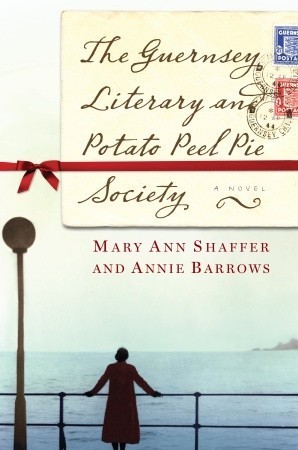
I approach epistolary fiction with a bit of trepidation. Can a story really be told effectively through a series of letters? In the case of the unusually named The Guernsey Literary and Potato Peel Pie Society, that is probably the best way to relate the events of the Nazi occupation of Guernsey and to present the characters and how the war affected them.
Juliet Ashton is a budding author with one successful book based on a column she wrote. Her publisher, Sidney, and his younger sister, Sophie, are friends of Juliet; their letters are part of the correspondence that moves the story along. The heart of this tale begins when a letter finds its way to Juliet in London from Guernsey where Dawsey Adams has bought a book by Charles Lamb with her name and address. Dawsey seeks more books by Lamb as well as information about him. Their correspondence leads to a discussion of the local book club which began during the Nazi Occupation.
Most of the book club characters are quite likable and work together because of, or in spite of, their idiosyncrasies and the hardships they have endured. They welcome the opportunity to share their stories with Juliet for potential publication. They are quite open to her personally as well. Juliet grows as a writer, her maternal instincts emerge, and she shows strength of character as she discovers what is important to her.
The Guernsey Literary and Potato Peel Pie Society is well-written with detailed settings and empathy for the characters. It is both a gentle and a strong book and gives a fair depiction of Nazi soldiers, most of whom suffer deprivation in Guernsey along with the locals. Some Nazis are depicted as brutal and a few as humane. Some citizens are supportive of each other and a few are treacherous. The accounts also included Todt slaves, brought in by the Germans. They suffer the most in this book. The Guernsey Literary and Potato Peel Pie Society has deservedly caused a lot of buzz among readers and has been made into a movie.
Rating: 5/5
Category: Historical Fiction
Publication: July 29, 2008—Dial Press
Memorable Lines:
I turned to a man sitting against a fence nearby and called out “We’re saved! It’s the British!” Then I saw he was dead. He had only missed it by minutes. I sat down in the mud and sobbed as though he’d been my best friend.
All those people I’ve come to know and even love a little, waiting to see—me. And I, without any paper to hide behind….I have become better at writing than living…On the page, I’m perfectly charming, but that’s just a trick I learned. It has nothing to do with me.
Dawsey was seeing to my bags and making sure that Kit didn’t fall off the pier and generally making himself useful. I began to see that this is what he does—and that everyone depends upon him to do it.
 education pathways