
Home » Posts tagged 'Catholic'
Tag Archives: Catholic
The Funeral Ladies of Ellerie County
The Funeral Ladies of Ellerie County
By Claire Swinarski

What an odd title for a novel! But as soon as you start reading, you will realize that it is very appropriate. Some of the main characters in the book are members of the funeral committee at St. Anne’s Catholic Church. When there is a death, they quickly move into action to provide the expected luncheon for attendees at the funeral “knowing they couldn’t fix broken hearts but might as well feed them.” Any food left over is packaged up and sent home with the bereaved so they don’t have to worry about food for the following difficult days.
As you get to know Esther, you will also meet her family and witness their love for each other. Esther is one of the kindest people you will ever meet. She is a widow, and she is frustrated with the process of growing old. Her generosity and empathy for Hazel, a young single pregnant woman she befriends on a Catholic website leads her into financial danger, but Esther’s family and friends gather round to support her. Unfortunately, Esther’s background and community stress the importance of pulling yourself up by your own bootstraps. The situation she is in is shameful to Esther, but it would also be shameful to accept help.
Esther’s granddaughter Iris comes to the rescue in a different way when Annabelle, a childhood resident of Ellerie County, passes away. Her family arrives for the funeral but find their reservations are a problem. Iris has a house almost ready for use as an Airbnb and lets them stay there. The grateful family includes a celebrity chef and his daughter. Cooper, his son from a previous marriage, is part of the dysfunctional family group. Cooper’s own mother is less a mother to him than Annabelle had been. A former EMT, he also suffers from PTSD.
The characters and their situations drive the plot and engage the reader. I felt immersed in the friends and family groups in the small town and could even feel the cold during the winter. The author of The Funeral Ladies of Ellerie County excelled in physical and emotional descriptions. Without a Hallmark kind of ending, she still manages to provide a hopeful conclusion to her story.
I received a complimentary copy of this book in exchange for an honest review. Opinions expressed in this review are completely my own.
Rating: 5/5
Category: Fiction, Women’s Fiction, New Adult
Publication: March 12, 2024—Harper Collins
Memorable Lines:
Esther was from an age where loving your neighbor meant loving your actual neighbor, not just adding an emoji to your Twitter name in times of crisis. She helped people just because they were standing in front of her.
…why couldn’t she just lie? It was the Catholic in her. The guilt clung to you like powdered sugar. You’d find the stuff in your hair days later.
They all thought you had to be in love to commit. They didn’t realize it was the other way around: that love came from commitment. Nobody ever tells you when you get married how many days you’ll wake up in the morning and want to strangle the other person. No, to them it was all Pinterest boards and buttercream flowers.
Pentecost: A Day of Power for All People
Pentecost
by Emilio Alvarez
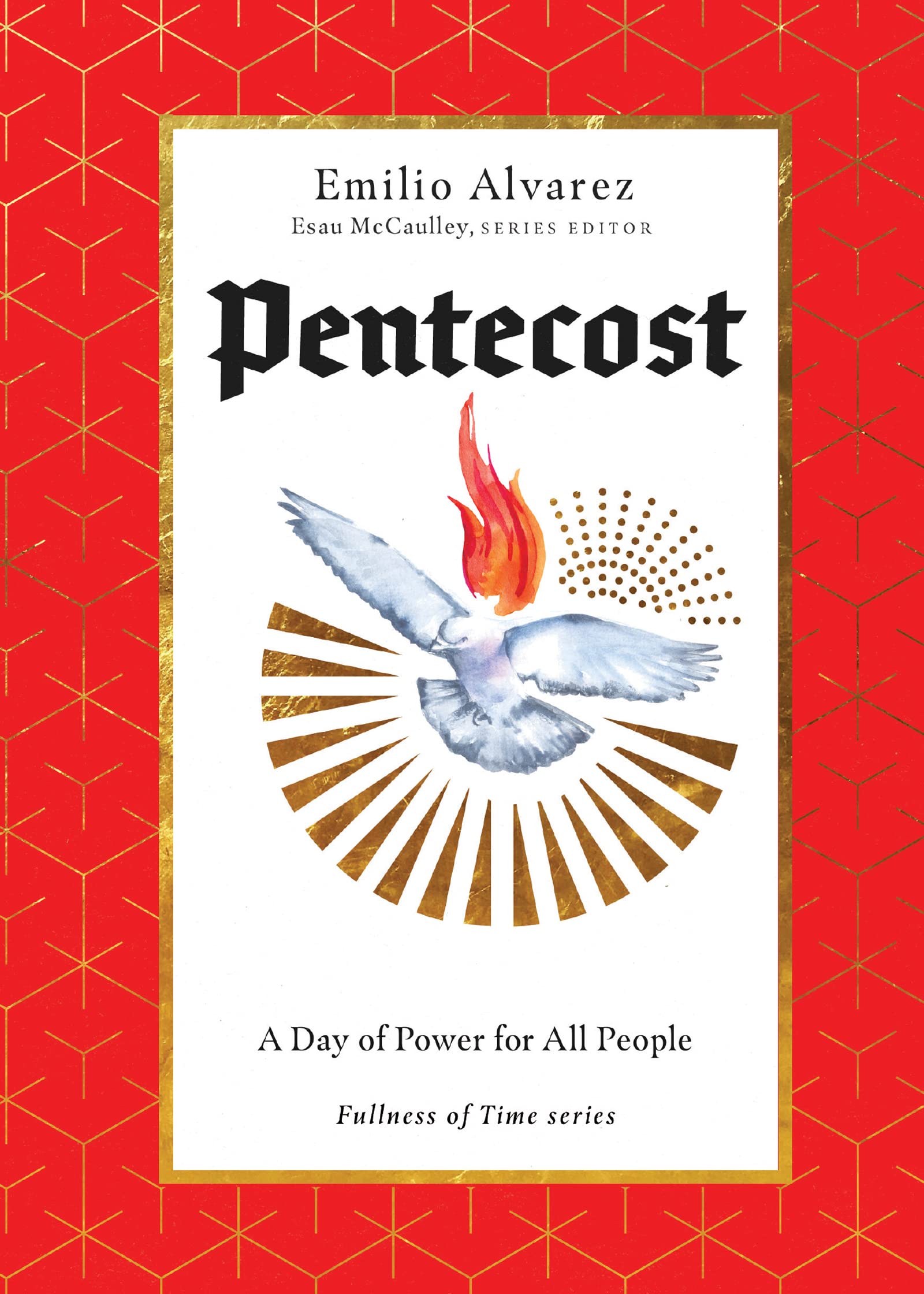
Pentecost is celebrated by Christians as the day when the Holy Spirit came to the early Christian church empowering Jesus’ followers to evangelize the world with the good news of salvation to all who believe that Jesus Christ died for their sins and was resurrected on the third day as He foretold. The writer Luke in Acts 2:1 sets the stage for the narrative with “when the day of Pentecost was fully come.” Jesus’ followers had been waiting for the prophecy to be fulfilled but were not told exactly when that would be. Pentecost is celebrated 50 days after the Jewish Passover. The author of Pentecost, Emilio Alvarez, writes that this season of waiting is a time to prepare our hearts. Fittingly, this book is part of the Fullness of Time series.
This little book begins with a discussion of the concepts of power and of pilgrimage. Next Alvarez devotes a chapter to various Jewish feasts that are the roots of the Pentecost celebration. Then a chapter is devoted to the speaking in other tongues as the Holy Spirit on that day of Pentecost enabled the Jews gathered from many nations to speak in each others’ languages. He relates this phenomenon to a reunion of peoples and a reversal of what happened at the Tower of Babel.
A large part of the book Pentecost is devoted to the rituals and liturgy related to the celebration of Pentecost ranging from the dates of remembrance to the custom of specific colors used for decorations and clothing and on to practices of kneeling or standing. Within the unity of Christian worshipers, there is a diversity of groups who celebrate in many different ways. Alvarez chooses to discuss the Christian tradition found in these five churches: Eastern Orthodox, Roman Catholic, Syrian Orthodox, Anglican, and Pentecostal. From this discussion you can extrapolate that there are a number of ways to celebrate Pentecost. They vary by culture, tradition, and understanding of Scriptures. The hymns, prayers, and Scriptures of these five traditions are just samples of the many available to Christians, and this theological scholar invites Christians to draw from other groups’ practices to enrich, not dilute their own. He ends this section with an interesting testimony of his own spiritual background as a Pentecostal Christian which differs greatly from the liturgies in the other church groups examined in this book. It is a personal spiritual journey which neither discredits nor confirms the formal liturgies found in the other churches mentioned. There are truths and blessings to be found in all of these traditions.
Upon a first reading of the Conclusion, I found it to be beautifully written, helping the reader to imagine the first Pentecost. Upon a second reading I realized I was in disagreement with the author. While I, also, want all people to overcome the “differences in race, culture, and religion,” I do not connect that as a necessity upon which the coming of the Holy Spirit depends. In Acts 1:4-8, Jesus told his followers that they should wait in Jerusalem until they received baptism of the Holy Spirit which would empower them as witnesses. Jesus had said that he would send the Holy Spirit. Just like salvation, this empowerment is a gift of God, not something we can earn.
Overall, I profited from reading this book. It gave me much to think about, and I had my view of the practices within many Christian churches widened.
Rating: 4/5
Category: Religion, Christianity, Theology, Nonfiction
Notes: 1. This is probably not an appropriate book for someone new to Christianity, but might be helpful to someone looking to understand formal liturgical church services.
2. I have read three other books in the Fullness of Time series, and this is my least favorite. I personally battle between it being highly edifying and overly pedantic.
3. I read this for my book club, and it was full of topics for discussion. My understanding of the book profited from hearing other viewpoints.
Publication: 2023—InterVarsity Press
Memorable Lines:
…no matter where we are in the world, and no matter what Christian tradition we belong to, at Pentecost all those who believe in the coming of the Holy Spirit sing and glorify the Most Holy Spirit, and God hears it as if it was coming from one voice.
At Pentecost we are awakened from the delusion that only our race, ethnicity, culture, political party, or language matters, is important, or is even truly Christian. This is one of the great errors of postmodernity, this division through delusion. In remembering Pentecost, however, we once again call on the Spirit to illuminate the dark areas of our lives and confront our delusion with godly wisdom and truth.
There is nothing we can successfully rationalize or theologize about Pentecost that would cause all Christian parties to nod with complete approval, yet there is nothing we can do or say against it that discredits its success in evangelizing the nations.
No Vacancy–struggle with religious identity
No Vacancy
by Tziporah Cohen

Life is not always easy as Miriam, an eleven year old, discovers. As her family faces financial distress, she is uprooted and transplanted to a motel in upstate New York. She leaves behind her close friends and spends her summer days helping her family revive the failing motel. Success for the motel would also mean better times for the Whitleys, a generous and kindly couple next door whose granddaughter Kate becomes Miriam’s best friend. When Miriam’s Uncle Mordy suggests it might take a miracle to keep the businesses afloat, Kate and Miriam decide to provide one!
As she is dealing with challenges at the motel, Miriam is trying to understand what it means to be Jewish and why she is different from others in her new community. She also wrestles with a fear of swimming.
Tziporah Cohen’s No Vacancy is a gentle, but thoughtful look at religion, ethics, and community. This work of fiction is aimed at middle schoolers, but I enjoyed reading it. I like Miriam and find that her interactions with other characters as she struggles with being open about being a Jew and about her aquaphobia gives the book more depth. Uncle Mordy shares differences that exist among Jews in practicing their faith. The Catholic priest acts as a counselor without being intrusive or preachy. The interactions between Miriam and Kate demonstrate that differences in faith don’t preclude a happy and healthy friendship.
I would like to extend my thanks to NetGalley and to Groundwood Books for giving me the opportunity to read this book in exchange for an honest review.
Rating: 4/5
Category: Children’s Fiction, Middle Grades
Notes: As an adult, I enjoyed this book, so just use this information as the publisher’s intended audience:
Grades: 4-7
Ages: 9-12
Publication: August 4, 2020—Groundwood Books
Memorable Lines:
Miriam starts to ask herself some prickly questions. Is a lie always a bad thing, even if what comes out of it is good? Does our faith make us so different from one another? And when bad things happen, do we really all have a shared responsibility for the hate in the world?
“It’s not that we can’t get along. We just believe in different things. And while I can be friends with someone who believes in different things than I do, it’s a lot harder to be married to, and raise a family with, someone who is different in these big ways. Not everyone feels that way, and that’s okay. but I do.”
“When someone is different from us,” he says, “sometimes we jump to conclusions instead of taking the time to understand.”
Death Comes for the Archbishop–New Mexico frontier
Death Comes for the Archbishop
by Willa Cather

Every well-read person should have read at least one book by Willa Cather, an American Pulitzer Prize winning author famous for her novels set in the frontier. When my book club decided recently to read Death Comes for the Archbishop, I had not read any of Cather’s books. I was delighted that the choice was one that focused on the history of the Catholic church in New Mexico where I currently live. The novel provides as a backdrop a tour of cities, towns, pueblos, and open deserts inhabited by foreign priests, Mexicans, and Indians. Cather paints beautiful word pictures of the landscapes while depicting the difficulties of life, and especially travel, as two French priests attempt to revive the Catholic religion in the region. Churches had been planted over three hundred years earlier but did not receive much attention from Rome. With the annexation of new territories by the U.S., things begin to change in a land viewed as “wild” for many reasons. It is ruled over by the Bishop of Durango located in Mexico, fifteen hundred miles away from Santa Fe where the missionaries headquartered.
Jean Marie Latour, a parish priest based in the Lake Ontario region is elevated to bishop arriving in New Mexico in 1851 after a difficult and dangerous year long journey. He is accompanied by his childhood friend Father Joseph Valliant. Despite its title, Death Comes for the Archbishop is not a murder mystery nor does it focus on the death of the Archbishop. Instead, it is a triumphant tale of strong, wise, and intelligent men who against all odds form friendships with peoples of various tribes, cultures, and languages in a harsh but beautiful land. The descriptive language is exquisite and serves to enhance and further the plot. This book celebrates the usually successful struggles for survival and the somewhat successful attempts to share the Catholic religion. In the Archbishop’s passing, it becomes evident that he was much loved and respected by the peoples of the many cultures in his diocese.
Death Comes for the Archbishop is a tale I would enjoy rereading for the breadth of its descriptions and the depth of its topics. The two Fathers were men I would enjoy meeting. Quite unalike physically and in disposition, they were fast and loyal friends with different means of evangelism, but suitable to their characters. Although this book has a specific setting in terms of time period and location and has characters with a religious profession, its themes of devotion, strength, and friendship transcend the New Mexico frontier of the 1850’s and the Catholic priesthood. Although the specifics were interesting and an effective vessel for the themes, the novel proves Cather to be, above all, an able storyteller. I had no regrets in reading this work of historical fiction based on the lives of two missionaries, and I highly recommend it.
Rating: 5/5
Category: Historical Fiction
Publication: June 15, 1927—Reading Essentials
Memorable Lines:
Everything showed him to be a man of gentle birth—brave, sensitive, courteous. His manners, even when he was alone in the desert, were distinguished. He had a kind of courtesy toward himself, toward his beasts, toward the juniper tree, before which he knelt, and the God whom he was addressing.
There was a reassuring solidity and depth about those walls, rounded at doorsills and windowsills, rounded in wide wings about the corner fireplace. The interior had been newly whitewashed in the Bishop’s absence, and the flicker of the fire threw a rosy glow over the wavy surfaces, never quite evenly flat, never a dead white, for the ruddy colour of the clay underneath gave a warm tone to the lime-wash.
This mesa plain had an appearance of great antiquity, of incompleteness; as if, with all the materials for world-making assembled, the Creator had desisted, gone away and left everything on the point of being brought together, on the eve of being arranged into mountain, plain, plateau.
Carnegie’s Maid–sacrificing for family
Carnegie’s Maid
by Marie Benedict
 Carnegie’s Maid, a work of historical fiction, attempts to explain what could have caused Andrew Carnegie, a ruthless businessman, to become a philanthropist and founder of the Carnegie Libraries. As a former impoverished Scottish immigrant, he fights his way to the top echelons of America’s monied, sometimes stepping on the backs of other immigrants to get there. Author Marie Benedict has created a lady’s maid from Ireland who is on a mission to support her Irish Catholic Fenian family. Her Clara is hard-working, smart, and focused. An opportunist, she takes the place of another Clara becoming a lady’s maid rather than a scullery maid making herself privy to the family’s secrets and business machinations.
As seen in Benedict’s other excellent work of historical fiction, The Other Einstein, the novel Carnegie’s Maid demonstrates the author’s intensive research and attention to detail. As I read I found myself wishing for a main character based on an actual person as in The Other Einstein. I assume the details and records of Carnegie’s life are just too sketchy to provide such a character. Benedict has taken the immigrant culture of the times, the certainty that Carnegie’s mother would have had a lady’s maid, the mystery of Carnegie’s altruism, and his delay in marriage as the basis for her fictional Clara. There is much more supposition in this book, but it is well written and not outside the realm of possibility.
I enjoyed the tale with its details about the difficult lives of the Irish both in Great Britain and in the United States. It paints a picture of the U.S. as a very difficult land of opportunity, with no handouts, and even fewer options for women. Gender, ethnic background, religion, money, family, and education all play a role in the highly stratified, unofficial class systems of the time.
I would like to extend my thanks to netgalley.com and to Sourcebooks Landmark for giving me the opportunity to read this book in exchange for an honest review.
Rating: 5/5
Category: Historical Fiction
Notes: by the author of The Other Einstein
Publication: January 16, 2018—Sourcebooks Landmark
Memorable Lines:
“These Catholic Irish running from the havoc wreaked by their famine and pouring onto American shores are not like the hard-working Protestant Irish who immigrated in earlier years. This new Catholic crop is rough and uneducated, and they’ll destroy the fabric of this country’s shaky democracy if we let them, especially in these days of Civil War unrest, just like they did back home in Scotland when they stole factory jobs away from Scottish men and women. An Irish Catholic servant might suffice as a scullery maid but not as my personal maid.”
For whom was I crying? for all the immigrants like the Lambs, who came to America seeking a better life but settled instead for a soot-infested home and dangerous work in the mills and gave thanks for it?
For the first time, I realized how alike my situation was to that of Mr. Carnegie. Although the scale was quite different, the stakes were not. The well-being of both our families rested on our success.
 education pathways