Home » Posts tagged 'bravery'
Tag Archives: bravery
Sisters Under the Rising Sun–cruelty and bravery
Sisters Under the Rising Sun
by Heather Morris
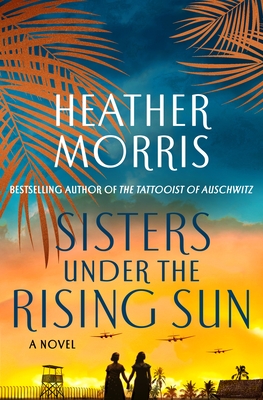
There are so many books that vividly describe the horrors of concentration camps in Europe during World War II, and Heather Morris has written several of these. In Sisters Under the Rising Sun, a work of historical fiction, Morris takes readers to the other side of the world to examine the equally dreadful treatment of civilians and Australian Army nurses in Japanese prisoner of war camps in World War II. Any sense of humanity went out the door on the part of the Japanese captors as their captives struggled to stay alive for almost 4 years with very little food, no medical supplies, unsanitary living conditions, and brutal treatment. There were many deaths, but also many examples of prisoners who survived by faith, loving and supporting each other with survival and hoping for a reunion with loved ones.
One prisoner has an extensive musical background and a lot of talent. She organizes a “voice orchestra” with women’s voices taking the parts of various musical instruments producing classical pieces to the amazement of all and with enthusiastic members. She refuses, however, the request of the camp captain to play a Japanese song, and she is harshly punished.
The groups are moved from camp to camp, each time having to restore the camp into a semi-livable place. They are given only a few inadequate tools for their work (e.g. two machetes to dig graves). Depending on the circumstances, they have to carry water quite a distance or dig wells with coconut shells or their hands. With very little to eat, they have very little energy for the work and weak immune systems. Vermin and rodents are a problem all the time. When the monsoons arrive, they have to repair their roofs with leaves. The heat is unbearable, and thirst is a common companion.
The book begins with a focus on two different groups. One is the brave and dedicated nurses who are addressed as “sisters.” The other is a family group consisting of two biological sisters and their husbands. It took me a little while to get into the story because initially the plot did not have a strong focus and kept going back and forth. Then the characters were united in one storyline which helped a lot. By the end of the story, I was smiling and crying at the resolutions for the various characters. They had become real to me.
I received a complimentary copy of this book in exchange for an honest review. Opinions expressed in this review are completely my own.
Rating: 5/5
Category: Historical Fiction
Notes: 1. As I began Sisters Under the Rising Sun, I pegged this book as worthy of 4/5 stars. By the end, my heart had gone out to the characters. Any book that can do that to me is worthy of 5/5 stars.
2. There is an epilogue that ties up what happened to the major characters when families are reunited. Ena and her sister Norah were prisoners together throughout the whole imprisonment period of almost 4 years but they had no idea what had happened to their loved ones. Especially important are June, a child who got separated from her parents and swept up in the arrests. She was cared for by Ena. Norah’s daughter Sally left Singapore under precarious conditions before everything fell apart.
3. The book ends with notes about what happened to the historical characters that the fictional ones are based on.
Publication: October 24, 2023—St. Martin’s Press
Memorable Lines:
“Be my life short or long, I’ll remember this moment forever. How in the worst possible circumstances two women, who I love more than life itself, found a way to laugh and make me laugh. Thank you, my darlings.’
“No, Sister, we’re not going anywhere. Can’t you see there are people here who need us? Yes, they have probably killed the men, but all our training and everything we stand for means we do not abandon those who need our help. I want you all to remember that where there is life there is hope.”
“I served in the Great War and I’ve been fighting in this one for two years. I thought I had seen and heard the worst of humanity. But today, just now, you have shown me that human brutality knows no bounds. What happened on that beach will not be forgotten. I’ll find a way to make it known and all I ask of you is that you say nothing to another living soul until you are safely back at home.”
The Nine–despair and courage
The Nine
by Gwen Strauss

Five years of research and writing went into the creation of The Nine, a nonfiction work that focuses on a group of nine women, most in their twenties, who joined the Resistance movement in World War II at various times and places. Six were French, two Dutch, and one Spanish. They were individually captured and sent to worse than horrible Nazi internment camps.
The author was able to interview her great aunt Helène who spoke five languages and was the leader of this band who joined together to survive and escape. Strauss followed quite a maze of information and was aided by many including families of “The Nine.” The book begins with Helène’s story which for me was emotionally difficult as she provides some details of her capture and torture. There were some types of torture, however, that Helène would not discuss or even name. The rest of the account moved more quickly as we learn more about each of the young ladies in the first nine chapters along with descriptions of life in a labor camp. Each chapter moves them closer to either death or escape. Most of the rest of the book lays out their last days together and concludes with what happens after the war is over.
The ladies did not share their stories with very many people for a variety of reasons which the author relates. Several wrote about their experiences in unpublished formats to be discovered after their deaths. Many former prisoners of World War II suffered again after their presumed return to safety—homes and loved ones were gone, their bodies were physically ruined, and society turned against them. Statistically they were lucky to survive, but they bore visible and invisible scars. Most returnees were reluctant to discuss their imprisonment with even those closest to them and found that, in general, people did not want to hear about their experiences.
I highly recommend this book for the author’s insightful and thorough reporting about the brave women of the Resistance and the cruel and evil system that treated them as vermin. One of the policies that I sadly see repeated currently is those in power inciting division to weaken and control those under them. In the camps, the Poles received the best treatment from the Nazis, followed by the Reds. Every group looked down on another in the camps with the Roma (Gypsies), criminals, and homosexuals regarded as the bottom of humanity.
I received a complimentary copy of this book in exchange for an honest review. Opinions expressed in this review are completely my own.
Rating: 5/5
Category: History, Nonfiction (Adult)
Notes: 1. Subtitled: The True Story of a Band of Women Who Survived the Worst of Nazi Germany
2. At the first of the book there is a list of the women with their nicknames and a brief description
3. At the end of the book are notes about the author’s journey into the past, a bibliography, notes on each chapter, and a list of the illustrations (which sound interesting, but were not included in my Advance Reader Copy).
Publication: May 4, 2021—St. Martin’s Press
Memorable Lines:
The Jewish prisoners were given the worst rations, worst living conditions, and the hardest jobs. They were already the most traumatized group, having suffered pogroms, witnessed mass murders, and narrowly escaped the gas chambers. All of them had probably seen their loved ones die, and they may or may not have counted themselves lucky to be alive.
They were proud of how they served each other, divided food equally, and maintained their civility in such an uncivil place. It had kept them strong when others become more and more like animals, lost their sense of themselves, and fell into dark despair.
In the sea of people who seemed to have been tossed up like pebbles on a beach, the prospect of finding their loved ones felt nearly impossible.
Storytime: The Not-So-Brave Penguin
Storytime: The Not-So-Brave Penguin
by Steve Smallman
 Join Percy penguin and Posy penguin doing what Antarctic penguins do—and bring along some kids for a fun time together. Storytime: The Not-So-Brave Penguin is an adorable picture book written and illustrated by Steve Smallman. It tells the tale of the adventurous daredevil Percy and his timid friend Posy. When Percy’s penchant for rollicking fun takes him over the edge, Posy finds the courage to overcome her biggest fear, the dark, to rescue him.
Children can identify readily with both characters and will enjoy talking about the plot, characters, emotions, and setting. The illustrations are outstanding and such that a non-reader could retell the story. The author follows up with suggestions for discussion and activities to enhance comprehension with charts and art activities.
I would like to extend my thanks to netgalley.com and to Quarto Publishing for giving me the opportunity to read this book in exchange for an honest review.
Rating: 5/5
Category: Children’s Fiction
Notes: Age Range: 4-8 years
Grade Level: Preschool-2
Publication: November 15, 2018—Quarto Publishing
Memorable Lines:
Percy penguin wasn’t scared of anything.
He loved WHIZZING down snowy slopes on his tummy.
Posy penguin was not so brave.
She shuffled down slopes on her bottom instead.
 education pathways