
Home » Posts tagged 'Bible'
Tag Archives: Bible
The Joshua Code: 52 Scripture Verses Every Believer Should Know
The Joshua Code: 52 Scripture Verses Every Believer Should Know
by O. S. Hawkins
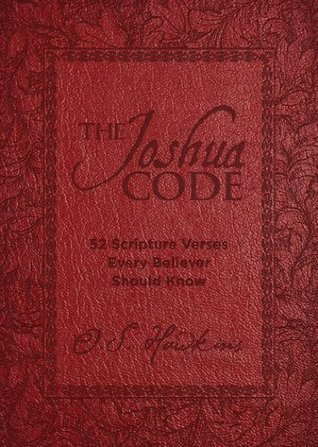
Have you ever felt like you should have more Bible verses committed to memory than you already have? That thought was the impetus for me to purchase and read this book. The goal is to memorize one verse each week. At first that seemed doable, but as life brought some ups and downs, I found myself unable to remember, over the long haul, all the Scripture references that went with each verse. So, about half way through the book, I switched to using it solely as a devotional and that worked well for me in that season.
My first reaction to The Joshua Code was to question the author’s choice of Scriptures. Many of my “favorites” were not included, and I wasn’t sure I saw the importance of those that were selected. As I stayed with it for a few weeks, I began to understand the process. With each verse there is a devotional, a short homily. As I read each chapter I could see why the verse was important. Since then, I have been surprised at how these verses come up in various contexts and provide an “Ah, ha” moment or a “God wink,” a term used by some for seeming “coincidences.”
According to the author, the title Joshua Code refers to Joshua 1:8 and is a “challenge to keep God’s Word in our mouths through memorization and keep it in our hearts through meditation ‘day and night.’ ” In the Introduction, Hawkins gives his practical method for committing verses to memory. He also explains what meditation is for Christians and how valuable meditation can be when applied to these verses.
I recommend this book for Christians and also for those seeking a relationship with Jesus. This book will show readers how to find Jesus in the Scriptures despite the chaos of daily life and digital content that constantly bombards us.
Rating: 5/5
Category: Christian, Nonfiction
Notes: 1. 52 Scriptures and devotionals to encourage memorization
2. A note at the end of the book states that all of the author’s royalties and any other proceeds from the book go to Mission Dignity which “enables thousands of retired ministers (and, in most cases, their widows) who are living below the poverty level, to live out their days with dignity and security.” Small churches are often unable to contribute to a pastor’s retirement, and Hawkins is using his book to financially fill that need.
Publication: 2012—Thomas Nelson
Be of Good Cheer: A Christmas Devotional
Be of Good Cheer: A Christmas Devotional
by Susan Hill
The season of Advent has come and gone on the Christian calendar as we remembered the arrival of Jesus, the King of Kings, who was born, as predicted in the Old Testament, in the little town of Bethlehem. His humble birth was just the beginning of the earthly story of the long awaited Messiah who was both fully God and fully man. He experienced in his perfect body all the things that we experience—grief, joy, pain, love, hunger, disappointment. Then he sacrificed himself on the cross to redeem men from their sins.
Be of Good Cheer is a 40 day devotional that draws the reader to the character of Jesus and focuses on words that are elements of a Christ-filled life. In fact, if you are looking for your “word” for 2025, this could be a resource for inspiration for that project.
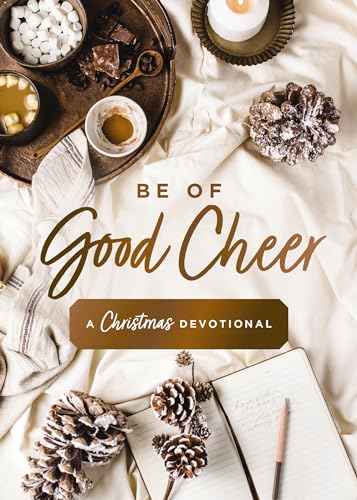
This small book is a visual delight with illustrations that are both photographs and paintings. It makes a nice coffee table book that can be read through as an Advent devotional according to each day or picked up by a casual guest to peruse at their leisure. The smooth, heavy weight paper adds touch to the pleasures of holding this book. Each chapter has a one word title followed by a relevant Scripture reference. For example, Chapter 1 is “Cheer” with the verse “Rejoice in the Lord always. I will say it again: Rejoice!” (Philippians 4:4). A short message ends with a suggestion on how to live out the word, how to apply it. This is followed by a brief prayer.
I enjoyed reading each passage. I think this book would make a nice gift for many in 2025.
Rating: 5/5
Category: Nonfiction, Christian, Devotional
Publication: October 1, 2024—Zondervan
Memorable Lines:
From Glory: To give glory to God doesn’t mean to give God something He lacks—it means to proclaim the magnificent glory He already possesses. God’s glory can be defined as all the things that make Him heavenly—His omniscience, omnipotence, and perfect love.
From Miracles: Christmastime is the ideal time to reflect on the reality that God is in the miracle business and routinely accomplishes the impossible. Is there a specific area in your life where you need God to work? Be encouraged that you serve a God who can do all things.
From Kindness: God, thank You for the countless ways You have lavished acts of kindness on me. Help me see the ways You are kind, and lead me to people who need my kindness.


Under the Tulip Tree–must-read book about slavery
Under the Tulip Tree
by Michelle Shocklee
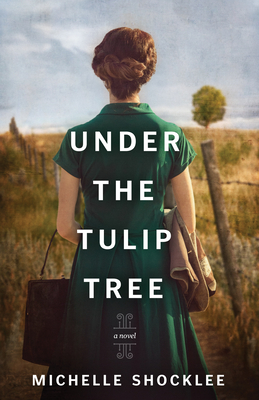
We have all heard it: it is important for us to know history so we don’t repeat the mistakes of the past. Michelle Shocklee does that in her novel Under the Tulip Tree. We get a view of slavery through the eyes of Lorena (Rena), an aspiring writer, who struggles to pursue her career in a male dominated society. She is sixteen when the stock market crashes and her privileged life changes forever. Seven years later she accepts a job with the Federal Writer’s Project (FWP) and meets Frankie who at 101 years old has a horrendous story to tell about what life was like for her and for others who were slaves.
The impact of someone being owned by another person is a concept that is hard for Rena to get her head around. The atrocities that Frankie shares are heartbreaking—even more so when you realize these things are drawn from actual events as told to FWP workers who were employed by the government to interview former slaves and record their stories for posterity.
What makes this story especially impactful is that Rena is telling this story from the viewpoint of a young White woman during the Great Depression. Although slaves had been freed, Blacks still did not enjoy equal rights. From sitting at the back of the bus, to lower pay, to being treated as dirty and ignorant, Blacks suffered from discrimination. Some Whites treated Blacks that way just because they could—acts of control and power. Some Whites treated Blacks that way because they were raised with that mindset, a deep cultural fear and hatred of someone who was different or because their own families had been mistreated by the Feds during and after the Civil War.
Rena’s father was a banker who fell apart after the crash. With her grandmother’s help, her family stayed afloat with both Rena and her mother getting jobs. Employment outside the home was something that was not acceptable for “their kind.” Rena’s mother was especially class conscious and worried about what her gossiping neighbors and former friends would say about Rena consorting with Blacks in Hell’s Half Acre where Frankie lived in a well-kept, small home boasting a beautiful floral garden and an outhouse.
As Frankie tells her story to Rena, the reader is quickly tied into the cruelty of the drama taking place in the book, and it becomes a page turner. It is harder to connect with Rena, but she grows as a person and becomes someone with the potential to do good. You can’t tell a story like this without pondering how a good God can allow bad things to happen. Frankie understandably harbors a lot of hate in her heart, but God works gently on her by bringing Illa, a Quaker woman, and Sam, a former slave, into her life, each encouraging, challenging and helping her.
Shocklee is a masterful storyteller, evoking empathy for 7 year old Frankie and embedding her into the heart of the reader. She shares the difficulties Frankie endured throughout her life without bearing down on graphic details. The author also dives into the “contraband” camp where Frankie lived for three years, still nominally a slave but under the protection of the Federal soldiers. Then she paints a picture of the horrors of war and its aftermath. As we learn about this part of history, we also see how citizens, both Black and White, were faring during the Great Depression. There are several surprising events at the end of this tale that help to bring closure for the characters and the reader.
There is a strong spiritual theme in Under the Tulip Tree. Frankie’s mother, Mammy, is a Christian believer, and although separated from each other early in Frankie’s life, Frankie never forgets her mother’s faith. Another important theme is literacy. Slaves were not allowed to learn to read. It was clear to the masters that slaves who could read could not be controlled as easily. Therefore books were forbidden. Frankie initially wanted very much to read, but the consequences were too great, robbing her of that desire. Standing up for what is right, for the downtrodden, for yourself against the power of the group in control is also a recurrent theme. All of these and many others remain ideas we wrestle with in our current society. On the positive side, we see the strength to be found in literacy, in trusting in God despite the circumstances, in the power in the Word of God, and in love for others—even our enemies.
Rating: 5/5
Category: Historical Fiction, Christian
Notes: 1. My personal thoughts in response to Under the Tulip Tree:
—The problem is not addressed in this book; but, sadly, slavery/human trafficking is widespread all over the world today. It is a major problem in the U.S.
—We make quick assumptions every day about other people based on where they come from, how they look and talk, and so many other factors. People, Black and White, did that in the book, and we still do it today.
- Original stories collected by WPA are available online from several sources. One is sponsored by Rice University: https://libguides.rice.edu/c.php?g=1231494&p=9012494
- Discussion questions are included in the back of the book.
Publication: 2020—Tyndale
Memorable Lines:
[Rena]: “People like me, like my family, we don’t know much about what slaves experienced. I’ve never heard of children being beaten with no one held accountable, or being forced into labor at the age of seven. Even though slavery isn’t legal anymore, I believe it’s important to remember the past as it truly was, not as we wish it to be.”
[Frankie]: “Helplessness washed over me, and I hated myself for it. Ever since the day I was sold away from Mammy, I’d despised helplessness. When overseers beat me and chased me down like an animal, I’d been helpless. When men used my body for their own pleasure and babies died, I’d been helpless to prevent it from happening. But the one thing I’d fought to maintain control over was my emotions. No one could force me to love or hate. They were mine to decide. I wasn’t about to allow this white woman to steal that away from me, no matter her attentive ministrations.”
[Sam]: “Don’t you see, Frankie? The day I landed on Miz Annabelle’s doorstep changed my life. I thought I found freedom when I ran away from my master, but it weren’t mine. Not yet. Freedom comes in knowing the truth of God. He loves each of us the same. He loves you, Frankie.”
Seeking Allah, Finding Jesus: A Devout Muslim Encounters Christianity
Seeking Allah, Finding Jesus
by Nabeel Qureshi
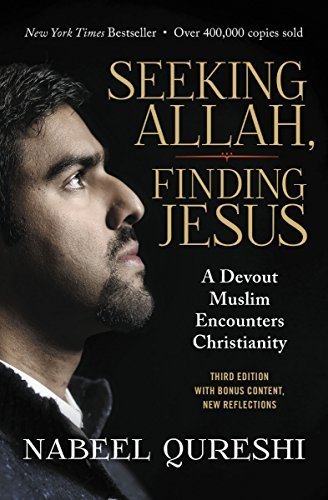
Nabeel Qureshi was an intellectual raised in a Muslim home who devoted years of study and fellowship with his best friend David, a Christian intellectual. They argued, researched, prayed, and maintained their friendship as Nabeel sought the Truth. Was he to find it in Jesus or in the teachings of Islam? This book is perfect for anyone who wants to:
—approach the Bible analytically
—prove or disprove the claims about Jesus Christ
—learn more about the beliefs of Muslims, their culture and how the two are related
—learn about the history of Islam
—understand the difference in approaches to Islam in the East and in the West
—learn some basic Islamic terminology
—witness a true Christian/Muslim friendship
—see how a Christian can share Jesus with others by example as he lives out his beliefs in Jesus through his actions
—learn how to disagree respectfully
—understand the Trinity
—gain an understanding of what a Muslim gives up when he converts to Christianity and the consequences of a conversion
—comprehend the claims and arguments against and for the crucifixion and resurrection of Jesus
—read truths about Muhammad and the Quran that imams don’t share with their followers.
The Foreword of Seeking Allah, Finding Jesus summarizes the book quite well: “This is the riveting story of one man’s quest to set aside his preconceptions and pursue answers to the most pressing issues of life and faith, despite enormous pressure to maintain the status quo.”
Rating: 5/5
Category: Memoir, Christian, Religion and Spiritual
Notes: The author describes the book as a “narrative biography,” and one of the contributors to the lengthy appendix which expands on the topics in the book calls it Qureshi’s “spiritual autobiography.”
Publication: August 21, 2018—Zondervan
Memorable Lines:
The culture clash of immigrant parents with their Western-born children is especially common during the emotionally stormy teenage years, and it serves to illustrate a vital fact: Muslim immigrants from the East are starkly different from their Muslim children born in the West.
Effective evangelism requires relationships. There are very few exceptions.
Because of hadith and tradition, Muslim religion, culture, heritage, and identity all find their core in the person of Muhammad. This is why Muslims see an attack on his character as equivalent to a personal attack on them and everything they stand for.
These are the costs Muslims must calculate when considering the gospel: losing the relationships they have built in this life, potentially losing this life itself, and if they are wrong, losing their afterlife in paradise. It is no understatement to say that Muslims often risk everything to embrace the cross.
Becoming Elisabeth Elliot–missionary seeking to obey
Becoming Elisabeth Elliot
by Ellen Vaughn
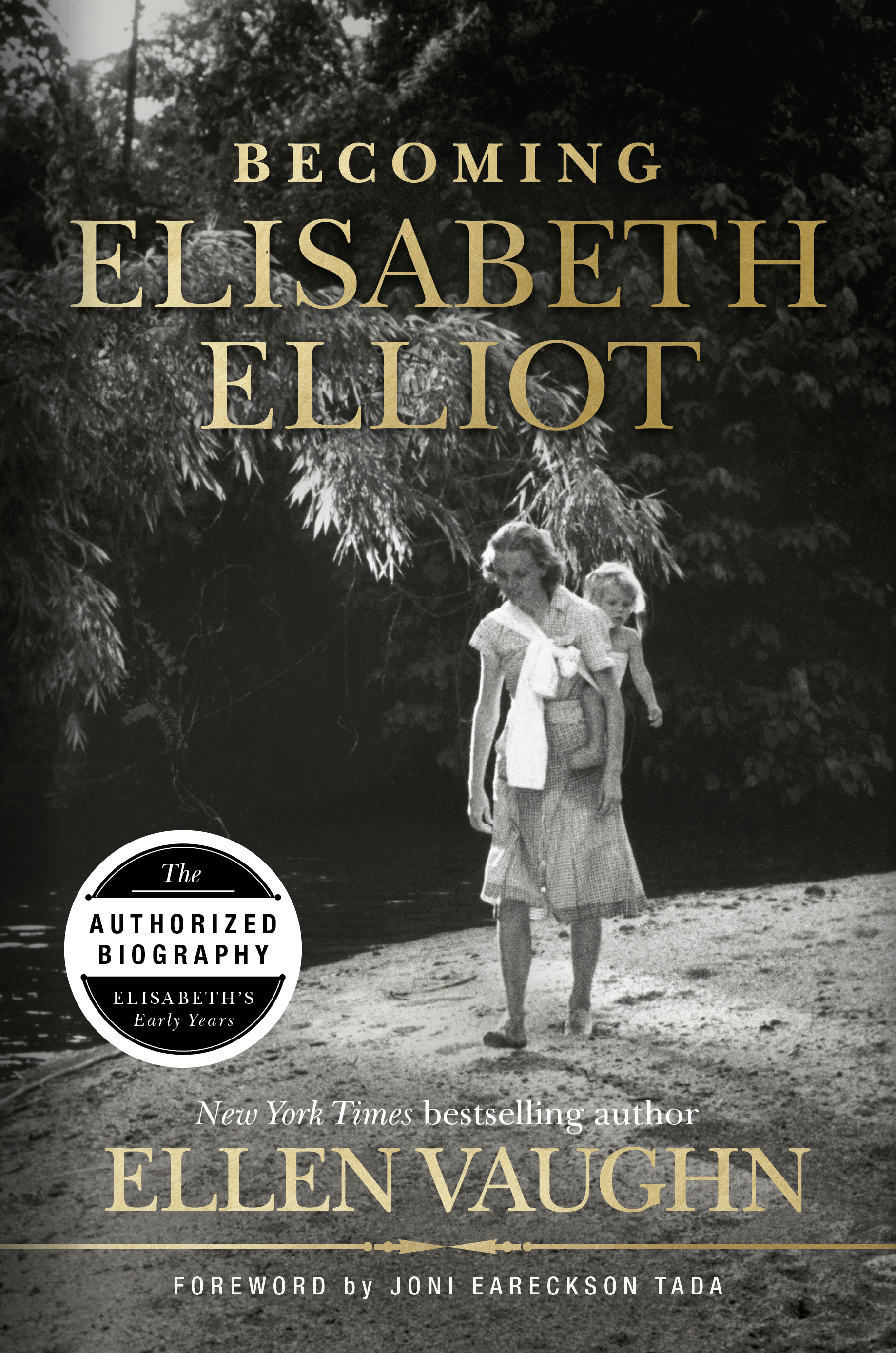
[No spoilers in this review.]
There are some biographies so full of facts that they are boring. There, I’ve said it! Becoming Elisabeth Elliot, thankfully, is not that kind of biography. Many readers may be familiar with the basic story of Jim and Elisabeth Elliot, missionaries to Ecuador to try to reach the Waodanis. This tribe had only experienced violent conflict with the outside world. Jim and Elisabeth (a.k.a. Betty) were determined to decipher the Waodani language so they could translate portions of the Bible to the native language as well as make friends with the people and introduce them to Jesus.
The basic story of their experiences are recorded in Elisabeth Elliot’s book Through Gates of Splendor. That same information appears in this authorized biography Becoming Elisabeth Elliot, but this book focuses on the first third of Elisabeth’s life and her preparation for whatever God called her to do. The author was given access to Elisabeth’s many private journals and interviewed people who were a part of her life in various ways. We are able to delve into Elisabeth’s thoughts as she poured out her soul in her journal disclosing her primary goal, to be obedient to God. We learn of her pain and suffering before, during, and after a major crushing event in her life. Her early years and education are discussed from the viewpoint of how they impacted her relationships with God, family, and friends. Then we learn how she matures in her faith, never seeking weak Christian platitudes but struggling to understand God and His plan. She has a lot of difficult seasons of waiting as she seeks God’s will and learns first hand that the question of why something happens may never be answered on Earth. The important question is not “why,” but “what”—what does God want me to do? What is the next step?
Well researched and well written, Becoming Elisabeth Elliot is a masterful biography and a page turner. It can be read as a historical document showcasing a woman who achieved fame as a missionary, prolific author, speaker, translator, professor, and radio broadcaster. It can also be read and studied by those who want to learn from Elliot’s experiences and spiritual insights to further their own personal journeys in drawing closer to God and obeying Him in following in the footsteps of Jesus.
Rating: 5/5
Category: Biography, Nonfiction, Christian
Notes: 1. Each chapter begins with a quote by various authors. They are always apropos to the chapter and worthy of pondering.
2. The book includes a Foreword by Joni Eareckson Tada, an Epilogue, and Footnotes.
3. The author has written the second in a series of three planned books to provide a complete telling of Elisabeth’s life. Being Elisabeth Elliot, which covers Elisabeth’s later years, will be published on September 12, 2023.
Publication: 2020—B&H Publishing Group
Memorable Lines:
And Eugenia had nearly vomited when Betty gave her some vegetable soup; she had absolutely recoiled at the taste of fudge. Well, Betty thought, it was just another vivid reminder that one could not assume that everyone thought and felt just like North Americans.
To opine about what God is up to in terms of results, can stray into the realm of hubris, or faithlessness. If we must see that there are worthy results in order to come to peace about what God has done or allowed, then we have no faith.
And suffering is one of God’s sanctifying tools. God is not a cosmic plumber who shows up to make things run smoothly for us. When He doesn’t fix broken situations in our lives, it’s usually because He is fixing us through them.
Food Triggers–a Godly approach to healthy eating
Food Triggers
by Amber Lia

Amber Lia writes Food Triggers from the perspective of a certified health coach and a Christian. She began her journey to develop healthy eating habits when she was sixty pounds overweight. She views the journey to health as both a physical and a spiritual battle. She began her personal changes with a “medically designed plan” in consultation with a health coach for accountability. She combined that with examining her food triggers one at a time. This book does not tell you what to eat although she clearly avoids sugars and excessive carbs. She intends her book to be read one chapter per day for 31 days. Each chapter addresses a specific motivation or food trigger, some external and some internal.
Lia backs up the information with research and with Scriptures. She encourages the reader to “exchange unhealthy patterns for God-honoring habits.” Some of her chapters resonated with me and others did not apply. She addresses how others can try to sabotage your healthy eating plan and the temptations that may arise when you are in community settings that involve food. There are many difficult areas she addresses including travel, portion control, and boredom. Food Triggers is not a diet plan, but is another tool with insights and practical tips that those struggling with weight loss and/or healthy eating can add to their toolbox.
I received a complimentary copy of this book in exchange for an honest review. Opinions expressed in this review are completely my own.
Rating: 4/5
Category: Nonfiction, Christian
Notes: Although I am in support of portion control, I did not agree with the author’s emphasis on following the serving sizes indicated on packaging. I have always viewed those as the food industry’s efforts to simplify the nutritional labeling. The FDA, however, says that the goal for their newly revised labels is to “bring serving sizes closer to what people actually eat so that when they look at calories and nutrients on the label, these numbers more closely match what they are consuming.” In other words, the serving size is not what people should eat, but what the “average” person consumes. These revised figures have gone up for ice cream, but decreased for yogurt. The government in this case is not leading consumers to healthier eating. You know the old saying, “just because he jumps off a cliff, doesn’t mean you should too.” A good example of that is the marketing of soda in huge cups. Along with that we have a huge increase in obesity and diabetes.
Publication: January 4, 2022—Bethany House (Baker Publishing)
Memorable Lines:
In many ways, our culture has brainwashed us with massive portions and helpings that are, well, NOT helping.
Your health journey will present you with hard choices, and it won’t just be saying no to onion rings—but saying no to people or jobs or places that are not moving you toward God’s best for us.
[part of a prayer from the chapter on holidays] Transform my thinking so that I learn to focus on the people and meaningfulness behind times of celebration, instead of all the things to put in my mouth.
The First Christmas–Eastern philosophical take on the Nativity story
The First Christmas
by Stephen Mitchell
While I am not a theological scholar, I have been a Christian for over sixty years. Those are years in which I have studied the Bible, and God has grown my faith. When the author of this book gives an interpretation that I disagree with, I can accept that as a difference of opinion. An example in Stephen Mitchell’s The First Christmas is the angel Gabriel’s appearance to Mary. In the Bible this event is reported in chapter one of Luke. I believe this account literally, that the angel Gabriel appeared to Mary in a physical form and spoke to her in an audible voice. In fact, there is a dialogue recorded there. The author wants to interpret the appearance as a bright light (“the best I could come up with,” he says) and its communication as “empathy and telepathy,” nothing “so gross as speech.” Based on the writings in Luke, the author is creating a fiction that, though unconfirmed, could have happened. Many describe near death experiences as a comforting, blinding, white light. So, here, the author is using his imagination within the context of an angel visiting Mary.
What is more believable in his telling of the story are the extensive thought processes that Mary must surely have engaged in during the days and months following the angel’s announcement that she had been chosen to bear the Son of God as He comes to Earth in human form. The Bible doesn’t give details of all of her thoughts and feelings, but it does record her song of praise often called The Magnificat (Luke 1:46-55). Luke also shows us that her response is meditative.
There were shepherds who had an angelic visitation. After that they came to worship the baby Jesus, explaining how they found the little family in Bethlehem filled with visitors paying their taxes. “Mary treasured up all these things, pondering them in her heart” (Luke 2:19). Using common sense and based on Biblical evidence that Mary was a reflective person, the inner dialogue the author creates is believable, even if you don’t agree with all the fictional details.
There are some larger issues with this novel, however, that bother me. Mary says “No one had ever prophesied that the Messiah would never die.” This statement skirts the issue that there were many Old Testament prophecies which predict the Messiah would be resurrected to reign in His eternal kingdom. Her statement feels like a deliberate distraction in the text. Author Mitchell is clear that Mary would know the Jewish teachings. Therefore, she would have been aware of the many prophesies that Jesus would be resurrected and sit on the right hand of God the Father (Psalm 110:1). Psalm 49:15 says “But God will redeem my soul from the power of the grave, for He shall receive me.” Interpretations are acceptable, but contradictions are not.
The format of the book is interesting. The author states “my only agenda was to inhabit the characters.” He tries to put himself into an ancient time and experience it as each of the characters in the Nativity story might have. As he looks at the role each person or animal had in this pivotal moment, the author makes the decision to tell the story in the third person for the people and first person for the animals. He separates the chapters with an “Interlude” which is his opportunity to reveal his thoughts as an author and provide some background information. This format (which he explains in an Interlude is based on “the glorified sestet of an Italian sonnet) is a good choice for this book. Unfortunately, the author deviates in the second part of Mary’s story and interrupts the tale as he inserts his “authorial I” into her story rather than waiting for the Interlude. This happens again in Joseph’s story. In general I found Joseph’s tale more convincingly told. Oddly though, Mary and Joseph were approached in the book by angels who were totally different in appearance with Joseph’s angel not even culturally appropriate to the time period.
The section of The First Christmas that tells of the visit of the wise men is an elaborate fictional tale of two Jewish scholars who travel to the East studying Buddhism and other mystic philosophies that concentrate on meditation and finding the god within. It deviates from Scripture in many ways, most notably in the visions of the future of Jesus and his family that the men have as they sit with Mary, Joseph, and baby Jesus. (In the book, they visit the family in the stable whereas most Christians believe this visit occurred somewhat later as the Bible says the wise men or magi went to a house.) If you believe that Jesus is the Son of God and He was with God from before the creation of the world, as set forth in John 1:1-3, then much of this chapter is disturbing. They envision a confused young man, estranged from His family, and perhaps mentally deranged. A reading of any one of the four gospels shows anything but what they see for His future. He was fully man and fully God. Their supposed vision is not in character. They even shortcut and omit important parts of His death, fantasize his burial in a mass grave, and totally neglect His resurrection.
The last major section focuses on the donkey and is my favorite. The donkey tell the Nativity story from his perspective. Recalling ancient donkey traditions, he retells the Biblical story of Balaam’s donkey who could both see angels and could talk. He points out the good qualities of donkeys—intelligence, honesty, service, dignity, and trustworthiness.
I have an admiration for the author as a multi-lingual translator, well-versed in many Eastern religions and philosophies. He possesses a great imagination and makes connections from various works of literature. I hope that he will return to the Bible to connect with Jesus in a personal relationship. I don’t regret reading The First Christmas as an intellectual exercise, but I don’t recommend it as an Advent activity or as a pleasure read.
I would like to extend my thanks to NetGalley and to St. Martin’s Press for giving me the opportunity to read this book in exchange for an honest review.
Rating: 2/5
Category: Religion & Spirituality, General Fiction (Adult)
Publication: November 9, 2021—St. Martin’s Press
Memorable Lines:
[From the chapter Yosef (Joseph)] Where was the Lord now? Not here, not amid this swirling chaos. But if the Lord was not with him, it was his own fault. He knew that. God had not left him; he had left God. It could be no other way.
[From the chapter Yosef—speaking of Maryam (Mary)] She was graced with a quality he had been striving for all his life, ever since he had realized what his purpose, what the purpose of every Jew, was: to love God with all his heart and to fulfill His commandments as impeccably and with as much joy as he could summon.
[From the chapter The Donkey] …throughout the day angels from every order of the hierarchy descending to take a peek at the new little visitor. They don’t knock or announce themselves; they just fly in through the roof or the walls, without so much as a by-your-leave, and nobody greets or even notices them. When they see me, though, they nod to acknowledge my presence and to let me know that they know I know.
Ripple Effects–what you do affects others
Ripple Effects
by Pam Tebow
 Author Pam Tebow is the mother of Tim Tebow, a football and baseball star. Tim uses his talents and fame as a platform to share God’s love and to make a difference in the lives of those who can’t help themselves through the many outreaches of the Tim Tebow foundation.
In Ripple Effects we learn how Tim Tebow and all of his brothers and sisters were affected by the Christian witness and guidance of their mom and dad. More importantly, Pam Tebow shares how what we do has ripple effects on those around us. When you take the time to help a neighbor or smile at a stranger, your actions can affect you, them, and the people they interact with.
Pam focuses on our relationship with Jesus, finding our purpose, mission and influence, reading the Bible, prayer, our mindset, and living with passion. She shows how all of these can and should be integrated into our lives. The book is full of anecdotes and examples demonstrating how she and her husband Bob learned to yield to God’s will as they followed His prompting to begin missions in the Philippines as well as speak and lead all over the world.
Pam is very practical, explaining the importance of memorizing Bible verses. She made up tunes to go with the Scriptures to help herself and her children remember them. One example of the ripple effect is that her grandchildren can now sing these same Scriptures as they have been passed on to a new generation. Bob and Pam used teachable moments in their daily lives to share Biblical truths through life experiences. They taught humility and giving God the glory with consistency in their teaching and lives and by always drawing their children’s attention back to God, the source of their talents and gifts.
Although a lot of the book focuses on raising children from a pioneering homeschooling mother’s perspective, the lessons of ripple effects are for everyone. People are watching you; what will they take away about you and your God?
I would like to extend my thanks to netgalley.com and to Tyndale House Publishers for giving me the opportunity to read this book in exchange for an honest review.
Rating: 5/5
Category: Christian, Self-Help
Publication: May 7, 2019—Tyndale House Publishers
Memorable Lines:
Put simply, faith is trusting God, even when we don’t have a clue how His plan will unfold.
The most effective way to influence people in our sphere to trust God is for them to watch us trust Him…Influence is not accidental; it results from making deliberate, determined, and repeated choices, beginning in the mind and then acted out day by day. Choices empowered by God and HIs Word.
Reading, memorizing, and meditating on Scripture has had an unmistakable impact on me, and it has served as one of my greatest opportunities to influence others—with ripple effects on my family, my friends, and the people I meet along the way.
Loving people is hard, but next to loving God, it should be our number one priority. You may have someone in your sphere who is not especially lovable…But when people are at their worst, they need love the most.
Our Gift-Giving God: A Devotional
Our Gift-Giving God: A Devotional
by Andrea Levin Kim
 In Our Gift-Giving God, Andrea Levin Kim centers the devotional around eight gifts from God to us, each paired with a traditional Christmas symbol. The author suggests beginning on the first day of December and learning about and meditating on each gift for three days. Each gift and supporting Bible verses are followed by questions and a prayer. The book concludes with the gift of Christmas. Alternate schedules are provided for those who would like to associate the gifts with Hanukkah or with the use of particular Christmas symbols throughout the season. Regardless of how you choose to use Our Gift-Giving God, you will be blessed as you prepare for Christmas by studying Scriptures that focus your thoughts on the role of Jesus in your life, not only as a child in a manger or a humble miracle-working man, but as the Savior of the world who sacrificed his own life so that you can have eternal life.
Our Gift-Giving God is sweetly illustrated by Carissa Robertson with simple line with watercolor pictures. The symbols are traditional for Christmas but may be associated with a gift you might not have anticipated. For example, a decked out fireplace is paired with new beginnings and angels with the concept of mercy. Andrea Levin Kim makes her points quite well, and you will come away with a deeper understanding of God’s love, provision, and sacrifice. I recommend this book for a scripturally based devotional with a fresh approach to the Advent season.
I would like to extend my thanks to netgalley.com and to Lucid Books for giving me the opportunity to read this book in exchange for an honest review.
Rating: 5/5
Category: Christian, Religious
Notes: 1. The purpose of this book is not to address the historical origins of various Christmas symbols, but to help prepare the reader’s heart for a celebration of the birth of Christ.
2. The suggested timelines for reading the book are truly only suggestions. I worked my reading of it into my schedule and was blessed by it.
Publication: November 19, 2018—Lucid Books
Memorable Lines:
Accepting this gospel gift of approval humbles us and fills us with a deeper desire to love and serve the Giver with all our heart, soul, and mind, and to love others out of that secure place of the covering of His approval. He will never love you less and He cannot love you more because His love and approval are perfect…
God’s words about real joy are like notes that together sing of the truth of a gospel gift that cannot be drowned out, that never lies, that is never upstaged or outshined by an emotion or circumstance, a song that never gets old or outdated but invites us to dance in step with Him. His word reveals a joy that is not only catchy, but catching, not only memorable, but lasting; not only uplifting, but a reminder that the Savior raises us up and seats us with Him.
The secret ingredient of the Lord’s gift of joy is the Lord Himself—God with us, Immanuel. It’s not what He can do for us or the multitude of blessings He delivers, although they are certainly good.
Who Do You Say That I AM?: A Fresh Encounter for a Deeper Faith
Who Do You Say That I AM?
by Becky Harling
 Welcome to Who Do You Say That I AM?, an eight week Bible study by Becky Harling. I knew this was a study I wanted to experience as soon as I read the title. Jesus’ question to His disciples “Who do you say that I am?” has always made me pause. He was giving them an opportunity to think through what they knew about Him and make a declaration of faith. This Bible study gives us a chance to do the same thing. It examines what Jesus said about Himself in eight I AM statements, all recorded by His disciple John in the New Testament of the Bible.
Harling has a comfortable style of writing as she sets up her lessons (5/week) in a way that encourages the reader to delve into Scriptures looking for meaning based on the original Hebrew words. She guides the reader in the process so it is a facet of the study: it is not overwhelming or overly pedantic. The reader is always encouraged to apply the truths to her own life. There are practical tips as well, such as compiling an emergency Scripture kit for the tough times. She also emphasizes praise songs and prayer in each lesson. Each lesson is put in a cultural context including a Bible story or a recounting of personal experiences in contemporary settings.
Who Do You Say That I AM? will get you involved in really examining what Jesus says about Himself. If you don’t have a relationship with Jesus yet, this could be the book that helps you understand the claims of the Bible (God’s Word) and make a decision. If you are already a follower of Jesus, this book is a great way to learn more about Him and turn your focus on Him moment by moment as you make your way through each day.
I would like to extend my thanks to netgalley.com and to Moody Publishing for giving me the opportunity to read this book in exchange for an honest review.
Rating: 5/5
Category: Christian
Notes: Bible study
Publication: February 6, 2018—Moody Publishing
Memorable Lines:
In a culture that devalued women, Jesus makes His first I AM statement to a woman! While religious systems often devalue women, Jesus honors women.
The two best weapons I know for fighting Satan when he tries to throw guilt and shame at you are: Praise and Scripture.
Human love, wonderful as it is, will at some level disappoint us and let us down. It is only Christ’s perfect, infinite, complete love that comes with the promise of satisfaction.
As I began to be intentional about worshipping Jesus Christ every morning, the Holy Spirit began to radically change my life. Fear turned to courage, worry turned to calm, and doubt turned to faith. I now believe that becoming intentional in the realm of praise is essential for every believer.
 education pathways