
Home » Posts tagged 'baptism'
Tag Archives: baptism
Easter: The Season of the Resurrection of Jesus
Easter: The Season of the Resurrection of Jesus
By Wesley Hill
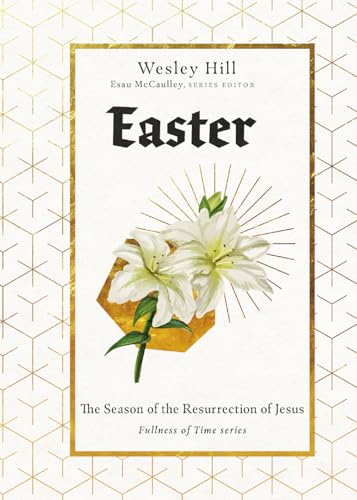
Continuing the Fullness of Time series, my book club very appropriately read Easter this month. It is a short book. Not a devotional, not an academic tome, Easter begins with a very engaging introduction describing a Great Vigil of Easter service Wesley Hill attended at a beautiful cathedral in England twenty years ago. He then moves into the story of the first Easter when Jesus Christ rose from the dead. He documents what he describes with Scripture references from all four Gospels weaving in important information about the context of the accounts.
Next, Hill discusses the liturgy used in Anglican and other churches relating baptism symbolically to the resurrection and the new life believers receive when they decide to follow Jesus. Easter is a movable feast, not occurring on the same calendar day each year. It is a complicated calculation, but Hill does share how to figure it out and the factors on which it is dependent. (Or, like me, you can just look the date up on the Internet or a calendar.)
Hill does not just leave us with a risen Lord. He moves on to how the church liturgy highlights the book of Acts which focuses on Jesus’ disciples. Their world has been turned upside down, but Jesus does not abandon them. When He ascends to be with God the Father in heaven, He leaves instructions for His followers to share the Good News and promises to send a helper, the Holy Spirit, to empower them.
Rating: 5/5
Category: Christian, Religion, Spirituality, Theology
Notes: The Fullness of Time series is edited by Esau McCaulley. It is composed of six stand alone books that can be read in any order: “Each volume in the Fullness of Time series invites readers to engage with the riches of the church year, exploring the traditions, prayers, Scriptures, and rituals of the seasons of the church calendar.” A seventh book is currently in process to complete the series.
Publication: 2025—InterVarsity Press
Memorable Lines:
Mercy for the undeserving is the overriding, hope-awakening theme of Easter.
Prayer, then, is our asking for what we need from the one who has triumphed over the world’s processes of decay and disorientation. We aren’t trapped by the limited options of life as we’ve always known it. Jesus is alive, and he exhales healing vitality, and wholeness into our world. His Spirit is with us.
The Lord is risen! The Lord is risen indeed! Alleluia!
Epiphany: The Season of Glory
Epiphany: The Season of Glory
by Fleming Rutledge
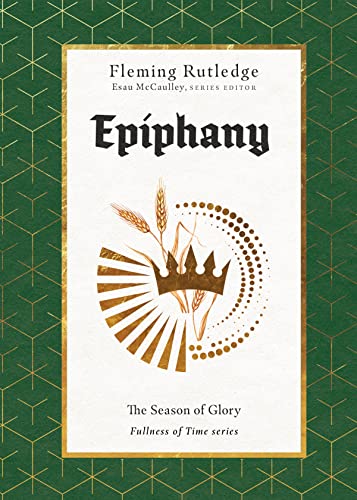
If you didn’t know anything about Fleming Rutledge before you began her tome on Epiphany, you would certainly quickly ascertain for yourself that she is a theological scholar. One of the first women to be ordained by the Episcopal church, she has spent her life studying the Bible and serving as a priest. As an author she has written many books and is known as an expert on the works of Tolkien. There is no fluff to be found in Epiphany: The Season of Glory.
Epiphany is celebrated on January 6 as the day the Magi brought their gifts to the Christ child, manifesting the glory of God and acknowledging the inclusion of Gentiles in the worship of Jesus. The day in many churches is extended into a season which celebrates other events in which the glory of God is preeminent: the baptism of Jesus by John the Baptist, the miracle of wine at Cana, and the transfiguration on the mountain top.
This book explains why we celebrate the day and season of Epiphany. It is a deep study which answers many questions for the reader and may well initiate many new questions. It is a work that requires time, careful reading, and thought. As other theological books, there are footnotes at the end. Many are reference sources for ideas and quotes in the book. Rutledge’s footnotes, however, include expansions on the various topics within and enlarge the experience for the reader. They are as interesting and thought provoking as the main body of the book.
Epiphany: The Season of Glory is part of the Fullness of Time Series which seeks to explain the liturgical calendar of many churches such as Anglican, Episcopal, and Lutheran. Many other churches are also finding renewal through experiencing the traditional seasons. As the editor of the series states “We want readers to understand how the church is forming them in the likeness of Christ through the church calendar.” The six books in the series are by different authors and can be read as standalones. This book is more intellectually challenging than the other books in the series, but they are all worthy reads.
Rating: 5/5
Category: Nonfiction, Christian, Religion
Notes: standalone, but part of the Fullness of Time Series
Publication: 2023—InterVarsity Press
Memorable Lines:
There will always be those who do not recognize him, but they will nevertheless be in his sight and have a part in his eternal plan (see Romans 11). The church, however, in its observance of Epiphany, is to take care of its calling, to point to Christ’s glory, and let his glory take care of itself.
Telling stories about Jesus, what he said and what he did, is an essential part of spreading the gospel. But without the doxa, the glory of the only Son from the Father, it is an incomplete gospel.
The season teaches us to value the entire fellowship of believers, because Jesus calls persons to himself without regard to their station, reputation, accreditation, or accomplishments—and we see how we can begin to be transformed by the action of his Hoy Spirit working through the unearned and undeserved gifts that he bestows.
Lent: The Season of Repentance and Renewal
Lent: The Season of Repentance and Renewal
by Esau McCaulley
Ash Wednesday is the “kick off” event of Lent for Christians. There are many of us who, like the author, did not grow up in a church that participated in Lenten practices. In fact, my first exposure was a coworker who fasted and upped her walking every year for Lent. Colleagues who had worked with her for years said smirkingly that although she made sure everyone knew she was fasting, the effort was not really aimed at a closer relationship with God, but at attaining the beach body she wanted for spring vacation. Her motivation is between her and God; discerning it is not my job.
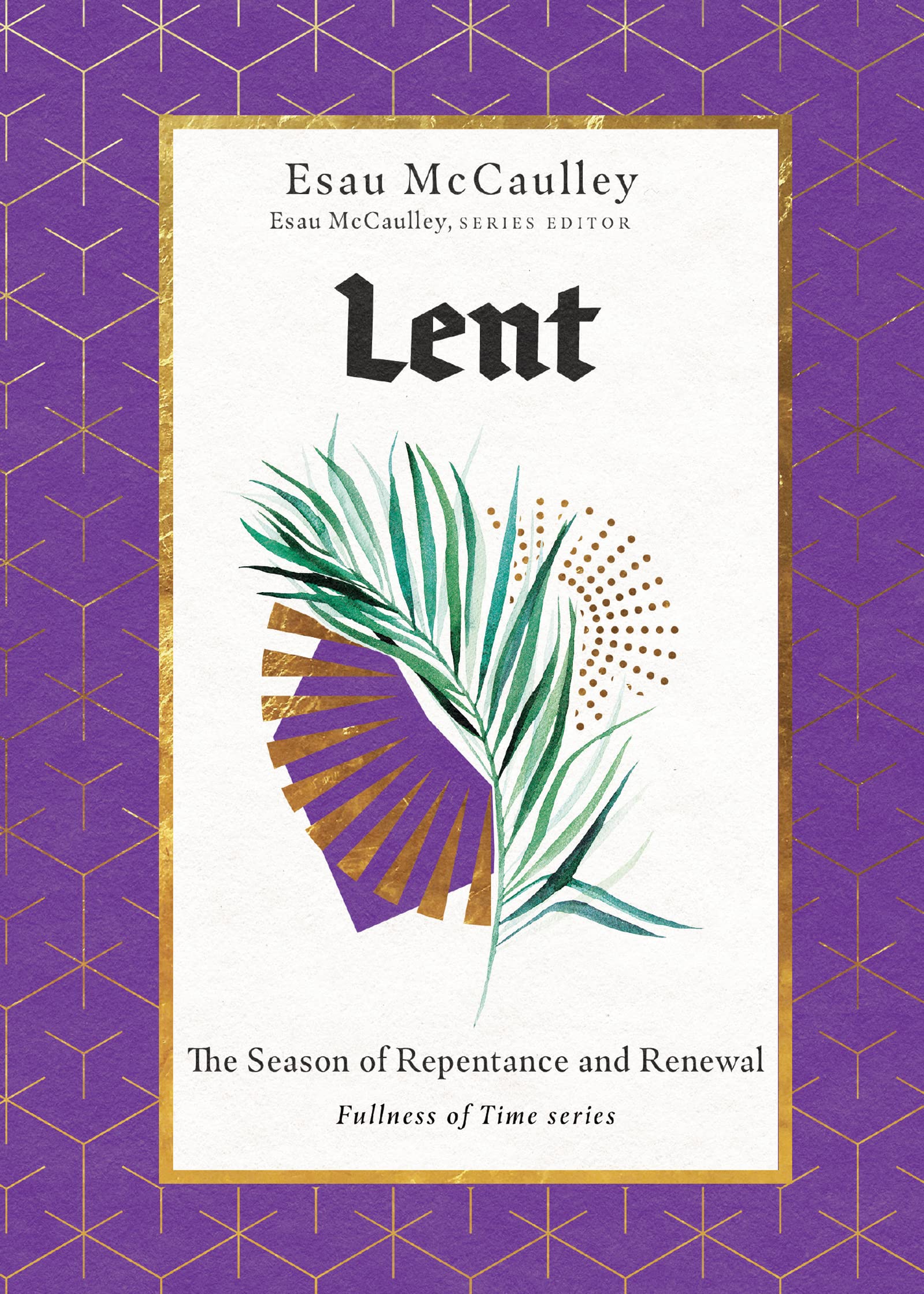
Over the years I have worshiped God in Baptist churches and independent mega-churches. Currently a part of the traditional liturgical movement, I am learning about Lent as practiced in the Book of Common Prayer. To that end, my book club has read Lent: The Season of Repentance and Renewal. It is part of the Fullness of Time series of which author McCaulley is the editor. The series is composed of short books written by various authors. They explain the various customs practiced by early Christians extending through our contemporary age. It is physically a beautiful series as the book covers are decorated with symbols and colors appropriate to each church season. The pages inside are incredibly smooth and slightly off-white. It is so elegantly designed that I can not bring myself to mark the many special passages or make notes in the margins.
Lent examines our need for repentance, the certainty of death, and the promise of eternal life in Jesus. McCaulley examines the rituals of Lent explaining how Christians can decide on a personal level what practices might be most useful with an emphasis on fasting. Fasting for food can be done in a variety of ways or not at all. Fasting might be giving up something else that is a distraction from devotion to God. Above all, I would say that the author’s approach is spiritual, not legalistic. There is no one right or wrong way to “do Lent.”
This little book also examines the collects (prayers) and the Scriptures associated with Lent in the Book of Common Prayer. It should be noted that McCaulley refers to the 1979 Book of Common Prayer. Most of the prayers found in my 1928 version and perhaps in other earlier or later editions are different from the ones he quotes. He chose that version because that is the one he was using when he began to practice Lent and therefore the one he is most comfortable providing discourse on. The differences don’t distract, but can provide more depth to the study of the season of Lent.
The last chapter deals with Holy Week, the last week in the life of Jesus Christ. This little tome details the various days such as Maundy Thursday, an important day because of the institution of the Lord’s Supper (Holy Communion or Eucharist). Less well known is the continuing practice of feet washing as set by the example of Jesus. Although Jesus’ message is clear and plain, “follow me and you will be saved,” there are many mysteries and much symbolism in the Bible. Perhaps McCaulley’s discussion of Lent will clarify for you the traditions that have emerged over the centuries.
Rating: 5/5
Category: Christian, Religion, Nonfiction
Notes: There are a few typos (probably generated by auto-correct) in this book which will hopefully be corrected in future printings. The other two books I read from this series did not have this problem.
Publication: 2022—InterVarsity Press
Memorable Lines:
Fasting then is not about us earning God’s forgiveness; it is about reminding ourselves through our fasting of our radical dependence on God.
Too often, Christians believe the lie that we have to dig down deep and discover in ourselves the strength and resolve to defeat our foes. Instead, we must realize that if we dig down to the bottom of ourselves, we’ll find a wounded soul in need of healing.
All these rituals, prayers, and ceremonies are simply doorways into the thing itself: God in all his splendor. May we find him afresh every year until we see him face-to-face.
 education pathways