
Home » Posts tagged 'Army'
Tag Archives: Army
Code Girls–The Untold Story of the American Women Code Breakers Who Helped Win World War II
Code Girls
by Liza Mundy

Nonfiction has the potential to be deadly boring or magnificently interesting. Liza Mundy’s Code Girls without a doubt falls into the latter category. It is not an easy read, but it is fascinating. Code Girls tells the tale of the essential role the code breakers, who were mostly women, played in the eventual Allied defeat of the Axis nations in World War II. If you are envisaging a handful of young women holed up in a room in D.C., think again. The Army’s code breakers numbered 10,500 with 70% of them women and most working out of the Arlington Hall campus in Virginia. The Navy’s group numbered 10,000 with half of those stationed in D.C. of which 80% were female. Both groups rose to those numbers from a mere 200 code breakers each in a short amount of time. These women came from all walks of life and backgrounds. Among the first recruited were college educated, low paid, school teachers at a time when a low priority was placed on education for women. Many of these women had a background in math and science, and all had a good memory. They were analytical and could approach problems in novel ways.
The code breakers’ stories went untold for most, if not all, of their lives because they were sworn to secrecy. They considered the work they did a duty of honor to their country and to the men in their lives. They understood that their work could literally save lives, perhaps even of their own loved ones, by intercepting and decoding enemy messages. It is a testament to their trustworthiness that Germany and Japan never knew that their transmissions had been intercepted. Even roommates and spouses could not speak of their work outside of their assigned workplace.
The author, Liza Mundy, had two hurdles to jump, both of which she accomplished with finesse. The first was her thorough research which is documented through 39 pages of notes and bibliography. Then she wove the hard facts into a narrative with a very personal touch derived from many interviews. She doesn’t just write that Washington, D.C. was inundated with uninitiated girls pouring in from all over the country needing housing, food, transportation, and training. She presents the scenario through the eyes and voices of the “girls” who lived it. Not everyone, of course, had the same experiences, and those experiences varied according to many factors including whether they were working for the Army or the Navy. They arrived with no assignments, just the promise that they would be helping their country.
The war period (1939-1945) was a time of great social upheaval. For most people, a woman’s place was in the home. Suddenly men were going overseas and their jobs needed to be filled along with positions created by the manufacturing needs of the war machine. There were many stereotypes that were broken down, and others that were not put to rest so willingly or easily.
Code Girls is masterfully written and a wonderful tribute to those women whose secrets can now be told. It should be “required reading” for all Americans who don’t want history to repeat itself, for readers who want to understand what previous generations endured to stand against tyranny, and for men and women interested in the societal changes that occurred as a result of World War II.
Rating: 5/5
Category: History, Nonfiction
Notes: The author sets the stage for the reader through her own notes as to how the book was written, information on the initial recruitment of women, and an introduction that discusses society in the U.S. at that tine and the military’s “bold” decision to recruit women. My copy of the book has an “Afterword for the Paperback Edition” in which the author shares the overwhelming response her book received from the code breakers and their families. The book also includes photographs of some of the women interviewed and more generic photographs of the code breakers at work. There is also a “Glossary of Code-Breaking Terms,” a very valuable “World War II Timeline,” and a “Reading Group Guide” of discussion questions.
Publication: October 20, 2017—Hachette Books
Memorable Lines:
Successful code breaking often comes down to diagnostics—the ability to see the whole rather than just the parts, to discern the underlying system the enemy has devised to disguise its communications. The Japanese, Agnes diagnosed, were encoding their messages and then using something called columnar transposition, which involves writing the code groups out horizontally but transmitting them vertically, aided by a grid with certain spaces blacked out, whose design changed often.
It was the first time many of the women had spent time in a bona fide workplace—apart from a classroom—and they discovered what workplaces are and have been since the dawn of time: places where one is annoyed and thwarted and underpaid and interrupted and underappreciated.
She and the other women knew that ship sinkings were the logical and desired consequence of their concerted efforts. They did not feel remorse. America was at war with Japan; Japan had started the war; the lives of American men were at stake, not to mention America itself. It really was that simple.
The Empty Nesters–friends pulling together
The Empty Nesters
by Carolyn Brown
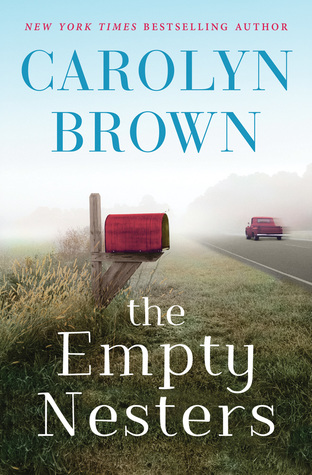 Having just finished a nonfiction book about the empty nest season of life, I enjoyed reading a fictional take on it. Carolyn Brown’s The Empty Nesters is a smiling, wipe a few tears kind of book. Four neighboring military families provide support for each other with retired and childless Tootsie and Smokey taking on a grandparenting role. The three other men are part of a team that frequently leaves for extended secret missions so the wives are left behind to raise their daughters.
Life is not always easy. We join their story with each of the four women at a different stage of the empty nest. A road trip in a mobile home to Tootsie’s old family home helps the women sort through various problems. The younger women have all just sent their daughters away to basic training. One mother is divorced and still has trust issues. Tootsie is recently widowed and still grieving, and the other two fear for their own family dynamics. Luke, Tootsie’s nephew, drives on the trip. He is handsome, single, rich but down to earth, and kind. These characters are people you would like to get to know from Diana who has decided love is not in the cards for her to Carmen who takes out her fury over a cheating, scumbag husband by splitting logs for hours.
You’ll enjoy the meetings of the Empty Nesters as they share with each other and support each other. Watching them work through calamities and successes makes you feel like you are a part of the group. We don’t get to know the daughters very well, but they reflect well on their mothers who worked hard to raise them right under difficult circumstances.
I would like to extend my thanks to netgalley.com and to Montlake Romance for giving me the opportunity to read this book in exchange for an honest review.
Rating: 5/5
Category: General Fiction (A), Romance
Notes: Includes some mild swearing
Publication: August 20, 2019—Montlake Romance
Memorable Lines:
It might have seemed strange to someone else, but with all the recent events, his comment was a life preserver in the midst of an ocean—a simple compliment to hang on to when the stormy waters of life were sweeping over her.
“When we get old, the biggest blessing in the world is simply to be needed”
Tootsie brought out a bottle of wine from her secret stash on the top shelf of her closet and piled sugar cookies high on a platter. Meetings weren’t held in the South, especially Texas, without food and something to drink, so it was only right that the first official meeting of the empty nesters should at least have something.
 education pathways