Home » Posts tagged 'America'
Tag Archives: America
The Bletchley Riddle–young code breakers
The Bletchley Riddle

By Ruta Sepetys and Steve Sheinkin
Written specifically for Middle Grade students, The Bletchley Riddle will appeal to those interested in World War II but not ready for the torturous aspects of the conflict. This book deals with code breaking efforts that were a critical support to the military in winning the war.
Jakob, with mathematical talents, has been recruited from Cambridge and becomes part of the secretive code breaking team at Bletchley Park. His much younger sister Lizzie, who prides herself in being straight forward, escapes from Fleetword, her chaperone who is supposed to escort her from England to live with her Gram in Cleveland, Ohio. Lizzie wants to stay in England to investigate the death of her mother Willa as she does not believe that she died in an explosion in Poland.
This novel becomes very involved as the two youths form relationships with a variety of other interesting characters who live in the area. It’s hard to determine who is a spy and who is not, but Jakob also needs to restore his relationship with Lizzie.
The Bletchley Riddle deals with official decoding using the Enigma machine and with personal riddle solving of secretive messages the pair receives. The book is well written and appropriate for middle grades; the authors knew their audience. While some books written for young people can be captivating for older readers as well, The Bletchley Riddle is not one of them. I have enjoyed other books about Bletchley Park that are more interesting and engaging for adults.
I received a complimentary copy of this book in exchange for an honest review. Opinions expressed in this review are completely my own.
Rating: 4/5
Category: Fiction, Middle Grades, Historical Fiction
Notes: Appropriate for Ages 10+ and Grades 5+
Publication: October 8,2024—Penguin Group (Viking Books)
Memorable Lines:
“Do you always speak your thoughts aloud?” “I do. I’m half American. I’m straightforward. Does that make you uncomfortable?”
She looks with disapproval toward the crumpled papers on the floor. And she’s right. It’s sloppy. I get up to gather the scraps. Even our rubbish is secret here. All of it must be burned.
But the past months have shown that circumstance can be the thief of choice.
The Mystery of Haverford House–multiple timelines
The Mystery of Haverford House
by Rachel Burton
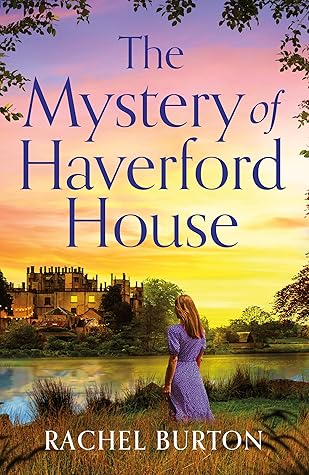
Viola, originally from Australia, has had to reinvent herself several times. She has finally found a place that feels like home—a huge estate in Yorkshire. Her job is to manage Haverford House as a tourist attraction, but it is difficult to maintain it as a viable establishment financially given its size, age, and tax status. The current earl and owner wants to sell it, but his mother, the dowager countess, is sentimentally attached to it.
There is a mystery and legend that Viola emphasizes in her house tours. Annie Bishop, a serving girl at Haverford, disappears in 1933. Was she murdered or did she travel to America to start a new life? As the story unfolds for the reader, much of the status of women during the period between the two World Wars is revealed. There is also a focus on the works of Shakespeare, particularly Twelfth Night, as there is a production of it in both timelines. The characters are fleshed out in both timelines with some villains and heroes in both. It is interesting to see that the Haverford residents in the 1930’s, even the “nice” ones, were disdainful of the servants that worked in the house. There were also those in the lower classes who felt they and their peers should “mind their place.”
My interest in both storylines never flagged. I no sooner finished a chapter with my interest peaked than the focus changed to equally compelling events in the other storyline. This seesaw continues all the way to the end of the book with a number of surprises along the way.
I received a complimentary copy of this book in exchange for an honest review. Opinions expressed in this review are completely my own.
Rating: 5/5
Category: Romance, Women’s Fiction, Mystery, Historical Fiction
Notes: clean in all aspects
Publication: March 14, 2024—Aria
Memorable Lines:
“I don’t know where you all find the time for reading,” Polly says regularly. In my opinion you make time for the things you love but she has no interest in fiction, or books in general. She hated dusting the library, but lucky for her I was always willing to do it.
I wonder if he knows why he is here—I wonder if he realizes how badly the estate needs his father’s money? And I wonder what it must be like for Prunella and Cecily, being duty-bound to marry somebody they might not even like, let alone love.
Viola wanted to run upstairs to her flat, get into bed and pull the duvet over her head. Alternatively if the ground would like to open up and swallow her that would be fine too.
I Capture the Castle–class structure in mid-20th century England
I Capture the Castle
by Dodie Smith
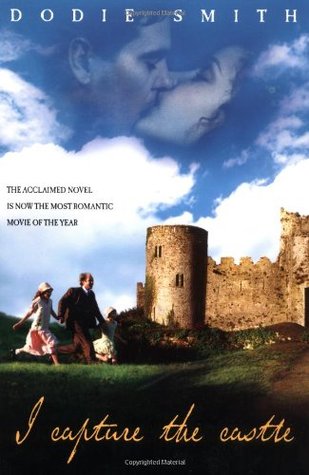
To label I Capture the Castle as a “coming of age” story is true, but the novel is so much more. It is related in her journal by Cassandra who lives in poverty under the leaky roof of a crumbling castle. Her father Mortmain is a writer with one successful book to his credit before he hit a writing desert. He secured a forty-year lease on the castle on a whim. The other residents are his son, another daughter, a boy taken in when his servant mother passed, and Topaz, the children’s stepmother. All in the family realize that the only way out of their financial straits is for at least one of the girls to marry into a rich family.
Author Dodie Smith has gifted us with a book full of nonconventional characters, a beautiful romantic background, and moral dilemmas. The plot begins with touches reminiscent of Pride and Prejudice but deviates fairly quickly. There is a similar theme of class differences, but without Austen’s use of satire. Two of the potential romantic interests grew up in America, one in the East and one in the West. Their backgrounds add another layer of social and cultural differences. Cassandra’s family is caught in the middle. They clearly had money in the past, but they have sold off most of their belongings and are reduced to very meager meals and one or two threadbare outfits per person. They have to be very creative to be acceptable in the social milieu to which they aspire.
I Capture the Castle has the depth necessary for a book to stand the test of time and appeal to a wide audience. It includes topics like women’s roles, art and sexuality, depression, literary criticism, and the laws of inheritance in Great Britain. While it addresses these issues, it remains an interesting and well-told tale with an ending that does not tie everything up neatly. Instead, it gives the reader the opportunity to speculate on the characters’ future decisions and actions which is a good way for this novel to conclude.
Rating: 5/5
Category: Romance, General Fiction
Notes: 1. There are discussion questions at the end.
2. The book has been made into a movie.
Publication: 1948—St. Martin’s Press
Memorable Lines:
I am writing this journal partly to practice my newly acquired speed-writing and partly to teach myself how to write a novel—I intend to capture all our characters and put in conversations. It ought to be good for my style to dash along without much thought, as up to now my stories have been very stiff and self-conscious.
The taxi drew up at a wonderful shop—the sort of shop I would never dare to walk through without a reason. We went in by way of the glove and stocking department, but there were things from other departments just dotted about; bottles of scent and a little glass tree with cherries on it and a piece of white branched coral on a sea-green chiffon scarf. Oh, it was an artful place—it must make people who have money want to spend it madly!
In the end, Topaz got Stephen to take the hen-house door off its hinges and make some rough trestles to put it on, and we pushed it close to the window-seat, which saved us three chairs. We used the grey brocade curtains from the hall as a table-cloth—they looked magnificent though the join showed a bit and they got in the way of our feet. All our silver and good china and glass went long ago, but the Vicar lent us his, including his silver candelabra.
 education pathways