
Home » Posts tagged 'Allies'
Tag Archives: Allies
The Teacher of Nomad Land–a child’s survival
The Teacher of Nomad Land: A World War II Story
by Daniel Nayeri
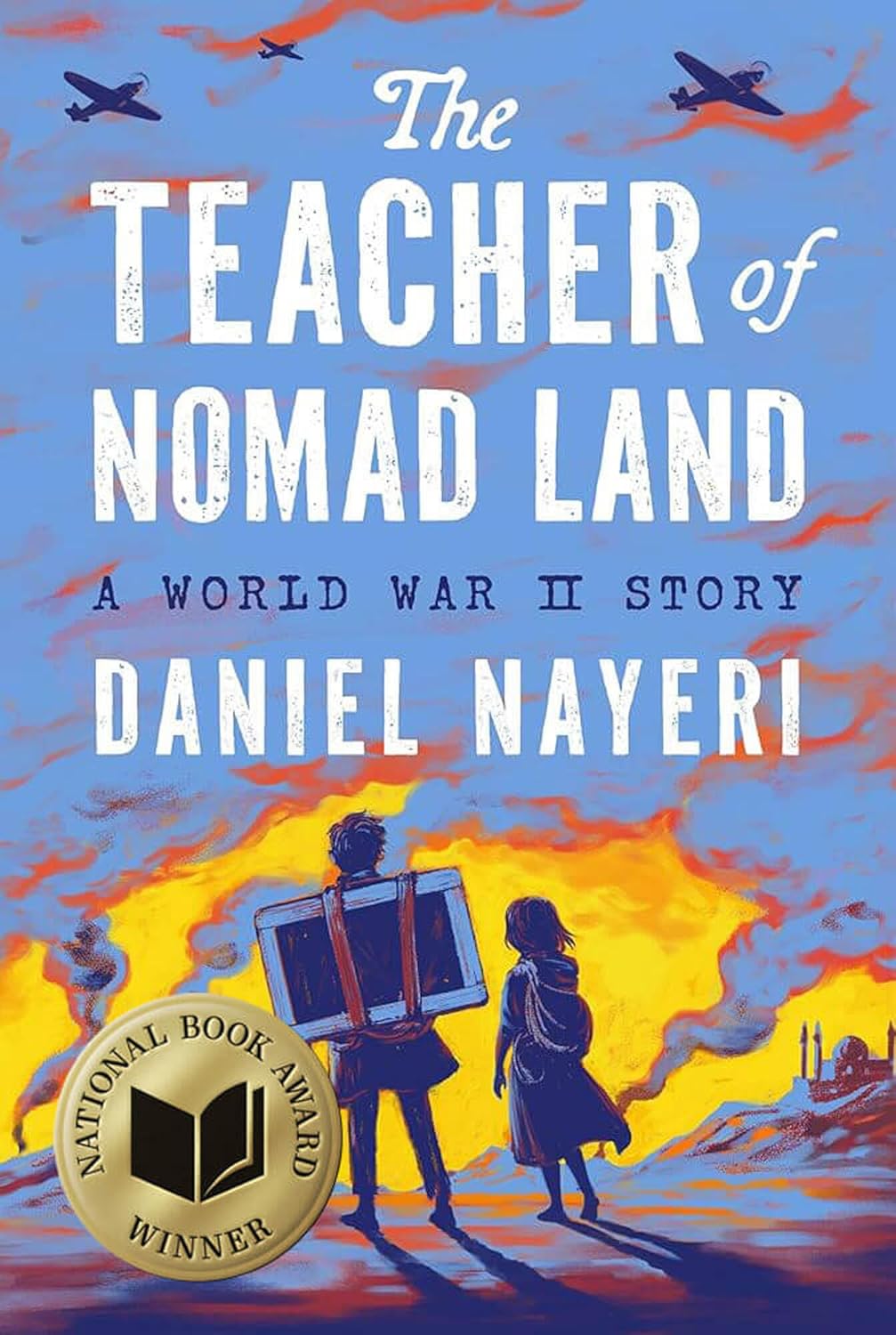
This is the story of two Iranian siblings, thirteen year old Babak and eight year old Sana, orphaned and separated during a time when their neutral country is being invaded by forces competing for Iranian oil—British, Soviet, and German. Add to that mix the Poles, the Jews, and the native nomads who don’t recognize any country as delineated on a map. Their various languages play an important role in this story. Babak has two goals—to become a teacher like his father and to take care of and stay with his sister.
Written for children, this is a fast read for adults. Instead of the horrors of concentration camps, The Teacher of Nomad Land focuses on the lives of the children as they to try to find “family” and dig within themselves to find what it takes to survive. In the Traveler, a friend of their father, they discover a kind man who tries to help. There is also a British soldier they bond with. Their lives are complicated by a mysterious man who is seeking a Jewish boy. All three children are put in danger by this situation. Babak’s resourcefulness is successful in dealing with the Soviets who halt the progress of the nomads in transitioning their herds to their winter home thus demonstrating his value to the nomads.
This is an age appropriate book that does not go into detail about concentration camps and home invasions. On the other hand, it does not shy away from the hunger the children suffer and the danger they face from other people. It highlights the communication problems when there are so many languages; and it shows how, despite being part of an army, individual soldiers can be nice to the local population. While Babak, as the older child, has much of the spotlight in this book, Sana also shines in certain situations with her creativity and ability to step up when things go bad. I was impressed by both characters at their positive attitudes, not allowing themselves to be overpowered by a victim mentality even when cold, hungry, tired or aching from long walks or sleeping on the hard ground.
Rating: 4/5
Category: Historical Fiction, Middle Grades
Notes: 1. Written for children Ages 8-12. Even though the reading level is for that age group, it may be too advanced in terms of understanding the political, geographical, linguistic, and social backgrounds. Discussion with an adult would be helpful for some children.
2. Included some helpful additions: a map, author’s notes about the political setting and the language barrier, and information on the Persian alphabet.
3. The book ends with “Further Reading” which lists nonfiction books for various ages.
Publication: 2025—Levine Querido
Memorable Lines:
“It might have been fair, but it wasn’t right.”
Everything is all at once. Our lives, these moments that change our lives, they all happen so fast.
Teaching is like sitting with a young person and encouraging them to only listen to the good angels in their mind and not the evil ones. But you can’t force them.
The Watchmaker’s Daughter: the true story of World War II heroine Corrie Ten Boom
The Watchmaker’s Daughter
by Larry Loftis
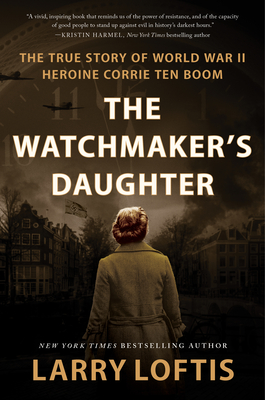
The Hiding Place, the original popular story of Corrie ten Boom, written with John and Elizabeth Sherrill, was released in 1971 and made into a movie in 1975. Corrie, skilled in watch repairs, and the rest of the ten Boom family saved many Dutch—both Jews and non-Jews—from being sent to prison, concentration camps, and labor camps by German Nazis in World War II.
Although The Hiding Place was a landmark book in telling the story of this remarkable Christian lady, Larry Loftis has gone even further in writing The Watchmaker’s Daughter. His research into the background of the World War II setting of the book sets the reader up to better understand the times culturally and politically and the invasion of Holland. His research includes examining photos and original small books by Corrie ten Boom along with memorabilia that are archived in the Billy Graham Center Archives at Wheaton College. Corrie ten Boom did not keep a diary, but Loftis sought out many other primary sources including journals and letters from survivors who had been hidden in the ten Boom home.
Corrie and her older sister Betsie were interned in Ravensbrück Concentration Camp for their crimes of hiding Jews. There these Christian sisters had a ministry within the barracks, holding secret Bible studies and encouraging the other women to hold strong despite the horrible conditions and continuous threat of execution. Upon release, Corrie began a ministry of traveling internationally with a message of forgiveness and established 3 different centers, one in a transformed concentration camp, to meet the physical and emotional needs of survivors. Betsie had a vision of the centers while they were still in the camp at a time when the fulfillment of her vision seemed impossible. Corrie’s story is an amazing one showcasing the love of God and the power of forgiveness.
Rating: 5/5
Category: Biography, Nonfiction, Christian, History
Notes: Even if you think you know the story of Corrie ten Boom, I encourage you to read this book. Corrie’s story is unforgettable, and her courageous life of dependence on God extended way past the events in Ravensbrück. Loftis’ research and writing along with Corrie’s life and faith make this book remarkable.
Publication: 2023—HarperCollins
Memorable Lines:
This was the hardest part—the hatred. Over ensuing days Corrie tried to be nice to the woman, but to no avail. “She seemed to be entirely devoid of human feeling,” Corrie recalled, “and altogether hard, hostile, and wicked…Why should they always snap and snarl at us? I always greeted them with a pleasant ‘Good morning,’ but everything seemed to glance off their impenetrable armor of hate.”
“My sister died here,” she told Tiny. “She suffered so much. I, too, have suffered. But Jesus is always with us. He did a miracle in taking away all my hatred and bitterness for my enemies.”
For more than fifty years the Beje had been her own hiding place, her refuge. But Ravensbrück had taught her that this magnificent home—with all of its memories—was but a shadow; her true hiding place was Christ.
Code Girls–The Untold Story of the American Women Code Breakers Who Helped Win World War II
Code Girls
by Liza Mundy

Nonfiction has the potential to be deadly boring or magnificently interesting. Liza Mundy’s Code Girls without a doubt falls into the latter category. It is not an easy read, but it is fascinating. Code Girls tells the tale of the essential role the code breakers, who were mostly women, played in the eventual Allied defeat of the Axis nations in World War II. If you are envisaging a handful of young women holed up in a room in D.C., think again. The Army’s code breakers numbered 10,500 with 70% of them women and most working out of the Arlington Hall campus in Virginia. The Navy’s group numbered 10,000 with half of those stationed in D.C. of which 80% were female. Both groups rose to those numbers from a mere 200 code breakers each in a short amount of time. These women came from all walks of life and backgrounds. Among the first recruited were college educated, low paid, school teachers at a time when a low priority was placed on education for women. Many of these women had a background in math and science, and all had a good memory. They were analytical and could approach problems in novel ways.
The code breakers’ stories went untold for most, if not all, of their lives because they were sworn to secrecy. They considered the work they did a duty of honor to their country and to the men in their lives. They understood that their work could literally save lives, perhaps even of their own loved ones, by intercepting and decoding enemy messages. It is a testament to their trustworthiness that Germany and Japan never knew that their transmissions had been intercepted. Even roommates and spouses could not speak of their work outside of their assigned workplace.
The author, Liza Mundy, had two hurdles to jump, both of which she accomplished with finesse. The first was her thorough research which is documented through 39 pages of notes and bibliography. Then she wove the hard facts into a narrative with a very personal touch derived from many interviews. She doesn’t just write that Washington, D.C. was inundated with uninitiated girls pouring in from all over the country needing housing, food, transportation, and training. She presents the scenario through the eyes and voices of the “girls” who lived it. Not everyone, of course, had the same experiences, and those experiences varied according to many factors including whether they were working for the Army or the Navy. They arrived with no assignments, just the promise that they would be helping their country.
The war period (1939-1945) was a time of great social upheaval. For most people, a woman’s place was in the home. Suddenly men were going overseas and their jobs needed to be filled along with positions created by the manufacturing needs of the war machine. There were many stereotypes that were broken down, and others that were not put to rest so willingly or easily.
Code Girls is masterfully written and a wonderful tribute to those women whose secrets can now be told. It should be “required reading” for all Americans who don’t want history to repeat itself, for readers who want to understand what previous generations endured to stand against tyranny, and for men and women interested in the societal changes that occurred as a result of World War II.
Rating: 5/5
Category: History, Nonfiction
Notes: The author sets the stage for the reader through her own notes as to how the book was written, information on the initial recruitment of women, and an introduction that discusses society in the U.S. at that tine and the military’s “bold” decision to recruit women. My copy of the book has an “Afterword for the Paperback Edition” in which the author shares the overwhelming response her book received from the code breakers and their families. The book also includes photographs of some of the women interviewed and more generic photographs of the code breakers at work. There is also a “Glossary of Code-Breaking Terms,” a very valuable “World War II Timeline,” and a “Reading Group Guide” of discussion questions.
Publication: October 20, 2017—Hachette Books
Memorable Lines:
Successful code breaking often comes down to diagnostics—the ability to see the whole rather than just the parts, to discern the underlying system the enemy has devised to disguise its communications. The Japanese, Agnes diagnosed, were encoding their messages and then using something called columnar transposition, which involves writing the code groups out horizontally but transmitting them vertically, aided by a grid with certain spaces blacked out, whose design changed often.
It was the first time many of the women had spent time in a bona fide workplace—apart from a classroom—and they discovered what workplaces are and have been since the dawn of time: places where one is annoyed and thwarted and underpaid and interrupted and underappreciated.
She and the other women knew that ship sinkings were the logical and desired consequence of their concerted efforts. They did not feel remorse. America was at war with Japan; Japan had started the war; the lives of American men were at stake, not to mention America itself. It really was that simple.
 education pathways