Home » United States
Category Archives: United States
The Four Winds–Historical Fiction about The Great Depression and the Dust Bowl
The Four Winds
By Kristin Hannah
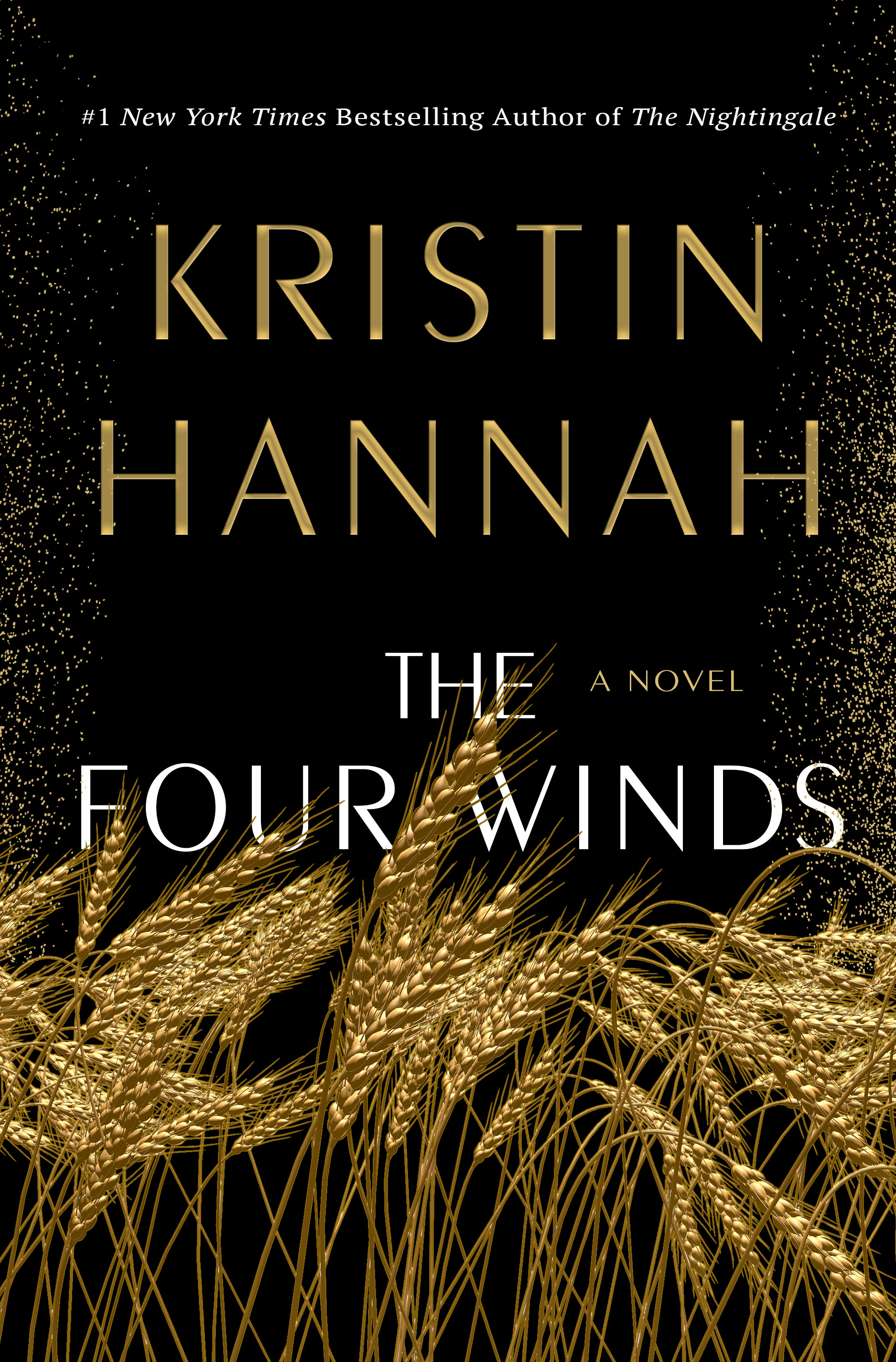
From prosperity to devastating poverty, The Four Winds takes the reader on a journey across time and across the United States. Since childhood, Elsa has been told she is unattractive, physically weakened by an illness, and ineligible for marriage. Her brief search for adventure and love in her small town leads her to Italian immigrants Tony and Rose and their son Rafe. The Martinellis take Elsa under their wing, connect her to the land, and love her as their own.
The Great Depression rips away the hopes and dreams of the generations who endured the struggle, but Tony and Rose are strong and refuse to give up their land. Then come years and years of drought and dust storms. The government says the farmers are to blame and provides minimal help. Millions of citizens leave Texas and surrounding states to find what is billed as a “land of milk and honey” where they will surely find work so they can support their families. Instead they find difficult work on large farms if they are lucky. They live in filthy conditions on subsistence wages or less. Each day they have to walk miles both ways from muddy tent cities to the fields where there is no guarantee of a job. Those seeking work are maligned by the residents who view them as dirty and lazy. If they manage to get on at a farm that supplies housing, a few toilets, and some running water and electricity, they soon discover that they are paid with credit at the expensive company store. There is a fee for everything, even obtaining pay in cash. When they dig deeper, the workers find that the whole setup, including where they live and when they work is completely set up to satisfy the greed of the owner. A worker is always indebted to the company.
Communists, at physical danger to themselves, work to organize the farm workers to strike for better working conditions. It is an uphill battle because the workers have safety concerns if they protest in addition to the possibility of losing their opportunity for work—such as it is. California is not the “Promised Land” after all.
Elsa is not just the main character of The Four Winds: she is the heroine. She is a strong, strong woman living out a difficult life with perseverance and determination. Come what may, she would do her best for her children whether eking out survival in a formerly rich land where cattle died with bellies full of sand or traveling across the desert in an unreliable vehicle praying that there was enough water and gas to get the family to their destination. She proves to be a good friend to others in need. She compromises when necessary for the sake of her children, but she reaches a limit where she stands up to greedy business people who deserve to be shamed.
The Four Winds exposes a sad part of our history showing a period in time that was devastating to people. Through no fault of their own they found themselves unable to care for their families. Many were proud and refused government aid. Some of that help from the government was commendable putting men to work in respectable jobs, but some was too little, too late and unreliable in execution. The people of California were depicted as mean-spirited and unwilling to help those who needed help. They looked down on the laborers with contempt. The one exception that stood out for me was an understanding librarian who checked out books to Elsa’s daughter and then gave Elsa a library card which Elsa presented to her daughter as her Christmas gift. It was treasured.
This work of historical fiction concludes nicely, but there is not a happy ending for everyone. The book is more realistic than that. Overall it is well written and kept me wanting to read more. It is a sad book, however. It has to be—it is about sad times.
Rating: 5/5
Category: Historical Fiction
Publication: March 14, 2023—St. Martin’s Griffin
Memorable Lines:
“Believe me, Elsa, this little girl will love you as no one ever has…and make you crazy and try your soul. Often all at the same time.” In Rose’s dark, tear-brightened eyes. Elsa saw a perfect reflection of her own emotions and a soul-deep understanding of this bond—motherhood—shared by women for millennia.
“Girls like that, unkind girls who think it’s funny to laugh at another’s misfortune, are nothing. Specks on fleas on a dog’s butt.”
Once, Elsa would have said, God will provide, and she would have believed it, but her faith had hit the same hard times that had struck the country. Now, the only help women had was each other. “I’ll be here for you,” Elsa said, then added, “Maybe that’s how God provides. He put me in your path and you in mine.”
Winter hit the San Joaquin Valley hard, a frightening combination of bad weather and no work. Day after day, rain fell from steel-wool-colored skies, fat drops clattering on the automobiles and tin-can shacks and tents clustered along the ditch bank. Puddles of mud formed and wandered, became trenches. Brown splatter marks discolored everything.
Poverty was a soul-crushing thing. A cave that tightened around you, its pinprick of light closing a little more at the end of each desperate, unchanged day.
Under the Tulip Tree–must-read book about slavery
Under the Tulip Tree
by Michelle Shocklee
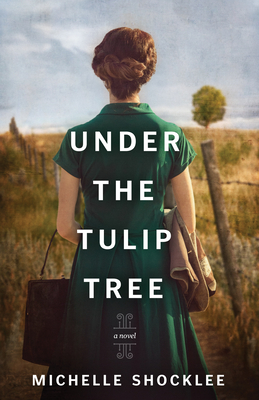
We have all heard it: it is important for us to know history so we don’t repeat the mistakes of the past. Michelle Shocklee does that in her novel Under the Tulip Tree. We get a view of slavery through the eyes of Lorena (Rena), an aspiring writer, who struggles to pursue her career in a male dominated society. She is sixteen when the stock market crashes and her privileged life changes forever. Seven years later she accepts a job with the Federal Writer’s Project (FWP) and meets Frankie who at 101 years old has a horrendous story to tell about what life was like for her and for others who were slaves.
The impact of someone being owned by another person is a concept that is hard for Rena to get her head around. The atrocities that Frankie shares are heartbreaking—even more so when you realize these things are drawn from actual events as told to FWP workers who were employed by the government to interview former slaves and record their stories for posterity.
What makes this story especially impactful is that Rena is telling this story from the viewpoint of a young White woman during the Great Depression. Although slaves had been freed, Blacks still did not enjoy equal rights. From sitting at the back of the bus, to lower pay, to being treated as dirty and ignorant, Blacks suffered from discrimination. Some Whites treated Blacks that way just because they could—acts of control and power. Some Whites treated Blacks that way because they were raised with that mindset, a deep cultural fear and hatred of someone who was different or because their own families had been mistreated by the Feds during and after the Civil War.
Rena’s father was a banker who fell apart after the crash. With her grandmother’s help, her family stayed afloat with both Rena and her mother getting jobs. Employment outside the home was something that was not acceptable for “their kind.” Rena’s mother was especially class conscious and worried about what her gossiping neighbors and former friends would say about Rena consorting with Blacks in Hell’s Half Acre where Frankie lived in a well-kept, small home boasting a beautiful floral garden and an outhouse.
As Frankie tells her story to Rena, the reader is quickly tied into the cruelty of the drama taking place in the book, and it becomes a page turner. It is harder to connect with Rena, but she grows as a person and becomes someone with the potential to do good. You can’t tell a story like this without pondering how a good God can allow bad things to happen. Frankie understandably harbors a lot of hate in her heart, but God works gently on her by bringing Illa, a Quaker woman, and Sam, a former slave, into her life, each encouraging, challenging and helping her.
Shocklee is a masterful storyteller, evoking empathy for 7 year old Frankie and embedding her into the heart of the reader. She shares the difficulties Frankie endured throughout her life without bearing down on graphic details. The author also dives into the “contraband” camp where Frankie lived for three years, still nominally a slave but under the protection of the Federal soldiers. Then she paints a picture of the horrors of war and its aftermath. As we learn about this part of history, we also see how citizens, both Black and White, were faring during the Great Depression. There are several surprising events at the end of this tale that help to bring closure for the characters and the reader.
There is a strong spiritual theme in Under the Tulip Tree. Frankie’s mother, Mammy, is a Christian believer, and although separated from each other early in Frankie’s life, Frankie never forgets her mother’s faith. Another important theme is literacy. Slaves were not allowed to learn to read. It was clear to the masters that slaves who could read could not be controlled as easily. Therefore books were forbidden. Frankie initially wanted very much to read, but the consequences were too great, robbing her of that desire. Standing up for what is right, for the downtrodden, for yourself against the power of the group in control is also a recurrent theme. All of these and many others remain ideas we wrestle with in our current society. On the positive side, we see the strength to be found in literacy, in trusting in God despite the circumstances, in the power in the Word of God, and in love for others—even our enemies.
Rating: 5/5
Category: Historical Fiction, Christian
Notes: 1. My personal thoughts in response to Under the Tulip Tree:
—The problem is not addressed in this book; but, sadly, slavery/human trafficking is widespread all over the world today. It is a major problem in the U.S.
—We make quick assumptions every day about other people based on where they come from, how they look and talk, and so many other factors. People, Black and White, did that in the book, and we still do it today.
- Original stories collected by WPA are available online from several sources. One is sponsored by Rice University: https://libguides.rice.edu/c.php?g=1231494&p=9012494
- Discussion questions are included in the back of the book.
Publication: 2020—Tyndale
Memorable Lines:
[Rena]: “People like me, like my family, we don’t know much about what slaves experienced. I’ve never heard of children being beaten with no one held accountable, or being forced into labor at the age of seven. Even though slavery isn’t legal anymore, I believe it’s important to remember the past as it truly was, not as we wish it to be.”
[Frankie]: “Helplessness washed over me, and I hated myself for it. Ever since the day I was sold away from Mammy, I’d despised helplessness. When overseers beat me and chased me down like an animal, I’d been helpless. When men used my body for their own pleasure and babies died, I’d been helpless to prevent it from happening. But the one thing I’d fought to maintain control over was my emotions. No one could force me to love or hate. They were mine to decide. I wasn’t about to allow this white woman to steal that away from me, no matter her attentive ministrations.”
[Sam]: “Don’t you see, Frankie? The day I landed on Miz Annabelle’s doorstep changed my life. I thought I found freedom when I ran away from my master, but it weren’t mine. Not yet. Freedom comes in knowing the truth of God. He loves each of us the same. He loves you, Frankie.”
Everything Sad is Untrue–memories are culture carriers
Everything Sad is Untrue
by Daniel Nayeri
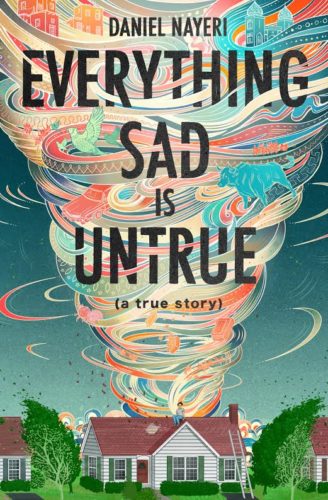
Daniel Nayeri’s Everything Sad is Untrue is part memoir and part storytelling where he fills in the things he doesn’t remember exactly from his childhood. The first part of the book is a mixture of three kinds of stories—myth, legend, and history—that attempt to place the reader in Daniel’s past and his ancestry as it happened and as he imagined it might have happened. He relates “story” in this way to help the reader understand the very different Persian culture he started his life in and which formed his beliefs and attitudes.
Although there are no chapters in this book, the reader can clearly tell when the story pivots from providing background to relating the events from the time his mother became a Christian on a visit to the West. She embraced Jesus and her faith in Him wholeheartedly. Christianity in Iran is a capital offense, so she had to take her children and flee. She traded a comfortable life as a respected physician married to a successful dentist for the life of an impoverished refugee, looked down on because of her language, menial job, and poverty. But she had Jesus, and no one could take that away from her.
Some of the book tells about the year they spent in a refugee camp in Italy. It was not actually a camp with tents, but a concrete building with small rooms and a bathroom. The residents were refugees from many countries, all waiting for the U.N. to find a place that would accept them. They had nothing and there was no access to books, media or recreation. It was made even harder by the refugees’ inability to converse with each other and by impatient workers who processed each refugee’s mound of paperwork.
A lot of Daniel’s story tells what life was like for him as a child in Edmond, Oklahoma, where they eventually settled. He experienced bullying, but came up with tricks for avoiding the worst of it. There was culture shock around every corner as he tried to fit into a very different mindset. Fortunately, he had an outstanding teacher in Mrs. Miller who encouraged him without babying him. The librarian in Edmond was kind too, and so Daniel spent many Saturdays there devouring books. His mom ended up in the emergency room several times thanks to his stepfather Ray, a black belt. Despite lots of difficult times, Daniel never seems to plead for sympathy from the reader and always points to his mother as the strongest person he knows.
Everything Sad is Untrue is a book I recommend. It is a challenging read as the author’s life is presented through the eyes of a child, but with some of the understanding of an adult. Memories are an important theme of this book as Daniel says, “Memories are always partly untrue.” and “A patchwork story is the shame of a refugee.” This is a book ripe with principles and beliefs worth pondering and a story and characters who will remain in the reader’s thoughts long after the last page is turned.
Rating: 5/5
Category: Autobiographical novel/fictionalized memoir
Notes: 1. This is a hard book to categorize which may, in part, be a critical factor in making it a very good book.
2. It has been rated for children 12+ on Amazon. Some readers refer to it as a Young Adult book. To me, it is probably more appropriate for adults. Some of the fascination with “poop,” however, in Daniel’s childhood classroom would attract the attention of middle school boys.
3. This book has won many awards.
4. I thought not having chapters would be a negative for me, but it does fit the style of Everything Sad is Untrue.
Publication: 2020—Levine Querido
Memorable Lines:
Memories are tricky things. They can fade or fester. You have to seal them up tight like pickles and keep out impurities like how hurt you feel when you open them. Or they’ll ferment and poison your brain.
And here is the part that gets hard to believe: Sima, my mom, read about him and became a Christian too. Not just a regular one, who keeps it in their pocket. She fell in love. She wanted everybody to have what she had, to be free, to realize that in other religions you have rules and codes and obligations to follow to earn good things, but all you had to do with Jesus was believe he was the one who died for you. And she believed.
Imagine you’re in a refugee camp and you know it’ll be a tough year. But for the person who thinks, “At the end of this year, I’m going somewhere to be free, a place without secret police, free to believe whatever I want and teach my children.” And you believe it’ll be hard, but eventually, you’ll build a whole new life….But if you’re thinking every place is the same, and there will always be people who abuse you, and about how poor you’ll be at first, the sadness overtakes you….But what you believe about the future will change how you live in the present.
The Healing of Natalie Curtis–destroying a culture by forbidding its music
The Healing of Natalie Curtis
by Jane Kirkpatrick

The Healing of Natalie Curtis is historical fiction based on a period in the life of Natalie Curtis, a classically trained singer and pianist during a time when women in music had few lifetime choices—remain single achieving success as a performer or marry and teach. After suffering psychological trauma which also affected her physically, her brother George, who had been cowboying in the Southwest, invited her to accompany him because living there had done wonders for his health.
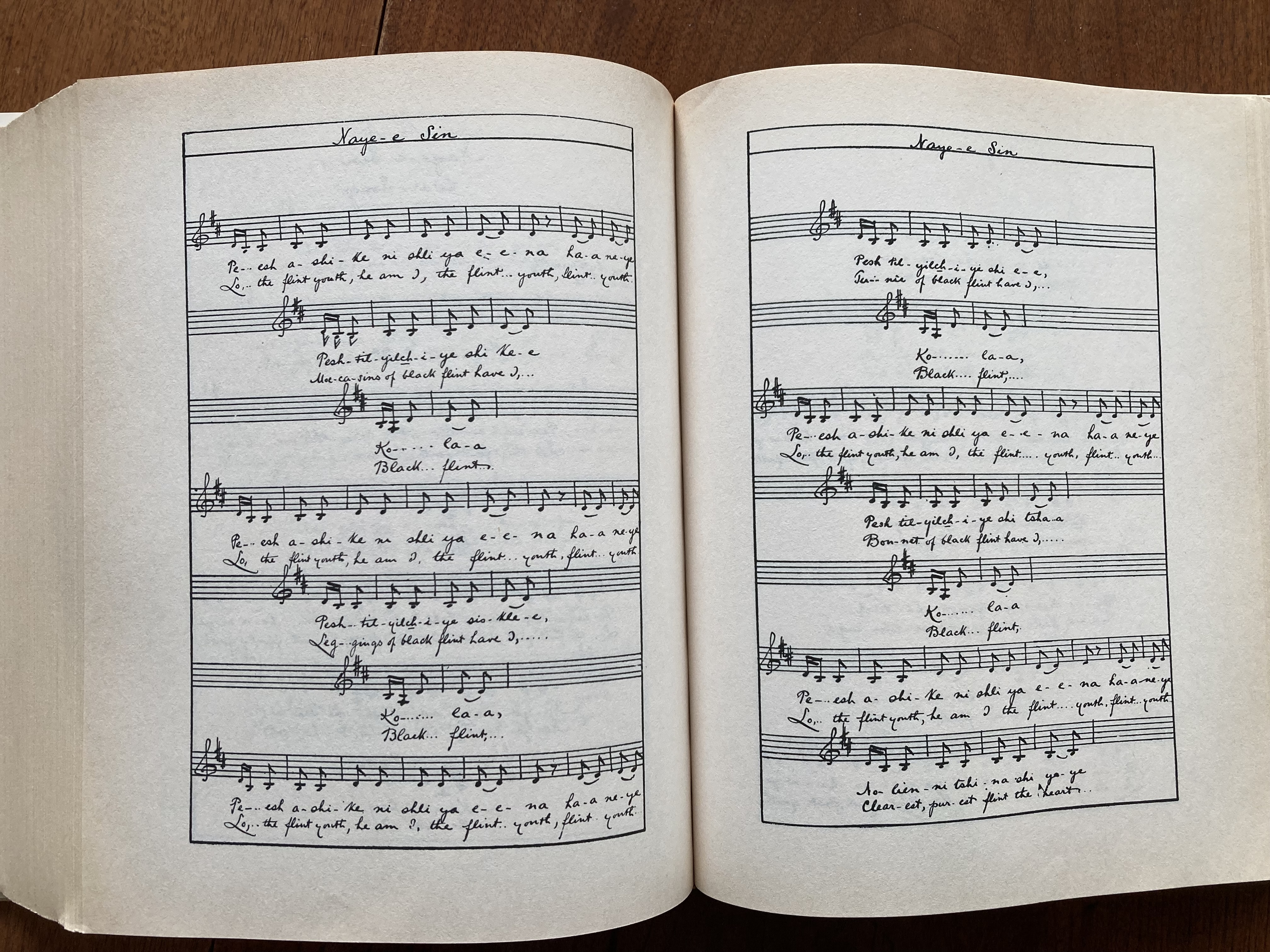
Natalie embarked on a developing, many year journey to record the music and dances of many American Indian tribes. She was afraid their voices would be forever lost as the U.S. government had imposed a Code of Offenses forbidding native singing, dancing, and other customs in its desire to assimilate the “savages” into a white culture. If they broke the Code, their food rations were cut and penitentiary was a possibility. Horrified by the treatment of the Indians, she set about to respectfully learn their stories and compile them along with their music in a book. To do this meant she had to gain legal access which she obtained by letters petitioning President Theodore Roosevelt and finally getting personal appointments with him.
Political change was slow and Natalie had roadblocks along the way. Her family wanted her at home, and she needed benefactors to fund her project. She made many friends, both Anglo and Indian along the way. She and her brother spent many nights camping, and she had to learn to ride horses western style. Her wardrobe changed from that of a proper lady in the early 1900’s to outrageous split skirts for riding and plain dresses adorned with native jewelry.
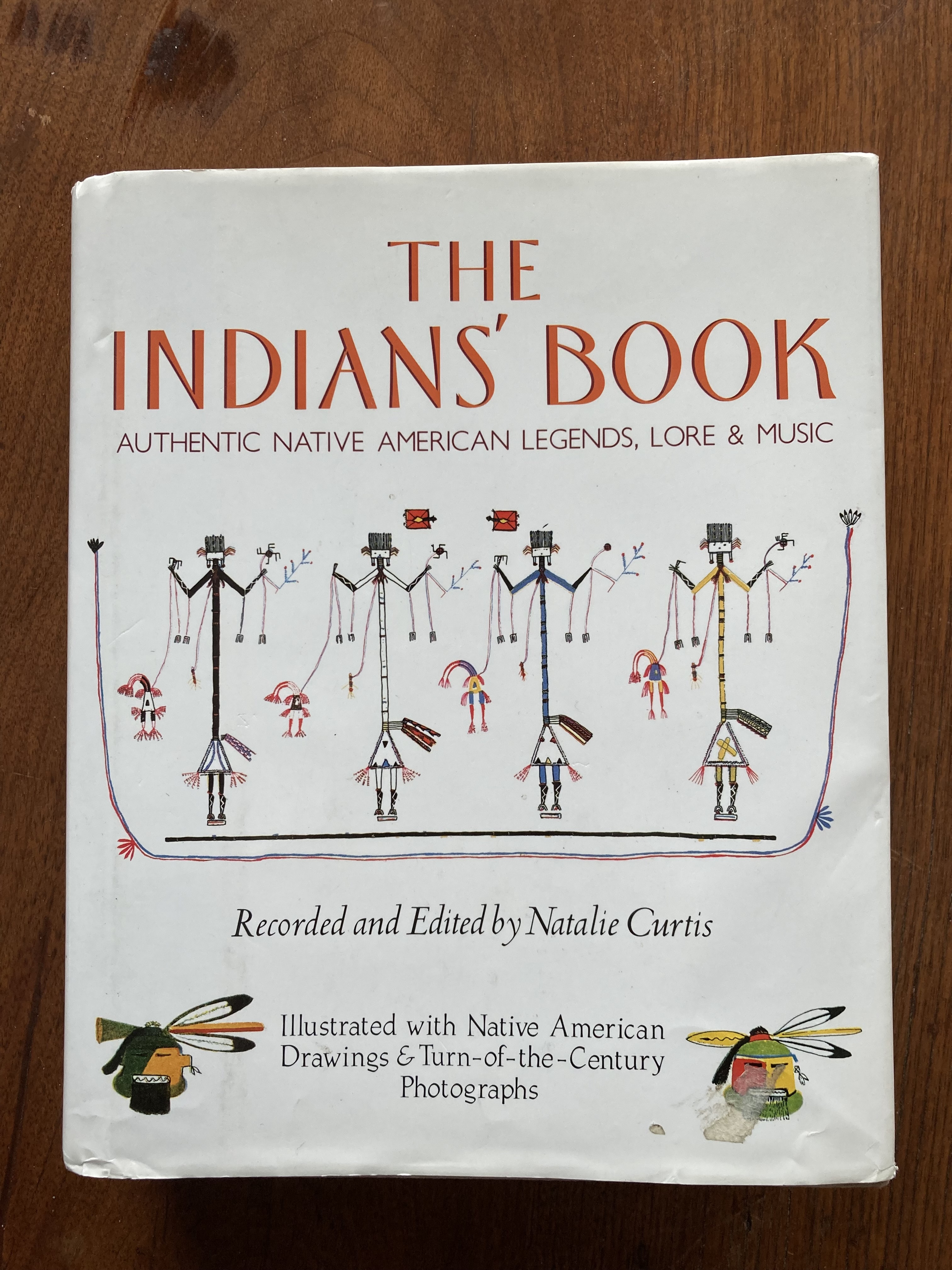
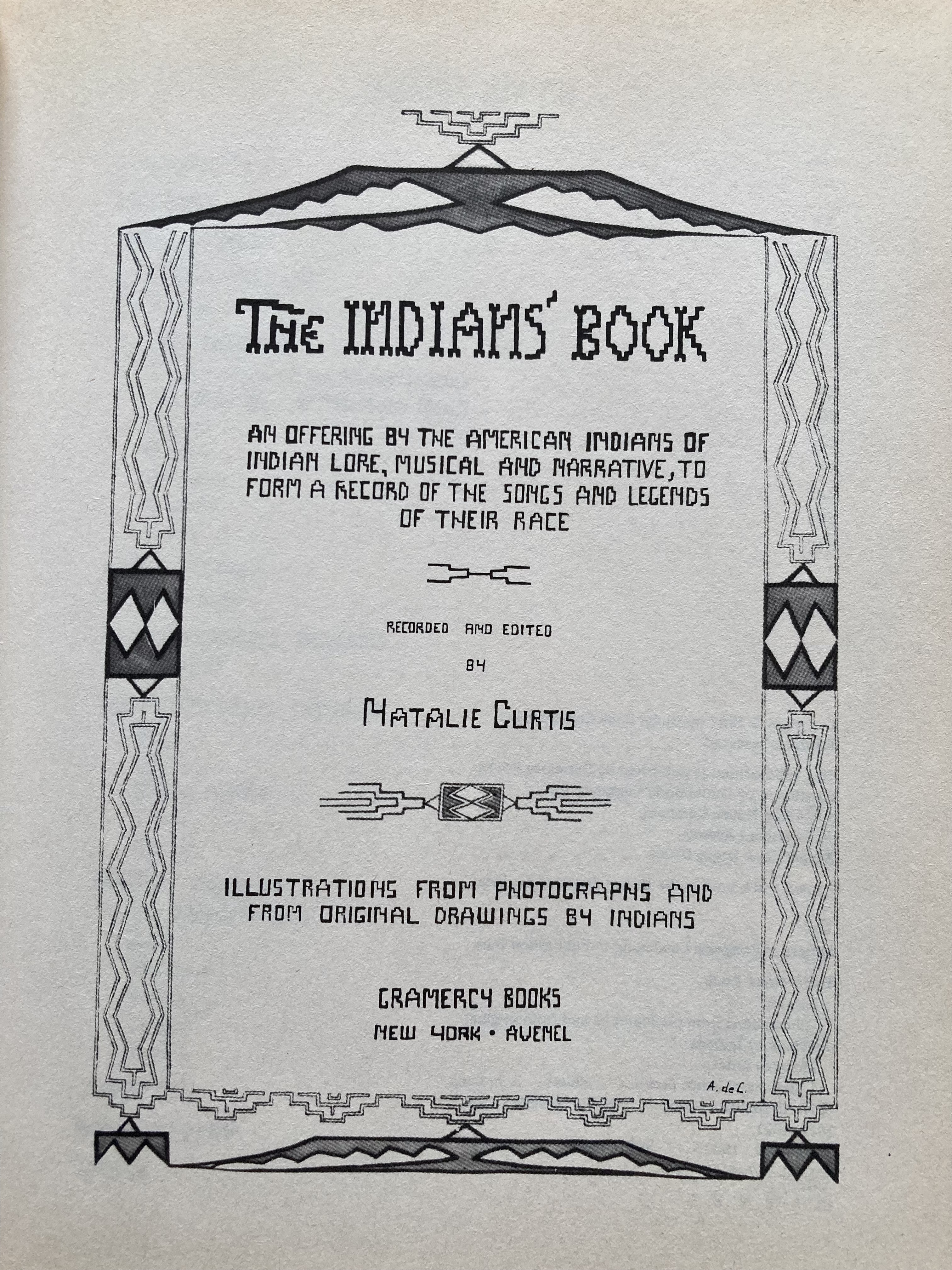
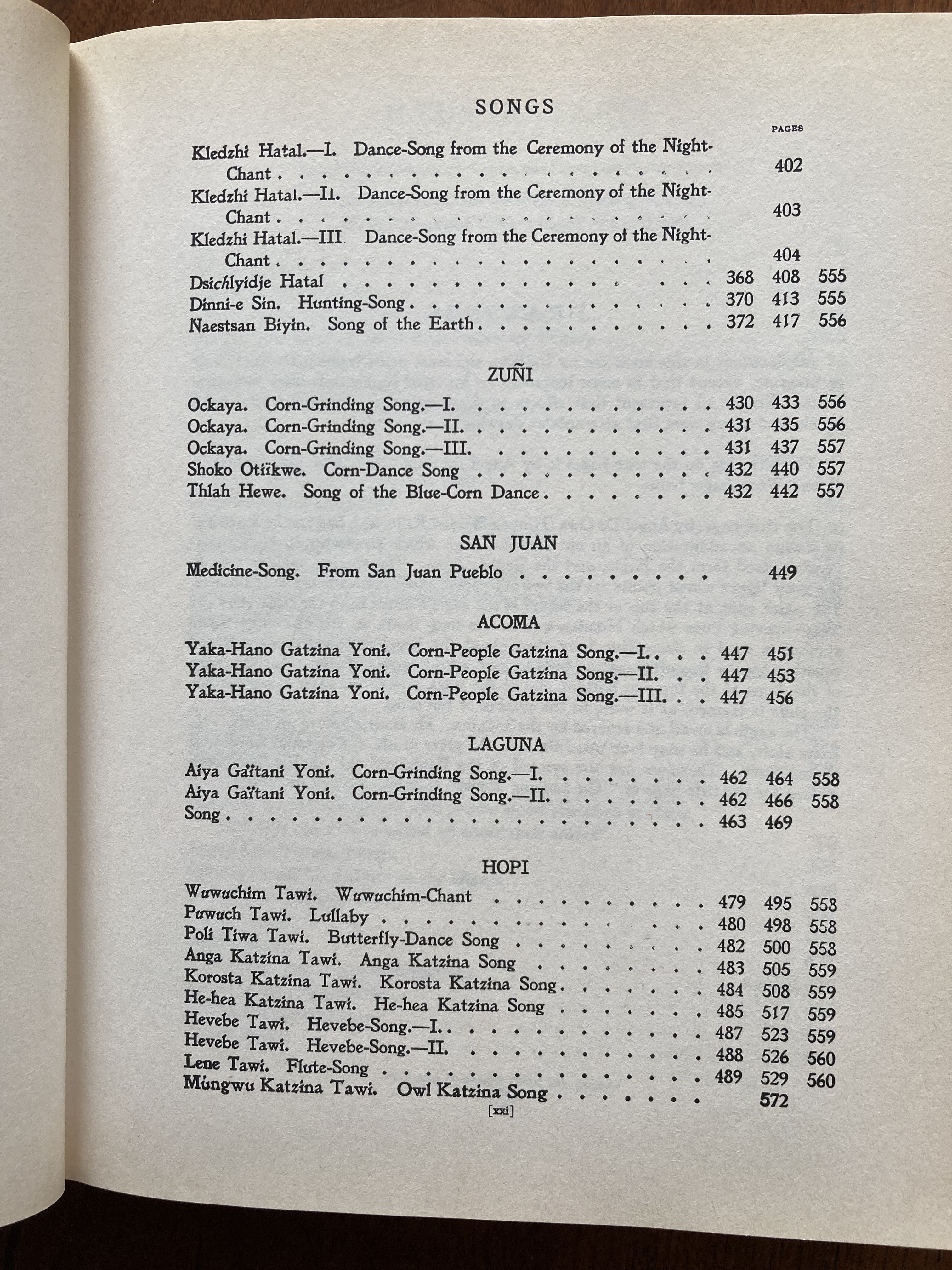
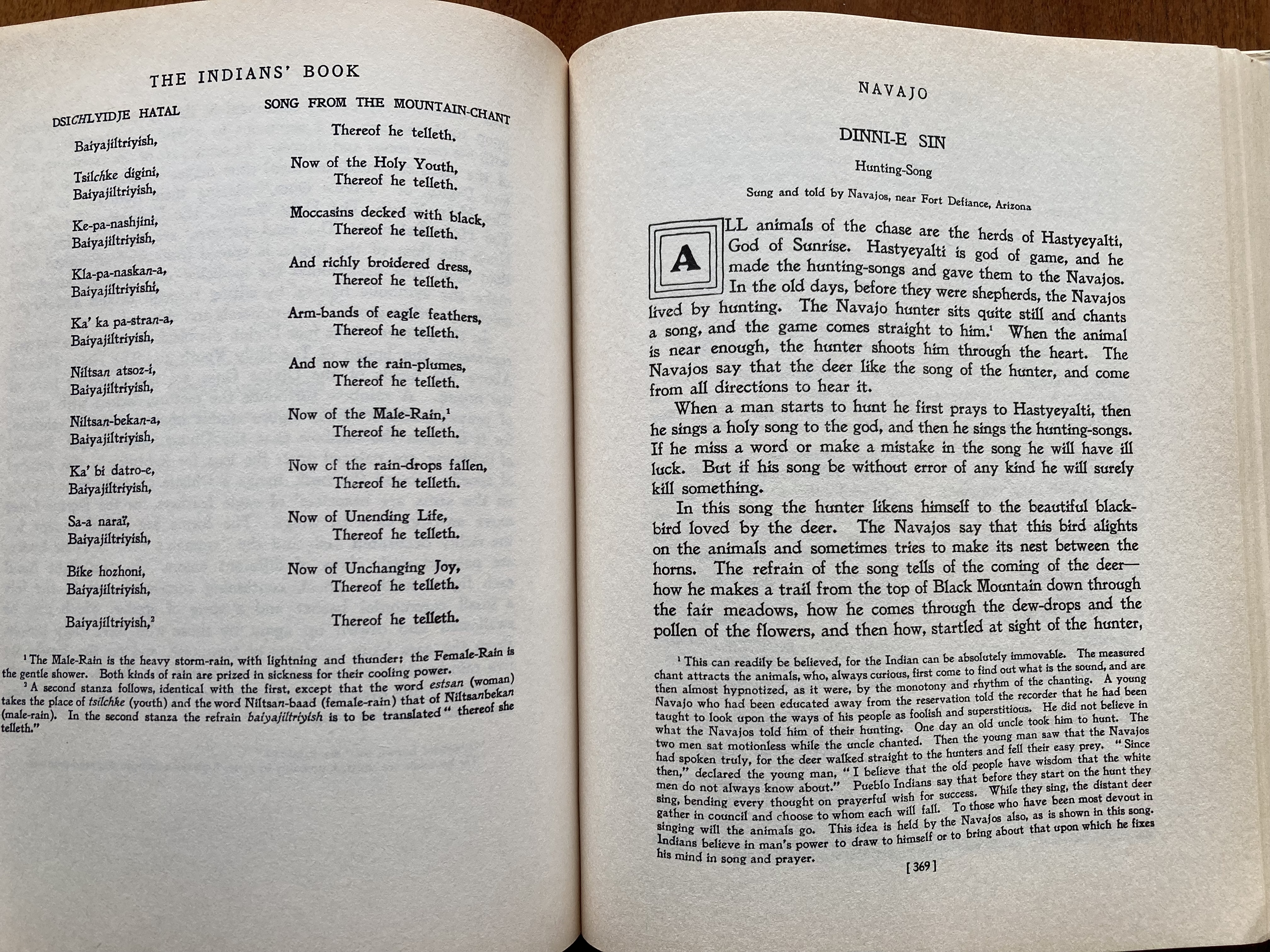
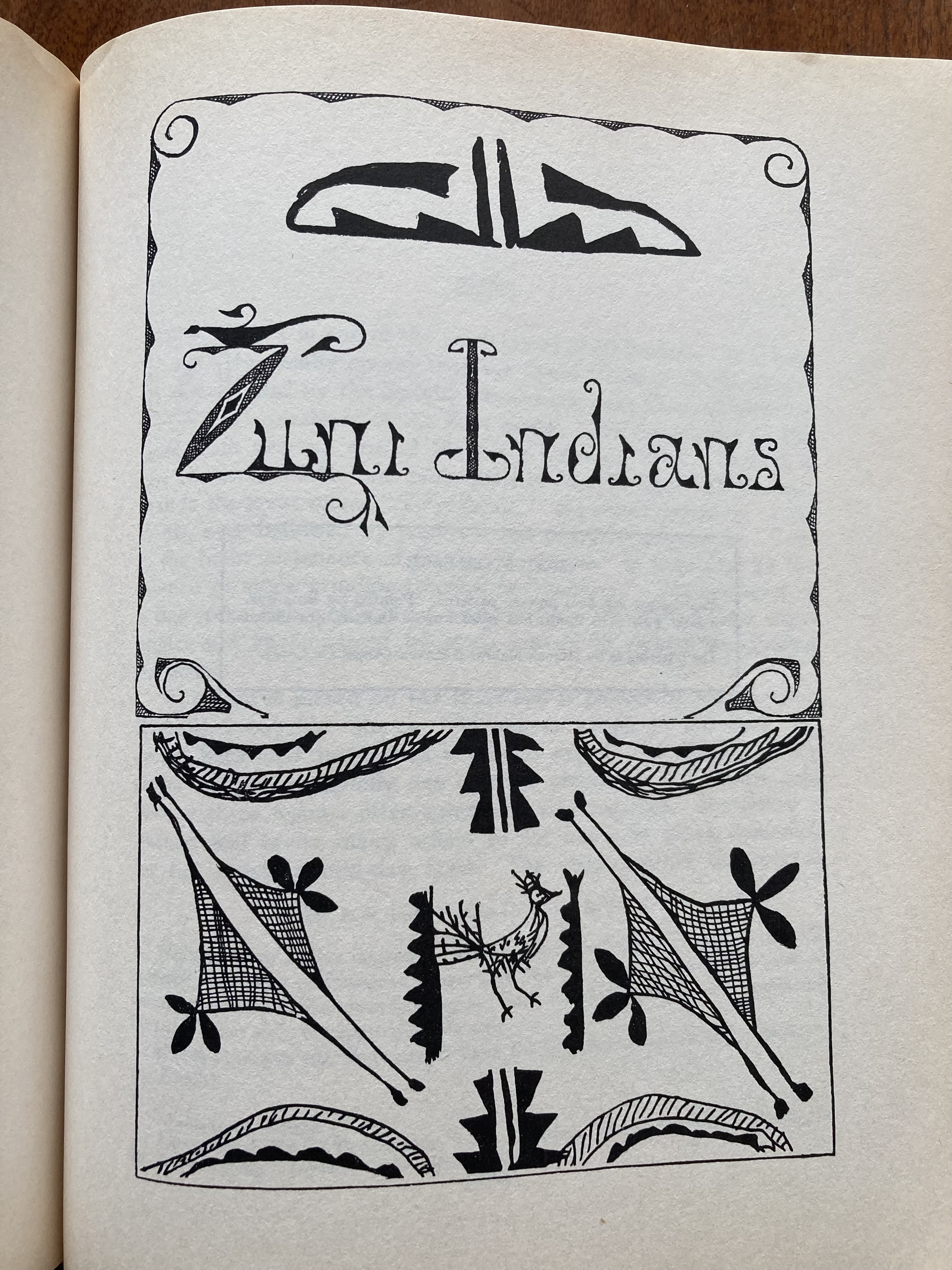
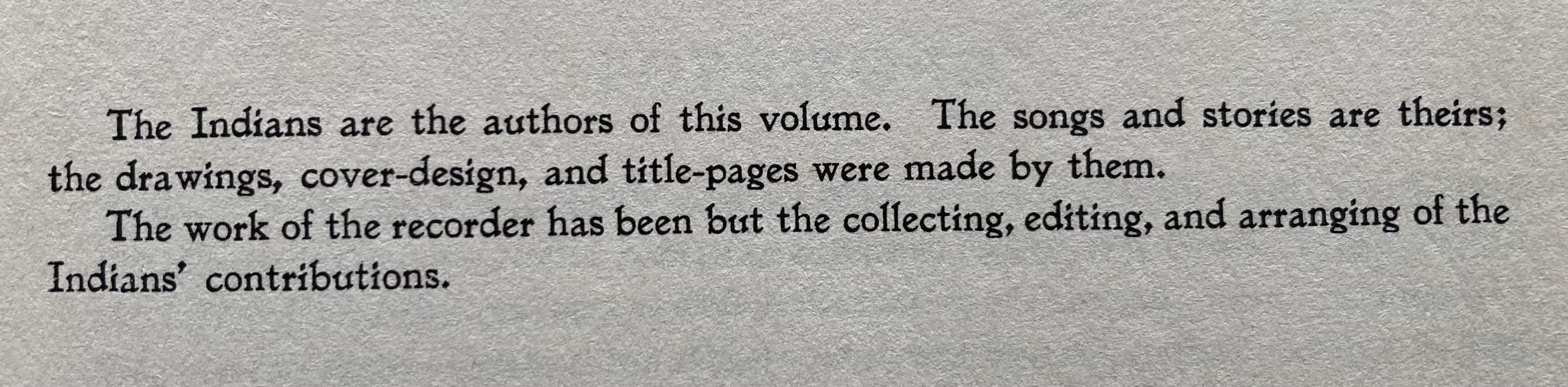
Initially I was puzzled by Natalie’s illness and her abrupt abandonment of the music world for five years, but the causes were revealed as the story progressed. This book is as much about Natalie’s struggle to change attitudes toward the Indians and consequently treatment of them as about the music itself. She threw herself into this project with the same enthusiasm and drive that she had exerted in developing her music career. The book is very factually based except for conversations which had to be imagined but were based on the context of her known travels and meetings. By the time I finished reading The Healing of Natalie Curtis, I had ordered a copy of the book Natalie put together from her research, The Indians’ Book, which was a major resource for author Jane Kirkpatrick. My desire was to see the finished product of almost 600 pages. Wanting to make it clear that the book truly belonged to the Indians, she called herself the editor rather than the author.
I received a complimentary copy of this book in exchange for an honest review. Opinions expressed in this review are completely my own.
Rating: 4/5
Category: Historical Fiction
Notes: 1. In keeping with the times, Natalie Curtis, Jane Kirkpatrick, and I have used the designation “Indians” for the indigenous people living in the U.S. The various tribes all had names for themselves in their own languages which often translated as “The People.”
2. The end of the book contains: Suggested Additional Reading, Book Group Questions, and Author’s Notes that address cultural issues and the factual basis for the book.
Publication: September 7, 2021—Revell (Baker Publishing)
Memorable Lines:
This dismissiveness had happened before, mostly with professional men who saw any independent unmarried woman as lacking brains and capable of nothing more than sitting at Daddy’s table and taking nourishment from others.
“What I don’t understand,” Natalie said, “is how the Hopi are punished for practicing their religious customs, and those same songs and dances are advertised to bring people to see them. Burton approves because the railroad wants the business?”
This was what she was called to do, to save these songs and more, to give these good people hope that their way of life would not be lost to distant winds.
PHOTOGRAPHS FROM
THE INDIANS’ BOOK:
Code Girls–The Untold Story of the American Women Code Breakers Who Helped Win World War II
Code Girls
by Liza Mundy

Nonfiction has the potential to be deadly boring or magnificently interesting. Liza Mundy’s Code Girls without a doubt falls into the latter category. It is not an easy read, but it is fascinating. Code Girls tells the tale of the essential role the code breakers, who were mostly women, played in the eventual Allied defeat of the Axis nations in World War II. If you are envisaging a handful of young women holed up in a room in D.C., think again. The Army’s code breakers numbered 10,500 with 70% of them women and most working out of the Arlington Hall campus in Virginia. The Navy’s group numbered 10,000 with half of those stationed in D.C. of which 80% were female. Both groups rose to those numbers from a mere 200 code breakers each in a short amount of time. These women came from all walks of life and backgrounds. Among the first recruited were college educated, low paid, school teachers at a time when a low priority was placed on education for women. Many of these women had a background in math and science, and all had a good memory. They were analytical and could approach problems in novel ways.
The code breakers’ stories went untold for most, if not all, of their lives because they were sworn to secrecy. They considered the work they did a duty of honor to their country and to the men in their lives. They understood that their work could literally save lives, perhaps even of their own loved ones, by intercepting and decoding enemy messages. It is a testament to their trustworthiness that Germany and Japan never knew that their transmissions had been intercepted. Even roommates and spouses could not speak of their work outside of their assigned workplace.
The author, Liza Mundy, had two hurdles to jump, both of which she accomplished with finesse. The first was her thorough research which is documented through 39 pages of notes and bibliography. Then she wove the hard facts into a narrative with a very personal touch derived from many interviews. She doesn’t just write that Washington, D.C. was inundated with uninitiated girls pouring in from all over the country needing housing, food, transportation, and training. She presents the scenario through the eyes and voices of the “girls” who lived it. Not everyone, of course, had the same experiences, and those experiences varied according to many factors including whether they were working for the Army or the Navy. They arrived with no assignments, just the promise that they would be helping their country.
The war period (1939-1945) was a time of great social upheaval. For most people, a woman’s place was in the home. Suddenly men were going overseas and their jobs needed to be filled along with positions created by the manufacturing needs of the war machine. There were many stereotypes that were broken down, and others that were not put to rest so willingly or easily.
Code Girls is masterfully written and a wonderful tribute to those women whose secrets can now be told. It should be “required reading” for all Americans who don’t want history to repeat itself, for readers who want to understand what previous generations endured to stand against tyranny, and for men and women interested in the societal changes that occurred as a result of World War II.
Rating: 5/5
Category: History, Nonfiction
Notes: The author sets the stage for the reader through her own notes as to how the book was written, information on the initial recruitment of women, and an introduction that discusses society in the U.S. at that tine and the military’s “bold” decision to recruit women. My copy of the book has an “Afterword for the Paperback Edition” in which the author shares the overwhelming response her book received from the code breakers and their families. The book also includes photographs of some of the women interviewed and more generic photographs of the code breakers at work. There is also a “Glossary of Code-Breaking Terms,” a very valuable “World War II Timeline,” and a “Reading Group Guide” of discussion questions.
Publication: October 20, 2017—Hachette Books
Memorable Lines:
Successful code breaking often comes down to diagnostics—the ability to see the whole rather than just the parts, to discern the underlying system the enemy has devised to disguise its communications. The Japanese, Agnes diagnosed, were encoding their messages and then using something called columnar transposition, which involves writing the code groups out horizontally but transmitting them vertically, aided by a grid with certain spaces blacked out, whose design changed often.
It was the first time many of the women had spent time in a bona fide workplace—apart from a classroom—and they discovered what workplaces are and have been since the dawn of time: places where one is annoyed and thwarted and underpaid and interrupted and underappreciated.
She and the other women knew that ship sinkings were the logical and desired consequence of their concerted efforts. They did not feel remorse. America was at war with Japan; Japan had started the war; the lives of American men were at stake, not to mention America itself. It really was that simple.
The Hour of Peril–The Secret Plot to Murder Lincoln before the Civil War
The Hour of Peril
by Daniel Stashower

This nonfiction account of an assassination plot against President-elect Abraham Lincoln required extensive research as much was written about the plot at the time, but many of the primary source documents present conflicting perspectives. I don’t think the author of The Hour of Peril, Daniel Stashower, had any intention of creating a tome that parallels current events, but it is hard not to make comparisons as we watch history repeat itself.
The politics of the elite to gain money and power is certainly a theme as well as inciting ordinary people to take extra-legal actions. Good and bad, ethical and immoral, slave vs. free, states’ rights or federal control—they all play a role in the politics of that time.
The rights of men to live freely and the rights of states to determine their own laws clash as the Union begins to disintegrate. Lincoln’s position is that new territories being added must be free, but that he would not advocate changing the slavery laws as they currently existed in the various states in the Union. This position incited those who felt Lincoln went too far and those who decided he had not gone far enough. There were just too many people unwilling to compromise.
As Lincoln headed to Washington, he wanted to greet as many people as possible and was not concerned about his safety. When Allan Pinkerton, a detective with a reputation for being “fierce and incorruptible,” was hired to secure the rail lines the president would be traveling on through Maryland, he discovered that there was a plot to assassinate Lincoln. At that time the focus of his investigation changed. He used the same techniques he had used for years to infiltrate groups planning railway robberies, but his operatives had to intensify their efforts because the time frame for discovery was very short. Pinkerton devised an extremely complicated plot that was successful but did require some last minute changes.
A lot of The Hour of Peril was about Pinkerton and included some discussion of Kate Warne, the first female detective in the United States. Pinkerton requested absolute secrecy of the very few people who were informed of the plot and countermeasures. He was dismayed when he discovered that Lincoln and several people close to the president-elect had, in fact, disclosed information about the travel plans, possibly endangering Lincoln’s life.
The Hour of Peril is not a quick or easy read, but well-worth the time invested. There is much information about and insight into the Civil War era and politics in general to be gained.
Rating: 5/5
Category: History, Nonfiction
Publication: 2013—Minotaur Books
Memorable Lines:
Among those attempting to defuse the crisis was the recently defeated candidate, Stephen Douglas, who selflessly carried a message of unity to hostile audiences in the South, attempting to calm the secessionist fervor and broker a compromise.
He would have been wary of revealing too much in a letter, especially one sent to a politician. As Pinkerton had told Samuel Felton at the start of the operation, “on no conditions would I consider it safe for myself or my operatives were the fact of my operating known to any Politician—no matter of what school, or what position.”
As far as Pinkerton was concerned, there would be no future disclosures. He had sworn the main participants to secrecy, and arranged matters so that the minor players had no sense of the larger plan. In many cases, even those directly involved in carrying out crucial elements of the detective’s design were ignorant of the roles they had played. Once again, secrecy had been the lever of his success.
A Dream Called Home–search for happiness
A Dream Called Home
by Reyna Grande

Torn between two countries, immigrant Reyna Grande seeks to find herself. Is she Mexican or American? Will she ever fit into either culture? Is she destined to metaphorically straddle the border for a lifetime? When her first book was published in 2006, one of her dreams had come true and she had begun “a lifelong quest to advocate for the Mexican immigrant community by sharing our stories with the world.” What she found in the aftermath of its publication, however, is that her story resonates with other immigrant communities as well and even with Native Americans who feel the same struggles to maintain a dual identity, language, and culture.
Reyna’s difficult, abusive childhood is discussed at various points in her memoir A Dream Called Home as it plays a strong and recurrent role in her efforts to work through the emotions of her turbulent past through her writing. She makes mistakes along the way as a college student and as a young adult, but she learns from them and decides to experience them as a part of the growth that shaped her into “a unique individual with a unique voice.”
The memoir is filled with stories of her personal relationships. She realizes that she is subconsciously seeking out the love of her father that she never felt under his roof or when he left his family in poverty to earn money in the United States. Reyna and her siblings wrestle with so many decisions in the U.S., and Reyna has to accept that the pathway to healing and success for her is not the right one for them. Fortunately, she has Chicana professors that become lifelong mentors. Even though Reyna is a talented writer, she also has to learn the difficult business end of publication.
Her stint as an untrained middle school teacher in Los Angeles is both sad and predictable for those familiar with teaching in that climate. She experiences unsupportive parents, disrespectful students, and ever changing assignments and curriculum. A bright light for Reyna is her introduction to folklórico. It revives her own interest in her Mexican heritage and renews an enthusiasm in Mexican culture for her students, many of whom, like Reyna, feel displaced and unsettled.
Reyna’s story can not be summarized in a review. My job is to tell you that A Dream Called Home is a book you should read; it should be a part of your mental catalogue. Regardless of your position on the influx of immigrants currently overwhelming the U.S. and its broken political system, you will find Reyna Grande’s perspective both informative and enlightening if you want to understand the struggles of people desperate to emerge from poverty who are clinging to the hope of the American dream.
Rating: 5/5
Category: Memoir
Notes: Includes pictures that personalize Grande and her experiences
Publication: 2018—Atria
Memorable Lines:
My biggest virtue and my biggest flaw was the tenacity with which I clung to my dreams, no matter how futile they might seem to others. The dream of having a true relationship with my parents was the one I had clung to the most because it was the first dream I’d had, and the farthest from my reach.
“Being in a new country, learning a new language, a new culture, takes time. You will learn. It doesn’t feel that way now, but one day you will be just as comfortable speaking English as you are speaking Spanish. But no matter what, don’t ever forget where you came from, and don’t ever be ashamed of who you are.”
I was finally beginning to understand that it takes as much courage to leave as it does to stay, and that being a parent was way more complicated than I had ever imagined.
Fortitude—Resilience in the Age of Outrage
Fortitude—Resilience in the Age of Outrage
by Dan Crenshaw

Fortitude is a nonfiction work that holds Dan Crenshaw’s views on strength of character and how people who have fortitude can work together for a better America. Crenshaw is a member of the House of Representatives and a former Navy SEAL. Therefore, Fortitude is colored by his time in D.C. as well as his experiences in the military. It is, however, an inspirational book, not a political diatribe. Crenshaw references history, philosophy, psychology, SEAL training, and his personal story to explain the different components of character building as well as the deficits and issues prominent in our current society.
Crenshaw pulls the curtain back on the popular outrage displayed by both conservatives and liberals as many spew epithets without evidence to back up their position of hatred. “If you find yourself calling someone a racist, communist, traitor, RINO, or Nazi because they disagree with you, it is a good indication that your arguments are shallow and your emotions are driving your thinking.”
One of my biggest personal take-aways from this book is the importance of how I frame my own story, my personal narrative. Crenshaw explains how changing “I have to” to “I get to” is empowering, lets you take back control of your life, and removes you from the victim status.
He also speaks to suffering and hard times. Both can help you develop a strong character and confidence. Meeting challenges can actually push you to a higher level of functioning both physically and psychologically. If you voluntarily submit yourself to hardship, you are also building resilience that will help sustain you when you find yourself in trying times not of your choosing.
A review can not begin to cover all aspects of Fortitude. Read it to be exposed to Crenshaw’s background and experiences. Reread it to incorporate some of his philosophies, beliefs, and insights into your own frame of reference.
I would like to extend my thanks to NetGalley and to Twelve (Hachette Book Group) for giving me the opportunity to read this book in exchange for an honest review.
Rating: 4/5
Category: Politics, Inspiration
Notes: Contains foul language and is appropriate for adults, not children
Publication: April 7, 2020—Twelve (Hachette Book Group)
Memorable Lines:
…a culture characterized by grit, discipline, and self-reliance is a culture that survives. A culture characterized by self-pity, indulgence, outrage, and resentment is a culture that falls apart.
Life is a power struggle, and the heroes we value are no longer those who gracefully overcome adversity, but those who complain the loudest about their story of injustice.
Unfortunately, these days, too many people are overcoming their knowledge deficits with passion, and too many more people are mistaking “passion” and “authenticity” for righteousness and sophistication. It is an unhealthy trend.
Happy 4th of July!
Whether you call it Old Glory, the Stars and Stripes, or the Red, White, and Blue, our flag represents the United States of America. The Declaration of Independence, our founding document, was signed on July 4, 1776.
Here are some patriotic displays I saw this week walking around a subdivision in Oklahoma.








Memorial Day
Memorial Day in the United States is observed on the last Monday in May and honors those in the U.S. military who have paid the ultimate sacrifice for our protection and freedom. In my mind it also honors the families who have lost their loved ones to that cause. Their lives will never be the same.
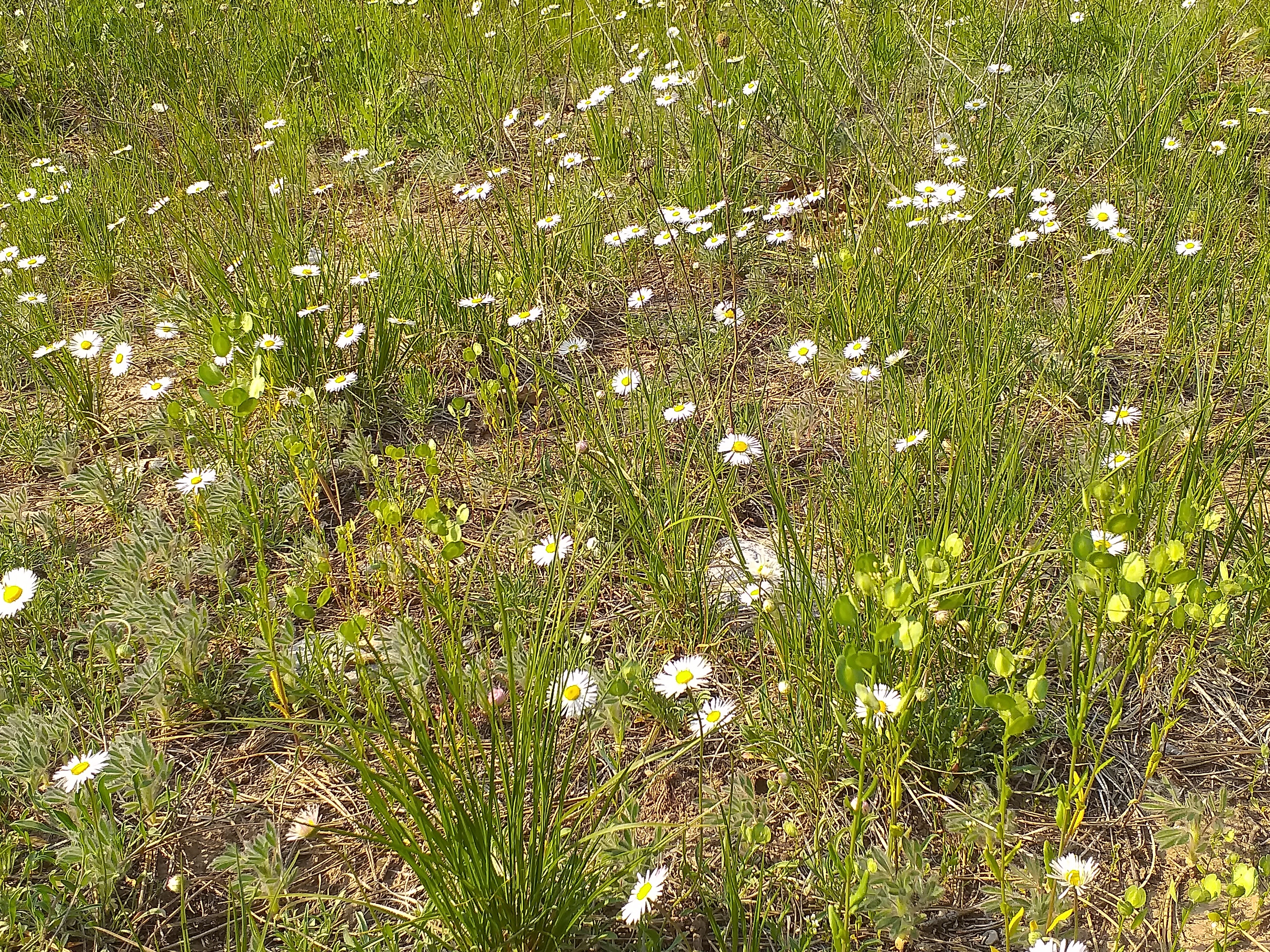
As I walked around our home in the mountains this weekend, I saw inspiring red, white, and blues in nature and am sharing them in honor of those heroes. Some of the reds have an orangish glow on the camera and the blues tend more toward purple, but we’ll use our imaginations and call it creative license.








 education pathways