Home » Social Issues
Category Archives: Social Issues
Waiting for Christmas–my new favorite Christmas story
Waiting for Christmas
by Lynn Austin
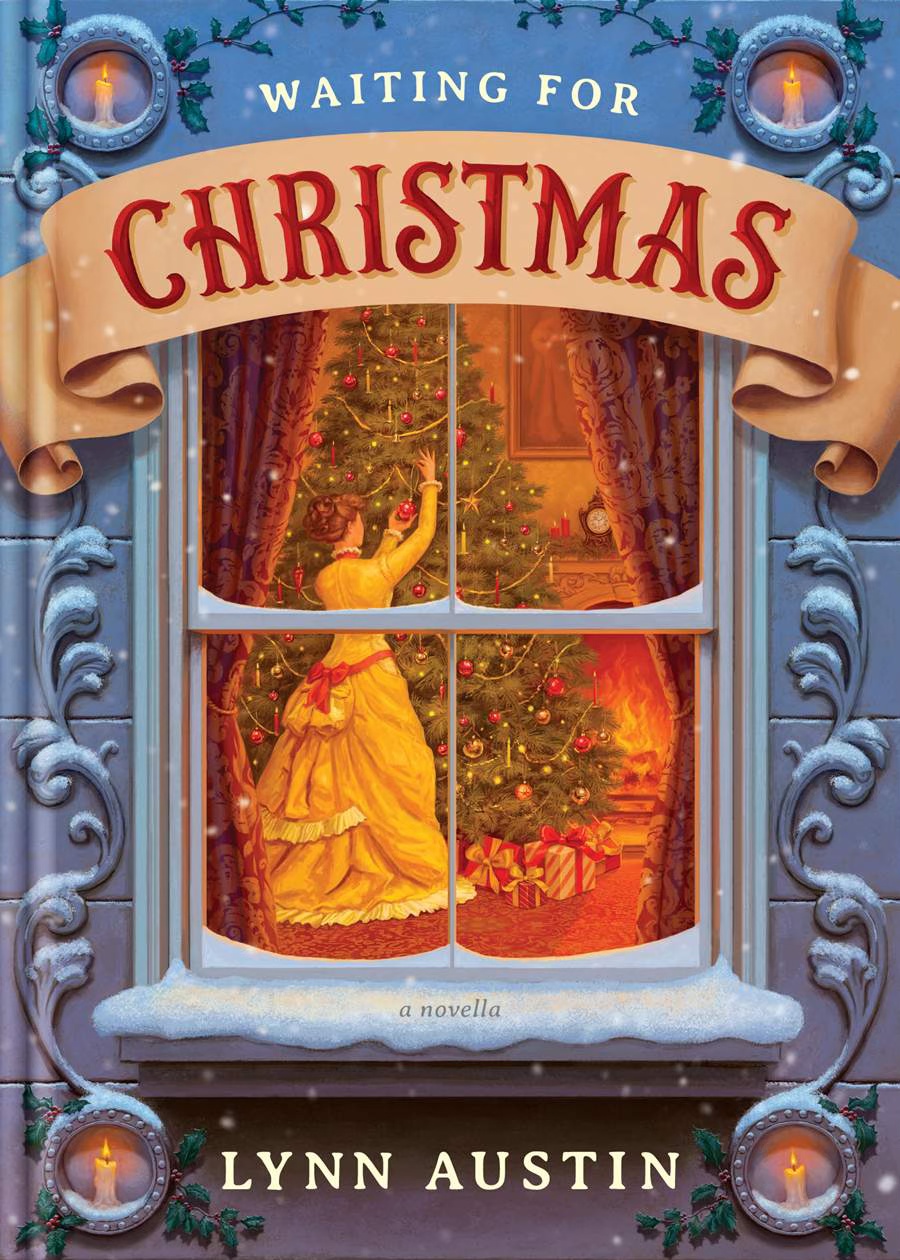
If you are searching for a Christmas story with depth and that calls the characters to examine the true meaning of Christmas, Waiting for Christmas is everything you could want in a Christmas story. I can imagine reading this every year as a new Christmas tradition.
As a novella, it fits well into this busy season, but contains all of the feeling that can be packed into a Christmas story. Addy, raised in wealth and comfort in 1901, gives up that life for the love of Howard, a young lawyer, the son of a preacher, who wants to support Addy without her having to spend any of her inheritance. Addy is active in the suffrage movement to help lift women out of poverty. This couple’s lives are turned upside down when she brings Jack, a runaway orphan, out of the bushes and into her home before he freezes to death. He is adamant that he is not an orphan because his father has promised to return home on Christmas. Meanwhile, he is desperate to find his little sister, often termed by others as an incoherent idiot. They were separated when their mother passed away. In the thousands of orphans in New York City, will Addy, Howard, and Jack be able to find little Polly? How will the children’s father know where to find them as their tenement house apartment has been rented to a poor Russian family?
My eyes filled with tears several times as I read this sweet, but powerful story. I highly recommend it for a great plot and wonderful characters. It brings Jesus’ teachings to light as the characters find ways to live out His example of acting with love towards others, even the unlovely. Addy finds ways to interact with various social groups in meaningful ways. If you want to be more like Jesus, then read Waiting for Christmas to see how the characters in this book respond to the challenges of helping others.
I received a complimentary copy of this book in exchange for an honest review. Opinions expressed in this review are completely my own.
Rating: 5/5
Category: Historical Fiction, Romance, Christian
Notes: Novella
Publication: September 3, 2024—Tyndale House Publishers
Memorable Lines:
He and Addy had experienced both extremes today, from ramshackle tenement to rambling mansion, and he marveled that both were in the same city, on the same 23-square-mile island. In between the extremes were his parents’ modest home and the simple town house he shared with Addy. The entire main floor of their town house could fit inside this echoing foyer, yet Howard felt blessed.
Vulnerable human beings of all ages and disabilities, society’s most helpless people, were being forced to live in appalling conditions simply because they were poor and disabled.
“I’ve prayed some pretty big prayers over the years that seemed to go unanswered. And if I wasn’t careful, I could start to believe that God didn’t love me because He didn’t give me what I’d asked for. I had to learn that my faith shouldn’t depend on whether or not God answers my prayers exactly the way I want Him to.”
Under the Tulip Tree–must-read book about slavery
Under the Tulip Tree
by Michelle Shocklee
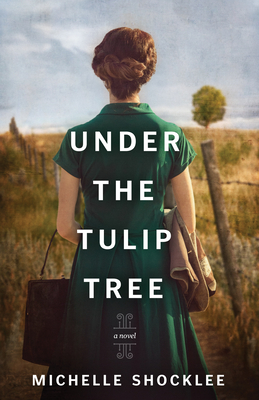
We have all heard it: it is important for us to know history so we don’t repeat the mistakes of the past. Michelle Shocklee does that in her novel Under the Tulip Tree. We get a view of slavery through the eyes of Lorena (Rena), an aspiring writer, who struggles to pursue her career in a male dominated society. She is sixteen when the stock market crashes and her privileged life changes forever. Seven years later she accepts a job with the Federal Writer’s Project (FWP) and meets Frankie who at 101 years old has a horrendous story to tell about what life was like for her and for others who were slaves.
The impact of someone being owned by another person is a concept that is hard for Rena to get her head around. The atrocities that Frankie shares are heartbreaking—even more so when you realize these things are drawn from actual events as told to FWP workers who were employed by the government to interview former slaves and record their stories for posterity.
What makes this story especially impactful is that Rena is telling this story from the viewpoint of a young White woman during the Great Depression. Although slaves had been freed, Blacks still did not enjoy equal rights. From sitting at the back of the bus, to lower pay, to being treated as dirty and ignorant, Blacks suffered from discrimination. Some Whites treated Blacks that way just because they could—acts of control and power. Some Whites treated Blacks that way because they were raised with that mindset, a deep cultural fear and hatred of someone who was different or because their own families had been mistreated by the Feds during and after the Civil War.
Rena’s father was a banker who fell apart after the crash. With her grandmother’s help, her family stayed afloat with both Rena and her mother getting jobs. Employment outside the home was something that was not acceptable for “their kind.” Rena’s mother was especially class conscious and worried about what her gossiping neighbors and former friends would say about Rena consorting with Blacks in Hell’s Half Acre where Frankie lived in a well-kept, small home boasting a beautiful floral garden and an outhouse.
As Frankie tells her story to Rena, the reader is quickly tied into the cruelty of the drama taking place in the book, and it becomes a page turner. It is harder to connect with Rena, but she grows as a person and becomes someone with the potential to do good. You can’t tell a story like this without pondering how a good God can allow bad things to happen. Frankie understandably harbors a lot of hate in her heart, but God works gently on her by bringing Illa, a Quaker woman, and Sam, a former slave, into her life, each encouraging, challenging and helping her.
Shocklee is a masterful storyteller, evoking empathy for 7 year old Frankie and embedding her into the heart of the reader. She shares the difficulties Frankie endured throughout her life without bearing down on graphic details. The author also dives into the “contraband” camp where Frankie lived for three years, still nominally a slave but under the protection of the Federal soldiers. Then she paints a picture of the horrors of war and its aftermath. As we learn about this part of history, we also see how citizens, both Black and White, were faring during the Great Depression. There are several surprising events at the end of this tale that help to bring closure for the characters and the reader.
There is a strong spiritual theme in Under the Tulip Tree. Frankie’s mother, Mammy, is a Christian believer, and although separated from each other early in Frankie’s life, Frankie never forgets her mother’s faith. Another important theme is literacy. Slaves were not allowed to learn to read. It was clear to the masters that slaves who could read could not be controlled as easily. Therefore books were forbidden. Frankie initially wanted very much to read, but the consequences were too great, robbing her of that desire. Standing up for what is right, for the downtrodden, for yourself against the power of the group in control is also a recurrent theme. All of these and many others remain ideas we wrestle with in our current society. On the positive side, we see the strength to be found in literacy, in trusting in God despite the circumstances, in the power in the Word of God, and in love for others—even our enemies.
Rating: 5/5
Category: Historical Fiction, Christian
Notes: 1. My personal thoughts in response to Under the Tulip Tree:
—The problem is not addressed in this book; but, sadly, slavery/human trafficking is widespread all over the world today. It is a major problem in the U.S.
—We make quick assumptions every day about other people based on where they come from, how they look and talk, and so many other factors. People, Black and White, did that in the book, and we still do it today.
- Original stories collected by WPA are available online from several sources. One is sponsored by Rice University: https://libguides.rice.edu/c.php?g=1231494&p=9012494
- Discussion questions are included in the back of the book.
Publication: 2020—Tyndale
Memorable Lines:
[Rena]: “People like me, like my family, we don’t know much about what slaves experienced. I’ve never heard of children being beaten with no one held accountable, or being forced into labor at the age of seven. Even though slavery isn’t legal anymore, I believe it’s important to remember the past as it truly was, not as we wish it to be.”
[Frankie]: “Helplessness washed over me, and I hated myself for it. Ever since the day I was sold away from Mammy, I’d despised helplessness. When overseers beat me and chased me down like an animal, I’d been helpless. When men used my body for their own pleasure and babies died, I’d been helpless to prevent it from happening. But the one thing I’d fought to maintain control over was my emotions. No one could force me to love or hate. They were mine to decide. I wasn’t about to allow this white woman to steal that away from me, no matter her attentive ministrations.”
[Sam]: “Don’t you see, Frankie? The day I landed on Miz Annabelle’s doorstep changed my life. I thought I found freedom when I ran away from my master, but it weren’t mine. Not yet. Freedom comes in knowing the truth of God. He loves each of us the same. He loves you, Frankie.”
Pride and Prejudice–courtship in the early 1800’s
Pride and Prejudice
by Jane Austen

In preparation for reading Pride, a modern day version of Jane Austen’s Pride and Prejudice, with my book club, I decided to reread the original. I knew I could watch a video of the story, but I decided to aim for authenticity and read the actual book. I was glad I did as there is so much to be appreciated in Austen’s words, style, and depiction of characters. In retrospect, I believe my younger self had seen one of the several videos, but had never actually read the novel. I would still like to view one of the movies for an opportunity to better envision the costumes and settings of this period piece, but there is much value to be gained from the reading experience.
Pride and Prejudice is a romance particularly focusing on Jane and Elizabeth Bennet as they navigate the difficult waters of courtship in the early 1800’s in England. Their courses are made more murky by the family’s financial and social status. They are not part of the old monied class that is full of prejudice, but they have standards and they and their suitors are driven at least in part by pride. From a twenty-first century viewpoint, the courtship and rules of engagement seem stilted, but the reader can see in a younger sister’s impetuous disregard for the rules and assumptions of the time, that there are real societal and personal consequences for ignoring the standards of any time period.
I enjoyed the book which is as much about social issues as it is a romance. Pride and prejudice are, of course, themes throughout the book. Most of the characters of the novel grow and develop through the events of the story. Some remain stuck in their ways of thinking, and those continue to be persons the reader won’t like. You may find yourself rereading Pride and Prejudice for love of the characters, the joy of the language, or the journey towards a known ending—happy for some, less so for others.
Rating: 5/5
Notes: Edited by R. W. Chapman. Distributed by Gutenberg Press
Category: General Fiction, Romance
Publication: 1813—T. Egerton Military Library, Whitehall
Memorable Lines:
“Affectation of candor is common enough;—one meets it every where. But to be candid without ostentation or design—to take the good of every body’s character and make it still better, and say nothing of the bad—belongs to you alone.”
Without thinking highly either of men or of matrimony, marriage had always been her object; it was the only honorable provision for well-educated young women of small fortune, and however uncertain of giving happiness, must be their pleasantest preservative from want. This preservative she had now obtained; and at the age of twenty-seven, without having ever been handsome, she felt all the good luck of it.
“You mean to frighten me, Mr. Darcy, by coming in all this state to hear me? But I will not be alarmed though your sister does play so well. There is a stubbornness about me that never can bear to be frightened at the will of others. My courage always rises with every attempt to intimidate me.”
The Coat–sacrificial giving
The Coat
by Séverine Vidal and Louis Thomas
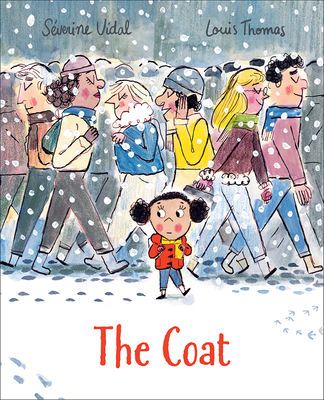
The Coat is a children’s picture book that tells the story of Elise who waits longingly for the day when her big sister Mia will outgrow her perfect red coat and pass it on to Elise. It also is the story of a homeless child dressed in a few layers of summer clothes sitting with her mother on cardboard on the sidewalk…in the snow. Elise passes her by the first day she wears her new red coat, but after a restless night, she can’t look away again. The second day she is late to school, coatless, and happy.
The Coat is a touching way to teach children about sacrificial giving. The homeless child is not given a name in the story which seems appropriate because there are so many “nameless” children who need help and hope. The pictures are colored line drawings, simple and almost cartoonish with an appeal to the reader to join the story. The snowy scenes and dialogue about “penguin cold” are perfect for this story. It is a book that children will request rereads on, and as they hear it again and again its message will make its way into their hearts.
I received a complimentary copy of this book in exchange for an honest review. Opinions expressed in this review are completely my own.
Rating: 5/5
Category: Children’s Fiction
Notes: Reading age: 3 – 7 years
Grade level: 1 – 2
Publication: October 11, 2022—Flyaway Books
Memorable Lines:
It was bitterly cold. Penguin cold!
But now when Elise thought about the warm, soft, red coat, it hurt a little, kind of like a pinch.
Her thoughts were enough to keep her warm.
In Case You Get Hit by a Bus: How to Organize Your Life Now for When You’re Not Around Later
In Case You Get Hit by a Bus: How to Organize Your Life Now for When You’re Not Around Later
by Abby Schneiderman and Adam Seifer

As a senior citizen, I realize I am each day closer to death than the day before and that no one, regardless of their age, knows when their time on earth will be over. With those things in mind, I agreed to review an advance copy of <i>In Case You Get Hit by a Bus: How to Organize Your Life Now for When You’re Not Around Later</i>. The first thing I noticed is that the digital copy provided was rather jumbled and therefore difficult to read. I am sure the final published copy will not have those issues. I plowed ahead, reading the Introduction, skimming the body of the text, and particularly noting the organization of the book.
This book provides timely advice and draws the reader’s attention to the multitude of decisions that should be made to help those responsible for end of life care and for the distribution of the estate. There are many decisions that, due to “advances” in technology, our ancestors would not have had to deal with (passwords, life support, etc.). This book both advertises and dovetails into their online planning system. In all fairness, though, they do refer readers to other companies besides their own, and by itself the book would be a good guide.
The authors differentiate between the critical issues that need to be done immediately (Plan of Attack), those items of lower priority, and other things that you might want to consider (Side Mission). They really do cover all the bases, for me anyway, and they recognize that even considering this project is difficult for many people in so many ways. Even as I write this review, my anxiety level has risen, but the idea is that if you make a plan you will not just feel, but actually be in control of, some aspects of your future and help those you care about during their time of grief.
I would like to extend my thanks to NetGalley and to Workman Publishing Co. for giving me the opportunity to read this book in exchange for an honest review.
Rating: 4/5
Category: Self Help, Relationships, Grief
Publication: December 22, 2020—Workman Publishing Co.
Memorable Lines:
In order to really make a difference for people at their time of greatest need, you had to help people get a plan in place ahead of time.
We all love instant gratification, but this type of planning forces you to look beyond your own personal gain and know your family has a well-lit path forward if you’re not around.
A Dream Called Home–search for happiness
A Dream Called Home
by Reyna Grande

Torn between two countries, immigrant Reyna Grande seeks to find herself. Is she Mexican or American? Will she ever fit into either culture? Is she destined to metaphorically straddle the border for a lifetime? When her first book was published in 2006, one of her dreams had come true and she had begun “a lifelong quest to advocate for the Mexican immigrant community by sharing our stories with the world.” What she found in the aftermath of its publication, however, is that her story resonates with other immigrant communities as well and even with Native Americans who feel the same struggles to maintain a dual identity, language, and culture.
Reyna’s difficult, abusive childhood is discussed at various points in her memoir A Dream Called Home as it plays a strong and recurrent role in her efforts to work through the emotions of her turbulent past through her writing. She makes mistakes along the way as a college student and as a young adult, but she learns from them and decides to experience them as a part of the growth that shaped her into “a unique individual with a unique voice.”
The memoir is filled with stories of her personal relationships. She realizes that she is subconsciously seeking out the love of her father that she never felt under his roof or when he left his family in poverty to earn money in the United States. Reyna and her siblings wrestle with so many decisions in the U.S., and Reyna has to accept that the pathway to healing and success for her is not the right one for them. Fortunately, she has Chicana professors that become lifelong mentors. Even though Reyna is a talented writer, she also has to learn the difficult business end of publication.
Her stint as an untrained middle school teacher in Los Angeles is both sad and predictable for those familiar with teaching in that climate. She experiences unsupportive parents, disrespectful students, and ever changing assignments and curriculum. A bright light for Reyna is her introduction to folklórico. It revives her own interest in her Mexican heritage and renews an enthusiasm in Mexican culture for her students, many of whom, like Reyna, feel displaced and unsettled.
Reyna’s story can not be summarized in a review. My job is to tell you that A Dream Called Home is a book you should read; it should be a part of your mental catalogue. Regardless of your position on the influx of immigrants currently overwhelming the U.S. and its broken political system, you will find Reyna Grande’s perspective both informative and enlightening if you want to understand the struggles of people desperate to emerge from poverty who are clinging to the hope of the American dream.
Rating: 5/5
Category: Memoir
Notes: Includes pictures that personalize Grande and her experiences
Publication: 2018—Atria
Memorable Lines:
My biggest virtue and my biggest flaw was the tenacity with which I clung to my dreams, no matter how futile they might seem to others. The dream of having a true relationship with my parents was the one I had clung to the most because it was the first dream I’d had, and the farthest from my reach.
“Being in a new country, learning a new language, a new culture, takes time. You will learn. It doesn’t feel that way now, but one day you will be just as comfortable speaking English as you are speaking Spanish. But no matter what, don’t ever forget where you came from, and don’t ever be ashamed of who you are.”
I was finally beginning to understand that it takes as much courage to leave as it does to stay, and that being a parent was way more complicated than I had ever imagined.
Fortitude—Resilience in the Age of Outrage
Fortitude—Resilience in the Age of Outrage
by Dan Crenshaw

Fortitude is a nonfiction work that holds Dan Crenshaw’s views on strength of character and how people who have fortitude can work together for a better America. Crenshaw is a member of the House of Representatives and a former Navy SEAL. Therefore, Fortitude is colored by his time in D.C. as well as his experiences in the military. It is, however, an inspirational book, not a political diatribe. Crenshaw references history, philosophy, psychology, SEAL training, and his personal story to explain the different components of character building as well as the deficits and issues prominent in our current society.
Crenshaw pulls the curtain back on the popular outrage displayed by both conservatives and liberals as many spew epithets without evidence to back up their position of hatred. “If you find yourself calling someone a racist, communist, traitor, RINO, or Nazi because they disagree with you, it is a good indication that your arguments are shallow and your emotions are driving your thinking.”
One of my biggest personal take-aways from this book is the importance of how I frame my own story, my personal narrative. Crenshaw explains how changing “I have to” to “I get to” is empowering, lets you take back control of your life, and removes you from the victim status.
He also speaks to suffering and hard times. Both can help you develop a strong character and confidence. Meeting challenges can actually push you to a higher level of functioning both physically and psychologically. If you voluntarily submit yourself to hardship, you are also building resilience that will help sustain you when you find yourself in trying times not of your choosing.
A review can not begin to cover all aspects of Fortitude. Read it to be exposed to Crenshaw’s background and experiences. Reread it to incorporate some of his philosophies, beliefs, and insights into your own frame of reference.
I would like to extend my thanks to NetGalley and to Twelve (Hachette Book Group) for giving me the opportunity to read this book in exchange for an honest review.
Rating: 4/5
Category: Politics, Inspiration
Notes: Contains foul language and is appropriate for adults, not children
Publication: April 7, 2020—Twelve (Hachette Book Group)
Memorable Lines:
…a culture characterized by grit, discipline, and self-reliance is a culture that survives. A culture characterized by self-pity, indulgence, outrage, and resentment is a culture that falls apart.
Life is a power struggle, and the heroes we value are no longer those who gracefully overcome adversity, but those who complain the loudest about their story of injustice.
Unfortunately, these days, too many people are overcoming their knowledge deficits with passion, and too many more people are mistaking “passion” and “authenticity” for righteousness and sophistication. It is an unhealthy trend.
Why God Calls Us to Dangerous Places–taking the Good News around the world
Why God Calls Us to Dangerous Places
by Kate McCord
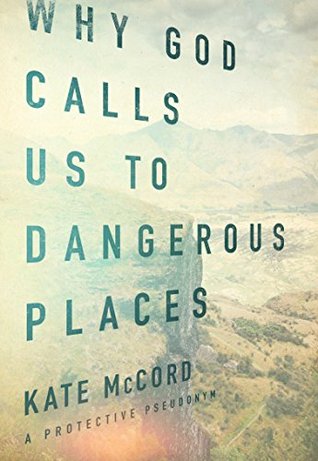
If you have ever wondered what it is like to be a missionary or why people would answer the call of God to go live in a hostile environment, then read Why God Calls Us to Dangerous Places. Author Kate McCord was a “business process consultant in global biopharmaceuticals.” She had a comfortable life and enjoyed her material blessings, friends, and church. In 2000, God started a process in her heart that led her four years later to Afghanistan to work for an NGO (nongovernmental organization). She became a project manager working to improve the lives of the people around her and share Jesus with her neighbors. She learned the language and the culture and relied on God through the Holy Spirit to help her negotiate the minefields of talking about Jesus in such a way that it would not result in her expulsion or execution.
Chapter by chapter McCord helps us dive deeper and deeper into an understanding of God’s calling and how it affects the person feeling the pull to devote themselves and their talents solely to the work of God. She describes how these decisions also affect their friends, families, and churches. McCord explores the kinds of people who are called, the places where they minister, and the difficulties and stress of living in a different culture under uncomfortable living conditions along with spoken and implied threats of violence. She relates all of this through descriptions of her own experiences and testimonies of others living in various countries. She backs up her discussion with stories from the Bible and with Scriptural references to support her theological underpinnings.
It is one thing to write about the missionary life; it is another to live it. McCord has done both and is able to share the calling and journey in a way that draws the reader into her story. I recommend this book for Christians who want to explore the call of Jesus on them personally or those they care about. I also recommend it for non-Christians seeking to understand what it is about this Jesus that makes people want to follow Him through the good times and the bad, enjoying an abundant life on earth with the assurance of an eternal life with Him in heaven.
Rating: 4/5
Category: Christian, Nonfiction
Publication: September 1, 2015—Moody Publishing
Memorable Lines:
We ask our question from the experiences of living in places of chronic stress, sporadic trauma, and brutal martyrdom. Both we who go, and those who love those who go, face the deep evil in the world and turn to God with all our human fragility. We ask the question: why does God call us to dangerous places?
Jesus calls us to dangerous places because He loves people who live in dangerous places. he loves the perpetrators of violence and the victims of violence. he loves the children and the old, the men and the women, the rich and the poor.
Yet they had heard those warnings, just as we, before we boarded airplanes to dangerous places, understood that we were walking into a darkness so deep it might someday overwhelm us. We counted the cost, at least as well as we could. We each said, “He’s worth it. Jesus is worth it.”
The Wall: Rebuilding a culture of LIFE in America—and ending abortion as we know it
The Wall: Rebuilding a culture of LIFE in America—and ending abortion as we know it
by Kirk Walden
 If you want to know more about what you can do to help rebuild “a culture of LIFE in America—and ending abortion as we know it,” then read The Wall by Kirk Walden. Written to encourage people to give of their resources—money, time, labor, and more, The Wall is informative, practical, and inspirational. Using the story of Nehemiah rebuilding the long destroyed wall around Jerusalem as a model, Walden shows how we can rebuild the broken culture as a loving people, giving options to those who find themselves in a crisis.
Pregnancy crisis centers can help in so many ways, from showing parents their unborn child using ultrasound to counseling men, encouraging them to step up to be dads. They can provide medical and physical support, abstinence and parenting education, post-abortion recovery counseling, and so much more. To provide all of these services, funds are needed, and all donations are important whether it is a small, but sacrificial donation of ten or twenty dollars or the rich person’s spare $50,000. If we create a culture that values life, abortion clinics will close their doors from lack of clients and profits. Give this book a read if you want to know more about pregnancy crisis centers and what you can do to help.
Rating: 5/5
Category: Christian, Nonfiction, Social Issues
Notes: short, inspirational read about providing real choices to those facing the real challenges of an unplanned pregnancy
Publication: August 4, 2013—LifeTrends
Memorable Lines:
Our Wall is going to be strong, and we will stand on that Wall. And we will invite inside our Wall the hurting, the fearful, the desperate and the destitute. We are not going to back down. And we are not going to back up or let up.
It’s a Wall of protection for those facing the cultural temptations and battles of today, and for their children waiting to be born; wanting nothing more than to celebrate their first smiles, their first steps, and their first birthdays. Once we get started, once we take our stand on that Wall, there is no limit to what God can do with each of us.
 education pathways