
Home » religion (Page 2)
Category Archives: religion
Practicing the Way–becoming more like Jesus
Practicing the Way
By John Mark Comer

The founder of Practicing the Way, John Mark Comer, brings his skills as a pastor, writer, podcaster, and teacher to this nonprofit that “develops spiritual formation resources for churches and small groups learning how to become apprentices in the Way of Jesus.” These are free resources. I was not surprised to learn that this book is a teaching resource. Comer is a highly organized thinker who develops his materials around lists, lists, and more lists.
Learning about the teaching methods of the many rabbis during the time of Christ was eye opening to me. Disciples of a rabbi answered a call by the rabbi to follow him and learn by observation and doing. The emphasis of this book for followers of Jesus today is on being apprenticed to Jesus, learning to be like him, not following a bunch of rules.
In a section on finding peace in this digital age, I identified with the author’s response to the stress and frustration most people feel in our society. I think he nailed it with: “The most powerful companies in the history of the world are working around the clock with the most sophisticated algorithms ever devised to stoke your fear and feed your anger, by any means necessary.”
This book is not going to miraculously turn you into “Super Christian,” but will help you think through what being a follower of Jesus means. It is full of quotes by a variety of authors. The purpose of the quotes seems to be to show that others think the way Comer thinks or to expand on what he is saying.
The thesis of the book encourages the reader to:
Be with Jesus
Become like him
Do as he did
I received a complimentary copy of this book in exchange for an honest review. Opinions expressed in this review are completely my own.
Rating: 4/5
Category: Christianity, Religion and Spirituality
Notes: This book is appropriate for all—from individuals who are just beginning to think about possibly wanting to learn more about Jesus to those who have been following Him for years but realize that they need to continue a fellowship with God that will lead them to be more like Him.
Publication: January 16, 2024—Waterbrook
Memorable Lines:
Apprenticeship to Jesus—that is, following Jesus—is a whole-life process of being with Jesus for the purpose of becoming like him and carrying on his work in the world. It’s a lifelong journey in which we gradually learn to say and do the kinds of things Jesus said and did as we apprentice under him in every facet of our lives.
…the reward for following Jesus is, well, Jesus. It’s the sheer joy of friendship with him.
God has a part, and we have a part. Our part is to slow down, make space, and surrender to God; his part is to transform us—we simply do not have that power.
Easter: The Season of the Resurrection of Jesus
Easter: The Season of the Resurrection of Jesus
By Wesley Hill
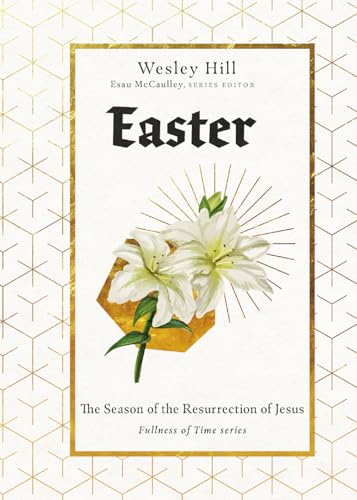
Continuing the Fullness of Time series, my book club very appropriately read Easter this month. It is a short book. Not a devotional, not an academic tome, Easter begins with a very engaging introduction describing a Great Vigil of Easter service Wesley Hill attended at a beautiful cathedral in England twenty years ago. He then moves into the story of the first Easter when Jesus Christ rose from the dead. He documents what he describes with Scripture references from all four Gospels weaving in important information about the context of the accounts.
Next, Hill discusses the liturgy used in Anglican and other churches relating baptism symbolically to the resurrection and the new life believers receive when they decide to follow Jesus. Easter is a movable feast, not occurring on the same calendar day each year. It is a complicated calculation, but Hill does share how to figure it out and the factors on which it is dependent. (Or, like me, you can just look the date up on the Internet or a calendar.)
Hill does not just leave us with a risen Lord. He moves on to how the church liturgy highlights the book of Acts which focuses on Jesus’ disciples. Their world has been turned upside down, but Jesus does not abandon them. When He ascends to be with God the Father in heaven, He leaves instructions for His followers to share the Good News and promises to send a helper, the Holy Spirit, to empower them.
Rating: 5/5
Category: Christian, Religion, Spirituality, Theology
Notes: The Fullness of Time series is edited by Esau McCaulley. It is composed of six stand alone books that can be read in any order: “Each volume in the Fullness of Time series invites readers to engage with the riches of the church year, exploring the traditions, prayers, Scriptures, and rituals of the seasons of the church calendar.” A seventh book is currently in process to complete the series.
Publication: 2025—InterVarsity Press
Memorable Lines:
Mercy for the undeserving is the overriding, hope-awakening theme of Easter.
Prayer, then, is our asking for what we need from the one who has triumphed over the world’s processes of decay and disorientation. We aren’t trapped by the limited options of life as we’ve always known it. Jesus is alive, and he exhales healing vitality, and wholeness into our world. His Spirit is with us.
The Lord is risen! The Lord is risen indeed! Alleluia!
What Happens Next: A Traveler’s Guide through the End of this Age
What Happens Next
by Max Lucado

Are you one of the many people tired of the chaos in our times? Are you wondering if we are about to experience the end of this age on Earth? Max Lucado has some answers as he provides a timeline in What Happens Next. His timeline is taken from Biblical prophecies and teachings. He is not going to give you a date for when the world as we know it is going to end because Jesus says in the Bible that only God the Father knows when that will be. Nevertheless, there are many Scriptures that spell out the events of the end times and their sequence. Max shares these to give you a hope, something to look forward to if you have accepted Jesus as your Savior.
Max literally uses a timeline graphic, however, to take you through the steps, clearly and one at a time. Futuristic prophecies are not just found in the book of Revelation where much of the end times is described, but are also in books such as Daniel and Isaiah. About this time last year, I did a study of the book of Revelation using several sources, but I did not come away with as clear an understanding as I did from reading What Happens Next.
Max Lucado has been in the ministry since 1978, and is a prolific author with a very relatable style. His goal is not to scare anyone into Heaven, but he doesn’t shy away from talking about Hell either. There are some controversies among scholars related to end time prophecies. Max explains the various viewpoints on the timing of the rapture, for example. Then he states which he believes is accurate and why. As is typical of Lucado’s writing, he includes anecdotes to tie into the spiritual point he is making, sometimes lightening the lessons and always clarifying them.
If you are a believer in Jesus, this book will give you a fresh appreciation of how much God loves you and certainty about your future. If you are not, you will find answers to questions you have about the end times, God, and how you can have a personal relationship with Him. I strongly recommend What Happens Next.
Rating: 5/5
Category: Nonfiction, Religion and Spirituality, Christian, Theology
Notes: 1. The book ends with “Questions for Reflection” for each chapter including the Big Idea, Application, and a prayer.
2. There is also a six-session Bible study on the end times, with the same title, that can be bought to accompany this book. It is appropriate for group or individual study. It has a workbook and streaming access to professionally created videos with talks presented by Max Lucado who is an excellent speaker. He is not speaking from a pulpit so it feels like a heart to heart conversation.
3. If you want a taste of Max Lucado and this book, I recommend going to YouTube where Max is currently posting on his channel a series called “Fresh Hope.” He has just added the third video.
Publication: 2024—Thomas Nelson (Harper Christian)
Memorable Lines:
God is the God of divine interruptions. Holy surprises. Who could have imagined God living on earth? But he came. Who could’ve imagined God hanging on a cross? But he died. Who could have imagined the empty tomb? But he rose from the dead. He intervenes in mighty and miraculous ways.
He has before.
He will again.
In the meantime keep an eye toward the sky. Live in such a way that Christ will find you faithfully looking for him.
That day is coming. God will put a crown on your head and a hand on your shoulder and bless you…Each child you hugged, he will praise you for it. Every time you forgave, he will praise you for it. Every penny you offered, truth you taught, prayer you prayed, he will praise you for it. He’ll praise you for the day you refused to give in and the season you refused to give up. But most of all, he’ll praise you for saying yes to Jesus.
Epiphany: The Season of Glory
Epiphany: The Season of Glory
by Fleming Rutledge
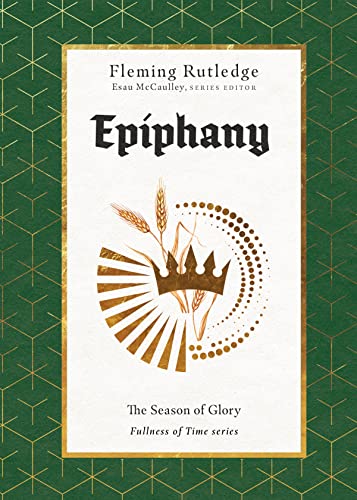
If you didn’t know anything about Fleming Rutledge before you began her tome on Epiphany, you would certainly quickly ascertain for yourself that she is a theological scholar. One of the first women to be ordained by the Episcopal church, she has spent her life studying the Bible and serving as a priest. As an author she has written many books and is known as an expert on the works of Tolkien. There is no fluff to be found in Epiphany: The Season of Glory.
Epiphany is celebrated on January 6 as the day the Magi brought their gifts to the Christ child, manifesting the glory of God and acknowledging the inclusion of Gentiles in the worship of Jesus. The day in many churches is extended into a season which celebrates other events in which the glory of God is preeminent: the baptism of Jesus by John the Baptist, the miracle of wine at Cana, and the transfiguration on the mountain top.
This book explains why we celebrate the day and season of Epiphany. It is a deep study which answers many questions for the reader and may well initiate many new questions. It is a work that requires time, careful reading, and thought. As other theological books, there are footnotes at the end. Many are reference sources for ideas and quotes in the book. Rutledge’s footnotes, however, include expansions on the various topics within and enlarge the experience for the reader. They are as interesting and thought provoking as the main body of the book.
Epiphany: The Season of Glory is part of the Fullness of Time Series which seeks to explain the liturgical calendar of many churches such as Anglican, Episcopal, and Lutheran. Many other churches are also finding renewal through experiencing the traditional seasons. As the editor of the series states “We want readers to understand how the church is forming them in the likeness of Christ through the church calendar.” The six books in the series are by different authors and can be read as standalones. This book is more intellectually challenging than the other books in the series, but they are all worthy reads.
Rating: 5/5
Category: Nonfiction, Christian, Religion
Notes: standalone, but part of the Fullness of Time Series
Publication: 2023—InterVarsity Press
Memorable Lines:
There will always be those who do not recognize him, but they will nevertheless be in his sight and have a part in his eternal plan (see Romans 11). The church, however, in its observance of Epiphany, is to take care of its calling, to point to Christ’s glory, and let his glory take care of itself.
Telling stories about Jesus, what he said and what he did, is an essential part of spreading the gospel. But without the doxa, the glory of the only Son from the Father, it is an incomplete gospel.
The season teaches us to value the entire fellowship of believers, because Jesus calls persons to himself without regard to their station, reputation, accreditation, or accomplishments—and we see how we can begin to be transformed by the action of his Hoy Spirit working through the unearned and undeserved gifts that he bestows.
Church of the Good Shepherd–Anglican
December 27, 2024
The Advent candles flicker with the arrival of Christ, the Light of the World.

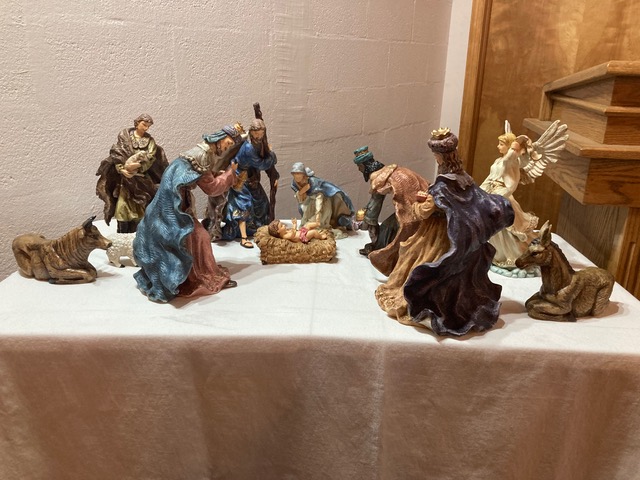
The Wise Men have been added to the nativity scene in readiness for January 6.
Gloria in Excelsis Deo!
The Amish Matchmakers–romance for the matchmakers
The Amish Matchmakers
by Beth Wiseman

Two Amish elderly sisters, Esther and Lizzie, own the Peony Inn and two neighboring cottages which they rent out. The sisters have a reputation in their community as matchmakers, but in this story they turn their skills on each other. They love each other so much that neither wants her sister to be alone or lonely if she passes first. When retired Englisch dentist Ben Stotzfus leases one of the cabins for 6 months, each determines to make a match for her sister, but both widowed women are actually attracted to Ben.
Another part of the plot introduces Ben’s granddaughter Mindy. Ben was semi-estranged from that part of his family, but now that she is grown they have reconnected. Gabriel is an Amish young man who works for the sisters at the inn, mainly when they need outside work done. He and Mindy meet when an accident occurs at Ben’s cottage. A spark flies upon their meeting but they wonder if anything can come of it since Amish and Englisch romances often have bad endings.
As older adults, Ben and Esther have medical issues that they try to keep secret. Lizzie is an energetic, feisty woman who is an avid reader of romances. She has decided that the cottage is haunted by the ghost of a previous tenant even though that concept is not part of Amish beliefs. Esther frequently has to rein Lizzie in, suggesting that she get rid of books on ghosts and serial killers and calling her out on some lies.
Depending on the issue, the antics and interactions of Esther and Lizzie can be serious or humorous, but their actions, although sometimes extreme, are always well-intentioned. The setting centers around Thanksgiving and Christmas giving an Amish holiday air to The Amish Matchmakers.
I received a complimentary copy of this book in exchange for an honest review. Opinions expressed in this review are completely my own.
Rating: 4/5
Category: Romance, Christian, Religion
Notes: Standalone
Publication: October 17, 2023—Zondervan
Memorable Lines:
“Gott had a plan. I believe that when things fall into place easily, it was meant to be.”
He truly did believe laughter was good for the soul, and he’d seen plenty of instances where a person’s joyfulness had prolonged their life.
He could lie, but she’d see through him. Mothers has a superpower when it came to lying.
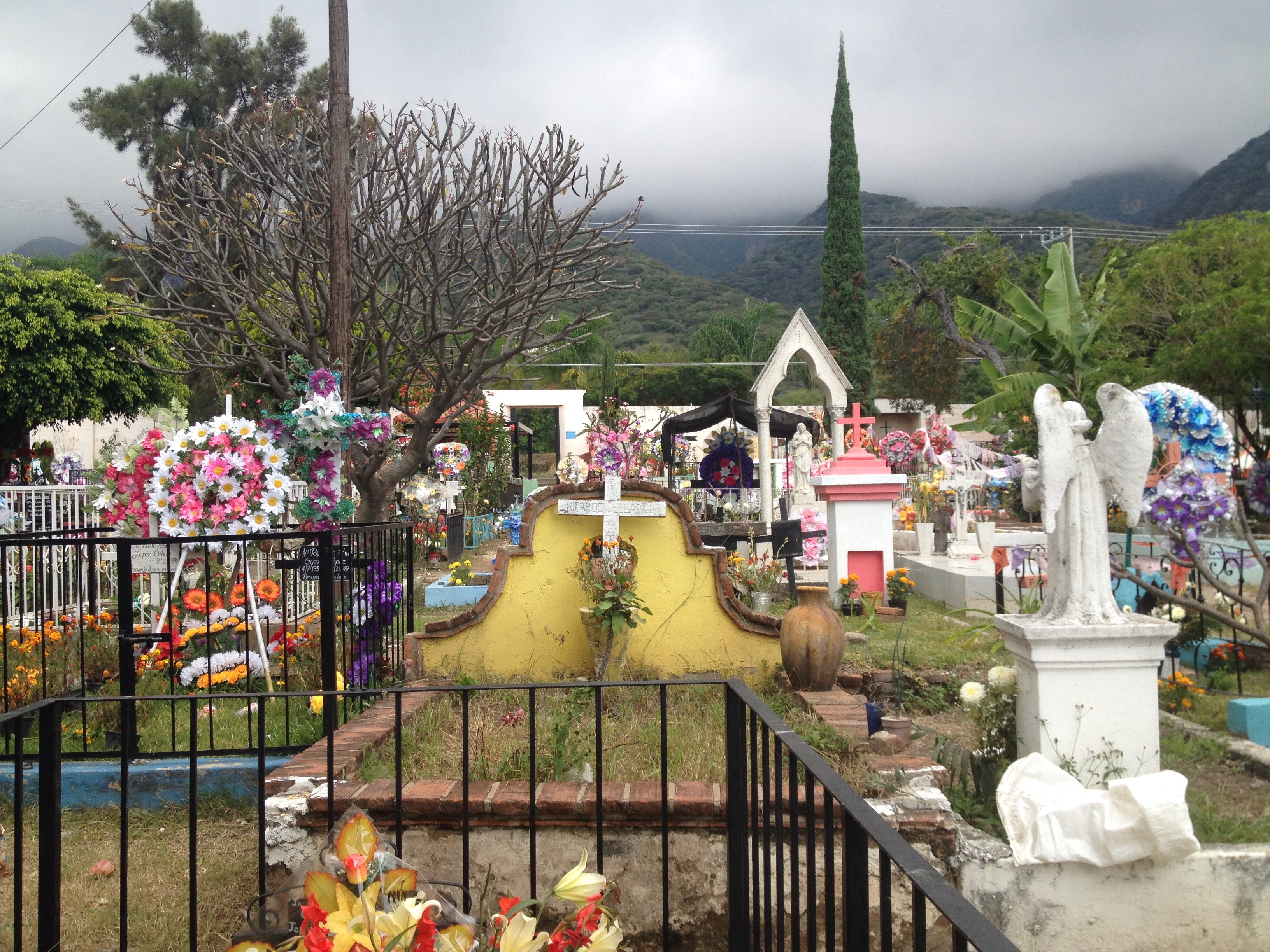
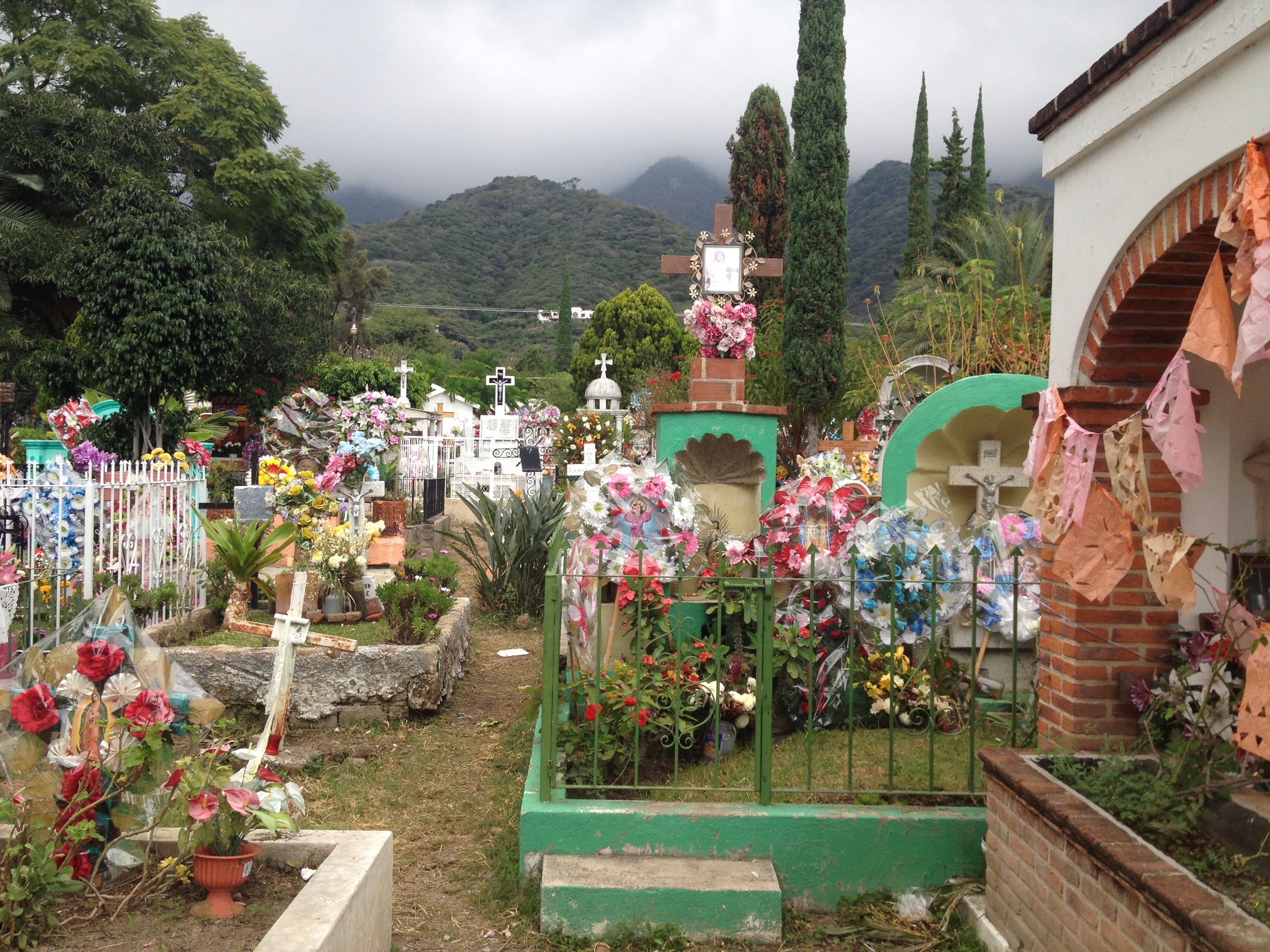
Día de los Muertos–Day of the Dead
Ajijic, Jalisco, México–2014






Surprised by Oxford–an intellectual’s search for meaning
Surprised by Oxford
by Carolyn Weber

Carolyn Weber had quite a culture shock when, as a scholarship student, she transported herself from Western Ontario into the revered halls of Oxford University. In that first year of working on her Master of Philosophy degree, she was introduced to a different system of learning and classes. She was expected to learn for the sake of learning and to pursue academic interests through tutorials—meetings of small groups of students with a professor. Along with tea or sherry, the groups dove into intellectual pursuits that exhilarated this future professor of literature.
Along the way, Weber discovered a diverse group of friends from a variety of backgrounds who challenged each other in the friendly way comrades can have in the pub over a pint at the end of a long day of studying. She discovered a diversity of spiritual beliefs from atheist to Eastern religions, but none kindled in her the desire to investigate like the Christian faith did. The Christian students and professors were not what she expected. No one was standing on street corners thumping a Bible. Instead, when they found she was interested, they encouraged her to actually read the Bible and to attend groups where the writings of C.S. Lewis were discussed.
Through Surprised by Oxford, I learned a lot about the University of Oxford that contradicted the stereotypes that are generally shared in media. It was interesting to watch her personal and intellectual growth, to see her search within herself for spiritual meaning and communication with God. Obviously a lover of literature, Weber begins each chapter with poetry and sprinkles other lines of poetry throughout the book, especially as she and her friends quote poetry to each other in the context of their discussions.
Rating: 5/5
Category: Memoir, Christian
Publication: 2011—Thomas Nelson
Memorable Lines:
I had no real need of believing in men, God incarnate or otherwise. Fathers especially were not to be trusted. They did not even seem relevant really. That much I had learned. That much I brought with me.
“Despair is the greatest sin,” Dr. Nuttham finally responded slowly. “It involves forgetting that God is there. Forgetting that He is good and that all He is and does extends from and works toward this perfect goodness. That doesn’t mean that He allows evil, or creates it, or perpetuates it. That’s our entwinement. Rather, He uses even our evil toward His good. We all need forms of remembering this first great love…writing, reading, creating, being.”
“Jesus brings the most radical message there is into any society at any time: you are beloved; you are worth a price that only the God of the universe could pay.”
The Heart’s Bidding–Amish special education students
The Heart’s Bidding
by Kelly Irvin

Although this book is an Amish romance, its strongest theme is the acceptance and education of children who are labelled as different, educationally challenged, developmentally delayed, disabled, mentally or physically handicapped, or as the Amish prefer to call them “special.” They see these children as gifts from God. In The Heart’s Bidding, Rachelle is a dedicated teacher, but as a Plain (Amish) woman she knows that although she loves teaching and has a talent in that area, her future will be to get married and have children. When the governing educational committee in her community decide that the special children should be transported daily to a town that offers more specialized services than the little community has available and at no cost to the Amish, Rachelle finds her last day of teaching coming more quickly than she could have imagined or desired.
Toby is a handsome bachelor who has been hurt in a past experience in courting and is haunted by the thought that no woman would want to be married to an auctioneer who spends many days and months on the road crisscrossing 5 states. Could an attraction between Toby and Rachelle come to anything? Both of their mothers would like to see it happen and have to be reminded to rein in their matchmaking. Both Toby and Rachelle have special siblings and common love and understanding for them.
There are other plot threads within this book about the large Amish families, the head of a family business stepping down, and an adult with dyslexia that has never been addressed. If you are interested in the Amish way of life and how both education and technology are addressed on an everyday level, this would be a good book to read. It gives the reader a different point of view from an author who is sensitive to both Amish and English cultures. The many children in the book provide both humor and excitement. In particular Jonah, Rachelle’s little brother, and Sadie, Toby’s little sister, both of whom will need lifelong support, will make you smile and tug on your heartstrings.
I received a complimentary copy of this book in exchange for an honest review. Opinions expressed in this review are completely my own.
Rating: 5/5
Category: Religion, Romance,
Notes: 1. The author includes a listing of characters by family and a glossary of Amish/Pennsylvania Dutch words at the beginning. She ends with author’s notes and discussion questions.
2. This is #1 in the series The Amish Calling. There are two in the series available now and one more that will be published in January 2025. All have characters who deal with disabilities of various types.
Publication: August 1, 2023—Zondervan Publishing
Memorable Lines:
Plain women liked their appliances the way some English women loved their jewelry or a roomy SUV for carting around their children—all two of them.
Their education was intended to help them be successful in their Plain communities, to be hard workers and good people, with the skills they would need to sustain to work with their families, to thrive, but to do so in a godly way.
“Sadie’s soul is innocent. It always will be.” Rachelle sought out the little girl. She found her on a swing, her legs pumping, her head thrown back, laughter spilling from her lips. “She knows what is gut and right and fair. Nothing will change that.” “Do you really believe that?” “Gott made her special. I believe His plan is for us to learn as much from her as she learns from us—more really.”
Pentecost: A Day of Power for All People
Pentecost
by Emilio Alvarez
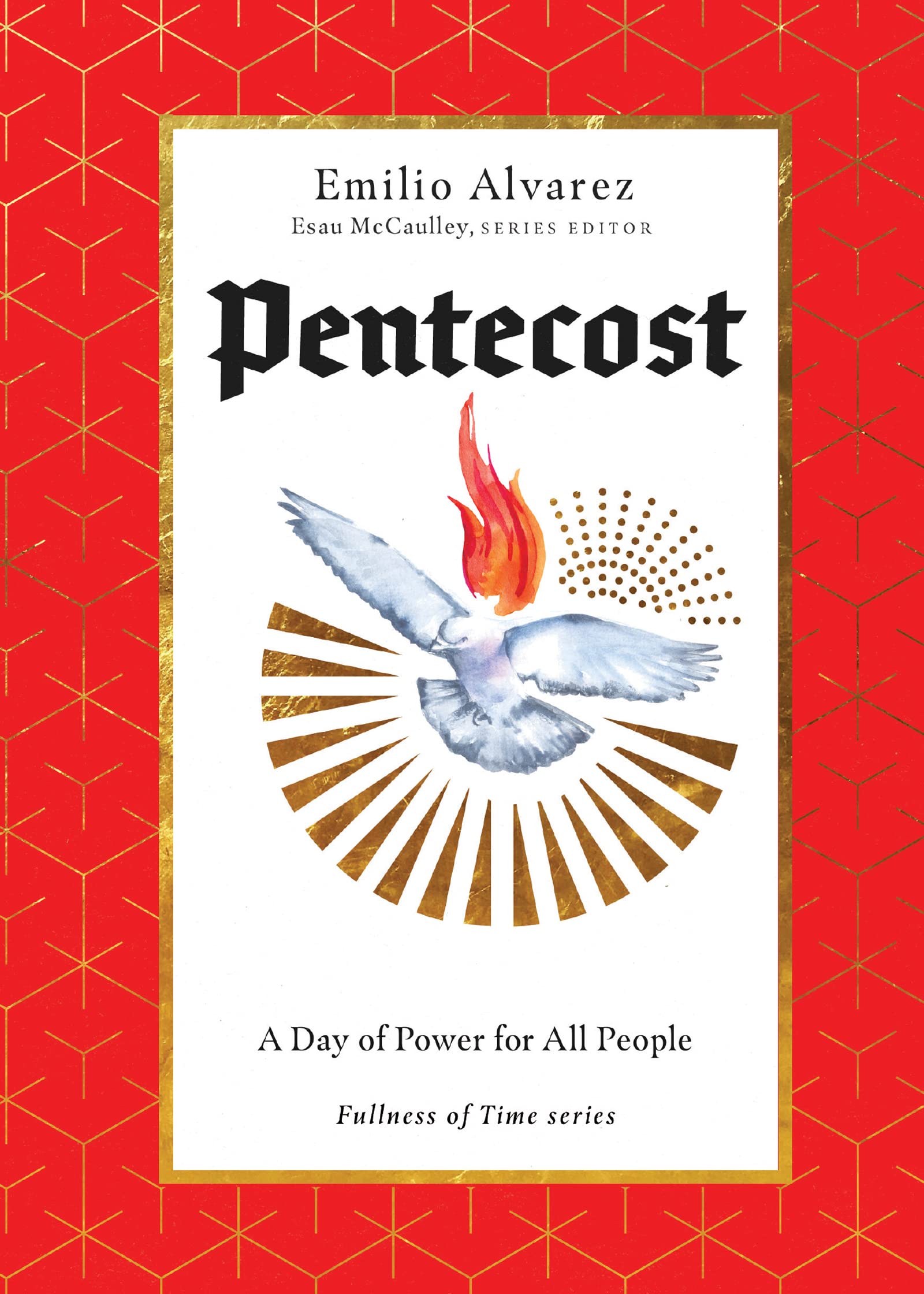
Pentecost is celebrated by Christians as the day when the Holy Spirit came to the early Christian church empowering Jesus’ followers to evangelize the world with the good news of salvation to all who believe that Jesus Christ died for their sins and was resurrected on the third day as He foretold. The writer Luke in Acts 2:1 sets the stage for the narrative with “when the day of Pentecost was fully come.” Jesus’ followers had been waiting for the prophecy to be fulfilled but were not told exactly when that would be. Pentecost is celebrated 50 days after the Jewish Passover. The author of Pentecost, Emilio Alvarez, writes that this season of waiting is a time to prepare our hearts. Fittingly, this book is part of the Fullness of Time series.
This little book begins with a discussion of the concepts of power and of pilgrimage. Next Alvarez devotes a chapter to various Jewish feasts that are the roots of the Pentecost celebration. Then a chapter is devoted to the speaking in other tongues as the Holy Spirit on that day of Pentecost enabled the Jews gathered from many nations to speak in each others’ languages. He relates this phenomenon to a reunion of peoples and a reversal of what happened at the Tower of Babel.
A large part of the book Pentecost is devoted to the rituals and liturgy related to the celebration of Pentecost ranging from the dates of remembrance to the custom of specific colors used for decorations and clothing and on to practices of kneeling or standing. Within the unity of Christian worshipers, there is a diversity of groups who celebrate in many different ways. Alvarez chooses to discuss the Christian tradition found in these five churches: Eastern Orthodox, Roman Catholic, Syrian Orthodox, Anglican, and Pentecostal. From this discussion you can extrapolate that there are a number of ways to celebrate Pentecost. They vary by culture, tradition, and understanding of Scriptures. The hymns, prayers, and Scriptures of these five traditions are just samples of the many available to Christians, and this theological scholar invites Christians to draw from other groups’ practices to enrich, not dilute their own. He ends this section with an interesting testimony of his own spiritual background as a Pentecostal Christian which differs greatly from the liturgies in the other church groups examined in this book. It is a personal spiritual journey which neither discredits nor confirms the formal liturgies found in the other churches mentioned. There are truths and blessings to be found in all of these traditions.
Upon a first reading of the Conclusion, I found it to be beautifully written, helping the reader to imagine the first Pentecost. Upon a second reading I realized I was in disagreement with the author. While I, also, want all people to overcome the “differences in race, culture, and religion,” I do not connect that as a necessity upon which the coming of the Holy Spirit depends. In Acts 1:4-8, Jesus told his followers that they should wait in Jerusalem until they received baptism of the Holy Spirit which would empower them as witnesses. Jesus had said that he would send the Holy Spirit. Just like salvation, this empowerment is a gift of God, not something we can earn.
Overall, I profited from reading this book. It gave me much to think about, and I had my view of the practices within many Christian churches widened.
Rating: 4/5
Category: Religion, Christianity, Theology, Nonfiction
Notes: 1. This is probably not an appropriate book for someone new to Christianity, but might be helpful to someone looking to understand formal liturgical church services.
2. I have read three other books in the Fullness of Time series, and this is my least favorite. I personally battle between it being highly edifying and overly pedantic.
3. I read this for my book club, and it was full of topics for discussion. My understanding of the book profited from hearing other viewpoints.
Publication: 2023—InterVarsity Press
Memorable Lines:
…no matter where we are in the world, and no matter what Christian tradition we belong to, at Pentecost all those who believe in the coming of the Holy Spirit sing and glorify the Most Holy Spirit, and God hears it as if it was coming from one voice.
At Pentecost we are awakened from the delusion that only our race, ethnicity, culture, political party, or language matters, is important, or is even truly Christian. This is one of the great errors of postmodernity, this division through delusion. In remembering Pentecost, however, we once again call on the Spirit to illuminate the dark areas of our lives and confront our delusion with godly wisdom and truth.
There is nothing we can successfully rationalize or theologize about Pentecost that would cause all Christian parties to nod with complete approval, yet there is nothing we can do or say against it that discredits its success in evangelizing the nations.
 education pathways