
Home » Nonfiction (Page 3)
Category Archives: Nonfiction
Dogwinks: True Godwink Stories of Dogs and the Blessings They Bring
Dogwinks
by Squire Rushnell and Louise DuArt
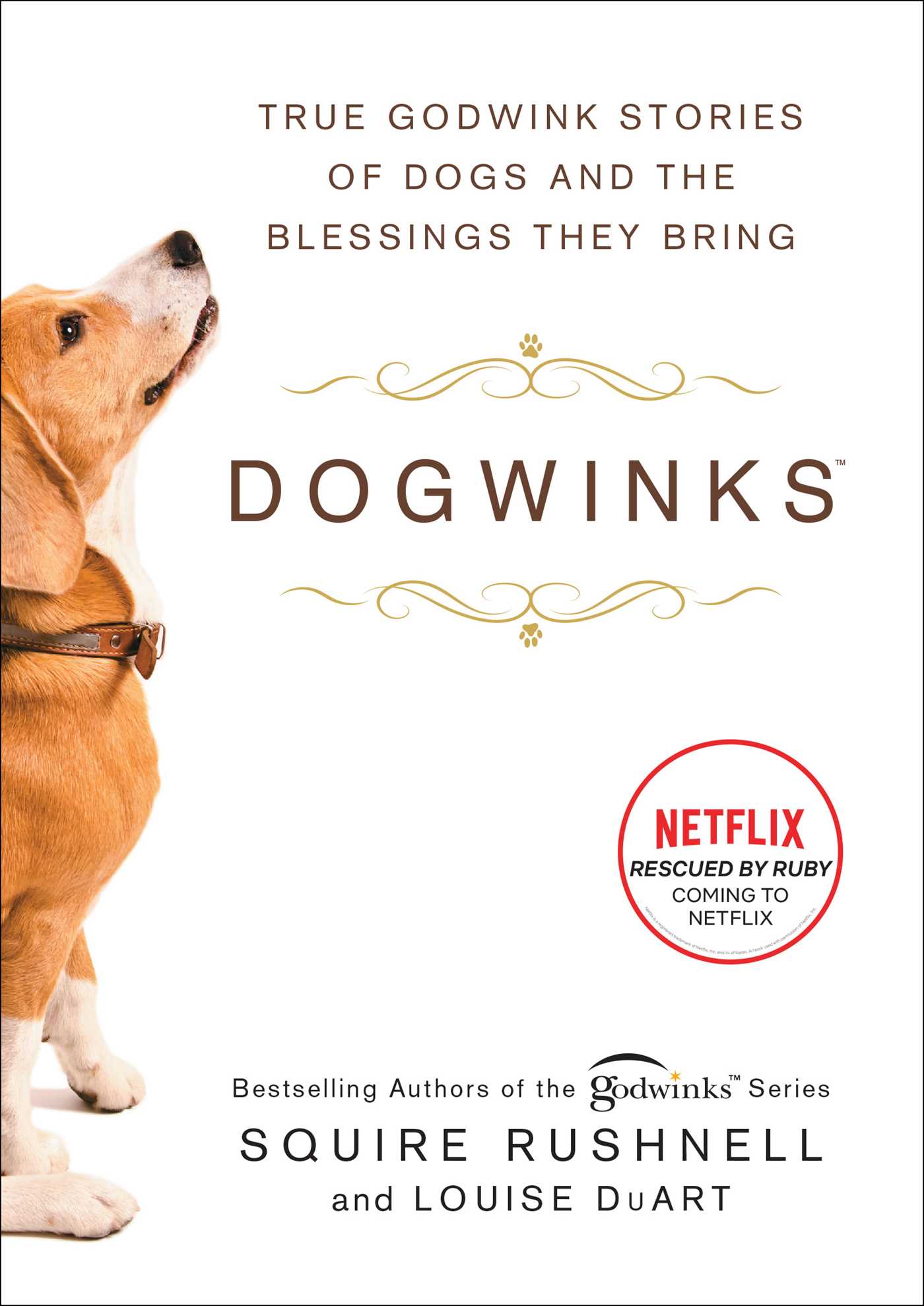
Not long after my beloved Mexican rescue dog crossed the rainbow bridge at age 16, my copy of Dogwinks arrived in the mail. “Godwinks,” according to author Rushnell, are events that some might call coincidences and others might say are reminders that God sees you and loves you. I felt like the arrival of Dogwinks was indeed a Godwink. I read it a chapter per night, and it was a much needed and comforting read.
The book is composed of short stories about dogs and their remarkable resilience and ability to love their human families. They are true stories and each is followed by a short reflection. Some will make you laugh; some will make you cry. All will inspire you to have a character more like a dog.
Rating: 4/5
Category: Nonfiction, Inspiration, short stories
Notes: I have read the original Godwinks book, and I found it more compelling than Dogwinks; but to the author’s credit, when you are writing about things that happen to people, you have more to go on. Dogs can’t share their memories or viewpoints of what happened so the authors had to make that part up, as is typical of other dog books or movies. Still, I enjoyed it and recommend it.
Publication: 2020—Howard Books (Simon and Schuster)
Memorable Lines:
“Son,” said Johnny’s dad, grasping him by the shoulders, “love isn’t something you say…it’s something you do.” … “Humans and dogs are just alike.” his dad continued. “You can tell someone you love ‘em all day long, but it’s when you reach out and touch them, showing affection, that’s when they really know it.”
When we lose a beloved pet, we ache from their absence. We feel the loss just as deeply as we would that of a human companion. God cares about all His creations and He knows how much we love our furry friends. The good book tells us: God formed every animal of the field and every bird of the sky…whatever man called every living creature, that was its name.” {Genesis 2:19 (BSB)}
The sweet deaf and blind dog, once left by the side of the road like a bag of trash, is today a celebrity dog touching the hearts of thousands. Even more important, Keller is a canine ambassador for God, delivering hope and encouragement to people young and old, in schools and hospitals.
The Prodigal God: Recovering the Heart of the Christian Faith
The Prodigal God
by Timothy Keller
You may feel the urge to read that title twice. Wait, you say, the parable in the Bible is commonly referred to as “The Prodigal Son”! One of the meanings of prodigal, however, is “recklessly extravagant,” and that is the kind of love God has for us.
The Prodigal God is a fairly short book that uses Jesus’ parable about a spendthrift son who wastes his inheritance on immoral living to explain the good news of God’s love and salvation. If you are not familiar with the tale, it’s okay because Keller shares the story as told by Luke at the first of his book. As you read it you will be reminded that there are two brothers who both have bad attitudes. The younger brother engages in wild living, but the older brother who exemplifies the religious leaders listening to the parable has an attitude problem as well. These self-righteous scribes and Pharisees try to follow the letter of the law but not the spirit of the law. One of the chapter titles is “The Two Lost Sons.” Neither son shows the respect for the father that would be expected according to the customs of their culture.
This is a great book to read if you are seeking a personal relationship with God. It is also good for those who are already followers of Jesus. I particularly appreciated the examination of the characters’ actions in the light of the time and place where they lived. It made a story I have long been familiar with come alive. Keller compares the feast at the end of the parable with “the great festival of God at the end of history” and explains four ways in which salvation is like a feast. This book will challenge your mind and heart.
Rating: 5/5
Category: Christian, Nonfiction, Religion, Theology
Publication: 2008—Penguin Group
Memorable Lines:
…sin is not just breaking the rules, it is putting yourself in the place of God as Savior, Lord, and Judge just as each son sought to displace the authority of the father in his own life.
…the prerequisite for receiving the grace of God is to know you need it.
We must learn how to repent of the sin under all our other sins and under all our righteousness—the sin of seeking to be our own Savior and Lord. We must admit that we’ve put our ultimate hope and trust in things other than God, and that in both our wrongdoing and right doing we have been seeking to get around God or get control of God in order to get control of those things.
Reading for the Love of God–erudite and spiritual
Reading for the Love of God
by Jessica Hooten Wilson

I thought Reading for the Love of God would be the perfect book for me, channeling my reading choices in a way that points to God and shining a light on the spiritual connection of God and a reader. It did both of those things, but I have to admit that, as a whole, it was not the right book for me. Some of this well organized book was appropriate for the average reader, but much of it was clearly written by a professor with a strong background in both literature and theology. Perhaps it would be more appropriate for study in a college level course. Here is an example from the text that demonstrates the background knowledge needed to fully benefit from this book: “In Christian tradition, the anagogic sense refers to a text’s echo or reflection of the divine. Where do we see God here? Or we might equate the anagogical with the eschatological: Knowing that all will end in our death and Christ’s second coming, what matters in what we have read? It’s the cultivation of a sight that points our eyes ever upward toward heaven.”
On the other hand, Hooten presents a lot of interesting ideas about reading. She is quite knowledgeable and gathers information from and about many authors. The footnotes cover about twenty percent of the book. She extols the virtues of reading and rereading the classics, and she asserts that learning how to read various genres helps us learn to read Scripture. If we read other books than the Bible, even secular books, through the lens of Scripture, God can teach us. Even books that some Christians avoid reading (e.g. Harry Potter) can lead to examination and discussions of evil versus good, etc. We should both enjoy and use literature, but should not put the message above the story itself. She points out that there are many current and historical opinions about how to best read the Bible addressing issues such as meditation, interpretation, the role of allegory, the depths of word meanings, and symbolism.
The author carefully places essays in the book expounding on what we can learn from examining the writing and reading of St. Augustine, Julian of Norwich, Frederick Douglass, and Dorothy L. Sayers. After her Conclusion and Acknowledgments, she guides the reader through a practice session of analysis of Flannery O’Connor’s short story “The River.” O’Connor is a much referenced author in this book so this discussion seems quite appropriate. A section of Frequently Asked Questions is very practical and useful. It is followed by “Reading Lists of Great Books” which is grouped by ages. The next list is “Great Books: The Living Tradition” which contains classics sorted by time periods and followed by a list entitled “Writers Whose Works Touch the Sacred and the Profane.” I’m not sure what her criteria are for this list, but it includes authors such as Wendell Berry, Frederick Buechner, Willa Cather, G. K. Chesterton, and Dorothy Sayers.
I received a complimentary copy of this book in exchange for an honest review. Opinions expressed in this review are completely my own.
Rating: 4/5
Category: Christian, Religion & Spirituality
Notes: As I think back over Reading for the Love of God, I find I am viewing it in a more positive light than when I was working my way through it. I am not recommending it to my book club as I initially thought I would do. I will be mulling her theses over and referring to her suggestions for reading selections as I expand my personal reading choices.
Publication: March 28,2023—Brazos Press (Baker Publishing Group)
Memorable Lines:
If we are going to read—the Bible included—we should learn how to read well. We should become readers who do not read for our own gain but who read as a spiritual practice, always open to how the Lord is planting seeds in our heart, teaching us more about him, and showing us ways of living more like Christ in the world.
But we should not read Virgil’s Aeneid in order that we may check a box on a great books list. Rather, a book such as the Aeneid is to be used—for pleasure and edification temporarily—and ultimately enjoyed in how it points us to God.
We read because without books our world shrinks, our empathy thins, and our liberty wanes. We read for the same reason that people have read—and shared poems or stories—for thousands of years because our eyes are not enough by which to see. The time and place in which we live blinds us to other perspectives and ways of being that are not of our own experience. We read because we have been given the gift of imagination and intellect, and we exhibit our gratitude by using it.
Maiden Voyages–Women and ocean liners
Maiden Voyages
by Siân Evans
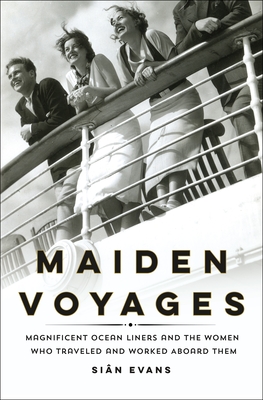
Under the overarching umbrella of History, the nonfiction book Maiden Voyages has two basic spokes—Women’s History and Nautical History. Author Siân Evans goes back to the beginnings of women’s affiliation with sea transportation which was mainly being the daughter or wife of a seaman. With a lot of research, she drives down to the first instances of women serving on ships and shows the progression of their work and social status as ships take on passengers in addition to cargo. Women book spaces to transport themselves across the ocean in uncomfortable circumstances. Gradually the concept of comfort on an ocean liner takes root and grows. More women begin to travel, and more women are hired to take care of their needs.
Most of this book focuses on the glory days of ocean liners between the two World Wars through the transition from transportation to holiday destination. Incorporated into the telling are stories about the lowliest women workers through the glamour stars who not only enjoy the trips, but use them as opportunities to see and be seen. The ship becomes a backdrop for those who have achieved or want to achieve fame and fortune.
The two World Wars affected all women in taking on jobs formerly held by men as the West saw a change in cultural expectations and increased rights for women. From a hazardous work environment for less pay than men received to breaking barriers and excelling in their chosen fields, women are the heroes of this book.
I liked Maiden Voyages, but I did not find it to be a page turner. Although it was told linearly as history progressed, there was some repetition as the author reminds the reader of facts as many of the personages’ roles continued through various eras of nautical travel. I learned a lot about the Golden Era of passenger ships, and I especially appreciated the many quotes from those actually involved. Primary sources authenticate Evans’ descriptions and conclusions. As the author researched the story of her great-great uncle, Cunard Chief Officer Stephen Grow of the Aquitania, this book emerged. It is told from a British perspective. History buffs, particularly those interested in Women’s Studies and Nautical History, will find Maiden Voyages very informative.
I received a complimentary copy of this book in exchange for an honest review. Opinions expressed in this review are completely my own.
Rating: 4/5
Category: History, Nonfiction
Publication: August 10, 2021—St. Martin’s Press
Memorable Lines:
The transatlantic ship not only provided a form of transport across the globe, it was also both the practical means and the symbol of opportunity, of new beginnings and fresh starts. From “third class” to “top deck,” from desperate women escaping financial hardship to wealthy international sophisticates hoping for romance and adventure, every transatlantic liner of this post-war era was freighted with hope.
There was a real symbiosis between Hollywood, the heart of the movie industry, which acted as a “dream factory” in the inter-war years, and the ocean liner, which on every voyage carried people full of hope and aspirations.
…working on the big ships became even more attractive as a career option for young men and women. The opportunity to leave behind the bomb sites and rubble, the poorly stocked shops, the dull and restricted food and the dismal British weather for the neon-lit, brilliantly colored, smartly dressed and culturally vibrant cities of the USA and Canada had never seemed so appealing to the restless young.
Christmas: The Season of Life and Light
Christmas: The Season of Life and Light
by Emily Hunter McGowan
In reading the book Advent (reviewed here) by Trish Harrison Warren, I learned much about liturgical Protestant churches (typically Lutheran, Anglican, and Episcopalian) that follow a structured, participatory format with foundations in practices of the early Christian church. The church calendar begins with the season of Advent focusing on repentance and the anticipated coming of the Messiah, which is celebrated on December 25th at the commencement of the Twelve Days of Christmas.
I decided to follow up my reading of Advent with the book entitled Christmas: The Season of Life and Lightwhich is also in the Fullness of Time series, but is written by a different author, Emily Hunter McGowin. I was pleased that Christmas held many of the same qualities that are found in Advent. Both are short books and very readable, but are packed with theological truths. McGowan did a lot of research, as witnessed by her footnotes, and she includes a brief list of books for further reading at the end of each chapter. After a fairly personal introduction, she very appropriately begins with the origins of the celebration focusing on the debates about when Christ was actually born. Much of the book discusses God in relationship to people. God’s gift of His Son can be related to the gifts we give at Christmas. Jesus was born in a poor family, and He was concerned about the poor all through his three year ministry. He leaves Christians with the mandate to give sacrificially to the poor. Decorations are an important part of our Christmas customs in the West, and her analysis of their role is found in the chapter “God of Creation and Re-Creation.” McGowan does not gloss over the tragedy of Herod’s slaying children in an attempt to ensure his throne from the threat of this newborn King. Singing and lighting candles are highlighted in her discussion of life and light.
Christmas ends with an appendix listing the “appointed Scriptures and collects” or prayers for Christmas found in the 1979 Lectionary and the Book of Common Prayer. I look forward to reading the other books in the series, all by different authors: Epiphany, Lent, Easter, and Pentecost.
Christmas permeates our society in cultural as well as religious ways. Therefore, this series has benefits of instruction and understanding for all—Christians who use the Book of Common Prayer and those who don’t, as well as those who aren’t followers of Jesus. I invite you to read this book to examine the truths behind our customs and the reasons Jesus Christ is the focus of this season named after Him.
Rating: 5/5
Category: Christian, Nonfiction, Religion, Theology
Notes: part of the Fullness of Time series which can be read in any order
Publication: 2023—InterVarsity Press
Memorable Lines:
Profligate shopping sprees and conspicuous consumption notwithstanding, the practice of gift-giving in itself remains evocative of the central mystery of Christmas: the incarnation of God in Christ. Christmas is about God’s great gift to us, which is God’s own self in the person of Jesus Christ.
In fact, children are among those people with whom Jesus so closely identifies that they become a sacramental sign. The hungry, the thirsty, the stranger, the unclothed, the sick, the imprisoned, children—Jesus says of all these that to welcome and serve them is to welcome and serve him (see Matthew 18:5; 25:40; Mark 9:37). So we separate ourselves from the poor, needy, and vulnerable at our collective peril.
Advent–Hope and Repentance
Advent: The Season of Hope
by Tish Harrison Warren

I have almost finished reading Advent by Tish Harrison Warren for the second time this season. It is a small book that packs a powerful punch and is worthy of a reread.
In the Protestant churches of my childhood and most of my adult years, “advent” was a word I rarely heard. The focus was on Christmas and making sure the cultural aspects of the celebration (e.g. decorations, gifts, and parties) did not take prominence over the spiritual foundation: “Jesus is the reason for the season.” In more recent years, I have worshiped in Protestant churches that follow the liturgy found in the Book of Common Prayer. Warren’s book has helped me unravel the church calendar year which begins with Advent and to understand Advent itself.
This tiny book explains the three comings or advents of Christ. We celebrate His birth in Bethlehem at Christmas and look forward to what we refer to as “His Second Coming” when He will reign as King of Kings. Warren says there is a third coming which we currently experience when He dwells in our hearts as we are filled with the Holy Spirit.
There are many themes of Advent discussed in this book, but the ones that impact my heart the most are “repentance and hope” and “darkness and light.” Warren refers to four prayers composed for the Advent season in the Book of Common Prayer. In addition to talking to God, these prayers or collects lead the reader to a deeper understanding of Christian theology and what we believe as Christians. She explains eight practices of Advent for those who want to use this season to meet with God and draw closer to Him during the course of the four weeks of Advent that lead up to Christmas.
Perhaps my favorite chapter in the book Advent is entitled “Crying Out: Two Prophets of Advent.” Who prophesied most about the advent or coming of Jesus? Isaiah in the Old Testament and John the Baptist in the New Testament. It is a good beginning place if you want to learn more about prophecies from the Old Testament that were fulfilled in the New Testament and prophecies that are yet to be fulfilled when Jesus comes again, not as a baby in a manger, but as the Messiah who returns to banish Satan and evil and rule on Earth for eternity with justice, peace, and love.
Rating: 5/5
Category: Christian, Theology
Notes: 1. “Each volume in the Fullness of Time series invites readers to engage with the riches of the church year, exploring the traditions, prayers, Scriptures, and rituals of the seasons of the church calendar.” These are standalone books, each written by a different author: Advent, Christmas, Epiphany, Lent, Easter, Pentecost.
2. This is a choice for my book club and lends itself well to group discussion, but it is also perfect for devotion, study, and meditation for individual readers.
Publication: 2023—InterVarsity Press
Memorable Lines:
Advent comes each year and quietly asks me to pause, to remember that we do not bring the kingdom of God to the world through our own effort or on our own timeline. We wait for one outside of us and outside of time. We wait for our coming king.
Advent is training in hope because this season tells us that when things lie fallow they do not lie in waste; things that seem dormant are not dead, and times of waiting are not without meaning, purpose, or design. God is working, sometimes almost imperceptibly, deep beneath the surface of time. Waiting is part of his redemption. It is part of his gift to us. It is part of his grace.
The love of God is the blazing fire that purifies us, remakes us, and sets right all that is broken in us and in the world. The love of God brings us to repentance. The love of God sets the oppressed free and makes all things new. The love of God insists on truth and justice. The love of God reveals every hidden thing. And it is this love that is coming for us.
Seeking Allah, Finding Jesus: A Devout Muslim Encounters Christianity
Seeking Allah, Finding Jesus
by Nabeel Qureshi
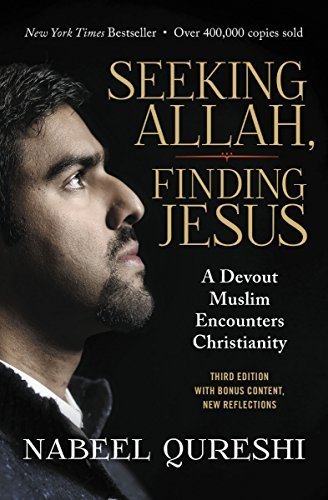
Nabeel Qureshi was an intellectual raised in a Muslim home who devoted years of study and fellowship with his best friend David, a Christian intellectual. They argued, researched, prayed, and maintained their friendship as Nabeel sought the Truth. Was he to find it in Jesus or in the teachings of Islam? This book is perfect for anyone who wants to:
—approach the Bible analytically
—prove or disprove the claims about Jesus Christ
—learn more about the beliefs of Muslims, their culture and how the two are related
—learn about the history of Islam
—understand the difference in approaches to Islam in the East and in the West
—learn some basic Islamic terminology
—witness a true Christian/Muslim friendship
—see how a Christian can share Jesus with others by example as he lives out his beliefs in Jesus through his actions
—learn how to disagree respectfully
—understand the Trinity
—gain an understanding of what a Muslim gives up when he converts to Christianity and the consequences of a conversion
—comprehend the claims and arguments against and for the crucifixion and resurrection of Jesus
—read truths about Muhammad and the Quran that imams don’t share with their followers.
The Foreword of Seeking Allah, Finding Jesus summarizes the book quite well: “This is the riveting story of one man’s quest to set aside his preconceptions and pursue answers to the most pressing issues of life and faith, despite enormous pressure to maintain the status quo.”
Rating: 5/5
Category: Memoir, Christian, Religion and Spiritual
Notes: The author describes the book as a “narrative biography,” and one of the contributors to the lengthy appendix which expands on the topics in the book calls it Qureshi’s “spiritual autobiography.”
Publication: August 21, 2018—Zondervan
Memorable Lines:
The culture clash of immigrant parents with their Western-born children is especially common during the emotionally stormy teenage years, and it serves to illustrate a vital fact: Muslim immigrants from the East are starkly different from their Muslim children born in the West.
Effective evangelism requires relationships. There are very few exceptions.
Because of hadith and tradition, Muslim religion, culture, heritage, and identity all find their core in the person of Muhammad. This is why Muslims see an attack on his character as equivalent to a personal attack on them and everything they stand for.
These are the costs Muslims must calculate when considering the gospel: losing the relationships they have built in this life, potentially losing this life itself, and if they are wrong, losing their afterlife in paradise. It is no understatement to say that Muslims often risk everything to embrace the cross.
My Several Worlds: A Personal Record
My Several Worlds: A Personal Record
by Pearl S. Buck
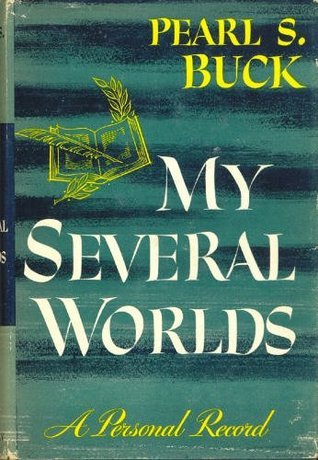
WHAT IS MY SEVERAL WORLDS?
It is a collection of essays integrated into a memoir. Author Pearl S. Buck, as she writes this tome, considers herself midway in her writing career. She presents it as a “record of the age in which I lived” and “as nearly an autobiography as I shall ever write.” It is not a linear book. The place she is located when she writes each section is noted, but not the date because it is such a combination of times. Although a confusing style at first, it makes sense because as she is writing about her current life in the United States, she will suddenly revert to recounting her younger years in China and historical world events or advance her opinions on a variety of subjects from practical to esoteric.
WHO WAS PEARL S. BUCK (1892-1973)?
She was a prolific author, primarily a novelist, and the winner of both the Pulitzer Prize in 1932 and the Nobel Prize in Literature in 1938. The child of Christian missionaries, she spent much of her life in China until politics forced Americans to leave. Completely bilingual, Pearl was an astute translator of Chinese and had great admiration for Chinese social structure and love for the Chinese people. When she returned to the United States, she found that she lived in two separate worlds and never felt quite at home in either. She was well-traveled and had friends from all over the world.
WHERE DID BUCK GET HER INSPIRATION?
Buck’s source material was mainly her observations of people. In her travels, she paid attention to people, listening more than talking. Her focus was more on the common man and woman than the famous people who wanted to entertain her as a celebrity.
WHAT ARE SOME OF BUCK’S “SEVERAL WORLDS”?
Buck watched various political groups attempt takeovers in China. This land she loved and which helped shape her was subject to political strife from inside the country and by forces from the outside. She was witness to Western influences on young Chinese who studied in the United States and tried to bring change to ancient Chinese customs. These endeavors were not always positives for the Chinese people.
As an American adult with Chinese training, Buck experienced disparate worlds in the United States. Looking past geopolitical issues, Buck also had several worlds on a personal level. Although equipped to mingle in high society circles, she preferred a rural lifestyle with a large household of adopted children who learned life and family skills on their farm. She had a long, unhappy marriage to an agricultural missionary in China followed by a long, happy marriage to her publisher in the U.S. Although a teacher and primarily a writer, Buck devoted her talents to social enterprises as well. She opened The Welcome Home for U.S.-born children of Asian descent whose mixed-race status made them “unadoptable” according to adoption agencies. She also advocated for appropriate care for the disabled, a cause close to her heart as her first child was unable to live independently.
WHAT IS YOUR OPINION OF MY SEVERAL WORLDS?
This is not an easy read; there is no fluff to it. In My Several Worlds you will discover a lot of Chinese history since, as Buck points out, the Chinese civilization is very old. She refers to many events in China’s past without details as she feels they have already been discussed thoroughly in books she and others have written. Her thoughts on the various subjects she examines are interesting although I do not always agree with all of them. They are informed by her unique background of living a cosmopolitan life. She was homeschooled by Christians but tutored by a Confucian. She went to college in the United States, but despite altering her clothing never felt like she fit in.
Buck is an excellent writer, but the reader needs to approach this non-fiction work with a desire to learn—to learn more about China, about adults who have grown up in more than one culture, and about the fascinating Pearl S. Buck. Having read this memoir, I think a good follow up would be to read one of her many novels.
Rating: 5/5
Category: Memoir, Nonfiction
Publication: 1954—John Day Co.
Memorable Lines:
But I had never known what hatred was. I had neither been hated nor had I ever hated anyone. I could not understand why we, who were still ourselves and unchanged, should be lumped with unknown white men from unknown countries who had been what we were not, robbers and plunderers. It was now that I felt the first and primary injustice of life. I was innocent but because I had the fair skin, the blue eyes, the blond hair of my race I was hated, and because of fear of me and my kind I walked in danger.
No people can be educated or even cultivated until books are cheap enough for everybody to buy.
I went back to my own resurrected home with a heavy heart indeed, for I knew that from that day on the new government was doomed in the end to fail. Why? Because it had failed already in understanding the people whom it purposed to govern and when a government does not rule for the benefit of those ruled, sooner or later it always fails, and history teaches that lesson to every generation whether or not its rulers can or will understand.
Becoming Elisabeth Elliot–missionary seeking to obey
Becoming Elisabeth Elliot
by Ellen Vaughn
[No spoilers in this review.]
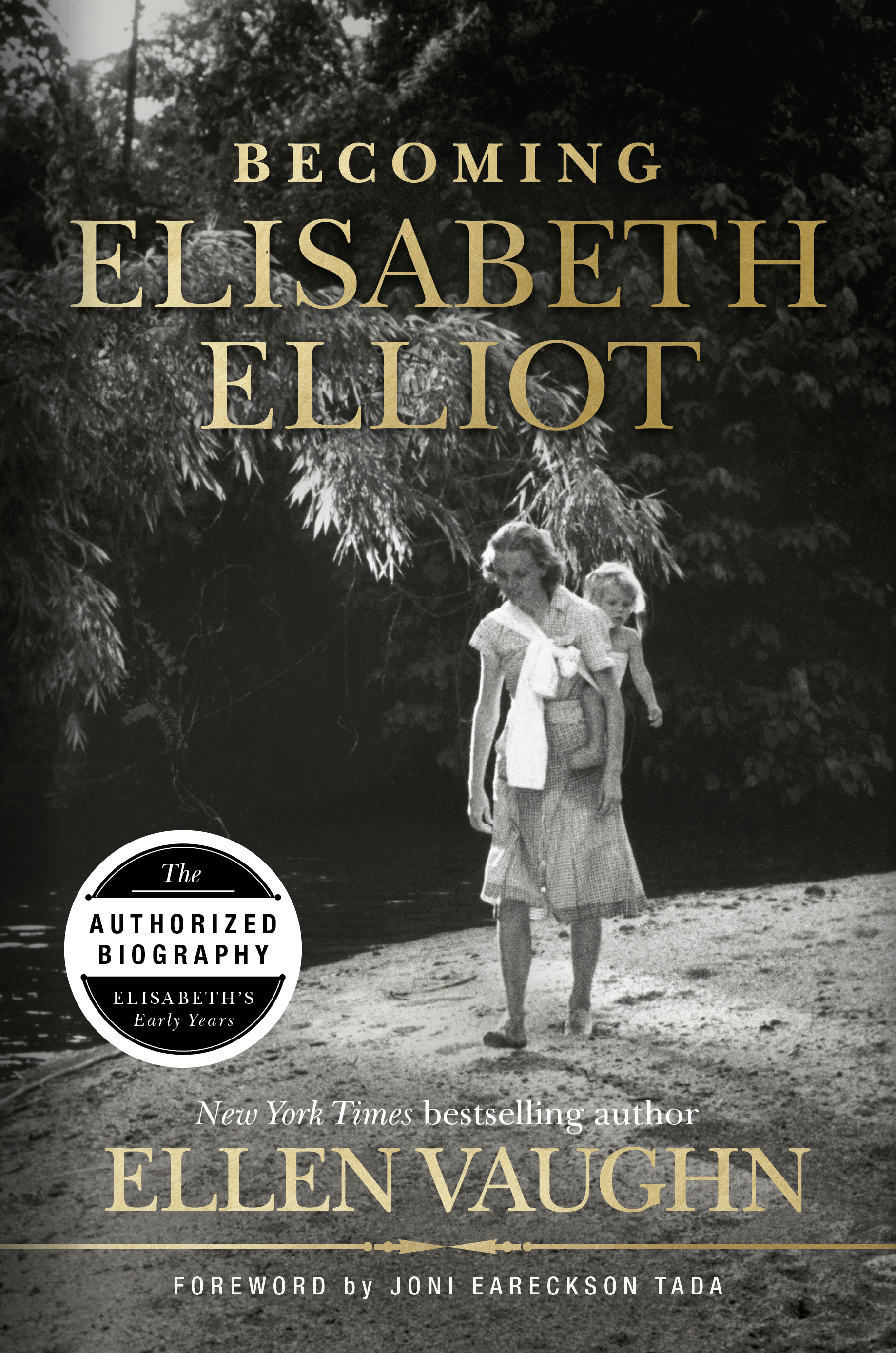
There are some biographies so full of facts that they are boring. There, I’ve said it! Becoming Elisabeth Elliot, thankfully, is not that kind of biography. Many readers may be familiar with the basic story of Jim and Elisabeth Elliot, missionaries to Ecuador to try to reach the Waodanis. This tribe had only experienced violent conflict with the outside world. Jim and Elisabeth (a.k.a. Betty) were determined to decipher the Waodani language so they could translate portions of the Bible to the native language as well as make friends with the people and introduce them to Jesus.
The basic story of their experiences are recorded in Elisabeth Elliot’s book Through Gates of Splendor. That same information appears in this authorized biography Becoming Elisabeth Elliot, but this book focuses on the first third of Elisabeth’s life and her preparation for whatever God called her to do. The author was given access to Elisabeth’s many private journals and interviewed people who were a part of her life in various ways. We are able to delve into Elisabeth’s thoughts as she poured out her soul in her journal disclosing her primary goal, to be obedient to God. We learn of her pain and suffering before, during, and after a major crushing event in her life. Her early years and education are discussed from the viewpoint of how they impacted her relationships with God, family, and friends. Then we learn how she matures in her faith, never seeking weak Christian platitudes but struggling to understand God and His plan. She has a lot of difficult seasons of waiting as she seeks God’s will and learns first hand that the question of why something happens may never be answered on Earth. The important question is not “why,” but “what”—what does God want me to do? What is the next step?
Well researched and well written, Becoming Elisabeth Elliot is a masterful biography and a page turner. It can be read as a historical document showcasing a woman who achieved fame as a missionary, prolific author, speaker, translator, professor, and radio broadcaster. It can also be read and studied by those who want to learn from Elliot’s experiences and spiritual insights to further their own personal journeys in drawing closer to God and obeying Him in following in the footsteps of Jesus.
Rating: 5/5
Category: Biography, Nonfiction, Christian
Notes: 1. Each chapter begins with a quote by various authors. They are always apropos to the chapter and worthy of pondering.
2. The book includes a Foreword by Joni Eareckson Tada, an Epilogue, and Footnotes.
3. The author has written the second in a series of three planned books to provide a complete telling of Elisabeth’s life. Being Elisabeth Elliot, which covers Elisabeth’s later years, will be published on September 12, 2023.
Publication: 2020—B&H Publishing Group
Memorable Lines:
And Eugenia had nearly vomited when Betty gave her some vegetable soup; she had absolutely recoiled at the taste of fudge. Well, Betty thought, it was just another vivid reminder that one could not assume that everyone thought and felt just like North Americans.
To opine about what God is up to in terms of results, can stray into the realm of hubris, or faithlessness. If we must see that there are worthy results in order to come to peace about what God has done or allowed, then we have no faith.
And suffering is one of God’s sanctifying tools. God is not a cosmic plumber who shows up to make things run smoothly for us. When He doesn’t fix broken situations in our lives, it’s usually because He is fixing us through them.
Madame Fourcade’s Secret War: The Daring Young Woman Who Led France’s Largest Spy Network against Hitler
Madame Fourcade’s Secret War
by Lynne Olson

Until I read Madame Fourcade’s Secret War, my idea of the French resistance in WWII was that it was composed of small, scattered groups of French who wanted no part of the German Nazis and fled to the forests to live in secrecy and give the Germans grief. This biography of Madame Fourcade is about her life, but also relates the amazing story of Alliance, an intricate spy network that collaborated with the British in obtaining information about German troop and ship movements that was critical to the eventual success of the Allies.
The work the resistance did was extremely dangerous from the undercover agents and their support crews to couriers and radio operators. Everyone was constantly under threat and generally on the move to avoid capture, imprisonment, torture, and execution. Yet these many brave individuals and the people who helped transport and conceal them performed their tasks voluntarily and with courage. They came from all walks of life knowing they were committing to the ultimate sacrifice in many cases.
It was amazing to read of the various situations they were involved in and the escape attempts. Fourcade, as the leader of this network, changed her identity and transferred her headquarters frequently, leaving her children in the care of others. The book makes clear how unusual and difficult it was in that time period for a woman to have a role of authority over men. She was a natural leader, however, and that quality was soon recognized by those who reported to her.
This work of nonfiction displays author Lynne Olson’s extensive research, but it reads like a novel. The reader wants to keep going to subsequent chapters to discover what happens next to the members of Alliance. There are many surprises, both good and bad.
The roles of the various countries and their agreements were at times quite infuriating. France was divided up into a northern part taken over by Germany and a southern part which became a puppet regime for Germany with their operatives everywhere. Even in exile in Britain there were two competing sides with French leaders—de Gaulle and the Free French vs. Giraud, a general the British were using to win over French forces in North Africa. There were even political pushes for dominance by the various resistance networks. Fourcade did her best to keep Alliance out of all the different political drives.
In each of the many historical fiction books popular right now, readers can learn something interesting and new about various groups in WWII. I recommend reading Madame Fourcade’s Secret War. As nonfiction, it is a slower and more difficult read, but it is well worth the effort to understand the French resistance movement and so much more about the events and major figures of WWII.
Rating: 5/5
Category: Nonfiction, Biography
Notes: 1. This would make a good selection for book clubs who want to read a work of nonfiction.
2. There are pictures of many of the agents.
3. Helpful sections of the book include Selected Cast of Characters, Author’s Note (about Fourcade’s name), Notes, Bibliography, and Index.
Publication: 2019—Random House
Memorable Lines:
Lynen, who had recently agreed to take part in a theatrical tour across France, said he would transport the transmitters and secret documents from one city to another in his costume trunk. He told Fourcade that his celebrity would be an advantage rather than a negative: No one would ever believe that the famous “Carrot Top” was a spy. It would be, he said with a grin, his finest role.
A few days before, she had gone to confession and told the priest about the poison she was taking with her and her concerns about being damned in the eyes of the church if she used it to kill herself. She hoped she would have the courage to resist torture, but she worried that she might not be able to do so and might, in the end, inform on her colleagues. The priest allayed her fears, saying her death would not be a suicide but rather a necessary means of resisting the enemy. He gave her absolution in advance.
Although they were from varied walks of life and political backgrounds, a moral common denominator overrode all their differences; a refusal to be silenced and an iron determination to fight against the destruction of freedom and human dignity. In doing so, they, along with other members of the resistance, saved the soul and honor of France.
 education pathways