Home » multicultural
Category Archives: multicultural
The Teacher of Nomad Land–a child’s survival
The Teacher of Nomad Land: A World War II Story
by Daniel Nayeri
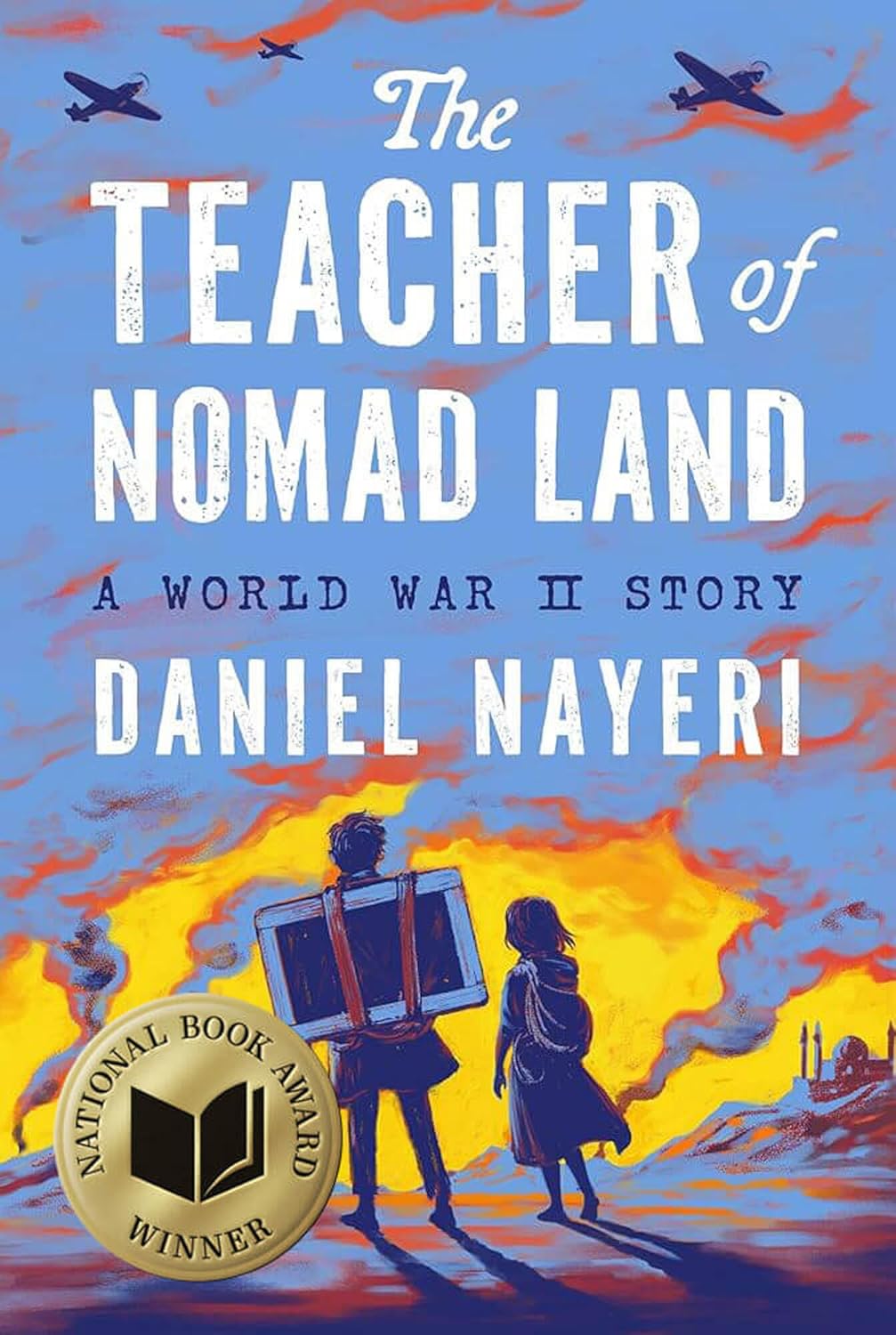
This is the story of two Iranian siblings, thirteen year old Babak and eight year old Sana, orphaned and separated during a time when their neutral country is being invaded by forces competing for Iranian oil—British, Soviet, and German. Add to that mix the Poles, the Jews, and the native nomads who don’t recognize any country as delineated on a map. Their various languages play an important role in this story. Babak has two goals—to become a teacher like his father and to take care of and stay with his sister.
Written for children, this is a fast read for adults. Instead of the horrors of concentration camps, The Teacher of Nomad Land focuses on the lives of the children as they to try to find “family” and dig within themselves to find what it takes to survive. In the Traveler, a friend of their father, they discover a kind man who tries to help. There is also a British soldier they bond with. Their lives are complicated by a mysterious man who is seeking a Jewish boy. All three children are put in danger by this situation. Babak’s resourcefulness is successful in dealing with the Soviets who halt the progress of the nomads in transitioning their herds to their winter home thus demonstrating his value to the nomads.
This is an age appropriate book that does not go into detail about concentration camps and home invasions. On the other hand, it does not shy away from the hunger the children suffer and the danger they face from other people. It highlights the communication problems when there are so many languages; and it shows how, despite being part of an army, individual soldiers can be nice to the local population. While Babak, as the older child, has much of the spotlight in this book, Sana also shines in certain situations with her creativity and ability to step up when things go bad. I was impressed by both characters at their positive attitudes, not allowing themselves to be overpowered by a victim mentality even when cold, hungry, tired or aching from long walks or sleeping on the hard ground.
Rating: 4/5
Category: Historical Fiction, Middle Grades
Notes: 1. Written for children Ages 8-12. Even though the reading level is for that age group, it may be too advanced in terms of understanding the political, geographical, linguistic, and social backgrounds. Discussion with an adult would be helpful for some children.
2. Included some helpful additions: a map, author’s notes about the political setting and the language barrier, and information on the Persian alphabet.
3. The book ends with “Further Reading” which lists nonfiction books for various ages.
Publication: 2025—Levine Querido
Memorable Lines:
“It might have been fair, but it wasn’t right.”
Everything is all at once. Our lives, these moments that change our lives, they all happen so fast.
Teaching is like sitting with a young person and encouraging them to only listen to the good angels in their mind and not the evil ones. But you can’t force them.
The Forgotten Names—forever a timely reminder
The Forgotten Names
by Mario Escobar
translated by Gretchen Abernathy
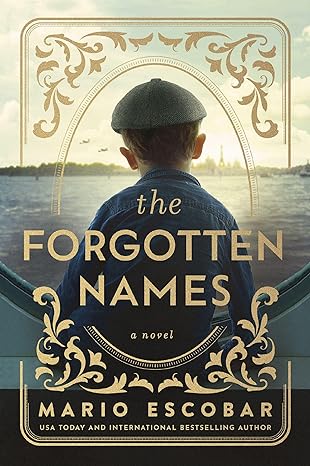
Many historical novels focus on one particular character and develop a story around that character. If it is a dual timeline, then the focus is on one character in each timeline. Escobar’s The Forgotten Names does, in the current timeline, focus on a nonfictional French historian and law student, Valérie Portheret. She spent 25 years identifying at least 90 of the 108 children whose identities were deliberately and necessarily abandoned in the rescue attempt from the Vénissieux internment camp near Lyon. Had their brave parents not signed release forms giving up their parental rights, the children would certainly have been killed by the Nazis who issued mandates for the number of Jews to be “processed.” The Vichy government was theoretically in control of France, but the reality was that they answered to the Nazis who disregarded both the legalities and moralities of the French.
A diverse coalition of Catholics, Protestants, and Jews, including social workers and Resistance organizations, found a loophole in the law. Orphaned minors could obtain an exemption from the roundup that sent the occupants of Vénissieux to their deaths. Escobar tells of the harrowing days and nights spent getting parents to agree, separating the children from their parents, arranging for new homes, transporting them to Lyon, and keeping them until the new parents arrived. All very secretive and all very dangerous for everyone involved in any way.
Escobar is a historian, but he also knows how to tell a story. The chapters are short, encouraging the reader to jump from the end of one into the beginning of the next chapter. The escape story of 1942 is framed by the research story which begins in 1992 when it was still difficult to find a sympathetic advisor. Sadly, the research was hampered by continuing anti-Semitism, rising fascism, and a reluctance to open up wounds of the past. Portheret persisted in locating the children for twenty-five years. The novel is personalized with the backgrounds and experiences of various children and families as imagined by Escobar. In this way, a sad part of history is brought to life with the goal of societies not repeating the horrific tragedies so many suffered through. Portheret originally planned her thesis to examine the life of the infamous Klaus Barbie, known as “the Butcher of Lyon.” As she began her work, however, she found herself drawn to the plan to “exterminate innocent children” and preferred to focus on the victims rather than the barbaric individuals who perpetrated the crimes.
There are so many books about World War II and the Nazis, but this is a new take on the crimes committed in that war. As hard as it is to read about the suffering of innocents whose only crime is to be Jewish, I am glad I read this book. Some of the Christian characters connect various events to Christian theology such as the birth of Jesus who was a Jew, God given Christian/human morality “which imposes duties and recognizes rights,” and the “demands of charity [love] made by Christ to be the distinctive mark of his disciples.” Above all is the emphasis that the human heart rebels against the cruel and painful measures enacted on Jews and certain groups of foreigners.
I received a complimentary copy of this book in exchange for an honest review. Opinions expressed in this review are completely my own.
Rating: 5/5
Category: Historical Fiction, Multicultural
Notes: The book contains references and something I always look for in historical fiction—a discussion of what is real and what is fictional. What follows is a World War II timeline beginning with the invasion of Poland by Germany in 1939 and continuing through the surrender of Nazi Germany to the Allies in 1945. The book concludes with Discussion Questions, information about the author who is Spanish and the translator.
Publication: June 11, 2024—Harper Muse
Memorable Lines:
“Have you noticed how the executioners often end up as celebrities? There are books and books about them. But so few write about their victims. The victims are mere numbers, faceless statistics, figures on the yellowed pages of history.”
The land of Mozart, Goethe, and Immanuel Kant had become a nation of barbarians, of heartless warriors whose driving desire was to control the human race and conquer the world.
“But now everybody—at least in the West—knows that it’s wrong to sacrifice humans. Maybe war will teach us a lesson we can’t learn any other way: the lesson that killing one another for our ideas, beliefs, or flags is absurd, because we all belong to the only human race there is, and we’re all brothers and sister of one another.”
Abscond–more than a coming of age story
Abscond
by Abraham Verghese

If you have heard of award winning Abraham Verghese’s books, but are not sure you want to invest the amount of time that it would take to read The Covenant of Water, for example, then I encourage you to sample Verghese’s work by reading the short story “Abscond” which features a thirteen year old boy. It is amazing what Verghese can do with either a full length novel or a short story. You will meet fascinating characters that you care about and visit a culture that is probably different from your own.
This short story focuses on resilience and rituals that help get us through times of grief. We learn to just sit with someone who is grieving. Although “Abscond” is about the death of a character, because of its themes and the author’s approach, it is not a sad book.
Rating: 5/5
Category: Short Story, Fiction, Multicultural
Publication: July 1, 2025—Amazon Original Stories
Memorable Lines:
He wanted to retreat to a time before he knew his father, a time when he was buffered from the world and its sorrows by his mother, spared any sound but the drumbeat of her heart, a time when memory had not existed, and so loss could not.
Billy had offered Ravi the thing he most needed: his quiet, silent presence.
“…maybe all these rituals are to help me figure out how to go on. Because right now, I have no clue.”
The Covenant of Water–Indian multigenerational saga
The Covenant of Water
By Abraham Verghese
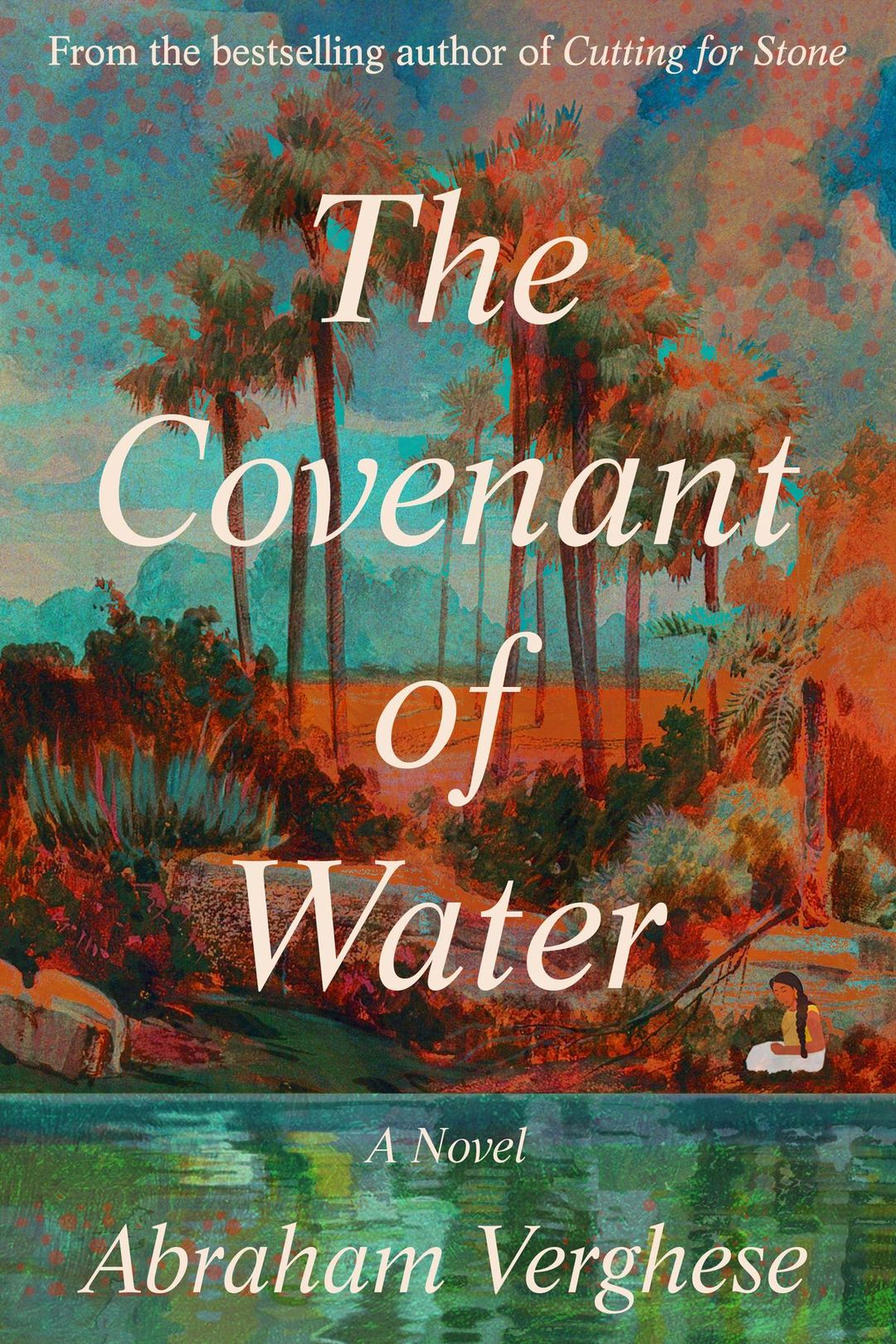
Fourteen years in the making, 724 pages long, this saga that mainly takes place in India will stay with readers long after they have finished reading it. This story spans the years 1900 to 1977 and begins with the arranged marriage of a twelve year old girl who is given years to mature and grow into her role before the marriage is consummated. She becomes the matriarch of the family and is known as Big Ammachi. The family has a secret, a curse they refer to as The Condition. At least one person, usually male, in each generation has died of drowning in a country where water is everywhere.
The reader takes a deep dive into the relationships that occur over the years in this area inhabited by St. Thomas Christians. The people in the community have a Christian faith, but it is interwoven with other cultural traditions. Big Ammachi’s husband Thamb’ran has the condition and was not allowed to travel by water to school. Therefore, he is an intelligent man, but has never learned to read. He also has a hearing loss.
Just when the reader has a grasp on these characters and the plot, the story jarringly transitions to Glasgow, Scotland, in 1919, where we meet Digby Kilgour, a surgeon, and become acquainted with the caste system. Although the transfer seems sudden, the plot soon moves back to Parambil in India where it is discovered that beloved Baby Mol suffers from a medical situation that will leave her childlike all of her life.
The Covenant of Water is too long for a reviewer to detail all of the events concerning the many characters. The plot is intricate and seemingly unconnected threads are eventually woven into other threads to create beautiful scenes full of emotion and love which cross many generations. There are tragedies and victories, happiness and great sadness. Heroic actions save lives and cause personal suffering. Writing and art are tools for healing. The World War brings death to many as Japan bombs Madras in India, but also inspires Indians to seek their freedom from Great Britain. There are births under primitive conditions, the arrival of electricity, and the release of Nehru after three years of imprisonment. Fire causes permanent damage as does leprosy, but with an undercurrent of faith, there is also healing and joy. Water is a powerful theme as the water flows through the land uniting all the characters with none of them having to stand alone because they are connected by the water—physically and emotionally. Story is important to this author and more important than themes and messages. As the story unfolds, however, Verghese reveals deep meanings and understandings of human nature in his beautiful writing. Although he labored over this saga for years, the telling seems to be effortless and replete with memorable lines and phrases. It is a masterpiece of fiction that readers will want to discuss and revisit for years to come.
Rating: 5/5
Category: Fiction
Notes: I am not normally a fan of celebrity book clubs, but I listened to Oprah Winfrey’s six part discussion (available on YouTube) of The Covenant of Water with author Abraham Verghese. It is a great interview and includes Verghese reading some passages from the book. It offers interesting insights into the writing process. I don’t usually listen to audio books because of hearing issues, but I could tell that Verghese’s reading of his book would be a positive addition to the enjoyment of The Covenant of Water.
It is a long book, but I think most people in my book club enjoyed it. One member shared a 5 page list of characters she found online. Because the book is so long, I would suggest readers explore that possibility or create their own list as they read.
Publication: May 2023—Grove Press
Memorable Lines:
The grandmother is certain of a few things: A tale that leaves its imprint on a listener tells the truth about how the world lives, and so, unavoidably, it is about families, their victories and wounds, and their departed, including the ghosts who linger; it must offer instructions for living in God’s realm, where joy never spares one from sorrow. A good story goes beyond what a forgiving God cares to do: it reconciles families and unburdens them of secrets whose bond is stronger than blood. But in their revealing, as in their keeping, secrets can tear a family apart.
“Are we not doing some good here, Honorine?” he asks gently. She looks at him kindly. “Aye, bonny lad, you are! Us all are! Our hospital, the railways and telegraphs. Plenty good things. But it’s their land, Digby, and we take and take us. We take tea, rubber, take their looms so they must buy our cotton at ten times the cost…”
“Half my life is spent on trains. Strangers of all religions, all castes getting on so well in a compartment. Why not same outside train? Why not simply all getting along?” Arjun looks out of the window and swallows hard.
My Family and Other Animals–adventures of a young naturalist
My Family and Other Animals
by Gerald Durrell
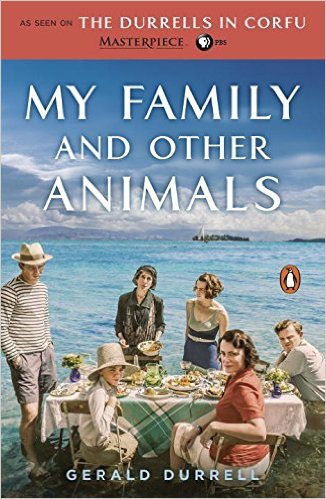
Ready for a boring book about animals? You won’t find it in My Family and Other Animals. Since the author Gerald Durrell (Gerry) was a naturalist from the age of two, there are plenty of animals in this book. He observes them and collects them when his family (Mother, brothers Larry and Leslie, and sister Margo) move from England to the Greek island of Corfu. Both the family and Gerry’s collection of animals are a continual source of humor for the reader with responses ranging from smiles to raucous laughter. Each of the family members is a unique character, but they argue and discuss issues until they arrive at a group “family” decision and act on it.
The story is told by Gerald as an adult looking back on Gerry’s adventures of which there were many. Ten year old Gerry was allowed to roam the island with his dog Roger exploring flora and fauna at his leisure. Occasionally, to Gerry’s dismay, the family would decide to rein him in by providing a tutor. They procured several knowledgeable men at various times, but it was apparent that Gerry’s passion for animals would dominate any efforts at education. When they arrive, Spiro, a local taxi driver and fixer, adopts them and helps them during their stay with any needs they might have. Gerry meets a lot of the locals during his roamings and they always welcome him and offer him refreshment as they chat.
Durrell is a wonderful author whether he is describing natural beauty, the mating of turtles, the parties hosted by the Durrells, the quirks of his siblings, or his observations of small, black scorpions living in the crumbling garden wall. As they are want to do, there were often animal escapes resulting in family meetings to decide what they were going to do about that particular animal’s housing. Occasionally animals were banned from the house, but at no time did the family try to stop Gerry’s proclivity for cultivating interactions with nature. They seemed to understand that it was as much a part of his nature as writing was to Larry, shooting to Leslie, romance to Margo, or cooking to Mother. Their adventures and interactions will keep you turning pages to see what they will do next.
Rating: 5/5
Category: Memoir, Humor
Notes: #1 in the Corfu Trilogy.A 4 season TV series, The Durrells in Corfu, was made by Masterpiece Theatre.
Publication: 1956—Penguin Books
Memorable Lines:
The cypress trees were whipped like dark pendulums against the sky, and the olives (so fossilized all summer, so still and witchlike) were infected with the madness of the wind and swayed creaking on their misshapen, sinewy trunks, their leaves hissing as they turned, like mother of pearl, from green to silver. This is what the dead leaves had whispered about, this is what they had practiced for; exultantly they rose in the air and danced, whirligiging about, dipping, swooping, falling exhausted when the wind tired of them and passed on.
By the time a certain amount of order had been restored, all the baby scorpions had hidden themselves under various plates and bits of cutlery. Eventually, after impassioned pleas on my part, backed up by Mother, Leslie’s suggestion that the whole lot be slaughtered was quashed…Roger and I went and spent the afternoon on the hillside, for I felt it would be prudent to allow the family to have a siesta before seeing them again.
The hill-top seemed to have its own breeze, albeit a baby one, for no matter how hot it was below in the valley, up in the three olive groves the tiny wind played constantly, the leaves whispered, and the drooping cyclamen flowers bowed to each other in endless greeting. It was an ideal spot in which to rest after a hectic lizard hunt, when your head was pounding with the heat, your clothes limp and discolored with perspiration, and the three dogs hung out their pink tongues and panted like ancient miniature railway engines.
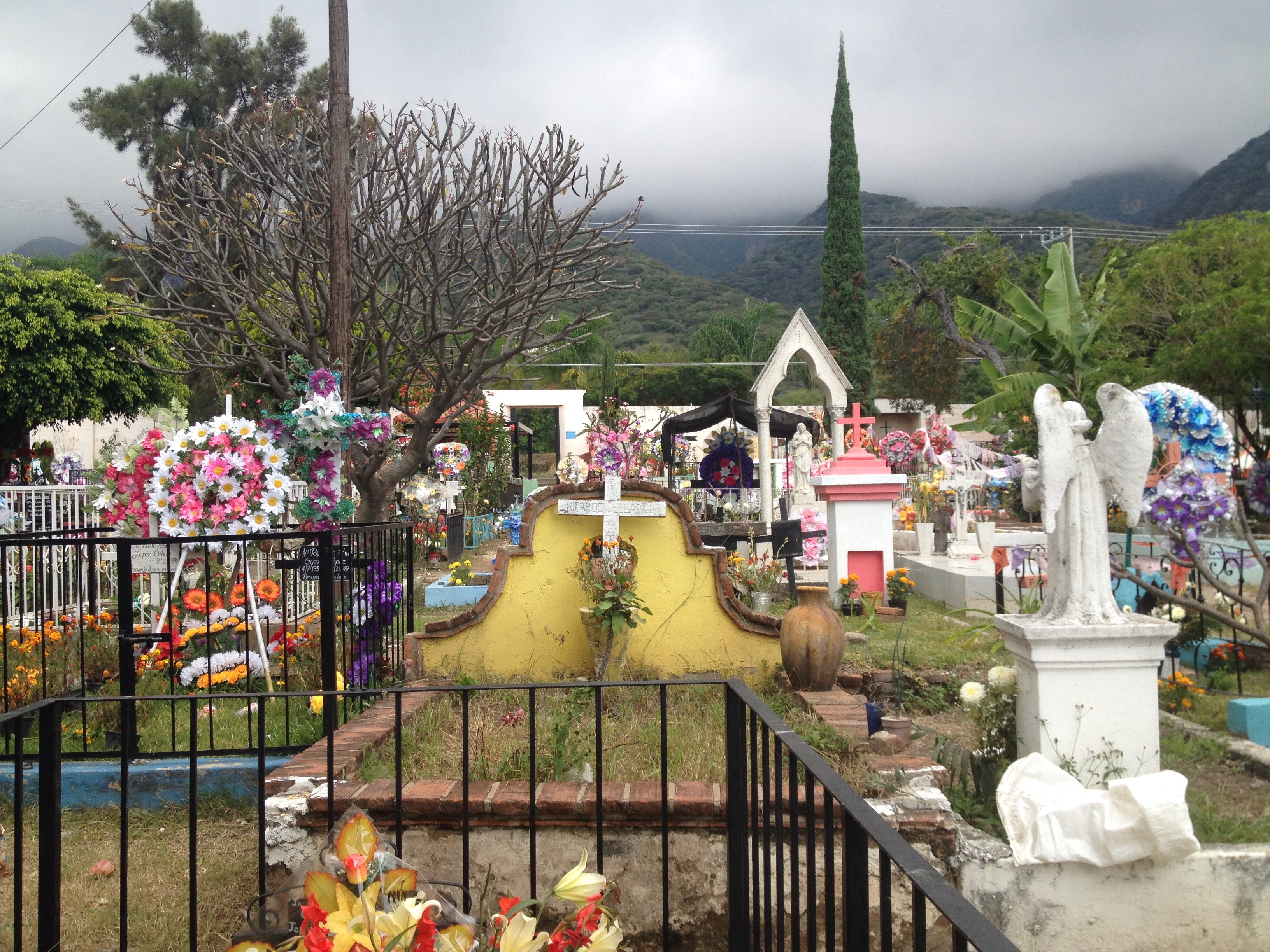
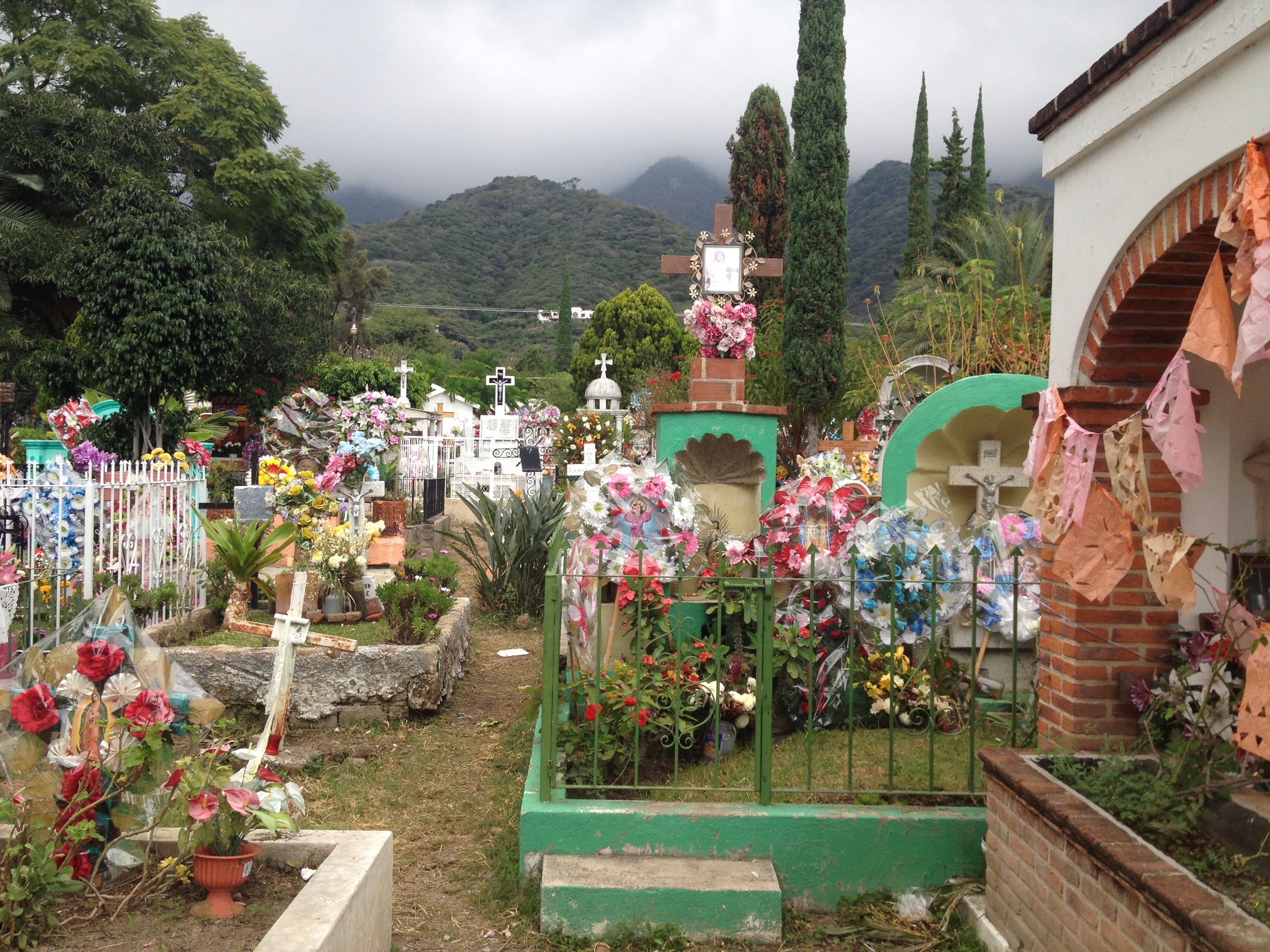
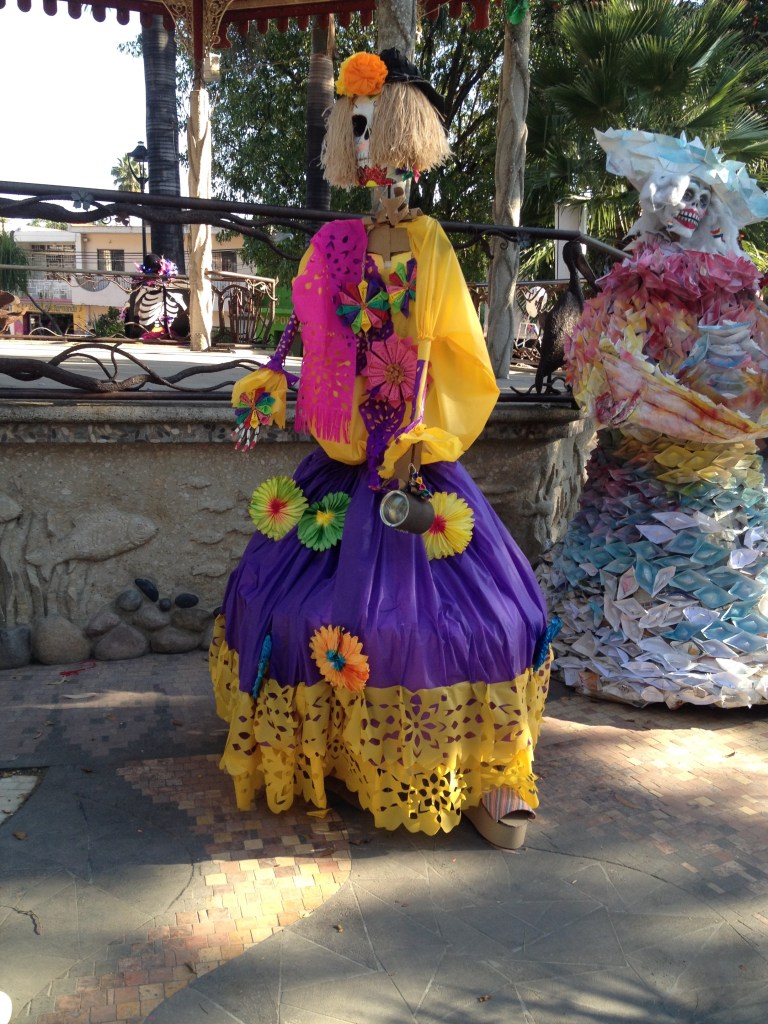
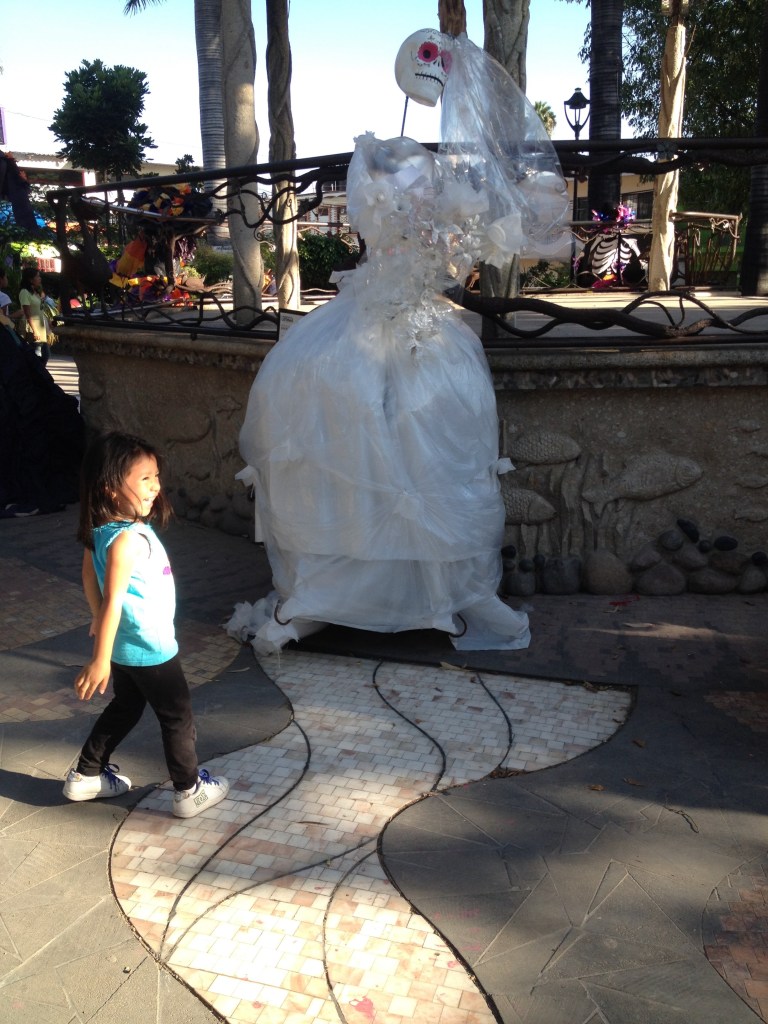
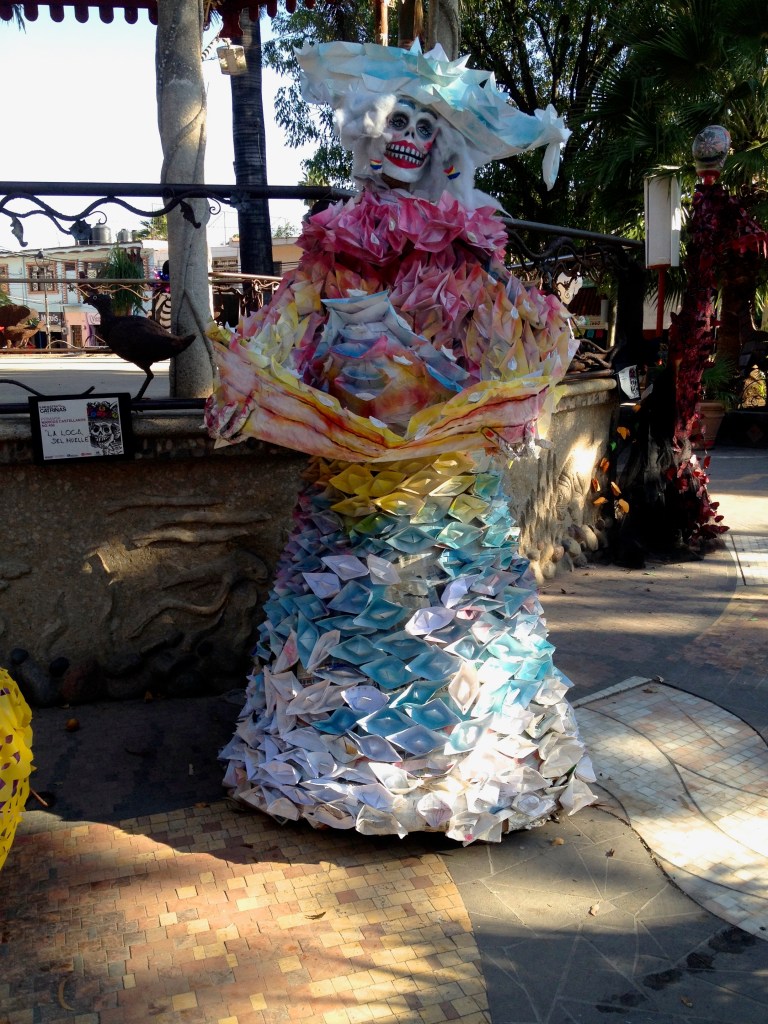
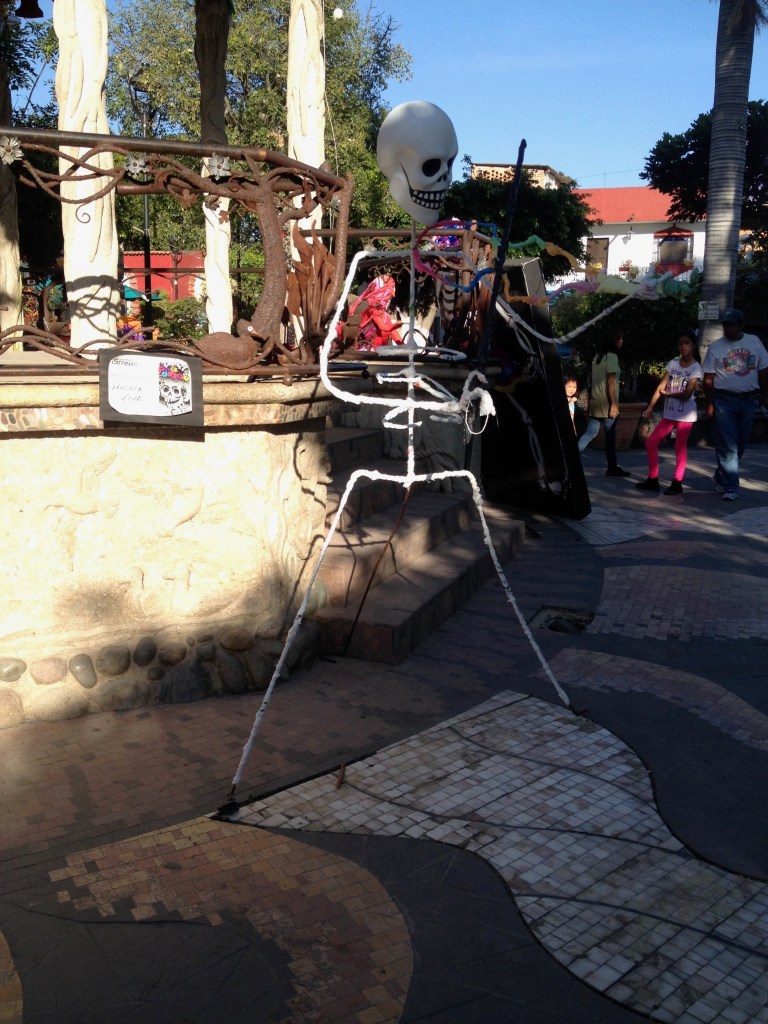
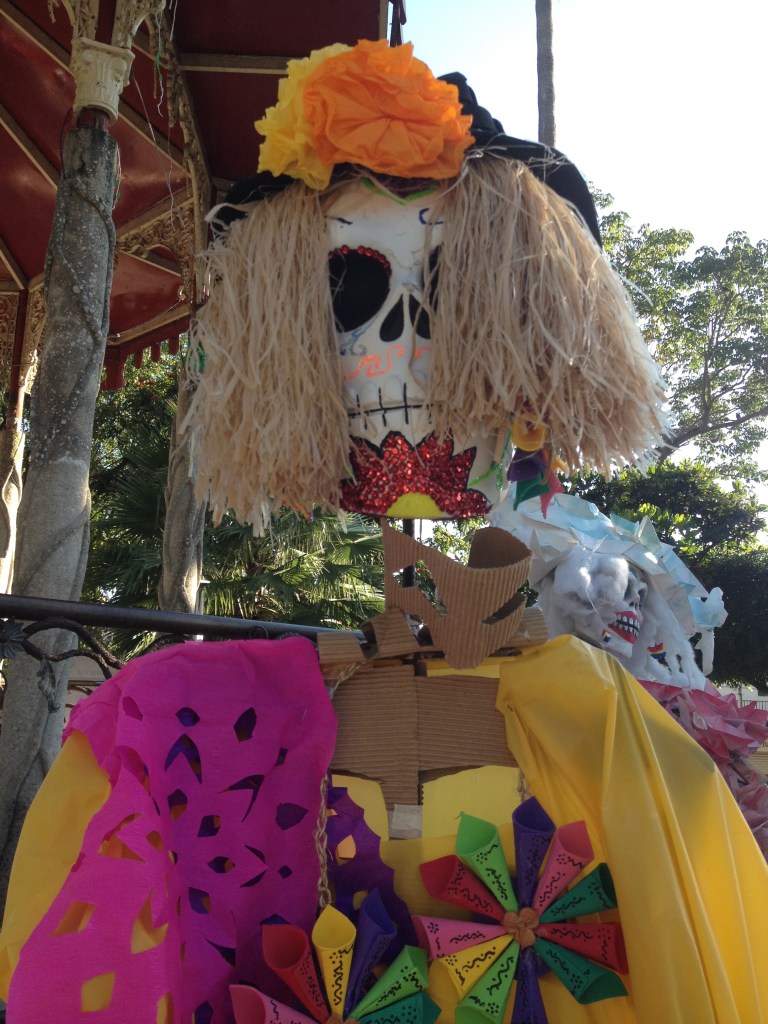
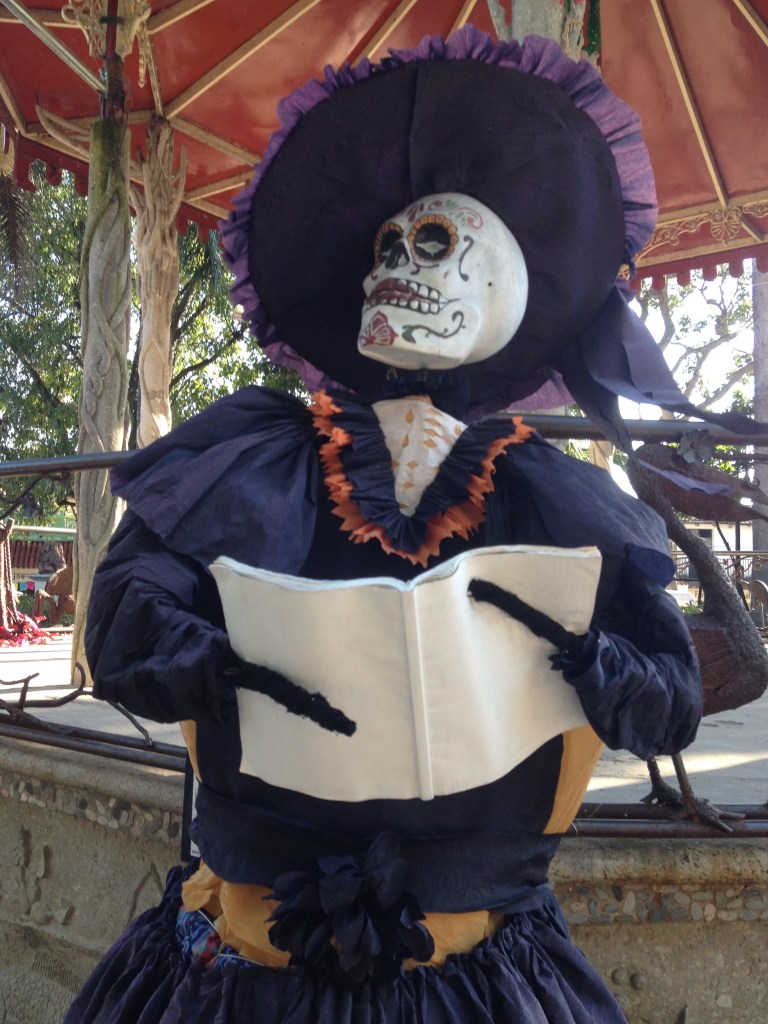
Día de los Muertos–Day of the Dead
Ajijic, Jalisco, México–2014











A Shadow in Moscow–Cold War spies
A Shadow in Moscow
by Katherine Reay
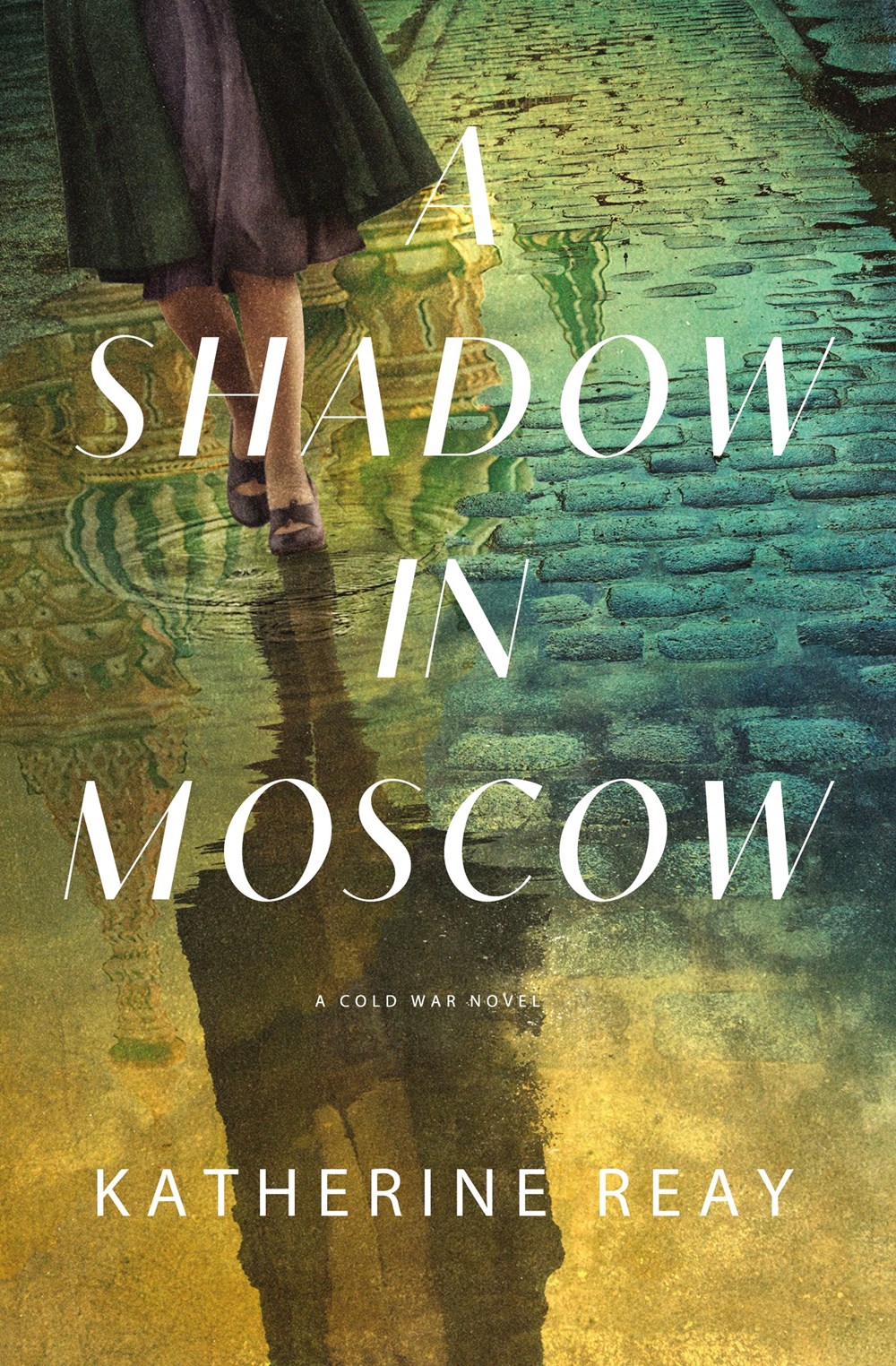
As you can guess from the title A Shadow in Moscow, this book is about spies—two women in particular—and is told in two timelines with a third included in an epilogue. I didn’t like the two timelines for a lot of the book, but by the end I understood why the author chose that style. She purposely does not reveal the connections between the two women operatives until late in the book. She, in fact, keeps a lot of clues from the reader. The whole book is interesting, but a little unsatisfying until the author reveals the relationships to the reader and to the characters themselves. At that point I was shaking my head at the courage, intelligence, and loyalty of these women.
Almost any summary of this work of historical fiction would include spoilers, so I will instead relate some of my impressions. I have read other books by Reay and appreciate her as a writer. She has researched her topic well and has shared information about the Cold War in a way that makes it understandable to the reader. It is hard to comprehend from our position in North America the length and depth of the spy organizations and culture that permeated the world during that era, especially as it involved the Soviet Union, the United States, and Great Britain. This is a story of intelligence agencies (CIA, MI6, and KGB) and counterintelligence agencies. We learn of the extent the KGB went to in their efforts to control the actions and even the thoughts of their people. We see this on an organizational level, but also a personal level as individuals and families are unable to express themselves or know who to trust. As Reay states in her notes to readers, “only in truly understanding our pasts will we be able to navigate—with empathy, humanity, and wisdom—our presents well.”
At two-thirds of the way through this book, I would have given it a moderate stamp of approval. At the end I was overwhelmed with the writer’s talent, with the way the various threads were drawn together, and with the motivations and resolutions for various characters. It will transport you to a difficult time in history when choices, whether based on ethics or on greed, led to life and death decisions.
I received a complimentary copy of this book in exchange for an honest review. Opinions expressed in this review are completely my own.
Rating: 4/5
Category: Historical Fiction
Notes: Discussion questions are included in the back of the book and Reay references other resources on her web page. If this is chosen as a book club selection, I would advise that the members read the whole book before discussing it.
Publication: June 13, 2023—Harper Muse
Memorable Lines:
Jamison’s cramped and stuffy book-lined office is my favorite spot on campus. Something about its dusty, ink-and-paper smell takes me right back to my bedroom and my all-night read-a-thons—because at home you get the best books in secret and only for one night.
Our conformity gives an illusion of power and peace as we are raised to believe our way of life is superior and virtuous. Illusions are powerful things. If you believe them hard enough, they can become one’s reality.
“They’re Americans, Sasha. They have constitutional rights agains that kind of stuff.” The memory is bright and convicting, blinding me with truth. That’s the difference, I think. Forget the bedazzled clothes, the neon colors, the malls, the plentiful vegetables. Forget it all. It’s window dressing hiding the truth. None of that matters because only one thing counts. Rights.
The Swiss Nurse–refugees from war
The Swiss Nurse
by Mario Escobar

I am so glad that I had read other books by Mario Escobar, because this work of historical fiction started off roughly for me. I feel sure the fault was my own. I am shamefully unfamiliar with the Spanish Civil War, and I started the book too late in the evening. I persevered the next day, however, and was quickly immersed in a tale of evil hearts and the strength of some good people who worked to help others in dire circumstances.
When Franco and his troops were successful in this war, they were determined to obliterate the Republicans fighting for their freedom and anyone associated with them. The result was a massive exodus of refugees into southern France which was not prepared for the influx and did not welcome them with open arms. The “camps” they provided were sandy beaches with no structures. There was little food and no potable water; the refugees were not allowed outside the camp.
This book is about the refugees in that war which was followed up by the events of World War II and the further torment of innocents by the French Vichy government which was a puppet government of the Nazis, and then by the Nazis themselves. Much of the story describes the horrible conditions of the refugee camps and the strength and boldness of Elisabeth Eidenbenz, a Swiss woman whose focus was orphans in Spain until she was forced relocate to southern France where she opened a hospital taking in pregnant women and giving them a safe place to deliver their babies. The other main character is Isabel, a Spanish lady who married Peter, an American who fought with the Spanish for their liberation. Their lives intersect when Isabel gives birth to her precious daughter Lisa at the Elne Maternity Hospital. With Peter held in various prisons and concentration camps and conscripted into the army for manual labor, Isabel stays to help in the maternity hospital.
The author pulls the reader into the horrible conditions and the faith and courage of characters who stand up for what is right. As a reader, you want everything to turn out great for the sympathetic characters. This is, however, a work of historical fiction, so not everyone has a happy ending. It is important to read works like this so that we are not duped yet again by politicians who promise good things and deliver nothing, creating untenable situations. History like this must not be allowed to repeat itself.
I received a complimentary copy of this book in exchange for an honest review. Opinions expressed in this review are completely my own.
Rating: 5/5
Category: Historical Fiction, Multicultural, Fiction
Notes: Additional material includes: References, Clarifications from History, Timeline, Discussion Questions, and Information about the Author and the Translator
Publication: April 14, 2023—Harper Muse
Memorable Lines:
Gazing off into the distance, their gaunt faces reflected the weary sadness of their souls. Their cheeks were sunken with hunger, and their skin was pallid from exhaustion and malnourishment.
An entire generation had been killed for naught: anonymous heroes on both sides, idealists attracted by the siren songs of their leaders who stayed safe in the rear guard. The only hope was to erase those painful years from their lives and try to start over from scratch.
Argelès-sur-Mer had been both refuge and jail. It had stamped out of us the hope of recovering our lives one day. We were now flea-infested riffraff with bones aching from damp nights spent on hard sand with thin blankets. The starry sky had been our prison roof.
“Sometimes we have to feel our way in the dark in order to find the path, but beyond the fog the sky is still blue, and the sun is still shining.”
Everything Sad is Untrue–memories are culture carriers
Everything Sad is Untrue
by Daniel Nayeri
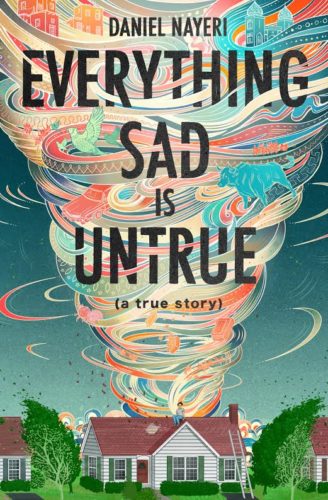
Daniel Nayeri’s Everything Sad is Untrue is part memoir and part storytelling where he fills in the things he doesn’t remember exactly from his childhood. The first part of the book is a mixture of three kinds of stories—myth, legend, and history—that attempt to place the reader in Daniel’s past and his ancestry as it happened and as he imagined it might have happened. He relates “story” in this way to help the reader understand the very different Persian culture he started his life in and which formed his beliefs and attitudes.
Although there are no chapters in this book, the reader can clearly tell when the story pivots from providing background to relating the events from the time his mother became a Christian on a visit to the West. She embraced Jesus and her faith in Him wholeheartedly. Christianity in Iran is a capital offense, so she had to take her children and flee. She traded a comfortable life as a respected physician married to a successful dentist for the life of an impoverished refugee, looked down on because of her language, menial job, and poverty. But she had Jesus, and no one could take that away from her.
Some of the book tells about the year they spent in a refugee camp in Italy. It was not actually a camp with tents, but a concrete building with small rooms and a bathroom. The residents were refugees from many countries, all waiting for the U.N. to find a place that would accept them. They had nothing and there was no access to books, media or recreation. It was made even harder by the refugees’ inability to converse with each other and by impatient workers who processed each refugee’s mound of paperwork.
A lot of Daniel’s story tells what life was like for him as a child in Edmond, Oklahoma, where they eventually settled. He experienced bullying, but came up with tricks for avoiding the worst of it. There was culture shock around every corner as he tried to fit into a very different mindset. Fortunately, he had an outstanding teacher in Mrs. Miller who encouraged him without babying him. The librarian in Edmond was kind too, and so Daniel spent many Saturdays there devouring books. His mom ended up in the emergency room several times thanks to his stepfather Ray, a black belt. Despite lots of difficult times, Daniel never seems to plead for sympathy from the reader and always points to his mother as the strongest person he knows.
Everything Sad is Untrue is a book I recommend. It is a challenging read as the author’s life is presented through the eyes of a child, but with some of the understanding of an adult. Memories are an important theme of this book as Daniel says, “Memories are always partly untrue.” and “A patchwork story is the shame of a refugee.” This is a book ripe with principles and beliefs worth pondering and a story and characters who will remain in the reader’s thoughts long after the last page is turned.
Rating: 5/5
Category: Autobiographical novel/fictionalized memoir
Notes: 1. This is a hard book to categorize which may, in part, be a critical factor in making it a very good book.
2. It has been rated for children 12+ on Amazon. Some readers refer to it as a Young Adult book. To me, it is probably more appropriate for adults. Some of the fascination with “poop,” however, in Daniel’s childhood classroom would attract the attention of middle school boys.
3. This book has won many awards.
4. I thought not having chapters would be a negative for me, but it does fit the style of Everything Sad is Untrue.
Publication: 2020—Levine Querido
Memorable Lines:
Memories are tricky things. They can fade or fester. You have to seal them up tight like pickles and keep out impurities like how hurt you feel when you open them. Or they’ll ferment and poison your brain.
And here is the part that gets hard to believe: Sima, my mom, read about him and became a Christian too. Not just a regular one, who keeps it in their pocket. She fell in love. She wanted everybody to have what she had, to be free, to realize that in other religions you have rules and codes and obligations to follow to earn good things, but all you had to do with Jesus was believe he was the one who died for you. And she believed.
Imagine you’re in a refugee camp and you know it’ll be a tough year. But for the person who thinks, “At the end of this year, I’m going somewhere to be free, a place without secret police, free to believe whatever I want and teach my children.” And you believe it’ll be hard, but eventually, you’ll build a whole new life….But if you’re thinking every place is the same, and there will always be people who abuse you, and about how poor you’ll be at first, the sadness overtakes you….But what you believe about the future will change how you live in the present.
 education pathways