Home » History (Page 2)
Category Archives: History
Through Gates of Splendor–a call from God
Through Gates of Splendor
by Elizabeth Elliot

Five young men felt God’s call to share the good news of Jesus with an Ecuadoran Indian tribe that had never had positive encounters with outsiders. Their bad experiences date back to the ruthless rubber traders of the 1870’s—“civilized savages against unbaptized savages.” They had Stone Age technology, were feared by other Indians for their unprovoked ambushes, and had a language known only to themselves. The missionaries and their wives had a daunting task. They started by evangelizing more friendly local tribes and establishing bases, many refurbished from areas abandoned by Shell Oil Co. From these bases they did flyovers of the Auca land, first to find where in the jungle the Aucas were living and later to communicate with them by dropping gifts to demonstrate their friendly intentions.
When they felt the time was right, they finalized plans to land and meet with the Aucas in person. The book becomes very intense at that point. After an initial positive meeting, there is literally radio silence instead of the expected call back to the wives. A search and rescue team went in consisting of Ecuadorian military, volunteer missionaries and Indians, and U.S military. It was a dangerous mission.
Although the preparation and action are the basis of the story, the core of the book is faith in God. Elizabeth Elliot, the author of Through Gates of Splendor, was the wife of Jim Elliot, the first missionary of the group to respond to God’s call to contact this people group who had never heard of Him. Jim Elliot was willing to die if need be to share the good news of salvation to the Aucas. He said, “He is no fool who gives what he cannot keep to gain what he cannot lose.” The story of the lives of these young men and their dedication to God is inspiring and many of their notes and thoughts are recorded in this book. In its pages you will see a vivd picture of what God’s call can look like as well as how these missionaries and their wives responded.
Rating: 5/5
Category: History, Christian, Memoir
Notes: The 40th anniversary edition which I read included:
1. Maps
2. Photographs, many taken at great peril by a Life magazine reporter who chose to stay with the search party when he could have returned to the base and safety.
3. Two Epilogues. One was written in 1958 explaining the immediate aftermath of the first contact and one written in 1996 relating the lives of the families as they evolved over the next 40 years.
Publication: Originally 1956
40th anniversary edition in 1996—Living Books (Tyndale)
Memorable Lines:
“If that old engine had quit up there, God alone could have saved me. I might just as well admit it frankly right here; I don’t like to fly over stuff like that and I have to have a pretty good reason to be over it without a good position-check and a good river to identify my position by. But these are people for whom Christ died, and you have to find them before you can take the Gospel to them, so I was happy to have stumbled on them.”
Pete Fleming was one of those who could not be content while the Aucas remained in darkness. In his diary he wrote: “It is a grave and solemn problem; an unreachable people who murder and kill with extreme hatred. It comes to me strongly that God is leading me to do something about it, and a strong idea and impression comes into my mind that I ought to devote the majority of my time to collecting linguistic data on the tribe and making some intensive air surveys to look for Auca houses….I know that this may be the most important decision of my life, but I have a quiet peace about it.
September, 1955, was the month in which Operation Auca really started, the month in which the Lord began to weave five separate threads into a single glowing fabric for His own Glory. Five men with widely differing personalities had come to Ecuador from the eastern United States, the West Coast, and the Midwestern States. Representing three different “faith-missions,” these men and their wives were one in their common belief in the Bible as the literal and supernatural and perfect word from God to man. Christ said “Go ye”; their answer was “Lord, send me.”
Seabiscuit–racehorse with a heart
Seabiscuit: An American Legend
by Laura Hillenbrand
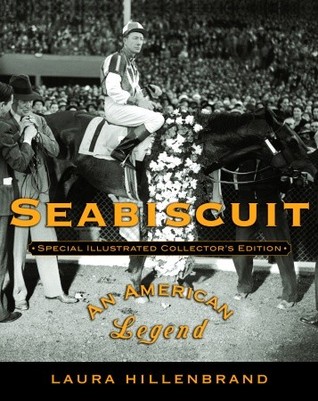
Seabiscuit is the story of an incredible racehorse who took the nation by storm at a time when people needed something positive. He lacked perfect conformation. It seemed like he never got a lucky break when it came to weather or rulings about the amount of extra weight added to his saddle for the races. What he had, however, was strength, speed, competitiveness, and the ability to give all that was asked of him. He also had a supportive team that never gave up on him.
Laura Hillenbrand had been writing about horses and racing in periodicals for years. In Seabiscuit she took that writing to a whole new level, researching, interviewing, delving into archives and corroborating the facts. Then she worked her magic as an outstanding writer to organize the information and make it come alive in word pictures that capture the reader’s heart and imagination.
Hillenbrand doesn’t just help the reader understand and come to love Seabiscuit as his fans did. She takes us into the life of Red Pollard, the jockey who knew Seabiscuit and his ways best. She introduces us to owner Charles Howard and trainer Tom Smith who were as unlikely to be part of his success story as Seabiscuit himself. We are treated to mini-biographies of those around Seabiscuit and the general nature of racing and betting in the 1930’s.
As a complete novice in the world of horse racing, I had to labor a little initially to follow the details, but I soon caught on and began chasing the powerful horse across the pages of this well written book. Hillenbrand’s words are chosen with care and create images in the mind and stir emotions in the heart making this a truly unforgettable piece of nonfiction.
Rating: 5/5
Category: Nonfiction, History
Notes: I purchased the Special Illustrated Collector’s Edition which contains more photographs than the original publication. I highly recommend this edition.
Publication: 2003—Random House
Memorable Lines:
Red Pollard and George Woolf had signed on to a life that used men up. But for all its miseries, there was an unmistakable allure to the jockey’s craft, one that both found irresistible….When a horse and a jockey flew over the track together, there were moments in which the man’s mind wedded itself to the animal’s body to form something greater than the sum of both parts….At the bottom of the Depression, when wrenching need narrowed the parameters of experience as never before, the liberation offered by the racehorse was, to young men like Pollard and Woolf, a siren song.
Seabiscuit seemed a cumbersome giant in comparison. At 1,040 pounds, he outweighed War Admiral by 80 pounds, with six feet of girth and a markedly wider chest. But the big body was perched on legs a full two inches shorter. His neck was thick, his head heavy, his tail stubby, his boxing-glove knees crouched….the mane plaits didn’t lie right and stuck out like quills. the horse stood straddle-legged, as if perpetually bracing himself against a strong wind.
A mournful hush fell over the barn, broken only by the long, low moans of a saddle pony who missed his absent stable companion. All evening long, the deep sad sound drifted out from the shed rows.
The Nine–despair and courage
The Nine
by Gwen Strauss

Five years of research and writing went into the creation of The Nine, a nonfiction work that focuses on a group of nine women, most in their twenties, who joined the Resistance movement in World War II at various times and places. Six were French, two Dutch, and one Spanish. They were individually captured and sent to worse than horrible Nazi internment camps.
The author was able to interview her great aunt Helène who spoke five languages and was the leader of this band who joined together to survive and escape. Strauss followed quite a maze of information and was aided by many including families of “The Nine.” The book begins with Helène’s story which for me was emotionally difficult as she provides some details of her capture and torture. There were some types of torture, however, that Helène would not discuss or even name. The rest of the account moved more quickly as we learn more about each of the young ladies in the first nine chapters along with descriptions of life in a labor camp. Each chapter moves them closer to either death or escape. Most of the rest of the book lays out their last days together and concludes with what happens after the war is over.
The ladies did not share their stories with very many people for a variety of reasons which the author relates. Several wrote about their experiences in unpublished formats to be discovered after their deaths. Many former prisoners of World War II suffered again after their presumed return to safety—homes and loved ones were gone, their bodies were physically ruined, and society turned against them. Statistically they were lucky to survive, but they bore visible and invisible scars. Most returnees were reluctant to discuss their imprisonment with even those closest to them and found that, in general, people did not want to hear about their experiences.
I highly recommend this book for the author’s insightful and thorough reporting about the brave women of the Resistance and the cruel and evil system that treated them as vermin. One of the policies that I sadly see repeated currently is those in power inciting division to weaken and control those under them. In the camps, the Poles received the best treatment from the Nazis, followed by the Reds. Every group looked down on another in the camps with the Roma (Gypsies), criminals, and homosexuals regarded as the bottom of humanity.
I received a complimentary copy of this book in exchange for an honest review. Opinions expressed in this review are completely my own.
Rating: 5/5
Category: History, Nonfiction (Adult)
Notes: 1. Subtitled: The True Story of a Band of Women Who Survived the Worst of Nazi Germany
2. At the first of the book there is a list of the women with their nicknames and a brief description
3. At the end of the book are notes about the author’s journey into the past, a bibliography, notes on each chapter, and a list of the illustrations (which sound interesting, but were not included in my Advance Reader Copy).
Publication: May 4, 2021—St. Martin’s Press
Memorable Lines:
The Jewish prisoners were given the worst rations, worst living conditions, and the hardest jobs. They were already the most traumatized group, having suffered pogroms, witnessed mass murders, and narrowly escaped the gas chambers. All of them had probably seen their loved ones die, and they may or may not have counted themselves lucky to be alive.
They were proud of how they served each other, divided food equally, and maintained their civility in such an uncivil place. It had kept them strong when others become more and more like animals, lost their sense of themselves, and fell into dark despair.
In the sea of people who seemed to have been tossed up like pebbles on a beach, the prospect of finding their loved ones felt nearly impossible.
Souvenirs from Kyiv–devastation of war
Souvenirs from Kyiv
by Chrystyna Lucyk-Berger
I want to believe Chrystyna Lucyk-Berger’s stories in Souvenirs from Kyiv are more fiction than history, but I know that is not true. She has researched and conducted interviews with survivors of World War II and its aftermath. She has compiled their memories into composite stories that share brutal truths about war. Her goal Is to “make it clear that conflict is not about two teams meeting on the battlefield—one called ‘good’ and one called ‘bad.’ There are no winners in this story.”
These tales are emotionally hard to read; I put aside the book several times to regroup. Because the author is Ukrainian-American, I expected the book would be slanted towards the Ukrainians. While they are certainly the focus, they are not depicted as guiltless. The barbarism of war is demonstrated in acts performed by Germany, Poland, the USSR, Ukraine, and the United Nations. “Sides” were not clear cut and people had to quickly change their nationalism based on necessity for survival.
In Ukraine’s War of Independence (1917-1921), a chant was popular:
Glory to Ukraine.
Glory to the heroes!
Death to the enemies.
It was revived in the 1940’s as a partisan group struggled to “ ‘purify’ Ukraine of Jews, of Poles, of Nazis, of Soviets.” The Organization of Ukrainian Nationalists (OUN) was founded after WW I. It fractured into two groups, each fiercely loyal to its leader. They expended energy which would have been better used in fighting their common enemy. That is an easy position to take from my safe twenty-first century armchair.
The author creates believable, fictional characters. Through them she makes real:
–the desperation of those in labor camps
–the hard work required just to survive each day
–the quick adjusting of priorities for those fleeing
–the raw, animalistic violence that emerged during the fight for survival—whether to get a place in a bomb shelter or to grasp a stale piece of bread.
There are also shining lights:
–parents sacrificing for children
–the kindness of a German officer leading a refuge family to safety during a bombing
–everyday citizens risking their lives by sharing their homes and what little food had been left for them by ravaging soldiers.
These are all stories that need to be told, but the tale goes further. When the dust of battle settles, what happens to the survivors? To what country will they claim allegiance? Even those captured by an army and put in uniform or forced into slave labor, can be blacklisted as traitors in their home country. There is the unimaginable prospect of labor camps once more. If these threats are not realized, the survivors still have to overcome physical and mental hurdles of reintegrating into a society, perhaps not the one of their birth. During and after the war, Ukraine Diaspora occurred in the U.S. and in Europe.
Although this book is historical fiction, I learned a lot about the strife between Ukraine and its neighbors. Conflict is not new in that area. The author made history come alive with characters caught up in a war not of their making. It is important to read the forward. The first story slowly immersed me into the time period. Then the rest of the book sped by quickly. This author has written other books, and I am interested in reading them as well. Although Souvenirs from Kyiv is about Ukraine, its theme, the devastation of war, has worldwide applications.
I would like to extend my thanks to NetGalley and to Bookouture for giving me the opportunity to read this book in exchange for an honest review.
Rating: 5/5
Category: Historical Fiction, General Fiction (Adult)
Notes: 1. A map of Ukraine is included.
2. The book ends with a letter from the author and also a valuable glossary. Some foreign language words are defined within the story, but the glossary is helpful for the other terms.
Publication: April 22, 2022—Bookouture
Memorable Lines:
I think of the Germans picking up and fleeing, the Red Army laying claim to the scorched land, and I know that one oppressor is no better than the next.
[Pretend death notification letter composed by an enlisted Ukrainian forced into the German army.] As we waited for our weapons to thaw, your son took a bullet. He did not die a hero. He did not kill many Red Army troops. He was shot, and others have died of TB, frozen to death, or have simply lost hope. You may stop sending blankets. They go to the officers, anyway. You could send clubs and knives, for we have been forced to turn into primitive cavemen. Our weapons are useless in this frozen land.
…if he has learned anything on this journey, it is this: he will give up everything—including his principles, including his painting, his life—to keep his family alive.
Code Girls–The Untold Story of the American Women Code Breakers Who Helped Win World War II
Code Girls
by Liza Mundy

Nonfiction has the potential to be deadly boring or magnificently interesting. Liza Mundy’s Code Girls without a doubt falls into the latter category. It is not an easy read, but it is fascinating. Code Girls tells the tale of the essential role the code breakers, who were mostly women, played in the eventual Allied defeat of the Axis nations in World War II. If you are envisaging a handful of young women holed up in a room in D.C., think again. The Army’s code breakers numbered 10,500 with 70% of them women and most working out of the Arlington Hall campus in Virginia. The Navy’s group numbered 10,000 with half of those stationed in D.C. of which 80% were female. Both groups rose to those numbers from a mere 200 code breakers each in a short amount of time. These women came from all walks of life and backgrounds. Among the first recruited were college educated, low paid, school teachers at a time when a low priority was placed on education for women. Many of these women had a background in math and science, and all had a good memory. They were analytical and could approach problems in novel ways.
The code breakers’ stories went untold for most, if not all, of their lives because they were sworn to secrecy. They considered the work they did a duty of honor to their country and to the men in their lives. They understood that their work could literally save lives, perhaps even of their own loved ones, by intercepting and decoding enemy messages. It is a testament to their trustworthiness that Germany and Japan never knew that their transmissions had been intercepted. Even roommates and spouses could not speak of their work outside of their assigned workplace.
The author, Liza Mundy, had two hurdles to jump, both of which she accomplished with finesse. The first was her thorough research which is documented through 39 pages of notes and bibliography. Then she wove the hard facts into a narrative with a very personal touch derived from many interviews. She doesn’t just write that Washington, D.C. was inundated with uninitiated girls pouring in from all over the country needing housing, food, transportation, and training. She presents the scenario through the eyes and voices of the “girls” who lived it. Not everyone, of course, had the same experiences, and those experiences varied according to many factors including whether they were working for the Army or the Navy. They arrived with no assignments, just the promise that they would be helping their country.
The war period (1939-1945) was a time of great social upheaval. For most people, a woman’s place was in the home. Suddenly men were going overseas and their jobs needed to be filled along with positions created by the manufacturing needs of the war machine. There were many stereotypes that were broken down, and others that were not put to rest so willingly or easily.
Code Girls is masterfully written and a wonderful tribute to those women whose secrets can now be told. It should be “required reading” for all Americans who don’t want history to repeat itself, for readers who want to understand what previous generations endured to stand against tyranny, and for men and women interested in the societal changes that occurred as a result of World War II.
Rating: 5/5
Category: History, Nonfiction
Notes: The author sets the stage for the reader through her own notes as to how the book was written, information on the initial recruitment of women, and an introduction that discusses society in the U.S. at that tine and the military’s “bold” decision to recruit women. My copy of the book has an “Afterword for the Paperback Edition” in which the author shares the overwhelming response her book received from the code breakers and their families. The book also includes photographs of some of the women interviewed and more generic photographs of the code breakers at work. There is also a “Glossary of Code-Breaking Terms,” a very valuable “World War II Timeline,” and a “Reading Group Guide” of discussion questions.
Publication: October 20, 2017—Hachette Books
Memorable Lines:
Successful code breaking often comes down to diagnostics—the ability to see the whole rather than just the parts, to discern the underlying system the enemy has devised to disguise its communications. The Japanese, Agnes diagnosed, were encoding their messages and then using something called columnar transposition, which involves writing the code groups out horizontally but transmitting them vertically, aided by a grid with certain spaces blacked out, whose design changed often.
It was the first time many of the women had spent time in a bona fide workplace—apart from a classroom—and they discovered what workplaces are and have been since the dawn of time: places where one is annoyed and thwarted and underpaid and interrupted and underappreciated.
She and the other women knew that ship sinkings were the logical and desired consequence of their concerted efforts. They did not feel remorse. America was at war with Japan; Japan had started the war; the lives of American men were at stake, not to mention America itself. It really was that simple.
The Hour of Peril–The Secret Plot to Murder Lincoln before the Civil War
The Hour of Peril
by Daniel Stashower
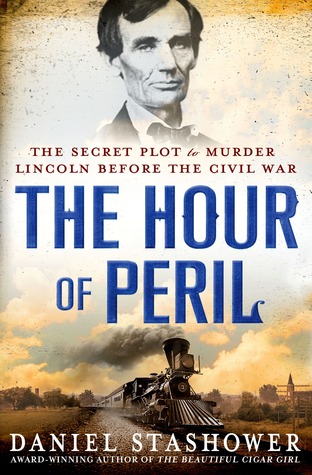
This nonfiction account of an assassination plot against President-elect Abraham Lincoln required extensive research as much was written about the plot at the time, but many of the primary source documents present conflicting perspectives. I don’t think the author of The Hour of Peril, Daniel Stashower, had any intention of creating a tome that parallels current events, but it is hard not to make comparisons as we watch history repeat itself.
The politics of the elite to gain money and power is certainly a theme as well as inciting ordinary people to take extra-legal actions. Good and bad, ethical and immoral, slave vs. free, states’ rights or federal control—they all play a role in the politics of that time.
The rights of men to live freely and the rights of states to determine their own laws clash as the Union begins to disintegrate. Lincoln’s position is that new territories being added must be free, but that he would not advocate changing the slavery laws as they currently existed in the various states in the Union. This position incited those who felt Lincoln went too far and those who decided he had not gone far enough. There were just too many people unwilling to compromise.
As Lincoln headed to Washington, he wanted to greet as many people as possible and was not concerned about his safety. When Allan Pinkerton, a detective with a reputation for being “fierce and incorruptible,” was hired to secure the rail lines the president would be traveling on through Maryland, he discovered that there was a plot to assassinate Lincoln. At that time the focus of his investigation changed. He used the same techniques he had used for years to infiltrate groups planning railway robberies, but his operatives had to intensify their efforts because the time frame for discovery was very short. Pinkerton devised an extremely complicated plot that was successful but did require some last minute changes.
A lot of The Hour of Peril was about Pinkerton and included some discussion of Kate Warne, the first female detective in the United States. Pinkerton requested absolute secrecy of the very few people who were informed of the plot and countermeasures. He was dismayed when he discovered that Lincoln and several people close to the president-elect had, in fact, disclosed information about the travel plans, possibly endangering Lincoln’s life.
The Hour of Peril is not a quick or easy read, but well-worth the time invested. There is much information about and insight into the Civil War era and politics in general to be gained.
Rating: 5/5
Category: History, Nonfiction
Publication: 2013—Minotaur Books
Memorable Lines:
Among those attempting to defuse the crisis was the recently defeated candidate, Stephen Douglas, who selflessly carried a message of unity to hostile audiences in the South, attempting to calm the secessionist fervor and broker a compromise.
He would have been wary of revealing too much in a letter, especially one sent to a politician. As Pinkerton had told Samuel Felton at the start of the operation, “on no conditions would I consider it safe for myself or my operatives were the fact of my operating known to any Politician—no matter of what school, or what position.”
As far as Pinkerton was concerned, there would be no future disclosures. He had sworn the main participants to secrecy, and arranged matters so that the minor players had no sense of the larger plan. In many cases, even those directly involved in carrying out crucial elements of the detective’s design were ignorant of the roles they had played. Once again, secrecy had been the lever of his success.
The Trouble with Reading (Part II)—Reading to Learn
I recently had some eye-opening experiences regarding reading that I want to share. I love to read, have a reading specialist credential, and am a retired educator of 34 years. I also love to learn, and I did just that this week in reading two different books. I gained a new appreciation of the struggles some readers have with reading. If you want to read Part I of The Trouble with Reading which deals with dyslexia, click here.

The other book I read that was a learning experience was a printed copy of a nonfiction book I purchased to read with my book club. It is a well-researched book that focuses on a part of my country’s history. Reading it was a great reminder of the differences in reading a fiction and a nonfiction work. “Work” is an appropriate word here, because of the extensive research effort of the author and the extra time and focus the reader needs to devote to reading the book. There are so many historical figures that play into the book along with settings of note. It is hard, but important, to keep track of them all. It is a very good and well written book and appropriate for book club discussion. I had to schedule reading it into my day so that I finished it by the time of our meeting. In other words, reading it was a chore; to do it justice, I took extensive notes and found the process tiring. Also, it did not focus on a subject that is my primary strength which makes the book intrinsically less interesting and more difficult to read. I brought less background knowledge to the table.
The book was not entertaining, but I am glad I read it. Although nonfiction varies widely, in general it is not my favorite genre. As all teachers should know, I was reminded that nonfiction, which is the foundation of most subject area texts, requires a different set of reading skills and those should be explicitly taught after students master the general reading process. Early elementary focuses on “learning to read” and grades above that should focus on “reading to learn.” Some middle and high school teachers believe that students leave elementary school with the skills they need for content area reading. This knowledge, however, is developmental; what is needed to process a middle grade text is not sufficient for comprehension of a high school text. Unfortunately, many students do not leave elementary school reading on grade level, making the gap even larger. To some degree, all teachers must be reading teachers.
Tomboy Bride: One Woman’s Personal Account of Life in the Mining Camps of the West
Tomboy Bride
by Harriet Fish Backus
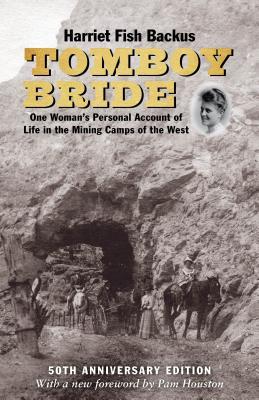
If you ever thought of memoirs as a boring genre, I encourage you to sample Harriet Fish Backus’ Tomboy Bride. It is anything but boring. “Tomboy” refers to the Tomboy Mine, located above Telluride, Colorado, and “bride” is the author Harriet who moved there in 1906 immediately after her wedding at the age of twenty with her mining engineer husband George Backus. The first half of the book describes the difficulties and adventures inherent in living in an almost impossible to reach area with only the barest necessities. Harriet was a city girl and had a big learning curve in basic survival skills in the remote, dangerous, high altitude mining camp—everything from baking at over 11,500 feet to how to wade in long skirts in the snow to an outhouse located quite a distance from the home.
The second half of the book relates a series of moves to various mines along with changes in mining fortunes. Not every mine was successful, and the country’s economic twists affected the mines as well. Their adventures took the couple to Britannia Beach, British Columbia; Elk City, Idaho; and Leadville, Colorado. They had several children and lived through World War I and the Great Depression. George’s mechanical ingenuity landed him a job in Oakland, California, which he held for 37 years, but Harriet’s fondest memories are not the ones of ease in the city, but of struggles, love, and friendship in the mountains.
Mining was a difficult and dangerous business. This was true even for college educated mining engineers who suffered from the cold, long hours and perils along with the miners. Mortality rates were high because of the distance to health care. Transportation was slow and uncomfortable along the treacherous snow packed mountain trails. Water and coal had to be carried by hand from dropping off points up slippery, snow-covered slopes to their homes by the residents. The only fruits and vegetables available were canned and brought up monthly on burros. Because of the isolation, residents tended to work as a community. As long as Harriet and George were together, they were happy despite, and sometimes perhaps because of, their shared hardships.
Rating: 5/5
Category: Memoir, History
Notes: 1. I recommend the 50th anniversary edition of Tomboy Bride because it includes many photographs that bring the story to life.
2. There is a timeline at the end of the book.
3. This is a great book for a book club to read as it is ripe with topics for discussion. Tomboy Bride includes thought provoking questions at the end of the book which our book club found quite helpful.
Publication: 2019—West Margin Press
First publication—1977
Memorable Lines:
On reaching his destination the rider tied the reins to the pommel of the saddle and turned the horse loose. Regardless of the distance, knowing the trails far better than most riders, the horse quietly and surely returned to the nearest stable, at the Tomboy or in Telluride.
Crash! What sounded like pounds of glass breaking into bits was only an old cigar box filled with nails that had fallen from a shelf. Even the rats laid low that night, at least we did not hear them. My chattering teeth kept time to the rattling of the old stovepipe fastened by wires to the rafters. The denim “carpet” rose and fell like ocean billows and wind crackled the newspaper padding.
…at the end of a month we both felt inwardly the call of the wild. Somehow, after the serenity of our mountains, the city seemed tawdry and confusing.
Little Heathens–Hard Times and High Spirits on an Iowa Farm During the Great Depression
Little Heathens
by Mildred Armstrong Kalish
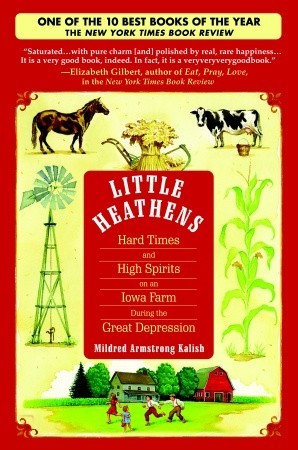
There are a variety of tales and anecdotes about life during the Great Depression, yet many who survived don’t want to talk about it. The experiences of those in the cities were quite different from those living in the country. Regardless of location, however, all but the very wealthy suffered and their lives and perspectives were formed or altered by their experiences.
In Little Heathens, Mildred Armstrong Kalish shares what life was like for herself and her extended family. It is somewhat difficult to distinguish between the normal trials of endless farm work and the efforts needed to reuse and repurpose items because of deprivation of money and resources. “Thrown away” was a foreign concept during this time and thrift was the champion of the day. Kalish shares the many saving and “make-do” tricks that were common during the Depression and some that were uncommon. Many of those have fallen out of use, but are still handy to know and good examples of the resourcefulness of our predecessors.
Kalish lays her memories out forthrightly, not concealing or varnishing the stories. Many are humorous and several are gasp-worth. Children worked alongside adults learning by example and experience. Farm life required the whole family to pitch in. Chores were divided by age and gender, but not strictly. For example, Monday Wash Day was a very physical, all-day task for which preparations began on Sunday night. Children and adults wore the same set of clothes all week, and everyone participated in wash day. The need for everyone to work together is apparent in the book over and over again.
Kalish addresses the many aspects of life at that time as seen through the eyes of a child who was an active participant. She has an incredible memory for detail right down to how to catch, kill, and prepare a snapping turtle for consumption. She also discusses the social aspects of community inside and outside the family unit. Her life was unique in that she lived in town during the winter and on a farm during the growing season because of her family situation. Her life was very different in each place, but the expectations of a good work ethic and attitude never changed.
The author viewed the hardships of her childhood as instrumental in her many achievements later in life. From success as a “hired girl” to working her way through college to her happy marriage and career as a professor, Kalish gives credit to her family, especially her mother: “Mama’s ability to meet challenges head-on and with a positive attitude created in us kids a sense of confidence that there was a way to solve every problem—just find it.” Although her life was hard, it was not unhappy and she prizes the memories of her past. I enjoyed her writing style, learned from the information she shared, and relived some of my past as I have memories of my Depression-era parents handing down wise sayings and thrifty values. Well done, Mildred Armstrong Kalish!
Rating: 5/5
Category: Memoir
Publication: May 29, 2007—Random House (Bantam)
Memorable Lines:
Mama, Aunt Hazel, Uncle Ernest, Grandma, and Grandpa had a real gift for integrating us children into farm life. Working alongside us, they taught us how to perform the chores and execute the obligations that make a family and a farm work.
An Old Maid (that’s what we called unmarried women in those days) was asked why she didn’t try to find a husband. Her reply was, “I have a dog that growls, a chimney that smokes, a parrot that swears, and a cat that stays out all night. Why do I need a husband?”
After our chores and household duties were done we were given “permission” to read. In other words, our elders positioned reading as a privilege—a much sought-after prize, granted only to those goodhardworkers who earned it. How clever of them.
She kept all of her needles stuck into a red felt pincushion which she had owned since just before God.
Happy 4th of July!
Whether you call it Old Glory, the Stars and Stripes, or the Red, White, and Blue, our flag represents the United States of America. The Declaration of Independence, our founding document, was signed on July 4, 1776.
Here are some patriotic displays I saw this week walking around a subdivision in Oklahoma.








 education pathways