
Home » Historical Fiction (Page 6)
Category Archives: Historical Fiction
The Healing of Natalie Curtis–destroying a culture by forbidding its music
The Healing of Natalie Curtis
by Jane Kirkpatrick

The Healing of Natalie Curtis is historical fiction based on a period in the life of Natalie Curtis, a classically trained singer and pianist during a time when women in music had few lifetime choices—remain single achieving success as a performer or marry and teach. After suffering psychological trauma which also affected her physically, her brother George, who had been cowboying in the Southwest, invited her to accompany him because living there had done wonders for his health.
Natalie embarked on a developing, many year journey to record the music and dances of many American Indian tribes. She was afraid their voices would be forever lost as the U.S. government had imposed a Code of Offenses forbidding native singing, dancing, and other customs in its desire to assimilate the “savages” into a white culture. If they broke the Code, their food rations were cut and penitentiary was a possibility. Horrified by the treatment of the Indians, she set about to respectfully learn their stories and compile them along with their music in a book. To do this meant she had to gain legal access which she obtained by letters petitioning President Theodore Roosevelt and finally getting personal appointments with him.
Political change was slow and Natalie had roadblocks along the way. Her family wanted her at home, and she needed benefactors to fund her project. She made many friends, both Anglo and Indian along the way. She and her brother spent many nights camping, and she had to learn to ride horses western style. Her wardrobe changed from that of a proper lady in the early 1900’s to outrageous split skirts for riding and plain dresses adorned with native jewelry.
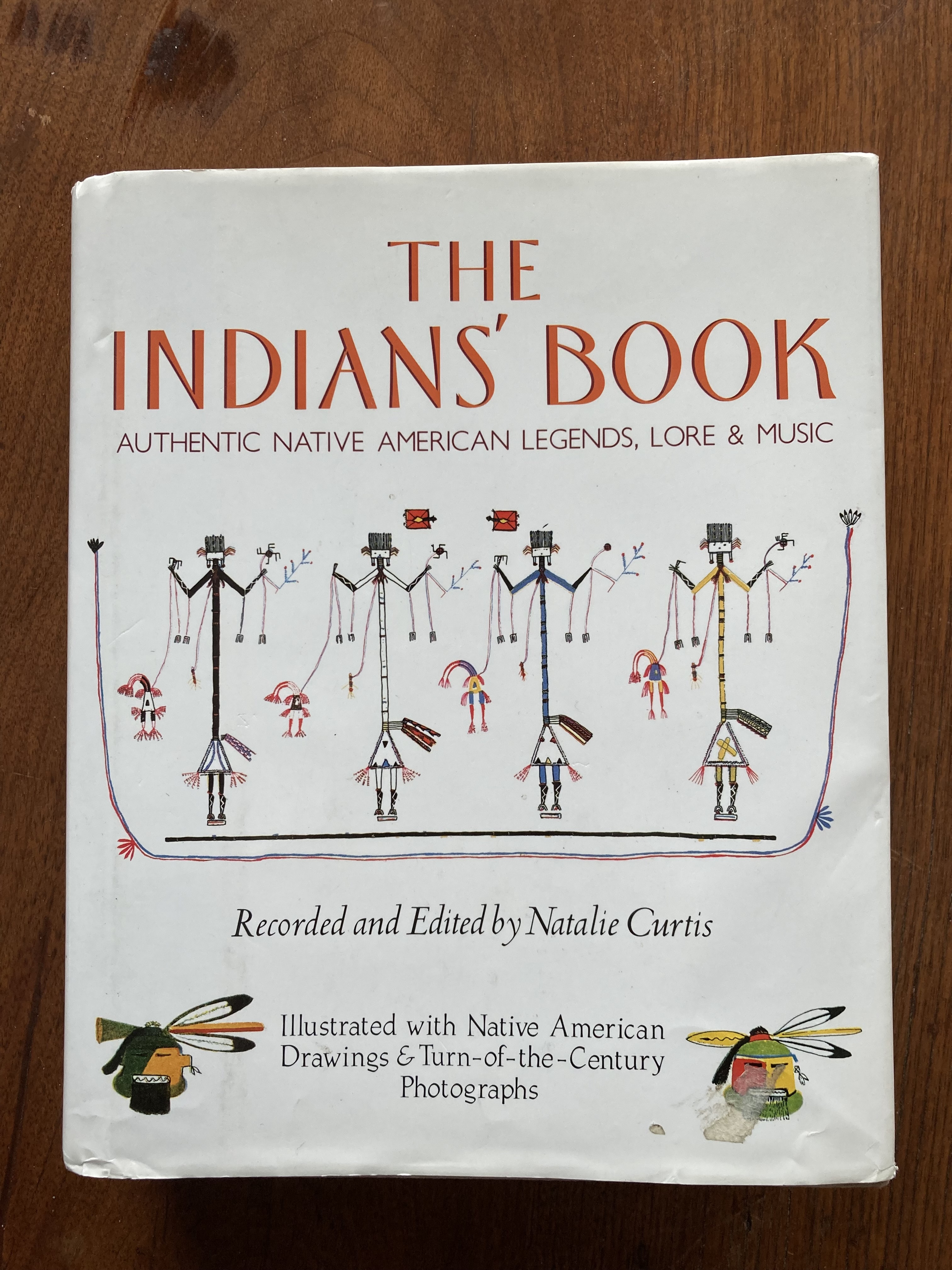
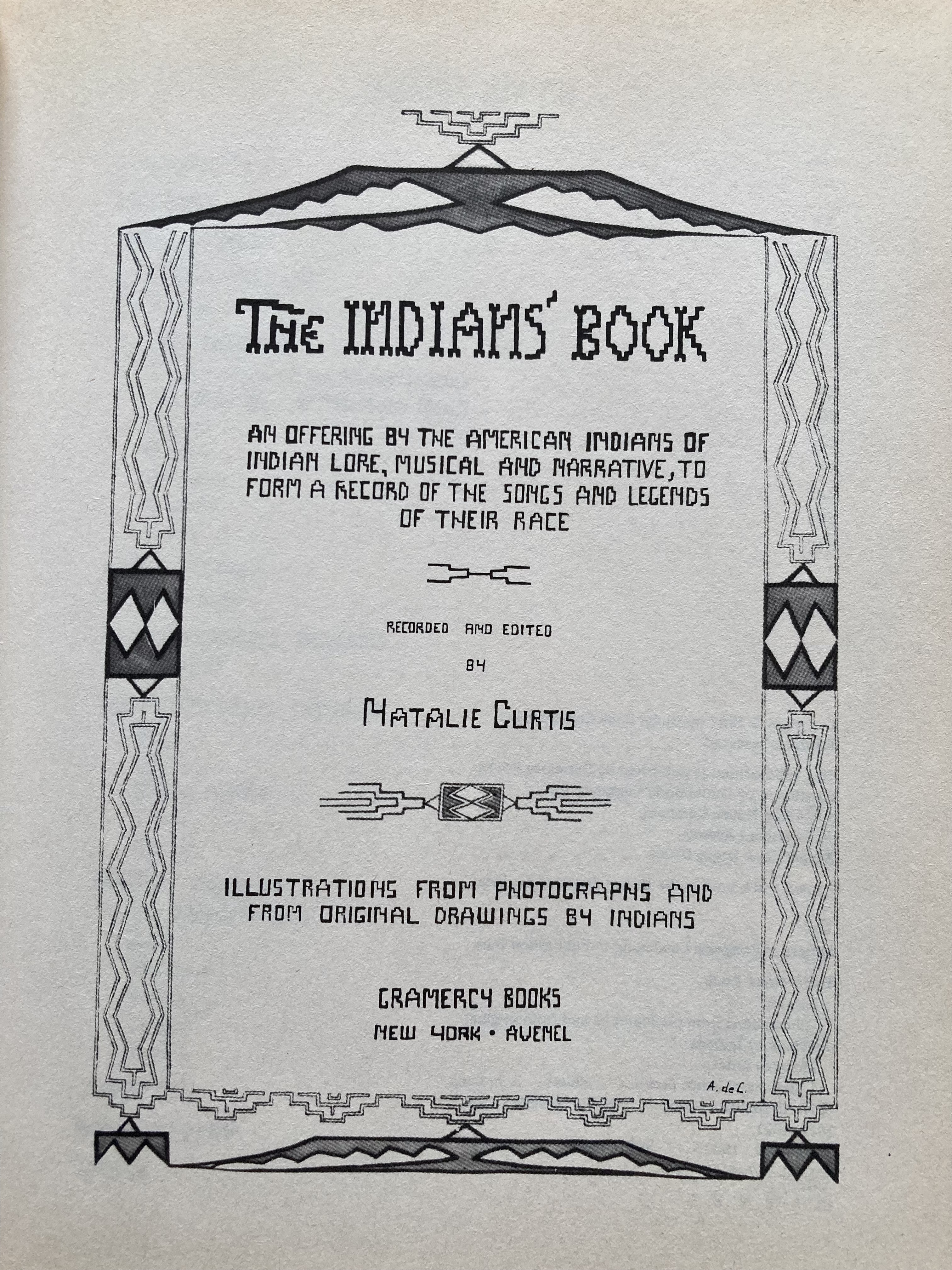
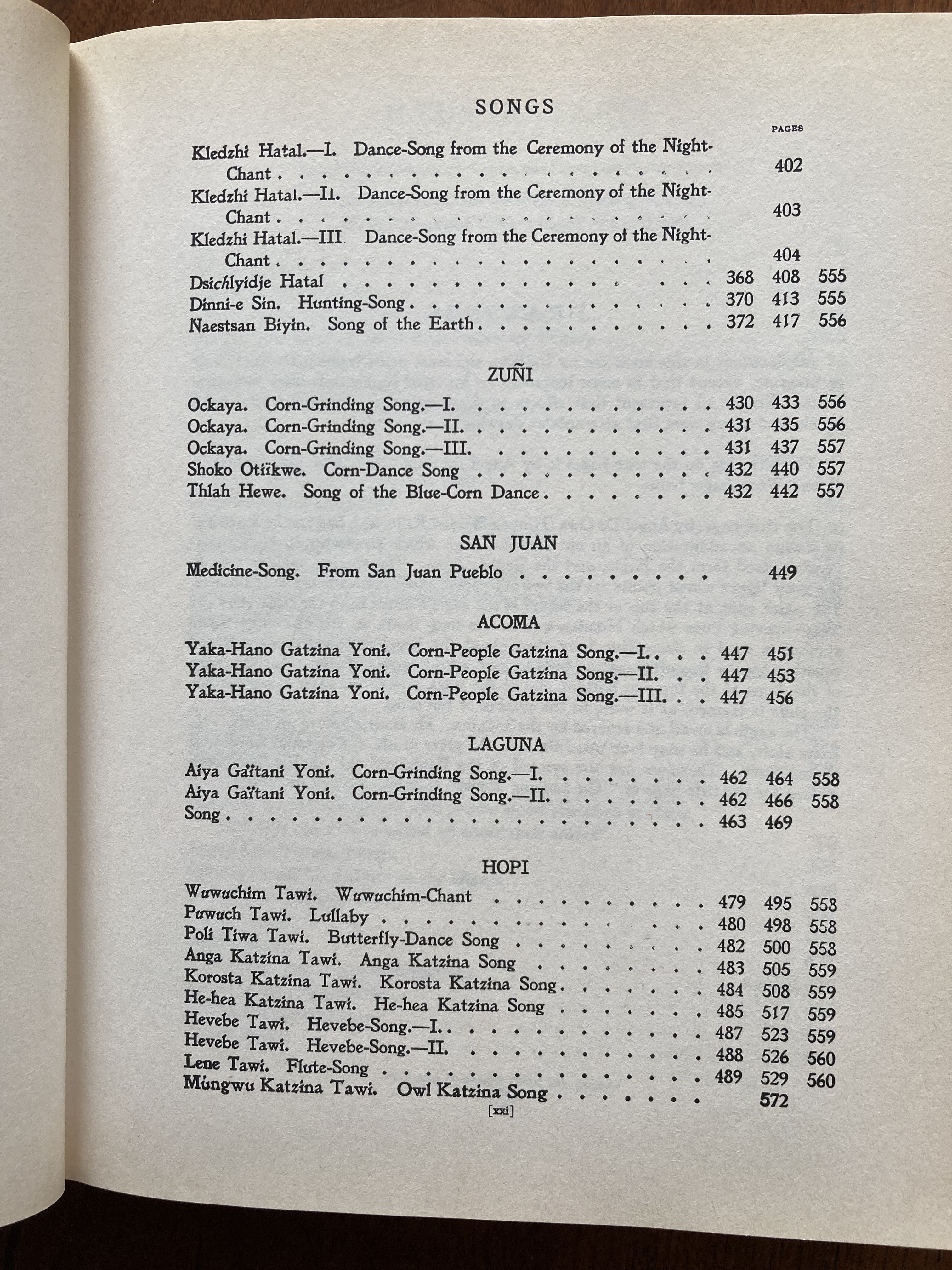
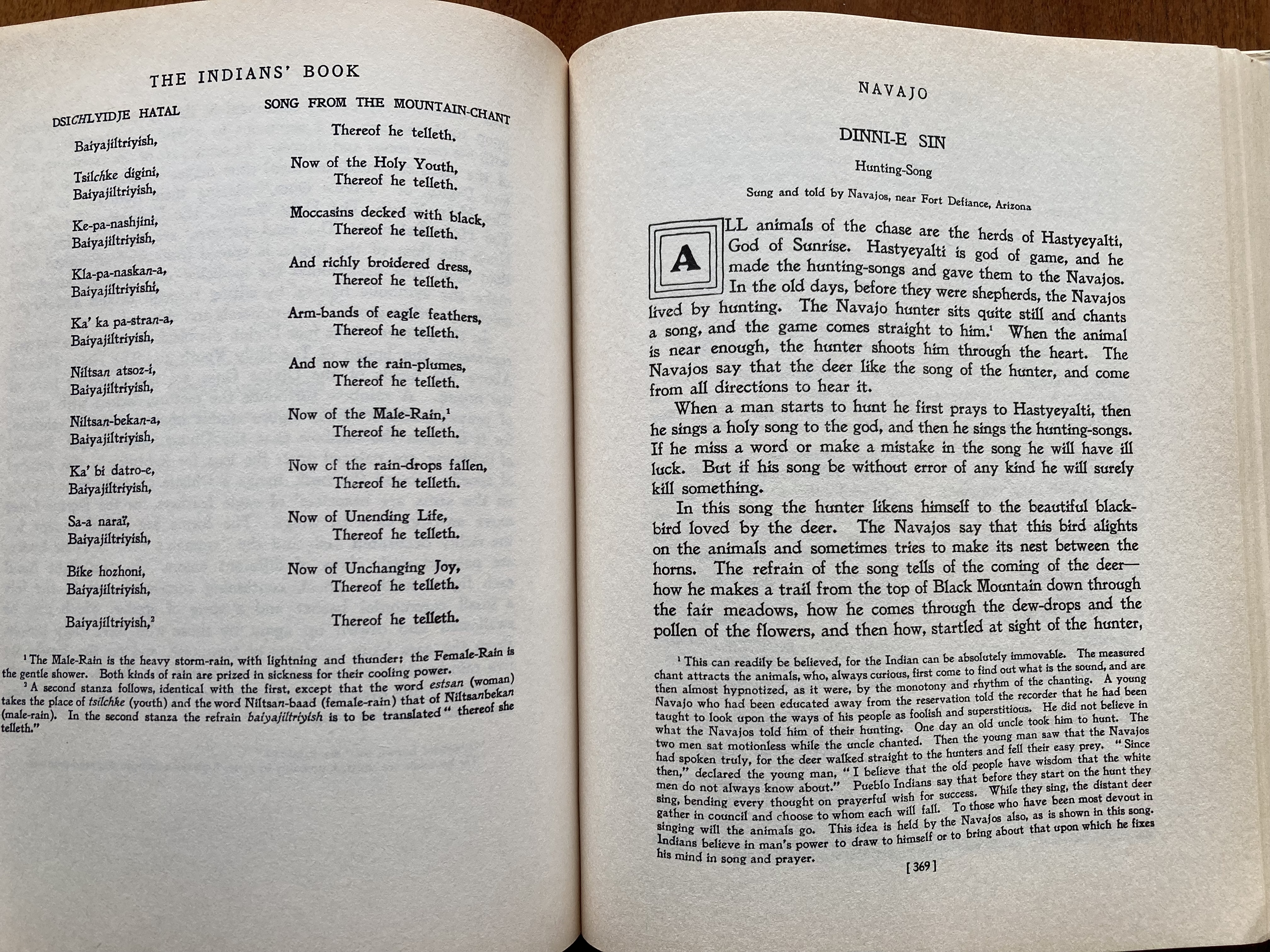
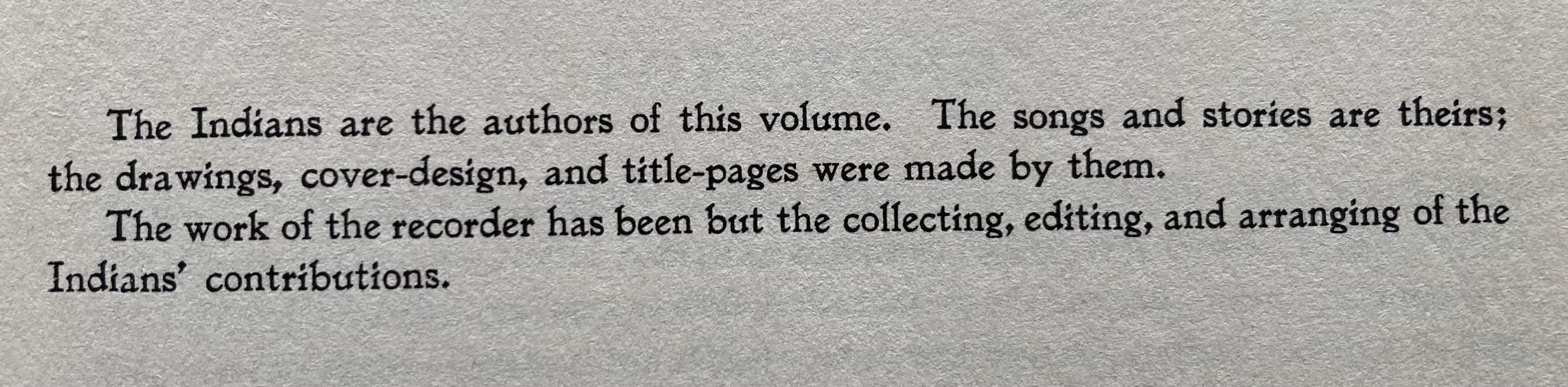
Initially I was puzzled by Natalie’s illness and her abrupt abandonment of the music world for five years, but the causes were revealed as the story progressed. This book is as much about Natalie’s struggle to change attitudes toward the Indians and consequently treatment of them as about the music itself. She threw herself into this project with the same enthusiasm and drive that she had exerted in developing her music career. The book is very factually based except for conversations which had to be imagined but were based on the context of her known travels and meetings. By the time I finished reading The Healing of Natalie Curtis, I had ordered a copy of the book Natalie put together from her research, The Indians’ Book, which was a major resource for author Jane Kirkpatrick. My desire was to see the finished product of almost 600 pages. Wanting to make it clear that the book truly belonged to the Indians, she called herself the editor rather than the author.
I received a complimentary copy of this book in exchange for an honest review. Opinions expressed in this review are completely my own.
Rating: 4/5
Category: Historical Fiction
Notes: 1. In keeping with the times, Natalie Curtis, Jane Kirkpatrick, and I have used the designation “Indians” for the indigenous people living in the U.S. The various tribes all had names for themselves in their own languages which often translated as “The People.”
2. The end of the book contains: Suggested Additional Reading, Book Group Questions, and Author’s Notes that address cultural issues and the factual basis for the book.
Publication: September 7, 2021—Revell (Baker Publishing)
Memorable Lines:
This dismissiveness had happened before, mostly with professional men who saw any independent unmarried woman as lacking brains and capable of nothing more than sitting at Daddy’s table and taking nourishment from others.
“What I don’t understand,” Natalie said, “is how the Hopi are punished for practicing their religious customs, and those same songs and dances are advertised to bring people to see them. Burton approves because the railroad wants the business?”
This was what she was called to do, to save these songs and more, to give these good people hope that their way of life would not be lost to distant winds.
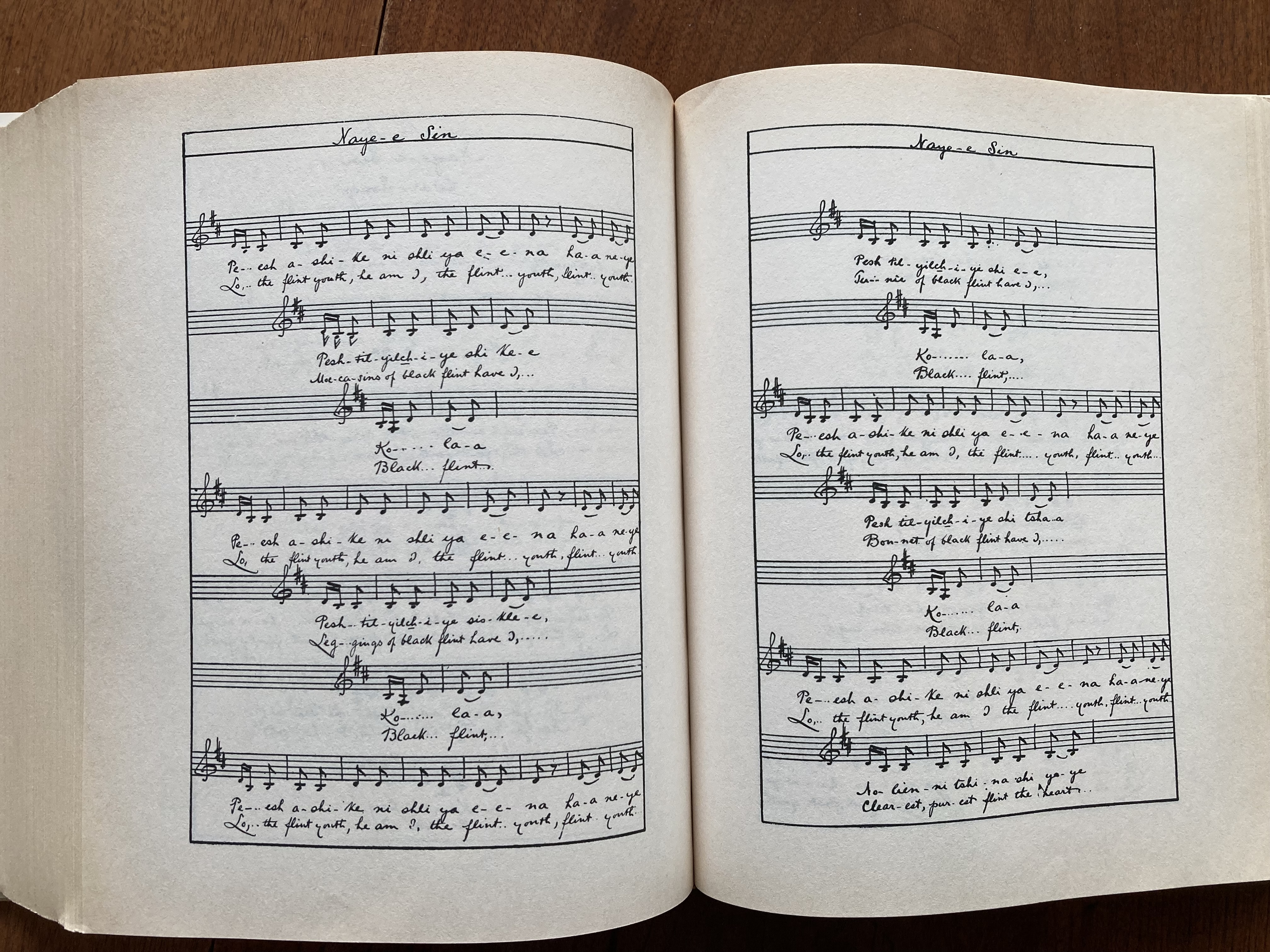
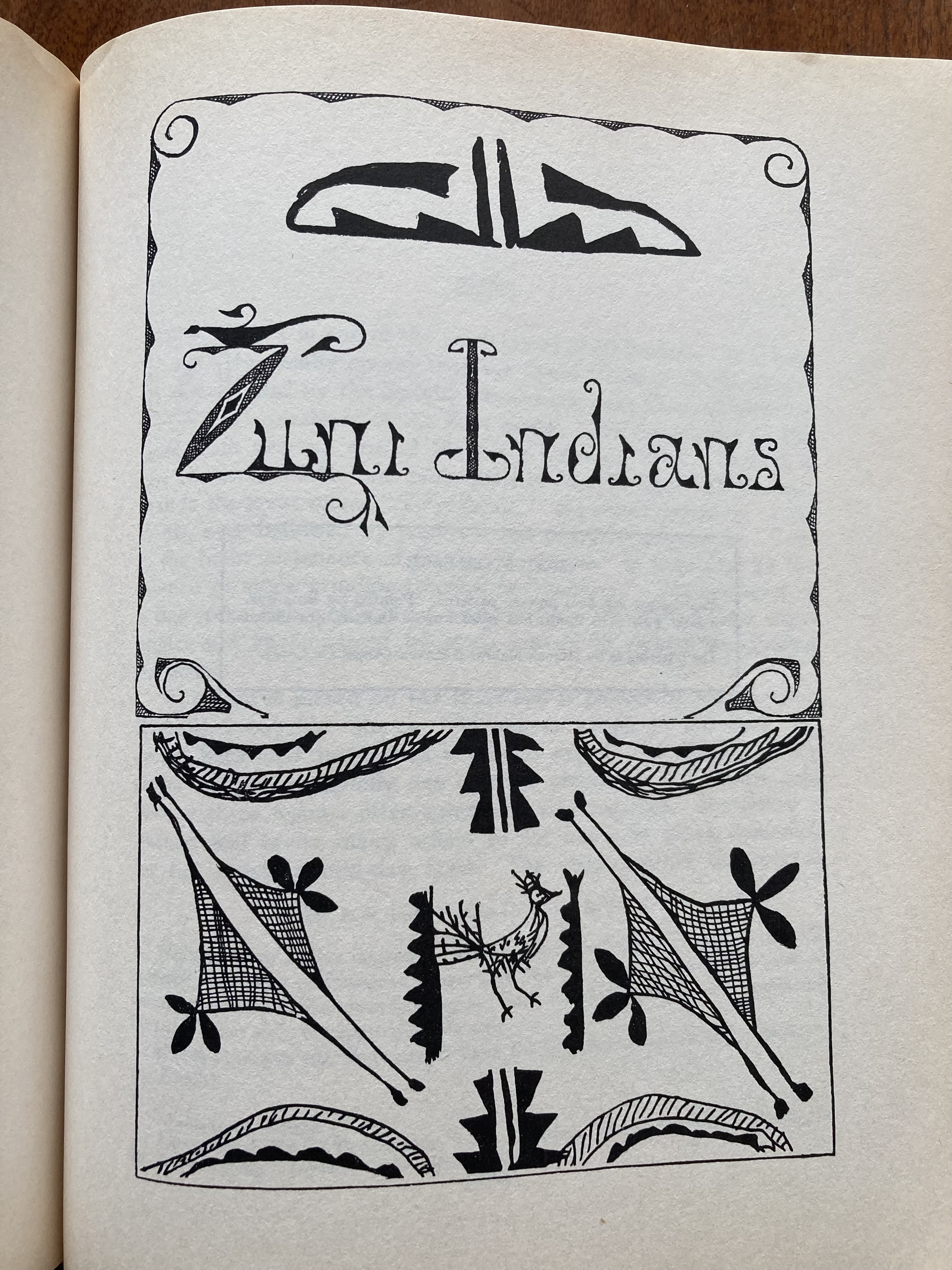
PHOTOGRAPHS FROM
THE INDIANS’ BOOK:
Pride and Prejudice–courtship in the early 1800’s
Pride and Prejudice
by Jane Austen
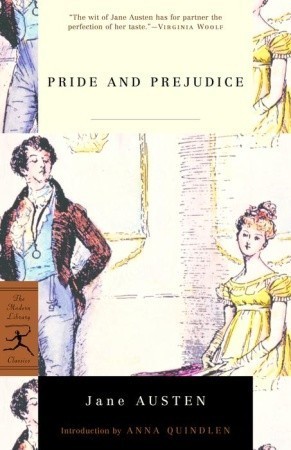
In preparation for reading Pride, a modern day version of Jane Austen’s Pride and Prejudice, with my book club, I decided to reread the original. I knew I could watch a video of the story, but I decided to aim for authenticity and read the actual book. I was glad I did as there is so much to be appreciated in Austen’s words, style, and depiction of characters. In retrospect, I believe my younger self had seen one of the several videos, but had never actually read the novel. I would still like to view one of the movies for an opportunity to better envision the costumes and settings of this period piece, but there is much value to be gained from the reading experience.
Pride and Prejudice is a romance particularly focusing on Jane and Elizabeth Bennet as they navigate the difficult waters of courtship in the early 1800’s in England. Their courses are made more murky by the family’s financial and social status. They are not part of the old monied class that is full of prejudice, but they have standards and they and their suitors are driven at least in part by pride. From a twenty-first century viewpoint, the courtship and rules of engagement seem stilted, but the reader can see in a younger sister’s impetuous disregard for the rules and assumptions of the time, that there are real societal and personal consequences for ignoring the standards of any time period.
I enjoyed the book which is as much about social issues as it is a romance. Pride and prejudice are, of course, themes throughout the book. Most of the characters of the novel grow and develop through the events of the story. Some remain stuck in their ways of thinking, and those continue to be persons the reader won’t like. You may find yourself rereading Pride and Prejudice for love of the characters, the joy of the language, or the journey towards a known ending—happy for some, less so for others.
Rating: 5/5
Notes: Edited by R. W. Chapman. Distributed by Gutenberg Press
Category: General Fiction, Romance
Publication: 1813—T. Egerton Military Library, Whitehall
Memorable Lines:
“Affectation of candor is common enough;—one meets it every where. But to be candid without ostentation or design—to take the good of every body’s character and make it still better, and say nothing of the bad—belongs to you alone.”
Without thinking highly either of men or of matrimony, marriage had always been her object; it was the only honorable provision for well-educated young women of small fortune, and however uncertain of giving happiness, must be their pleasantest preservative from want. This preservative she had now obtained; and at the age of twenty-seven, without having ever been handsome, she felt all the good luck of it.
“You mean to frighten me, Mr. Darcy, by coming in all this state to hear me? But I will not be alarmed though your sister does play so well. There is a stubbornness about me that never can bear to be frightened at the will of others. My courage always rises with every attempt to intimidate me.”
The Teacher of Warsaw–hope in the middle of despair
The Teacher of Warsaw
by Mario Escobar
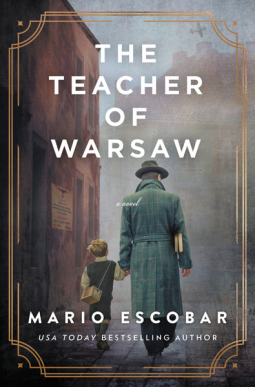
When a book leaves an impact on your soul after the covers are closed, you know you have read a treasure. I was a few chapters into The Teacher of Warsaw before I was captivated by Mario Escobar’s work of historical fiction. After I understood what this author with a master’s degree in Modern History had set out to share, I was repeatedly drawn back from my world into the sad and inspiring world of Janusz Korczak, a pediatrician and teacher with many talents who dedicated his life to the children in his orphanage. They suffered together as the Nazis made their lives and the lives of all Polish Jews a nightmare of starvation and deprivation. Thanks to Dr. Korczak and the dedicated group of tutors who worked alongside him, the children were given hope and taught to love even their enemies. Korczak was Jewish by heritage but had not been raised in a religious family. He admired and appreciated many things about the Jew Jesus and likened Him to the anticipated Messiah, but did not accept Him as the fulfillment of prophecies. Dr. Korczak described himself at various times as an atheist, an agnostic, and a seeker, but those around him would have been hard pressed to find a stronger, more sacrificial, more ethical, and more loving leader. In return the children loved him, and he was regarded with respect by all but the most evil of Nazis.
Dr. Korczak was encouraged by many, including Polish social worker Irena Sendler, to escape the Warsaw Ghetto and the extermination which was surely coming, but his answer was always the same: the children of the orphanage needed him and he would not abandon them. The Teacher of Warsaw is both horrifying and inspiring as it depicts the worst and the best of mankind and demonstrates the power of love.
I received a complimentary copy of this book in exchange for an honest review. Opinions expressed in this review are completely my own.
Rating: 5/5
Category: Historical Fiction
Notes: 1. Translated from Spanish by Gretchen Abernathy.
2. Includes two sections that discuss the historical basis of the story, a timeline of the Warsaw Ghetto, and discussion questions for the reader.
Publication: June 7, 2022—Harper Muse
Memorable Lines:
“Can you think what would’ve happened to the boy had we not been passing by? Everything happens for a reason. Even the greatest misfortunes can become the sweetest blessings.”
“We labor to give them back their hope: but we cannot give what we do not possess. Therefore, be full of hope this morning. May your joy overflow because you do what you do out of love and service for the weakest ones. And when negative thoughts come to steal your peace and joy, don’t let them make a nest in your minds. We can’t avoid those kinds of thoughts, but we can keep them from controlling us.”
I had two hundred children whom I loved and who loved me. I was undoubtedly the richest man in the Warsaw ghetto.
Murder Most Fair–grief
Murder Most Fair
by Anna Lee Huber

What is the best way to grieve? Murder Most Fair weaves that theme throughout a captivating mystery by Anna Lee Huber. This novel has its basis in the spy and undercover operations of the Great War (WWI). The espionage secrets of that period are held close by those involved because of the Official Secrets Act which binds them through honor and legalities. It is in this atmosphere that Verity Kent, a spy, and her husband Sidney Kent, a war hero also engaged in undercover work, pursue what appears to be the frivolous, carefree lifestyle of the young rich.
In reality, like so many of that period, Verity and Sidney are working through grief—for Verity, the personal loss of her beloved brother Rob and for both of them, the witnessing of many soldiers and civilians killed or maimed in the conflicts. The couple is also struggling to avoid the clutches of the evil Lord Ardmore in a different type of war fallout. Meanwhile, we get a first hand view of the hatred many in England felt for all Germans. Verity’s great-aunt Ilse manages to obtain legal entry to Great Britain along with her German maid. Ilse is but a shell of her former self after surviving the war in a country where even if you had money, there was nothing to buy. Malnutrition and starvation were rampant.
The mystery becomes deadly as it progresses. Sidney and Verity are asked to investigate on the side as the local law officer has never handled a murder case. Verity’s relationship with her family is highly stressed as she has not been home in five years, including for her brother’s funeral. Her absence was quite painful for her mother.
Huber’s descriptions are outstanding, evoking a visual and emotional picture. She places the reader in the middle of the setting along with the characters. Her plot is intricately crafted with threads that seem to go nowhere…until they do. This is a good historical novel with suspense to keep you turning pages.
I received a complimentary copy of this book in exchange for an honest review. Opinions expressed in this review are completely my own.
Rating: 5/5
Category: Historical Fiction, Mystery
Notes: #5 in the Verity Kent Mystery Series. I haven’t read all the books in this series, but Huber provides needed background information, so this book could be read as a standalone.
Publication: August 3, 2021—Kensington
Memorable Lines:
I wrapped my juniper-green woolen jumper tighter around me and breathed deeply of the air tinted with the smoke from the hearths burning inside, the earthy aroma of autumn decay, and a faint tinge of saltiness from the sea a short distance away. The breeze sawed gently through the trees overhead, rustling the leaves like castanets…
“Well, the Jerries weren’t happy to sit in their mudholes and cesspits any more than we were. We were both just cogs caught up in the higher-ups’ wheels of madness.”
Most of the war dead, of course, had not been repatriated, instead being buried in France, Belgium, Gallipoli, Palestine, and other far-flung places on the globe. But nonetheless I could feel their absence like the missing notes of a song or the lost verse of a poem.
The Guernsey Literary and Potato Peel Pie Society–comeback from World War II
The Guernsey Literary and Potato Peel Pie Society
by Mary Ann Shaffer and Annie Barrows
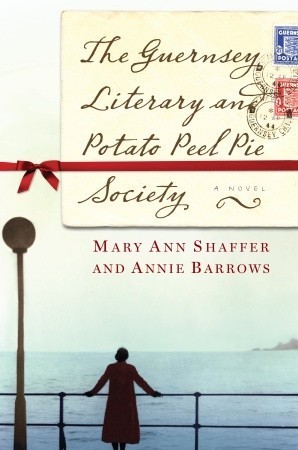
I approach epistolary fiction with a bit of trepidation. Can a story really be told effectively through a series of letters? In the case of the unusually named The Guernsey Literary and Potato Peel Pie Society, that is probably the best way to relate the events of the Nazi occupation of Guernsey and to present the characters and how the war affected them.
Juliet Ashton is a budding author with one successful book based on a column she wrote. Her publisher, Sidney, and his younger sister, Sophie, are friends of Juliet; their letters are part of the correspondence that moves the story along. The heart of this tale begins when a letter finds its way to Juliet in London from Guernsey where Dawsey Adams has bought a book by Charles Lamb with her name and address. Dawsey seeks more books by Lamb as well as information about him. Their correspondence leads to a discussion of the local book club which began during the Nazi Occupation.
Most of the book club characters are quite likable and work together because of, or in spite of, their idiosyncrasies and the hardships they have endured. They welcome the opportunity to share their stories with Juliet for potential publication. They are quite open to her personally as well. Juliet grows as a writer, her maternal instincts emerge, and she shows strength of character as she discovers what is important to her.
The Guernsey Literary and Potato Peel Pie Society is well-written with detailed settings and empathy for the characters. It is both a gentle and a strong book and gives a fair depiction of Nazi soldiers, most of whom suffer deprivation in Guernsey along with the locals. Some Nazis are depicted as brutal and a few as humane. Some citizens are supportive of each other and a few are treacherous. The accounts also included Todt slaves, brought in by the Germans. They suffer the most in this book. The Guernsey Literary and Potato Peel Pie Society has deservedly caused a lot of buzz among readers and has been made into a movie.
Rating: 5/5
Category: Historical Fiction
Publication: July 29, 2008—Dial Press
Memorable Lines:
I turned to a man sitting against a fence nearby and called out “We’re saved! It’s the British!” Then I saw he was dead. He had only missed it by minutes. I sat down in the mud and sobbed as though he’d been my best friend.
All those people I’ve come to know and even love a little, waiting to see—me. And I, without any paper to hide behind….I have become better at writing than living…On the page, I’m perfectly charming, but that’s just a trick I learned. It has nothing to do with me.
Dawsey was seeing to my bags and making sure that Kit didn’t fall off the pier and generally making himself useful. I began to see that this is what he does—and that everyone depends upon him to do it.
I Capture the Castle–class structure in mid-20th century England
I Capture the Castle
by Dodie Smith
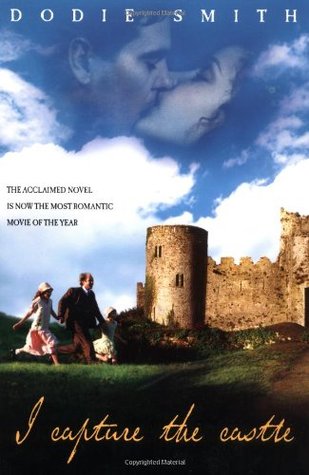
To label I Capture the Castle as a “coming of age” story is true, but the novel is so much more. It is related in her journal by Cassandra who lives in poverty under the leaky roof of a crumbling castle. Her father Mortmain is a writer with one successful book to his credit before he hit a writing desert. He secured a forty-year lease on the castle on a whim. The other residents are his son, another daughter, a boy taken in when his servant mother passed, and Topaz, the children’s stepmother. All in the family realize that the only way out of their financial straits is for at least one of the girls to marry into a rich family.
Author Dodie Smith has gifted us with a book full of nonconventional characters, a beautiful romantic background, and moral dilemmas. The plot begins with touches reminiscent of Pride and Prejudice but deviates fairly quickly. There is a similar theme of class differences, but without Austen’s use of satire. Two of the potential romantic interests grew up in America, one in the East and one in the West. Their backgrounds add another layer of social and cultural differences. Cassandra’s family is caught in the middle. They clearly had money in the past, but they have sold off most of their belongings and are reduced to very meager meals and one or two threadbare outfits per person. They have to be very creative to be acceptable in the social milieu to which they aspire.
I Capture the Castle has the depth necessary for a book to stand the test of time and appeal to a wide audience. It includes topics like women’s roles, art and sexuality, depression, literary criticism, and the laws of inheritance in Great Britain. While it addresses these issues, it remains an interesting and well-told tale with an ending that does not tie everything up neatly. Instead, it gives the reader the opportunity to speculate on the characters’ future decisions and actions which is a good way for this novel to conclude.
Rating: 5/5
Category: Romance, General Fiction
Notes: 1. There are discussion questions at the end.
2. The book has been made into a movie.
Publication: 1948—St. Martin’s Press
Memorable Lines:
I am writing this journal partly to practice my newly acquired speed-writing and partly to teach myself how to write a novel—I intend to capture all our characters and put in conversations. It ought to be good for my style to dash along without much thought, as up to now my stories have been very stiff and self-conscious.
The taxi drew up at a wonderful shop—the sort of shop I would never dare to walk through without a reason. We went in by way of the glove and stocking department, but there were things from other departments just dotted about; bottles of scent and a little glass tree with cherries on it and a piece of white branched coral on a sea-green chiffon scarf. Oh, it was an artful place—it must make people who have money want to spend it madly!
In the end, Topaz got Stephen to take the hen-house door off its hinges and make some rough trestles to put it on, and we pushed it close to the window-seat, which saved us three chairs. We used the grey brocade curtains from the hall as a table-cloth—they looked magnificent though the join showed a bit and they got in the way of our feet. All our silver and good china and glass went long ago, but the Vicar lent us his, including his silver candelabra.
The Warsaw Orphan–survival in the Ghetto
The Warsaw Orphan
by Kelly Rimmer
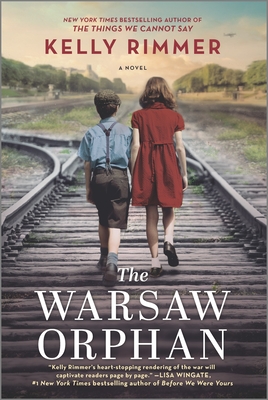
World War II is a popular subject for historical fiction. There are so many countries involved along with a variety of religions and philosophies. Lots of major political figures vie for power. Lives are turned upside down, families destroyed, and cultural icons demolished. In the midst of this upheaval, the citizens of Poland find themselves in a tug of war between Nazi Germany and the Red Army of the Soviet Union.
Roman, raised Catholic, is part Jewish. As a teenager he feels compelled to keep his Jewish family safe and later to fight from the Warsaw Ghetto with the Resistance for Poland’s freedom. Emilia (known as Elzbieta on her false identity papers) finds a way to work daily in the Ghetto under horrible conditions to help the people there who are overcrowded and sick from diseases and malnutrition. Their paths cross, and Roman and Emilia begin a friendship that lasts across the years.
In The Warsaw Orphan, Kelly Rimmer creates three dimensional characters who change and mature as a result of both growing up and experiencing the dramatic events that the war brings into their lives. They both see and endure things no one should have to—especially not teenagers. There are many characters of note and none of them see life as black and white. Many events take place in the grey area of life where one’s values and necessities do not line up perfectly. Some of the characters are Christian, some are Jewish, and others are atheists. Some are moral, decent people while others are torturing murderers.
The plot is told alternately from Roman’s and Emilia’s points of view. This is an effective way of narrating this story as it takes us on the personal journey each has to endure. There are decisions the characters have to make that affect others, not just themselves. The plot leads the reader through the many emotions that engulf the characters: grief, fear, shame, guilt, revenge. There are also moments of kindness, love, protectiveness, and generosity.
I thought The Warsaw Orphan was good, but the final fourth of the book was both surprising and riveting. You can’t expect a book about WWII to be filled with happiness and light, but I was amazed at Rimmer’s creative abilities to put her characters in desperate situations and then resolve them in a hopeful and rational way.
I received a complimentary copy of this book in exchange for an honest review. Opinions expressed in this review are completely my own.
Rating: 5/5
Category: Historical Fiction, General Fiction
Publication: June 1, 2021—Harlequin (Graydon House)
Memorable Lines:
Bystanders have allowed themselves to be convinced that the Jews are not like us, and as soon as you convince someone that a group of people is not human, they will allow you to treat them as badly as you wish.
Those agonizing weeks during the Uprising confirmed that art is not always for the viewer. Sometimes the very act of creating can mean salvation for the artist.
As punishment for our decision to rebel, our homes, our libraries, our monuments and our infrastructure would be reduced to dust. It wasn’t enough that they had taken our people and our homes—they were going to take what was left of our culture.
The Woman with the Blue Star–refuge in a sewer
The Woman with the Blue Star
by Pam Jenoff
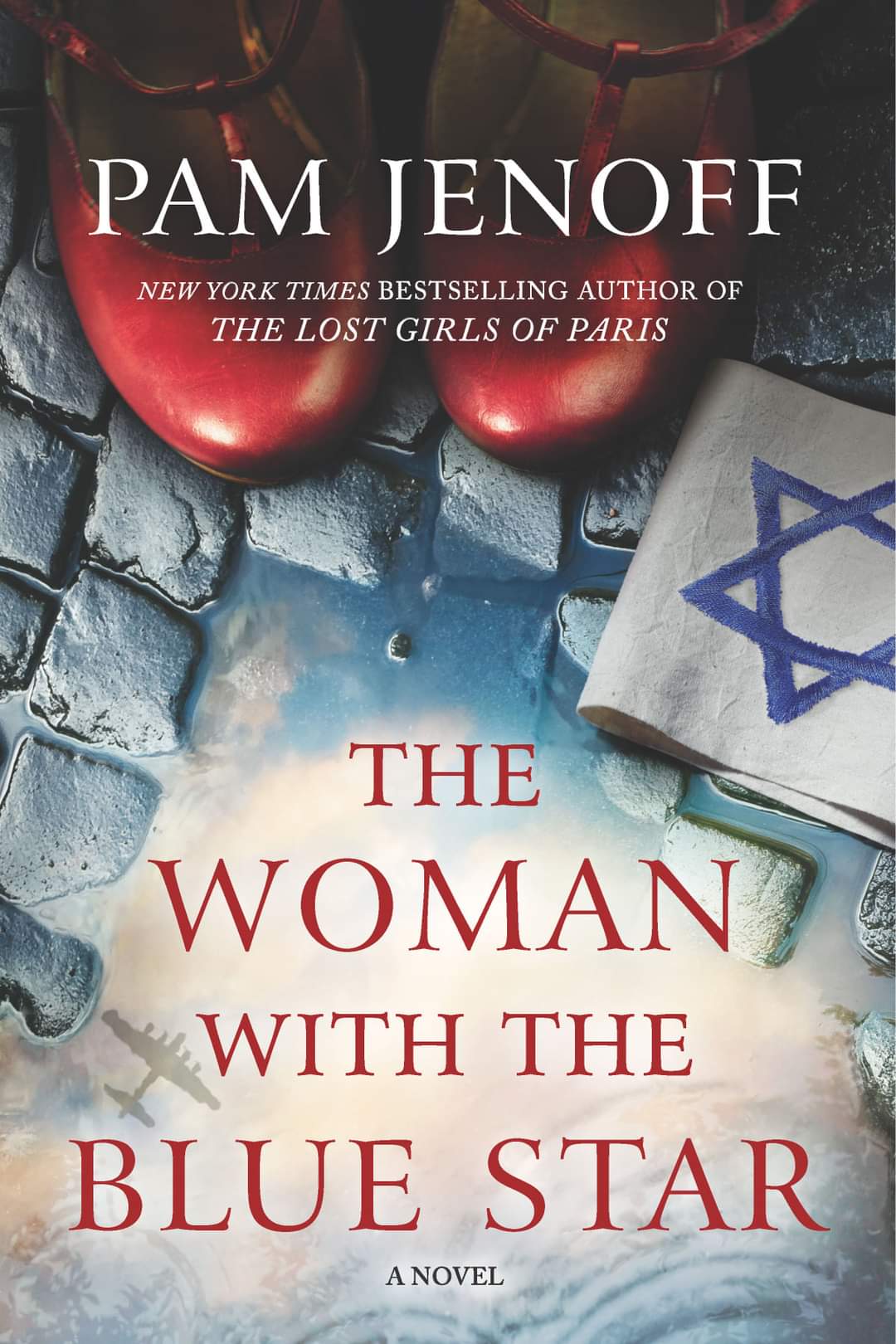
If you are an aficionado of World War II novels, you will probably like The Woman with the Blue Star, the story of Sadie and her family who are forced into a Polish ghetto and later avoid a roundup of Jews for deportation by fleeing to the dark stench and filth of the sewers. Their survival depends on the mercy of the sewer worker who leads them there and provides them with what food could be had in Krakow in 1942. The Germans leave little for the local population and ration cards are required.
Sadie’s path crosses with Ella’s at a chance glance down through a sewer grate. Ella lives with her stepmother who maintains a fairly good standard of living by acting as a mistress to various German officers.
The author describes in detail both the disgustingly putrid conditions for the Jewish family in the sewer and the better, but still precarious, lives of the Polish citizens above ground. The characters and their reactions are generally believable. There are a number of dramatic twists in the story along with some romantic threads and a look at those involved in the Polish Home Army underground movement.
Most of the story seems realistic. I do wonder about the many occasions when Ella ventures out after the government imposed curfew, once even with Sadie above ground. Given the enormous threat of German soldiers and Polish police patrolling the streets, their adventures seem foolhardy and unlikely.
I love the epilogue which confirms something I suspected, but its revelation makes a great twist. Although it is difficult to read about the enormous hardships, this book is an important reminder of a piece of history we should never forget so we will not allow it to be repeated.
I received a complimentary copy of this book in exchange for an honest review. Opinions expressed in this review are completely my own.
Rating: 4/5
Category: Historical Fiction, Women’s Fiction
Publication: May 4, 2021—Harlequin
Memorable Lines:
We had almost nothing by the end; it had all been sold or left behind when we moved to the ghetto. Still, the idea that people could go through our property, that we had no right to anything of our own anymore, made me feel violated, less human.
Once I could not have imagined staying in the sewer for so long. But there was simply nowhere to go. The ghetto had been emptied, all of the Jews who lived there killed or taken to the camps. If we went onto the street, we would be shot on sight or arrested.
Saul talked on and on through his tears, telling stories of his brother, as if pressing the memories of his brother between pages to preserve like dry flowers.
Souvenirs from Kyiv–devastation of war
Souvenirs from Kyiv
by Chrystyna Lucyk-Berger
I want to believe Chrystyna Lucyk-Berger’s stories in Souvenirs from Kyiv are more fiction than history, but I know that is not true. She has researched and conducted interviews with survivors of World War II and its aftermath. She has compiled their memories into composite stories that share brutal truths about war. Her goal Is to “make it clear that conflict is not about two teams meeting on the battlefield—one called ‘good’ and one called ‘bad.’ There are no winners in this story.”
These tales are emotionally hard to read; I put aside the book several times to regroup. Because the author is Ukrainian-American, I expected the book would be slanted towards the Ukrainians. While they are certainly the focus, they are not depicted as guiltless. The barbarism of war is demonstrated in acts performed by Germany, Poland, the USSR, Ukraine, and the United Nations. “Sides” were not clear cut and people had to quickly change their nationalism based on necessity for survival.
In Ukraine’s War of Independence (1917-1921), a chant was popular:
Glory to Ukraine.
Glory to the heroes!
Death to the enemies.
It was revived in the 1940’s as a partisan group struggled to “ ‘purify’ Ukraine of Jews, of Poles, of Nazis, of Soviets.” The Organization of Ukrainian Nationalists (OUN) was founded after WW I. It fractured into two groups, each fiercely loyal to its leader. They expended energy which would have been better used in fighting their common enemy. That is an easy position to take from my safe twenty-first century armchair.
The author creates believable, fictional characters. Through them she makes real:
–the desperation of those in labor camps
–the hard work required just to survive each day
–the quick adjusting of priorities for those fleeing
–the raw, animalistic violence that emerged during the fight for survival—whether to get a place in a bomb shelter or to grasp a stale piece of bread.
There are also shining lights:
–parents sacrificing for children
–the kindness of a German officer leading a refuge family to safety during a bombing
–everyday citizens risking their lives by sharing their homes and what little food had been left for them by ravaging soldiers.
These are all stories that need to be told, but the tale goes further. When the dust of battle settles, what happens to the survivors? To what country will they claim allegiance? Even those captured by an army and put in uniform or forced into slave labor, can be blacklisted as traitors in their home country. There is the unimaginable prospect of labor camps once more. If these threats are not realized, the survivors still have to overcome physical and mental hurdles of reintegrating into a society, perhaps not the one of their birth. During and after the war, Ukraine Diaspora occurred in the U.S. and in Europe.
Although this book is historical fiction, I learned a lot about the strife between Ukraine and its neighbors. Conflict is not new in that area. The author made history come alive with characters caught up in a war not of their making. It is important to read the forward. The first story slowly immersed me into the time period. Then the rest of the book sped by quickly. This author has written other books, and I am interested in reading them as well. Although Souvenirs from Kyiv is about Ukraine, its theme, the devastation of war, has worldwide applications.
I would like to extend my thanks to NetGalley and to Bookouture for giving me the opportunity to read this book in exchange for an honest review.
Rating: 5/5
Category: Historical Fiction, General Fiction (Adult)
Notes: 1. A map of Ukraine is included.
2. The book ends with a letter from the author and also a valuable glossary. Some foreign language words are defined within the story, but the glossary is helpful for the other terms.
Publication: April 22, 2022—Bookouture
Memorable Lines:
I think of the Germans picking up and fleeing, the Red Army laying claim to the scorched land, and I know that one oppressor is no better than the next.
[Pretend death notification letter composed by an enlisted Ukrainian forced into the German army.] As we waited for our weapons to thaw, your son took a bullet. He did not die a hero. He did not kill many Red Army troops. He was shot, and others have died of TB, frozen to death, or have simply lost hope. You may stop sending blankets. They go to the officers, anyway. You could send clubs and knives, for we have been forced to turn into primitive cavemen. Our weapons are useless in this frozen land.
…if he has learned anything on this journey, it is this: he will give up everything—including his principles, including his painting, his life—to keep his family alive.
The Valet’s Secret–class barriers to love
The Valet’s Secret
by Josi S. Kilpack
When I started reading The Valet’s Secret, I realized it is a historical romance, not of the Jane Austen satirical variety, but one of romantic attraction thwarted by class differences. This is not my typical reading genre, and so it took a few chapters for me to get involved with the characters and their dilemmas. At that point I began to really care about the main characters.
Kenneth Winterton, while raised as a gentleman, had no expectations or training to be the future Earl of Brenton. When his cousin Edward dies suddenly, Kenneth is expected to prepare himself for his new role, including marrying someone from the local gentry. Thus begins round after round of entertainments to introduce him to suitable ladies. His heart has already been stolen by a chance encounter with Rebecca Parker, a widow living with an abusive, alcoholic father, helping him with his craft of silhouettes. Prior to her marriage, she had been “in service” as a maid. Kenneth and Rebecca are by status incompatible.
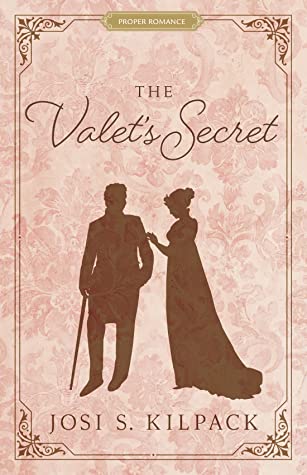
As the story moves towards its conclusion, the reader must certainly wonder how the couple could possibly marry. There are several dramatic twists; the actions of a few characters reveal their true motivations and scheming, and some even have a change of heart. The cover reflects the importance of silhouettes in the story, and the title reflects an early, light-hearted deception in the tale with serious consequences. By the end of The Valet’s Secret, I was convinced by this quick read that this genre and author deserve some more attention from me as I make future selections.
I would like to extend my thanks to NetGalley and to Shadow Mountain Publishing for giving me the opportunity to read this book in exchange for an honest review.
Rating: 4/5
Category: Romance
Publication: March 8, 2022—Shadow Mountain Publishing
Memorable Lines:
“The title precedes you into every room, every relationship, every decision. You do not think what is best for any individual—not even yourself—but what is best for the community affected by your status. Nothing comes above that responsibility. Nothing at all.”
…the thought that he would remain here, learning to live a life that was uncomfortable with a woman whom he did not know while waiting for an old man he loved to die, made him extremely sad.
How he hated this marriage mart he was hung within. So very much. The only viable solution to get out of it was, in fact, to marry.
 education pathways