Home » Historical Fiction (Page 2)
Category Archives: Historical Fiction
To Slip the Bonds of Earth: A Mystery in the First Days of Flight
To Slip the Bonds of Earth
By Amanda Flower
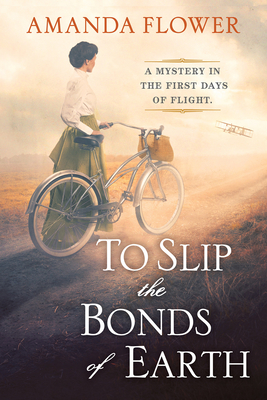
Most books on flight focus on the famous brothers Orville and Wilbur Wright. At a time when women were frequently shown disrespect, the Wright brothers’ college educated sister Katharine was outspoken and independent all while caring for her father and brothers after the death of their mother. She also was in charge of the business end of their bicycle sales and repair shop and worked as a Latin teacher.
When one of her students is accused of murder, Katharine moves into high gear to prove his innocence and discover who the real murderer is. Ironically, she had dismissed that student from her class a few days prior for his disrespectful behavior. There are many interesting threads along the way including a men’s only club in Dayton, Ohio, frequented by the political leaders of the city. The treatment of women and various social classes is also highlighted. Orville Wright took the plans for their airplane to a party and they disappeared resulting in another mystery. Katharine needed to determine if the murder and the stolen papers are related crimes.
I enjoyed the mix of history, fiction, and mystery. It is well written and interesting and kept me guessing to the end.
I received a complimentary copy of this book in exchange for an honest review. Opinions expressed in this review are completely my own.
Rating: 4/5
Category: Historical Fiction, Mystery
Notes: #1 in the Katharine Wright Mystery series
Publication: March 26, 2024—Kensington
Memorable Lines:
When I was younger, there had been times when I’d lamented—if only to myself—my unremarkable appearance, but now, as an adult, I found it served me well. Those who had been lulled by the relative dullness of my looks had been disarmed by the sharpness of my wit.
“Poor decisions always come late in the day, Katie. I want you to remember that. As the day goes on, thoughts become muddled, because so many choices have to be made. A man’s willpower lags, and he makes mistakes, some of which may be the most costly of his life.”
“What did I teach you?” she asked in a hushed voice. I paused. “That sometimes doing the right thing is the wrong thing in the eyes of the law. That sometimes justice and mercy don’t coincide. That sometimes mercy is the better choice.”
The Mystery of Haverford House–multiple timelines
The Mystery of Haverford House
by Rachel Burton
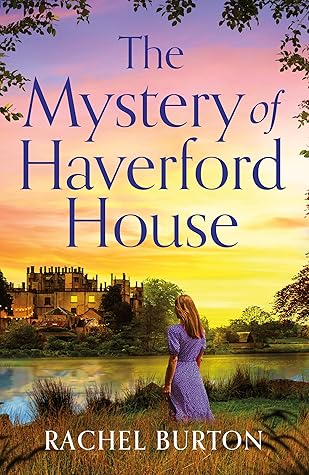
Viola, originally from Australia, has had to reinvent herself several times. She has finally found a place that feels like home—a huge estate in Yorkshire. Her job is to manage Haverford House as a tourist attraction, but it is difficult to maintain it as a viable establishment financially given its size, age, and tax status. The current earl and owner wants to sell it, but his mother, the dowager countess, is sentimentally attached to it.
There is a mystery and legend that Viola emphasizes in her house tours. Annie Bishop, a serving girl at Haverford, disappears in 1933. Was she murdered or did she travel to America to start a new life? As the story unfolds for the reader, much of the status of women during the period between the two World Wars is revealed. There is also a focus on the works of Shakespeare, particularly Twelfth Night, as there is a production of it in both timelines. The characters are fleshed out in both timelines with some villains and heroes in both. It is interesting to see that the Haverford residents in the 1930’s, even the “nice” ones, were disdainful of the servants that worked in the house. There were also those in the lower classes who felt they and their peers should “mind their place.”
My interest in both storylines never flagged. I no sooner finished a chapter with my interest peaked than the focus changed to equally compelling events in the other storyline. This seesaw continues all the way to the end of the book with a number of surprises along the way.
I received a complimentary copy of this book in exchange for an honest review. Opinions expressed in this review are completely my own.
Rating: 5/5
Category: Romance, Women’s Fiction, Mystery, Historical Fiction
Notes: clean in all aspects
Publication: March 14, 2024—Aria
Memorable Lines:
“I don’t know where you all find the time for reading,” Polly says regularly. In my opinion you make time for the things you love but she has no interest in fiction, or books in general. She hated dusting the library, but lucky for her I was always willing to do it.
I wonder if he knows why he is here—I wonder if he realizes how badly the estate needs his father’s money? And I wonder what it must be like for Prunella and Cecily, being duty-bound to marry somebody they might not even like, let alone love.
Viola wanted to run upstairs to her flat, get into bed and pull the duvet over her head. Alternatively if the ground would like to open up and swallow her that would be fine too.
The Berlin Letters–postwar intrigue
The Berlin Letters
By Katherine Reay

There are so many works of historical fiction that deal with World War II. Writers have explored the different countries engaged in the war and affected by the war. They have researched and examined the lives of the individuals caught up in the horrors of war from those at the top to the common citizen and from the despots and their minions to the heroes for freedom. The Berlin Letters creates a story that showcases the strange time in Germany after World War II when the West and the Soviet Union cavalierly divided the country into two power blocks and the city of Berlin into two entities. Suddenly, people who were associated with East Berlin could not cross the street into West Berlin to shop or visit with family without fear of arrest and torture.
As word spread that East Berlin was soon to be shut down, there was a mass exodus. Those remaining were subject to surveillance by the Stasi, a group that seemed to be everywhere and were admired by the KGB. They perfected “decomposition,” continuous torture and pressure from all directions that resulted in arrestees admitting to crimes they didn’t even commit.
Perhaps the worst part of living in East Berlin at that time was the presence of snitches. They could be anyone, from your friend to your neighbor or work colleague. Some monitored other citizens for money, but most to protect themselves and their families.
The Berlin Letters is a complicated web of ordinary citizens, spies, revolutionary young people who protested through their punk music and clothes, propaganda writers, and the underground. It begins with Monica passing her daughter Luisa across barbed wire to her parents, who later move to the United States. Monica’s husband Haris is a successful propaganda writer for the state newspaper and believes what he writes—at first. We meet Luisa again as an adult. She works in deciphering codes left over from World War II, a skill her grandfather taught her. Never one to pass up a puzzle, she discovers that her father and her grandfather communicated over the years even though she had been told that her parents had been killed in an automobile accident. The letters include secrets so she is obligated to involve her CIA bosses. Luisa gives up all of her and her grandmother’s savings and risks her own life to travel to East Berlin to rescue someone who is about to be transferred to one of the worst prisons in East Germany. Whom can Luisa trust? Is her CIA training from years ago enough to see her through? Will her impulsive actions cause her to lose her job and clearance?
I received a complimentary copy of this book in exchange for an honest review. Opinions expressed in this review are completely my own.
Rating: 5/5
Category: Historical Fiction
Notes: Clean historical fiction with a touch of romance
Publication: March 5,2024—Harper Muse
Memorable Lines:
Walther’s “I fought tooth and nail to stay, until the day I needed to leave” has become my rallying cry. I don’t want to leave. So I fight.
I’m surprised there are none of the neon signs or billboards so prevalent in West Berlin. Then I realize it’s a planned economy. There is no need for advertising.
Now I see when you grow up with little more than the necessities, you take care of them, and you don’t put your happiness into more.
A Love Discovered–Wild West
A Love Discovered
by Tracie Peterson

When Marybeth Kruger’s father dies in a wagon accident, he leaves Marybeth and her two year old stepsister without money. Marybeth is the only “mother” little Carrie has ever known and she refuses to part with her. She is offered a way out of her situation by Edward Vogel, her friend and the husband of her deceased friend Janey.
Cheyenne is a booming town in the Dakota Territory. Edward receives a job offer as a lawman there, but the preference is for a family man. Marybeth and Edward agree to a marriage of convenience. They will not be intimate as he feels responsible for the death of Janey during childbirth. Neither anticipates the feelings that blossom as they struggle together to adapt to life in Cheyenne.
Marybeth is a tough young lady, and if anyone can survive the cold and windy winters of Cheyenne in a tiny tent, she has the fortitude to do it. Any sacrifices are worth it to keep Carrie, a precious little girl who soon calls Edward “Papa.” He loves Carrie right back and is continually concerned about the dangers of the railroad town that is truly the wild west where murders are a frequent event and justice is meted out by vigilantes when it is clear that a hanging offense has occurred.
The historical aspects of life shortly after the Civil War as the country looks westward through railroad expansion are fascinating, but the real focus of the story is Marybeth and Edward’s relationship. Edward has to come to grips with his trust issues with God before he can move ahead with Marybeth. There were a few times that progress in the book seemed slow and the relationship issues repetitive, but I liked the characters especially little Carrie. Tracie Peterson is a prolific writer and was recommended to me by a friend as a good author of Christian historical fiction. I will return to read more of her books to evaluate her works more thoroughly.
I received a complimentary copy of this book in exchange for an honest review. Opinions expressed in this review are completely my own.
Rating: 4/5
Category: Historical Fiction, Christian, Romance
Notes: #1 in The Heart of Cheyenne series
Publication: March 5, 2024—Bethany House
Memorable Lines:
“Ah, ya’ve a wee daughter. A greater blessin’ can’t be had. Oh, a son is a fine thing, but a daughter is somethin’ special.” The man’s eyes seemed to twinkle in the the dim light.
I remember my parents sayin’ that folks need a Savior, but they also need a friend.” He smiled. “Pa also said we need to be careful and not try to be both.”
“Sometimes we do a thing out of obligation, and in time, we learn to take joy in it.”
The Covenant of Water–Indian multigenerational saga
The Covenant of Water
By Abraham Verghese
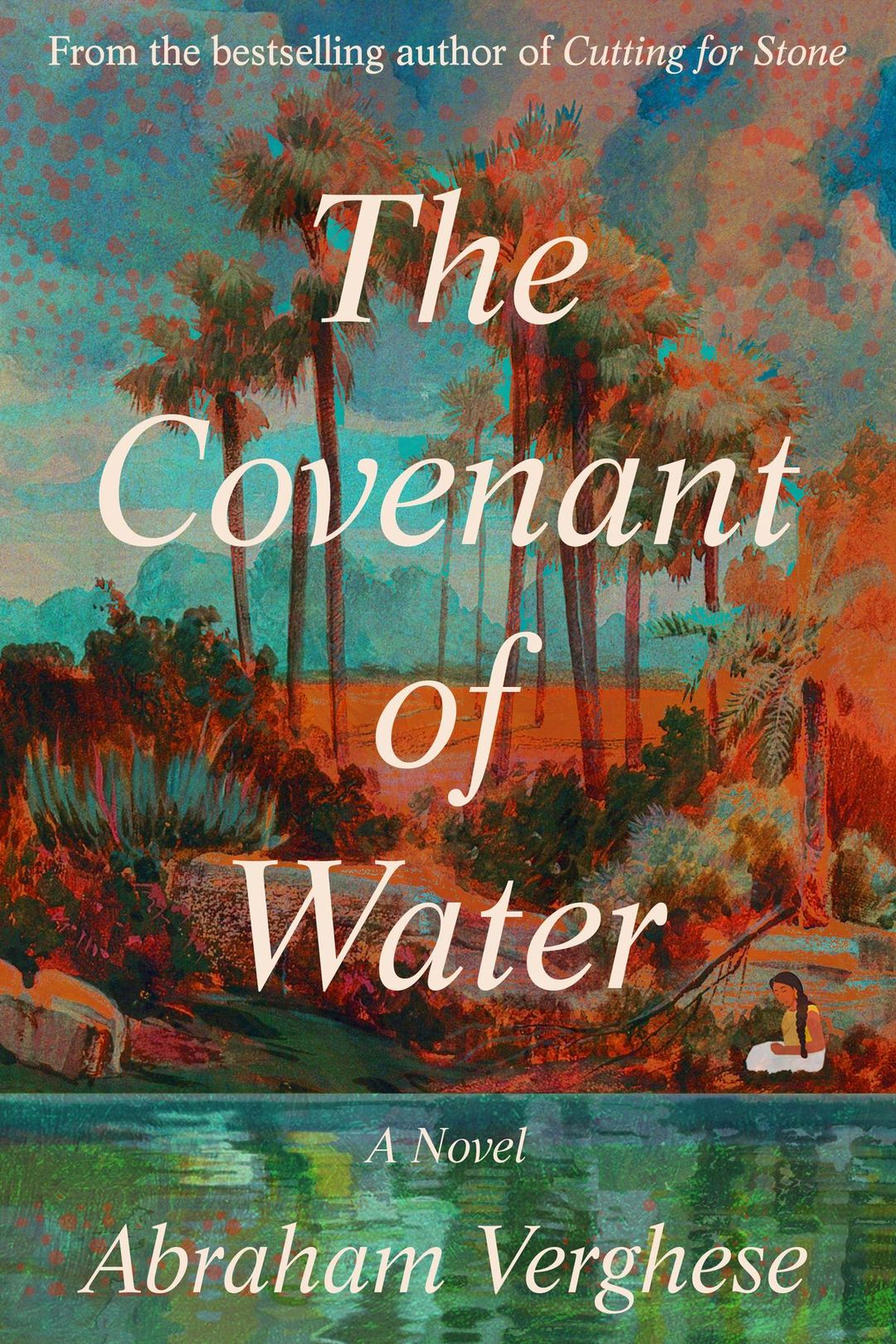
Fourteen years in the making, 724 pages long, this saga that mainly takes place in India will stay with readers long after they have finished reading it. This story spans the years 1900 to 1977 and begins with the arranged marriage of a twelve year old girl who is given years to mature and grow into her role before the marriage is consummated. She becomes the matriarch of the family and is known as Big Ammachi. The family has a secret, a curse they refer to as The Condition. At least one person, usually male, in each generation has died of drowning in a country where water is everywhere.
The reader takes a deep dive into the relationships that occur over the years in this area inhabited by St. Thomas Christians. The people in the community have a Christian faith, but it is interwoven with other cultural traditions. Big Ammachi’s husband Thamb’ran has the condition and was not allowed to travel by water to school. Therefore, he is an intelligent man, but has never learned to read. He also has a hearing loss.
Just when the reader has a grasp on these characters and the plot, the story jarringly transitions to Glasgow, Scotland, in 1919, where we meet Digby Kilgour, a surgeon, and become acquainted with the caste system. Although the transfer seems sudden, the plot soon moves back to Parambil in India where it is discovered that beloved Baby Mol suffers from a medical situation that will leave her childlike all of her life.
The Covenant of Water is too long for a reviewer to detail all of the events concerning the many characters. The plot is intricate and seemingly unconnected threads are eventually woven into other threads to create beautiful scenes full of emotion and love which cross many generations. There are tragedies and victories, happiness and great sadness. Heroic actions save lives and cause personal suffering. Writing and art are tools for healing. The World War brings death to many as Japan bombs Madras in India, but also inspires Indians to seek their freedom from Great Britain. There are births under primitive conditions, the arrival of electricity, and the release of Nehru after three years of imprisonment. Fire causes permanent damage as does leprosy, but with an undercurrent of faith, there is also healing and joy. Water is a powerful theme as the water flows through the land uniting all the characters with none of them having to stand alone because they are connected by the water—physically and emotionally. Story is important to this author and more important than themes and messages. As the story unfolds, however, Verghese reveals deep meanings and understandings of human nature in his beautiful writing. Although he labored over this saga for years, the telling seems to be effortless and replete with memorable lines and phrases. It is a masterpiece of fiction that readers will want to discuss and revisit for years to come.
Rating: 5/5
Category: Fiction
Notes: I am not normally a fan of celebrity book clubs, but I listened to Oprah Winfrey’s six part discussion (available on YouTube) of The Covenant of Water with author Abraham Verghese. It is a great interview and includes Verghese reading some passages from the book. It offers interesting insights into the writing process. I don’t usually listen to audio books because of hearing issues, but I could tell that Verghese’s reading of his book would be a positive addition to the enjoyment of The Covenant of Water.
It is a long book, but I think most people in my book club enjoyed it. One member shared a 5 page list of characters she found online. Because the book is so long, I would suggest readers explore that possibility or create their own list as they read.
Publication: May 2023—Grove Press
Memorable Lines:
The grandmother is certain of a few things: A tale that leaves its imprint on a listener tells the truth about how the world lives, and so, unavoidably, it is about families, their victories and wounds, and their departed, including the ghosts who linger; it must offer instructions for living in God’s realm, where joy never spares one from sorrow. A good story goes beyond what a forgiving God cares to do: it reconciles families and unburdens them of secrets whose bond is stronger than blood. But in their revealing, as in their keeping, secrets can tear a family apart.
“Are we not doing some good here, Honorine?” he asks gently. She looks at him kindly. “Aye, bonny lad, you are! Us all are! Our hospital, the railways and telegraphs. Plenty good things. But it’s their land, Digby, and we take and take us. We take tea, rubber, take their looms so they must buy our cotton at ten times the cost…”
“Half my life is spent on trains. Strangers of all religions, all castes getting on so well in a compartment. Why not same outside train? Why not simply all getting along?” Arjun looks out of the window and swallows hard.
Caroline: Little House, Revisited
Caroline: Little House, Revisited
by Sarah Miller

The book Little House on the Prairie is part of a series of historical fiction books about the Ingalls family. Treasured by several generations of readers, it was written for children, but has also been enjoyed by adults and made into a television series. Caroline: Little House, Revisited tells the same story but from the perspective of the mother, Caroline. The original Little House on the Prairie book is written by one of the children in the story, Laura Ingalls Wilder. Both books are historical fiction with Little House on the Prairie based on Laura’s memory while Caroline is a combination of Wilder’s reminiscences, historical research, and Miller’s creativity.
Because of the source material and the intended audiences, the books are similar in most of the basic events, but quite different in a few aspects. Intending to read the two books side by side, I soon found Caroline deviating. In the book for adults, Caroline makes the long journey in a covered wagon from Wisconsin to Kansas pregnant with her third child. In Little House on the Prairie, Baby Carrie is already a part of the family and makes the trip with Pa, Ma, Mary, and Laura. Miller attributes this difference, which readers may find rather jarring at first, to Wilder’s condensing events because she had not planned on writing a series. She later continued writing about the Ingalls family because of her fans’ requests. As you might imagine, Caroline has a lot of focus on what it would be like to travel pregnant and give birth in very humble circumstances far from family support. Miller is a good writer who leads the reader to empathize with the protagonist even though her circumstances are outside the cultural norms of the twenty-first century.
Some of the disparities occur because Laura Ingalls Wilder was three years old when the family began their journeys. What impacts a child and stays with them can be quite different than what is important to an adult. Things that happen to the animals in the story are important to Laura. For example, in Wilder’s book, when they are trying to negotiate crossing a rushing creek with the wagon and ponies, their dog Jack disappears. This loss is traumatic for Laura. She recounts frequently how she tries to be as good as her older sister Mary and that sitting still is hard for her.
On several occasions, Indians came uninvited into their home and took things. This tale was a part of both books but only in Little House on the Prairie was there a description of the horrible odor in the house. It seems that the Indians were wearing skunk pelts! That would definitely make an impression on a young child.
Caroline is historical fiction that can make you feel like you are there—experiencing the jolting wagon, the terror of being a woman alone for days at a time in Indian Territory, the pain of childbirth, and the agony of malaria. The story is not all disheartening, however. Christmas is memorable, and the girls’ happiness over what we would consider a meager celebration will pull at heartstrings. The main characters are all likable. Pa is hardworking and kind. With his fiddle and the twinkle in his eye, he manages to make light of hardships. Ma (Caroline) is a strong woman who loves her husband and ever tries to smooth things over. She attempts to absorb the bad times and disappointments to protect her husband’s feelings and model strength for her daughters.
Caroline: Little House Revisited is a good work of historical fiction whether the reader is familiar with Little House on the Prairie or not. I also recommend Laura Ingalls Wilder’s original book for children. I enjoyed a reread as an adult, especially the version I chose with illustrations by Garth Williams.
Rating: 5/5
Category: Historical Fiction
Notes: The story of Little House on the Prairie told from the mother’s perspective.
Publication: 2017—Harper Collins
Memorable Lines:
“You’ll need two hands to fire it—hold your arms out straight ahead and lace your fingers around the stock, the way you do to pray.” Caroline’s tongue rose to object to the juxtaposition, then halted. If ever she had cause to fire this gun, there would indeed be a prayer behind it.
She sat down close beside Charles, too full for words, and looked out into the wide open night. It was to hard to imagine that darkness stretching all the way back across the long way they had come. And the fiddle sang, low and rich now, its melodies swaying in an easy back-and-forth rhythm until the home they had left and the home they would make seemed within reach of each other.
They would never, never forget this Christmas. None of them. Already Caroline could feel the morning embedding itself in her own memory. Her mind was a bottling it whole, so that it would remain fresh and glistening as a jar of preserves.
When the Waters Came–flood, fire, and disease
When the Waters Came
by Candice Sue Patterson

Often, works of historical fiction focus on a famous character, a war, or a period in history. This book has as its subject the Johnstown, PA, flood of 1889 which resulted in two thousand deaths. Add to that the destruction of most structures, thousands of animals, and deep mud everywhere. Families were torn apart, and basic services of electricity and water disappeared. Transportation came to a standstill. The stench of decomposition was overwhelming, and typhoid fever was a concern resulting from the unclean water. The government sent in resources, and Clara Barton brought medical help along with her organizational aid in arranging temporary housing and providing food.
The early part of the story focuses on Monty, a likable, handsome pastor with a secret in his background. He loses everything in the flood as most people do. Annamae is a Red Cross nurse in Washington, D.C., who travels to Pennsylvania to help in the tragedy. She had a very difficult childhood, and following the death of her father in a factory accident she is left to her own resources. She manages to become a nurse and because of her skills attracts the attention of Clara Barton. Monty and Annamae’s paths cross, and they gradually reveal their interest in each other.
Annamae and Monty both have lessons to learn about forgiveness. Annamae has a deep-felt need for revenge, and has to come to grips with acknowledging a trust in God and His justice in dealing with wrongs. While I felt for the people who lost all in this flood and were terrorized by the powerful waters, I never really connected with the protagonists. I did learn a lot about the devastation of floods and this one in particular. The descriptions of the natural occurrences and their aftermath are powerful.
I received a complimentary copy of this book in exchange for an honest review. Opinions expressed in this review are completely my own.
Rating: 3/5
Category: Christian, Historical Fiction, Romance
Notes: 1. #1 in the six book series A Day to Remember featuring disasters in American history written by six different authors.
2. The author includes details explaining which parts of her work were taken from actual sources and which are fictionalized.
Publication: January 1, 2024—Barbour
Memorable Lines:
He looked in the direction the man had come from, and fear pierced his heart. Black mist rolled into the air. Then Monty saw a wall of water as tall as any building, devouring everything in its path. The dam had broken.
This had been no judgment day or act of God. Not in the biblical sense. The truth was that this had happened from the selfishness and indifference of the industrial kings who ran the country and spent summers recreating at the top of the mountain. But proving it would be no easy task.
“Here we are, a hundred and thirteen years after the revolution, ruled by a different tyrant. The tyrant of greed and monopoly, where payment for backbreaking work is given in company scrip that can only be used at the company stores where prices are higher than anywhere else. After years of sacrificing health and family, the reward is death.”
The Four Winds–Historical Fiction about The Great Depression and the Dust Bowl
The Four Winds
By Kristin Hannah
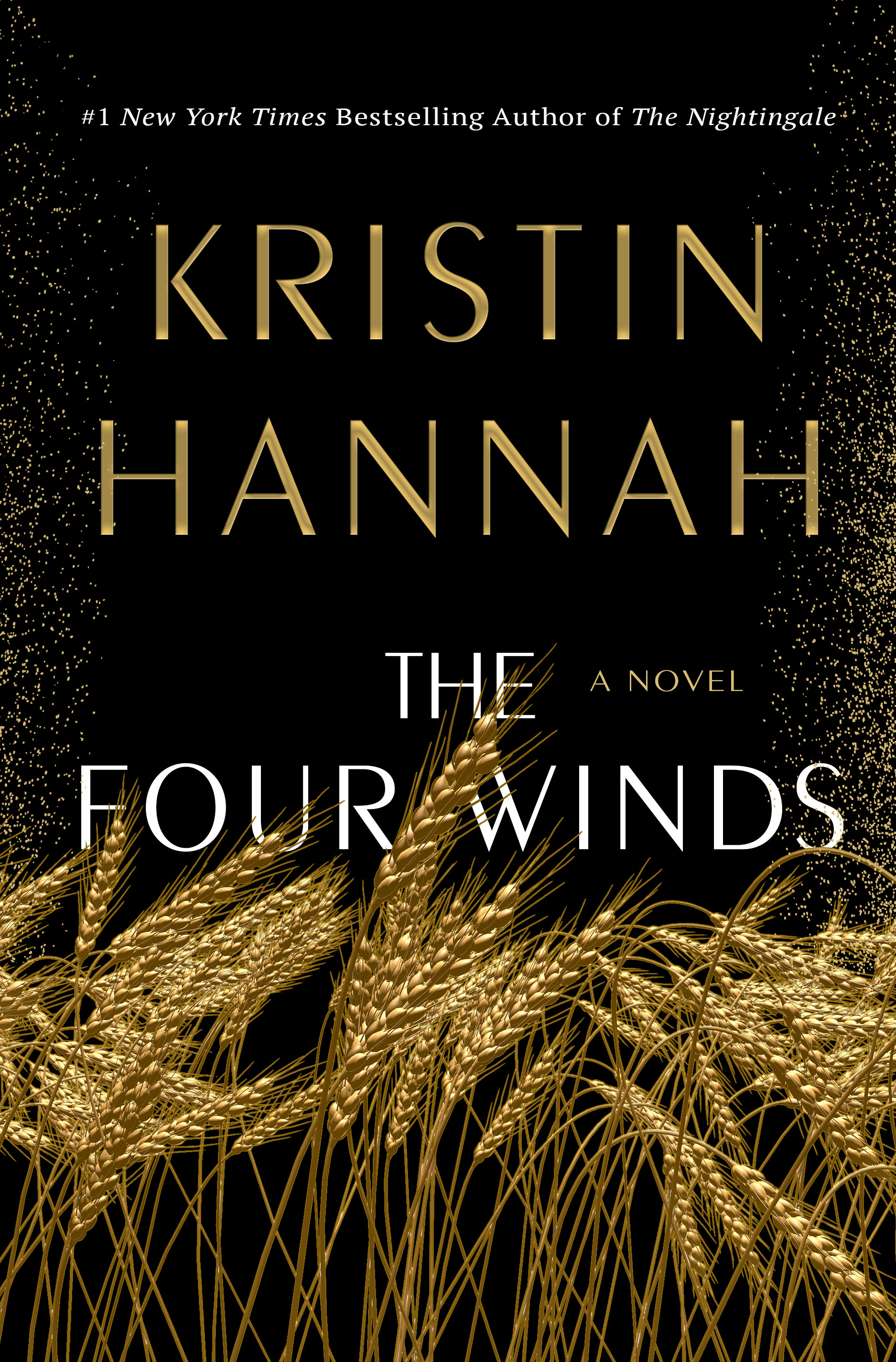
From prosperity to devastating poverty, The Four Winds takes the reader on a journey across time and across the United States. Since childhood, Elsa has been told she is unattractive, physically weakened by an illness, and ineligible for marriage. Her brief search for adventure and love in her small town leads her to Italian immigrants Tony and Rose and their son Rafe. The Martinellis take Elsa under their wing, connect her to the land, and love her as their own.
The Great Depression rips away the hopes and dreams of the generations who endured the struggle, but Tony and Rose are strong and refuse to give up their land. Then come years and years of drought and dust storms. The government says the farmers are to blame and provides minimal help. Millions of citizens leave Texas and surrounding states to find what is billed as a “land of milk and honey” where they will surely find work so they can support their families. Instead they find difficult work on large farms if they are lucky. They live in filthy conditions on subsistence wages or less. Each day they have to walk miles both ways from muddy tent cities to the fields where there is no guarantee of a job. Those seeking work are maligned by the residents who view them as dirty and lazy. If they manage to get on at a farm that supplies housing, a few toilets, and some running water and electricity, they soon discover that they are paid with credit at the expensive company store. There is a fee for everything, even obtaining pay in cash. When they dig deeper, the workers find that the whole setup, including where they live and when they work is completely set up to satisfy the greed of the owner. A worker is always indebted to the company.
Communists, at physical danger to themselves, work to organize the farm workers to strike for better working conditions. It is an uphill battle because the workers have safety concerns if they protest in addition to the possibility of losing their opportunity for work—such as it is. California is not the “Promised Land” after all.
Elsa is not just the main character of The Four Winds: she is the heroine. She is a strong, strong woman living out a difficult life with perseverance and determination. Come what may, she would do her best for her children whether eking out survival in a formerly rich land where cattle died with bellies full of sand or traveling across the desert in an unreliable vehicle praying that there was enough water and gas to get the family to their destination. She proves to be a good friend to others in need. She compromises when necessary for the sake of her children, but she reaches a limit where she stands up to greedy business people who deserve to be shamed.
The Four Winds exposes a sad part of our history showing a period in time that was devastating to people. Through no fault of their own they found themselves unable to care for their families. Many were proud and refused government aid. Some of that help from the government was commendable putting men to work in respectable jobs, but some was too little, too late and unreliable in execution. The people of California were depicted as mean-spirited and unwilling to help those who needed help. They looked down on the laborers with contempt. The one exception that stood out for me was an understanding librarian who checked out books to Elsa’s daughter and then gave Elsa a library card which Elsa presented to her daughter as her Christmas gift. It was treasured.
This work of historical fiction concludes nicely, but there is not a happy ending for everyone. The book is more realistic than that. Overall it is well written and kept me wanting to read more. It is a sad book, however. It has to be—it is about sad times.
Rating: 5/5
Category: Historical Fiction
Publication: March 14, 2023—St. Martin’s Griffin
Memorable Lines:
“Believe me, Elsa, this little girl will love you as no one ever has…and make you crazy and try your soul. Often all at the same time.” In Rose’s dark, tear-brightened eyes. Elsa saw a perfect reflection of her own emotions and a soul-deep understanding of this bond—motherhood—shared by women for millennia.
“Girls like that, unkind girls who think it’s funny to laugh at another’s misfortune, are nothing. Specks on fleas on a dog’s butt.”
Once, Elsa would have said, God will provide, and she would have believed it, but her faith had hit the same hard times that had struck the country. Now, the only help women had was each other. “I’ll be here for you,” Elsa said, then added, “Maybe that’s how God provides. He put me in your path and you in mine.”
Winter hit the San Joaquin Valley hard, a frightening combination of bad weather and no work. Day after day, rain fell from steel-wool-colored skies, fat drops clattering on the automobiles and tin-can shacks and tents clustered along the ditch bank. Puddles of mud formed and wandered, became trenches. Brown splatter marks discolored everything.
Poverty was a soul-crushing thing. A cave that tightened around you, its pinprick of light closing a little more at the end of each desperate, unchanged day.
Mrs. Mike–survival in the Canadian wilderness
Mrs. Mike
by Benedict and Nancy Freedman

When sixteen year old Katherine Mary (Kathy) O’Fallon leaves Boston in the early 1900’s to travel to Calgary, Alberta, she begins the adventure of a lifetime. She lives briefly with her uncle hoping to improve her health, but she falls in love with Mike Flannigan, a sergeant in the Canadian Mounted Police. He is kind, courageous, and handsome. They marry and live in the wilderness of “the North” in very difficult and dangerous conditions—overwhelmingly cold in the winter and slushy wet in the summer with mosquitoes bent on driving them crazy.
From both Mike and the natives, Kathy learns hard lessons about survival in the wilderness. It is a time and place when women undergo difficult pregnancies and childbirths without medical intervention. Families are wiped out by plagues, fire, and hunger. Although Kathy was treated well, that was not the case for many women. Their status was low, especially if they were native or half-breeds. Their languages and customs were different from her own, but she cultivated friendships based on common suffering and aid.
Mrs. Mike is historical fiction, but it is based on the life of Katherine Mary Flannigan. Full of adventure, history, and romance, Mrs. Mike is well written with great descriptions of the hardships of travel and the beauty of the northern wilderness. The reader experiences the tragedies of life and death along with people who endure the cold and scarcity of necessities, but have the moral fortitude to share and help their neighbors.
Rating: 5/5
Category: Historical Fiction
Publication: 1947—Berkley Books
Memorable Lines:
These big things, these terrible things, are not the important ones. If they were, how could one go on living? No, it is the small, little things that make up a day, that bring fullness and happiness to a life.
I couldn’t stand so many people so close to me. I was overpowered by the noise, the perfume, the decorations, and by the glare of the electric lights. After the soft glow of candles, everything seemed harsh and artificially bright.
The heart is a resilient thing, capable of enduring great pain and still finding joy.
Frankenstein: The Modern Prometheus
Frankenstein
by Mary Shelley
with A Guide to Reading and Reflecting by Karen Swallow Prior

What do you think of when you hear the word “Frankenstein?” For many, that name conjures up an ugly monster pieced together from the flesh of others. A quick Internet search of images associated with that name bring up iconic pictures that are a part of our popular culture. Many movies have been made of the book Frankenstein as well as versions and spin-offs of the Gothic novel. In truth, Victor Frankenstein is the name of the scientist who created the monster who was never named in the book, but may be referred to as “The Creature.”
Clearly a classic, Frankenstein, was the creation of 18 year old Mary Shelley as a result of a dreary day’s writing contest with a small group of men, that included her husband the poet Percy Bysshe Shelley and Lord Byron. The little group fought to overcome the ennui of the season. Mary Shelley won and her story was first published anonymously.
The structure of the story is initially a little confusing, but it becomes clearer as the tale progresses. Captain Robert Walton’s narrative frames the story with his recounting, as his ship headed to the North Pole, of the sighting of an unknown creature and then the rescue of a man who was pursuing the creature. Much of the book is epistolary as Walton shares the story of Victor Frankenstein’s life with his sister in England.
The reader is also given the Creature’s viewpoint. At eight feet tall and very different looking, he is viewed as a threat. At times the reader might feel some sympathy for him as he wants love and acceptance, but he also reveals a murderous side. When he realizes he will never be integrated into human society, he approaches Victor with the idea of creating a woman to be his wife. This request ignites another ethical dilemma for Victor who has already ignored his moral obligations when he gave life to the Creature and then abandoned him. His bad decisions turn his life and that of his loved ones into tragedies.
The editor of this volume, Karen Swallow Prior, is a Professor of English and Christianity and Culture. She states that the major themes of Frankenstein are “creation, creator, guilt, ambition, reason vs. emotion, nature vs. nurture, friendship, sexuality.” She points out that Shelley does not write from a biblical point of view, but that these themes are timeless. This is obviously a complicated book and important in terms of its effects on our culture. The editor Prior attempts to make it more accessible in her introduction and in the background she presents about the time in which it was written. Not an easy read, Frankenstein offers a lot of food for thought. The reader will probably argue with the characters over their motivations and actions and will be hard pressed to find a likable character among them. Victor Frankenstein, in particular, proves over and over again that he is self-centered. His own happiness and a fulfilled ego are so important to him that his emotions swing wildly and greatly affect his health while he disregards how his actions hurt others.
Rating: 4/5
Category: Fiction, Gothic, Classic, Christian
Notes: 1. The editor ends each section (volume) with Reflection Questions which are a wonderful resource for individuals or groups studying Frankenstein. She also includes Questions for Further Reflection which address the whole book.
2. The appendix adds the introduction to the 1831 edition.
3. Prior has helpful footnotes on the appropriate pages to define words that are unfamiliar to readers in the twenty-first century.
4.Frankenstein is subtitled The Modern Prometheus pointing to the tension between a creation and its creator.
5. Although Frankenstein is not a Christian novel, Prior’s goal is to show readers how to approach it from a Christian viewpoint and to the glory of God
6. Prior has a series of classics that she has edited in a similar way. I have read several of these with my Book Club. Some have been more enjoyable than others, but all have resulted in good discussions.
7. This was written during the transitional period from Enlightenment to Romanticism.
Publication: 1818—Original publication
2021—(as edited by Prior) B&H Publishing
Memorable Lines:
I entered with the greatest diligence into the search of the philosopher’s stone and the elixier of life. But the latter obtained my most undivided attention: wealth was an inferior object; but what glory would attend the discovery. If I could banish disease from the human frame, and render man invulnerable to any but a violent death!
I was benevolent and good: misery made me a fiend. Make me happy and I shall again be virtuous.
“Hateful day when I received life!’’ I exclaimed in agony. ‘’Accursed creator! Why did you form a monster so hideous that even you turned from me in disgust? God, in pity, made man beautiful and alluring, after his own image; but my form is a filthy type of yours, more horrid even from the very resemblance. Satan had his companions, fellow-devils, to admire and encourage him; but I am solitary and abhorred.”
 education pathways