Home » education (Page 4)
Category Archives: education
What does an experienced teacher turned politician say about the direction of education?
“I saw education before No Child Left Behind. I also experienced education during No Child Left Behind up until I got elected to Congress. Basically, test and punish did not work. Because of No Child Left Behind, I suddenly had to follow a syllabus and a pacing guide dictated by the district office. There was less trust of the teacher, and that’s a mild way of putting it. We began being treated like we were a transmitter of someone else’s idea of what is good education. Effective education doesn’t work that way. Effective education is building relationships with students. It’s about teachers strategizing on how to engage students. You can’t do the canned lesson or scripted content.”
–Rep. Mark Takano of California, U.S. Congressman, 24 years of classroom experience
Three Day Quote Challenge–Day 2
I love Robert Frost’s poetry, but I never knew he had a sense of humor until I encountered this quote:

Three Day Quote Challenge–Day 1

My new blogger friend, Wendy from Ramblings and Musings, invited me to participate in this three day quote challenge.
The rules for the challenge are:
- Thank the person nominating you for the challenge.
- Post a quote on your blog for 3 consecutive days.
- Invite 3 of your favorite bloggers to join the challenge.
My nominees for the challenge are:
- David from David Snape and Friends, whom I originally started following because of an interesting post he wrote on autism. It is also through his blog that I discovered the fantastic Kindness Blog.
- Shellie from Shellie Woods who writes about marketing and life, from a Christian perspective.
- Kim from Learn to Love Food. Through her blog Kim has taught me about the need some children have for food therapy and her fun approach to helping those with food issues.
No obligation–just fun, inspiration and exposure to bloggers you may not have encountered before.
My first quote has been my favorite for years. It was my signature quote on my work email. I wanted it always there as a reminder to the “Standardistas” that accumulating facts is not what education is all about. Many education policy makers and enforcers (in my former school district and around the country) have forgotten that education is inspiring children to be lifelong learners.
Will Great Scores on a High Stakes Test Land You a Job at Goodreads?
Goodreads is a website that has created a huge community of readers, and their goal is to hook up readers with books they will love. In browsing today, I came across their Jobs page. I’m not looking to come out of retirement, but I was interested in their values:
- Ownership
- Create Fun
- Be Humble
- Think Big
- Customer Obsession
- Be Passionate
- Help Each Other
- Always Be Learning, Always Be Teaching.
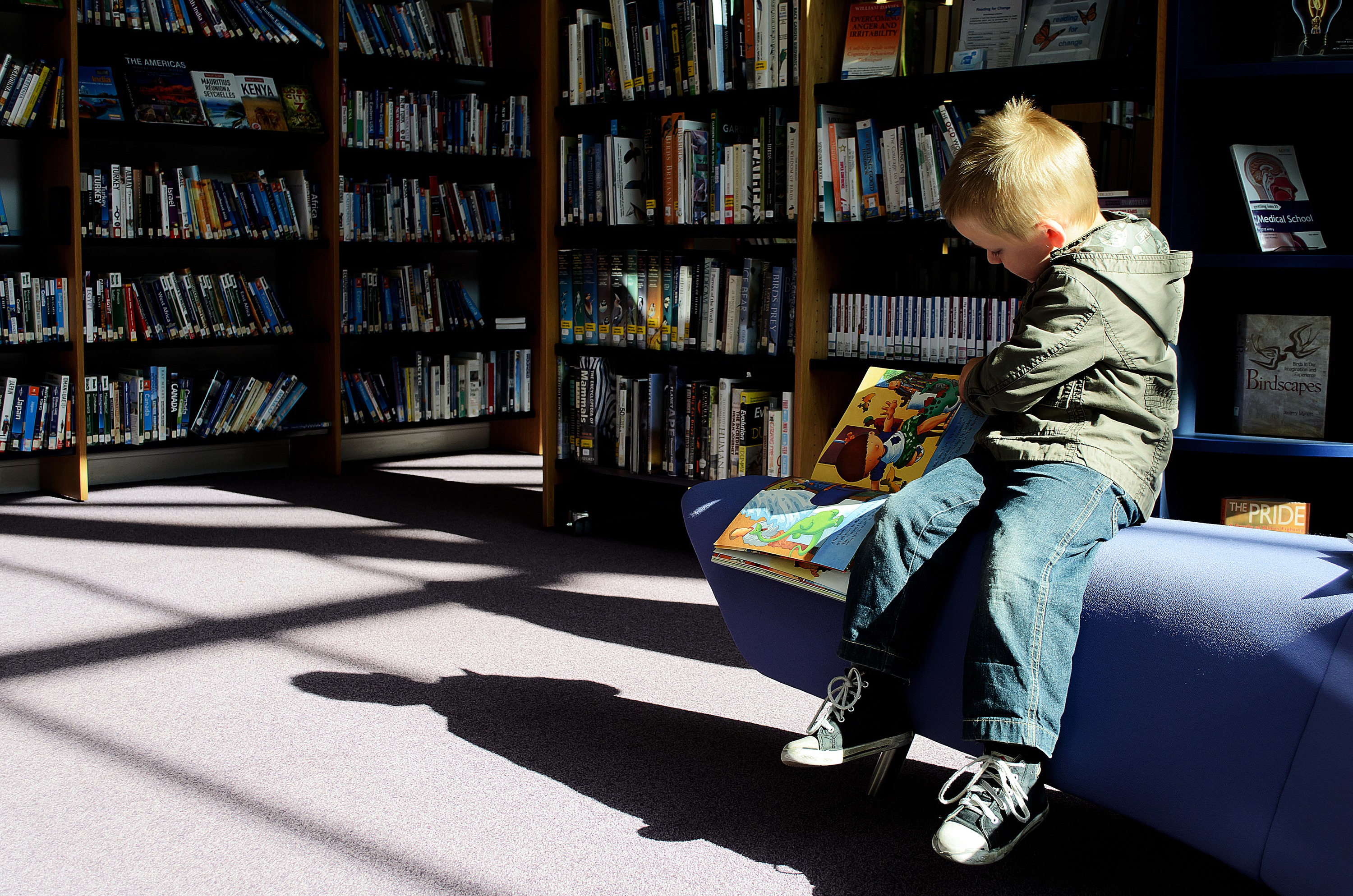
Goodreads says they want people that are creative and care about the customer. Reread their list of values. Are any of those items on a standardized test? Are any of those values part of the Common Core State Standards? Would they be integral to a private school education where neither the CCSS nor standardized testing is required? Then WHY are we not including them in a public school education? All of our kids deserve a first class education.
If you want to see the source, go to:
I Am That Teacher Too (Letter 3) Thematic Learning—Where the Pieces Work Together
Dear Former Students,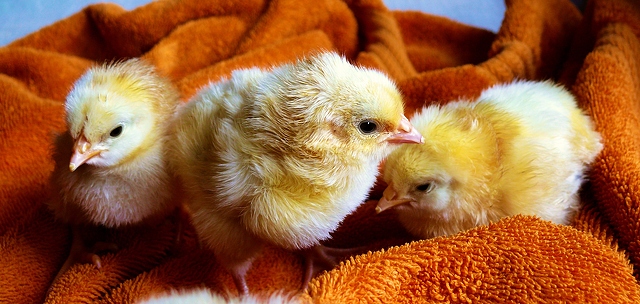
What do I hope you remember about me?
Reading, Math, and Science, Oh My!
Social Studies, Art, and Music, Oh My!
I hope you remember the special activities and projects that made learning so much fun—different activities for different years. Some of you raised calves and others hatched baby chicks or silkworms. We grew plants. Lots of you will remember our parakeet and our gerbils. You took turns letting Little Bird sit on your shoulder. You cleaned out cages and pens and learned a lot about life and a little about death. Some first grade classes researched dinosaurs and created individual reports on their work producing the most fantastic books.
Our whole day was about learning how to read, but you didn’t know it. Reading was in everything we did. I cocooned you with the look, sounds, and feel of language. When you emerged from that cocoon at the end of first grade, I had succeeded if you loved to read and to learn. I had succeeded if you had found a passion in some of the many things we explored: math, science, social studies, art, music, and of course language itself. We sprinkled in movement, drama, and dance. Was there anything you couldn’t do? I remember one of you telling me, “I am UNSTOPPABLE!” When the year began, your behavior was unstoppable, but when the year ended, your desire to learn was unstoppable. That was success for both of us.
I am That Teacher Too (Letter 1)
In writing these letters to former students, I want to provide a glimpse of my classroom and inspiration for yours.
 Dear Former Students,
What do I hope you remember about me?
I hope you remember smiles and hugs. I worked hard to make our room a safe and happy place. Even if I was having a bad day or you were having a bad day. I hope you know that I always loved you. I hope it showed in what I said and did. Each one of you was (and is) special to me. You have a personality and gifts that make you unique. I tried to help you find that best part of yourself.
All those beautiful new school supplies…
I also tried to help you get along with others and learn to share. We pooled all of our school supplies. That was initially hard for some of you. You had never had 24 perfect crayons all of your own. As a teacher I had learned that shared supplies last longer. I didn’t want anyone to feel left out. We avoided arguments over possession and cleaning up. Most importantly, it is hard to share so we worked on that first. When you are grown up, there is plenty of time to possess all by yourself. But I hope you will always remember to share.
I Am That Teacher Too (Introduction)
 I have an enviable viewpoint: I am retired after 34 years as an educator. I loved being in the classroom, but then I received an incredible opportunity to work with the entire student body. I spent 14 years as a computer lab teacher. That job began as the ultimate in creativity and technology curriculum development and disintegrated into the role of babysitter so teachers could attend their Professional Learning Community (PLC) meetings and the role of proctor for the Measures of Academic Progress (MAP) exams. Then I ($$$$$) was replaced by an assistant ($) and offered a job in the classroom again. The enviable part is that I only put in three years as a classroom teacher during the current epoch of Testing and Tears. At that point, I had more than enough time in the system to say, “I will not do this to kids or to myself anymore.” I walked away at the end of the school year. Since I am blogging about education issues, it is obvious I have not stopped caring.
I recently read a blog post written by a colleague who teaches reading to sixth graders in New York state. She has to teach using modules aligned with CCSS and to subject her students yearly to the NYS high stakes test. Those tests sound comparable to the PARCC exams. Her post “I Am That Teacher” (https://standingupforthefuture.wordpress.com/2015/03/22/I-am-that-teacher/) describes how she wants to be thought of by her students as “that teacher.” Her post is the inspiration for my thoughts on how I hope my students remember me and my time with them. I will be writing from an Early Childhood perspective with a touch of PreK-6th grade computer instruction. I will be addressing my thoughts to my students as I used to do in a daily letter to them, but I hope that current teachers will get some ideas of what a classroom can be like without CCSS. Perhaps, if you are a renegade, you will feel support as you try to sneak in real instruction. Hats off to the blogger of STANDINGUPFORTHEFUTURE! You are a kindred spirit, and I know your students will remember you with smiles.
The information I want to share is much too long for one blog post, so I have divided it into sections (letters). I hope you will follow me and return to read these letters. Also, I encourage you to read the original post of “I Am That Teacher” for more inspiration.

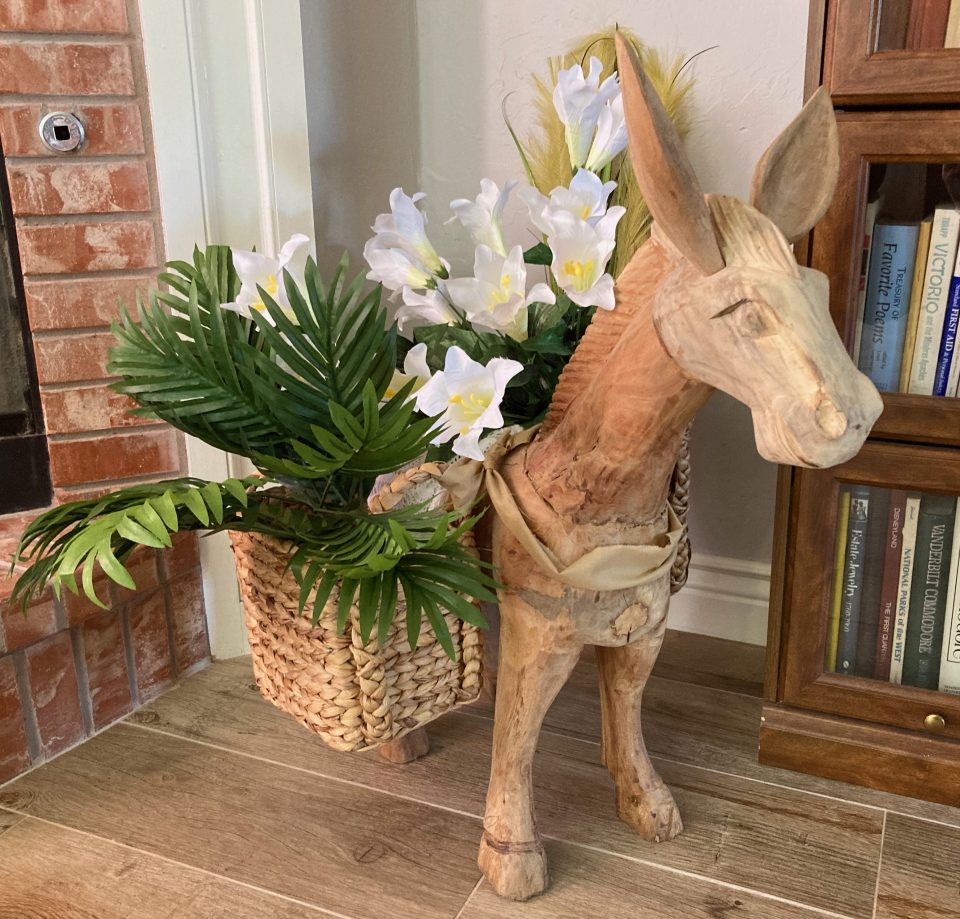
Horses and Teachers Have a Lot in Common
 I passed a field today where several horses grazed, each with a bird perched on its back. The horses were quite unperturbed by their friends. I immediately suspected a special relationship, not unlike that of teacher and student. The horse is the strong base that supports the bird both from the standpoint of safety (you can see a lot from atop a horse) and from the delicious morsels available in its coat. In a type of symbiotic relationship, the bird helps rid the horse of annoying insects.
Teachers and students enjoy a similar relationship. Teachers are the strong base that supports students. We hold them up so they can see more of the good in the world, we try to protect them from the evils that threaten their stability, and we provide knowledge to nourish their brains. Sometimes we provide food to nourish their bodies.
What of the symbiotic relationship? That holds true as well. Real teachers, the ones who hold their students close to their hearts, come away from the encounter enriched as well. Frankly, a paycheck may put food on the table and a roof over our heads, but the real pay comes in the form of hugs and smiles, of an understanding twinkle of the eye, of a thirst for more knowledge. It may arrive after weeks of explaining fractions or years later when a student returns to reminisce. The truth is real teachers thrive on teaching and learning. And most importantly, we never give up. We never try to shake the bird off our back, because when they are ready, they will fly.

Opt-Out of PARCC???
 The Internet and news reports are filled this week with articles about the PARCC test and about the advisability and consequences of opting out of taking the test.
One of the strongest arguments seems to be that if fewer than 95% of the students take the test, then the school’s grade will be low. For example, according to the Zannesville Times Recorder, “The consequences, however, mean the district and child’s teacher will not be given credit for progress that is made, affecting the school’s department of education report card and educators’ individual evaluations.”
So, it’s always good to ask yourself, “what is the worst thing that could happen?” In this case if fewer than 95% of the students take the test, across the board, then the affected districts and state departments of education would have to admit defeat and develop a new plan. And that sounds like a great plan to me!
Who seriously thinks a state is going to give a rating of “F” to all of its schools?
High school students, teachers, and parents are being told that instead of civil disobedience, they should take their concerns to school administrators, school boards, state legislators, the governor, and the Department of Education. That advice sounds really good except for the fact that people have already written letters and made phone calls to the appropriate people and their concerns have been ignored. School districts publish official statements provided by state departments of education that attempt to explain why they are wasting so much instructional time on testing and contributing so much to Pearson’s coffers. Pearson constructed the PARCC tests and the test preparation materials that support the test. They are also the ones that mandate a blackout on test discussions. The people who need to make changes, from the district level all the way up to the political powers in each state, are ignoring the real problems in the name of better education for our children and are lining their pockets at student expense.
Opting-out is not an easy decision. Parents receive a lot pressure from school districts to “do the right thing.” Students are putting themselves at risk for a variety of unspecified punishments. Since the decision makers obviously underestimated the anger of the people, they have not yet decided what the consequences of this civil disobedience will be. Threats have included not being allowed to graduate and suspension. Teachers are caught in the middle between a system that financially supports their families and a career that focuses on doing the right thing for students.
Opting-out has certainly gotten the attention of policy makers at all levels. Now what will they do about it?

Should a Child Exit Kindergarten Reading?
Common Core Answer: YES! Otherwise he or she is a failure and needs “intervention.”
Common Sense Answer: Maybe. It depends on the child and his or her readiness for reading.
 To most teachers, the common sense answer seems like a no-brainer. The creators and enthusiasts of Common Core State Standards are either ignorant of the concept of “readiness” or have chosen to ignore it.
As a reading specialist with thirty-four years of teaching with a focus on literacy, I will gladly proclaim what most teachers know. There is such a thing as readiness for various academic, physical, and social skills. Readiness for those apparently disparate skills are often tied together. You can teach children who are not ready for a certain activity how to do it, but until they are actually ready to learn it they will not master the skill. Mastery means being able to apply it in new situations and store it in long term memory. Additionally the learning process for that skill is much harder than it needs to be. Depending on the teacher and the process, it may result in negative views on learning that skill and subject, on school in general, and even on his or her own self-worth.
Reading instruction is very important in Kindergarten and the other Early Childhood grades (1-3), but it should not look like or feel like reading instruction in the upper elementary grades (4-6). Literacy activities should be so much fun that children are begging for reading time. Students should be immersed in stories, rhythm, and rhyme. They should read chorally and use predictable texts. They should have read alouds and silent reading, time to devour books in groups, in pairs, and by themselves. They should express their ideas in art, drama, music, movement, and writing. Students should learn thematically so that science and social studies are an integral part of the day with exciting projects. Reading should be taught all day in whatever students are engaged in. It should be as natural as breathing.
Surrounding students with these opportunities is giving them the gift of reading. They will learn how to read when they are ready and they will love to read.
The following posts are recommended reading for those who are looking for the best in education. Decide for yourself which is right for your classroom or your child. According to one grandparent speaking of her previously happy grandchild when subjected to the Common Core: “On the fifth day of kindergarten he refused to go to school, locked himself in his bedroom, and hid under his bed!” Perhaps you would rather be the parent who said to me: “Thank you so much for being our child’s teacher. Because of you, she loves to read.” Believe me, that did not happen under Common Core State Standards.
Reading Instruction in Kindergarten: Little to Gain and Much to Lose
Report: Requiring kindergartners to read — as Common Core does — may harm some
 education pathways