Home » Children (Page 7)
Category Archives: Children
If My Moon Was Your Sun–the Great Forgetting
If My Moon Was Your Sun
by Andreas Steinhöfel
Illustrated by Nele Palmate
Translation by Matthew O. Anderson
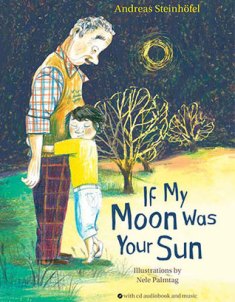 If My Moon Was Your Sun is the poignant tale of ten year old Max who kidnaps his grandfather from an assisted living facility where he lives because he is gradually losing his memory. Max takes his grandpa to Grandpa’s favorite place where he first kissed his future wife and asked her to marry him. They are accompanied on their adventure by Miss Schneider who relives her younger days by dancing through the meadow.
I was provided with a digital version of this book for reviewing purposes, but the actual book has a CD audiobook with classical music by Georges Bizet and Sergei Prokofiev. The original story was created as part of the Ohrenspitzer project for children’s concerts. There are annotations throughout the book indicating the musical work and composer that accompanies each segment of the book. Most of the compositions are by Prokofiev, so I listened to some of his works and can only imagine how wonderful the union of the story, artwork, and music must be.
I would like to extend my thanks to netgalley.com and to Plough Publishing House for giving me the opportunity to read this book in exchange for an honest review.
Rating: 5/5
Category: Children’s Fiction, Parenting and Families
Notes: accompanied by CD audiobook
Publication: November 1, 2017—Plough Publishing House
Memorable Lines:
The special thing happened when you let yourself sink slowly into the tall grass and pressed your hands into earth, which was firm and yet soft too, as though it could breathe. You closed your eyes, you breathed deeply in and out, and in no time at all you felt rooted and alive. Your thoughts became clear and orderly: the right thoughts flowed through your mind like cool, wet silver, and the wrong thoughts burned up like rust in a very hot fire.
To keep the Great Forgetting away from Grandfather when it tried to grab hold of him, it was sometimes enough to hug him tightly, offering nearness and security.
Watching Miss Schneider dance was like watching the sun spill itself over the earth. Stiff arms and legs, now in motion, suddenly seemed touched by eternal youth, and from their graceful movements a lightness flowed throughout the valley.
The Eye of the North–children’s fantasy adventure
The Eye of the North
by Sinéad O’Hart
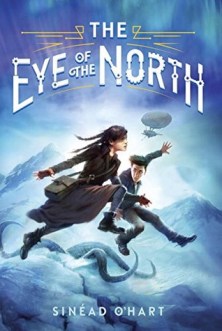 The Eye of the North is a fantasy adventure tale intended for children in grades three through seven. The interest level would be appropriate for that range and maybe a little higher, but the reading level is too high for most third graders as it contains some fairly advanced vocabulary. It would make a good read aloud with a parent. The chapters are short. Within each chapter, when the two main characters are apart, the story jumps from one character to the other in a well-defined fashion which keeps the plot moving and the reader involved in the action of both characters.
The main character is Emmeline Widget whose parents are immersed in secret scientific research which endangers both them and their daughter. The storyline follows Emmeline’s adventures through apparent abandonment, solo sea travel, kidnapping, attacks and rescues by extraordinary creatures, and near death experiences. Along the way she meets Thing, a most unusual and self-sufficient boy. She saves his life and he repays her by following her north to lands of snow and ice to rescue her.
I would like to extend my thanks to netgalley.com and to Random House (Knopf Books for Young Readers) for giving me the opportunity to read this book in exchange for an honest review.
Rating: 4/5
Category: Children’s Fiction
Notes: Age Range: 8-12 years
Grade Level: 3-7
Publication: August 22, 2017— Random House (Knopf Books for Young Readers)
Memorable Lines:
Even worse, a roaring river ran right at the end of their property, sweeping past with all the haughtiness of a diamond-encrusted duchess.
…her gaze was caught by a dusty head emerging from a grating in the wall. This head—the color of whose hair was impossible to determine—was swiftly followed by a grubby body dressed in overalls. The fingernails of this creature were clotted with dirt and oil, and his—its?—face was smeared with grease. As Emmeline watched, he slithered out of the hole he’d been hiding in, until all of him—and there wasn’t much—was standing in front of Emmeline with a hand held out in greeting.
“Mornin’,” he said “M’names’s Thing. Who’re you?”
The wind was rummaging through his clothing like a pickpocket looking for a payday.
Do Not Take Your Dragon to Dinner–fun picture book
Do Not Take Your Dragon to Dinner
written by Julie Gassman
illustrated by Andy Elkerton
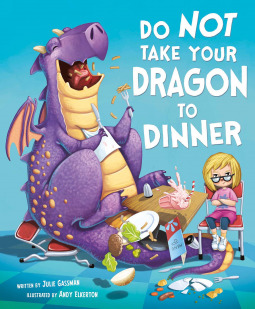 Almost any child will enjoy Do Not Take Your Dragon to Dinner; its predictable rhyming patterns and repetition will charm. Its descriptions of all the rude behaviors a dragon might engage in are sure to disgust to the delight of children. Dinosaur lovers will be particularly happy reading this book. The illustrations are bright, colorful, large, and seem to jump off the page. The illustrator worked hard to be inclusive of children of both genders and many ethnicities. The best part of the book’s structure is that after showing all the annoying and disgusting things a dragon might do at a restaurant, the author suggests that the child teach the dragon dining etiquette at home so he will be welcome in a restaurant with the child.
This book bears a strong resemblance to How Do Dinosaurs Eat their Food by Jane Yolen. The focus of Do Not Take Your Dragon to Dinner is, of course, dragons, but these dragons strongly evoke fanciful dinosaurs. If your child enjoys Yolen’s “How Do Dinosaurs…” books, then he or she would probably enjoy Do Not Take Your Dragon to Dinner. My ultimate test for a good children’s book is to decide if the adult will enjoy reading the book with the child as read-alouds should always be a time of pleasure for all involved. In the case of this book, I personally give it two thumbs up!
I would like to extend my thanks to netgalley.com and to Capstone Young Readers for giving me the opportunity to read this book in exchange for an honest review.
Rating: 5/5
Category: Humor, Children’s Fiction
Notes: suggested for ages 3-7; fun for home or school
Publication: September 1, 2017—Capstone Young Readers
Memorable Lines:
A rude guest like a dragon disturbs everyone.
He barges right in. He spoils the fun.
A wing in your face! A tail in a drink!
And worst of all, that distinct dragon STINK!
Lemons–in search of Bigfoot and love
Lemons
by Melissa Savage
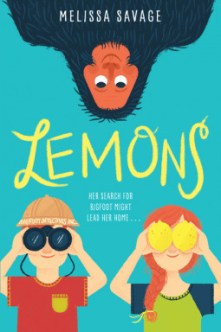 Lemons is a delightful chapter book intended for children ages 8-12. As an adult, I loved it, and I will purchase it for my grandchildren.
Lemons features Lemonade Liberty Witt, a young girl whose mother has passed away. Suddenly “Lem’s” whole life is turned upside down. She meets her grandfather, Charlie, for the first time when she moves in with him. Her first friend in her new town is Tobin who founded and is president of Bigfoot Detectives, Inc.
I laughed and cried as Lem and Tobin along with Charlie and Tobin’s mother, Debbie, live out the pain of losing their respective loved ones, at different times and in different ways. They help each other in their struggles and work to make lemonade out of lemons. The relationship of Lem and Tobin and their search for Bigfoot is both humorous and touching.
I recommend Lemons for independent reading or as a story to share in the classroom or with a parent. It explores issues of grief and the aftermath of expressions of grief for both adults and children. This book shows bullying from the perspective of a child who is socially awkward and what a friend can do to help. The tale abounds with humor as the dynamic duo spend the summer getting to know each other as they search for evidence of Bigfoot.
I would like to extend my thanks to netgalley.com and to Random House (Crown Books) for giving me the opportunity to read this book in exchange for an honest review.
Rating: 5/5
Category: Children’s Fiction (Middle Grades)
Notes: provides many opportunities for discussions about feelings and how we express them
Publication: May 2, 2017—Random House (Crown Books)
Memorable Lines:
The wrinkles are so deep and twisty, each one is like a road map to all the different stories of her life.
[Lemon, thinking about her mother:] It’s an important name. The most important name in the whole universe. I say it out loud every day so the universe remembers how important it is, and that it still matters to someone. And also so it doesn’t disappear. Like she did.
“So we let all our sad and mad feelings take over, and instead of loving and supporting each other, we hurt each other with our words.”
The most important thing to remember is to have gratitude for those we love and those who love us. Even if it’s not for the amount of time we had expected or wished for. If you don’t, you can be washed away by the sadness.
Animals Do Too! How They Behave Just Like You–Parents and Teachers, take note of this one!
Animals Do Too! How They Behave Just Like You
by Etta Kaner
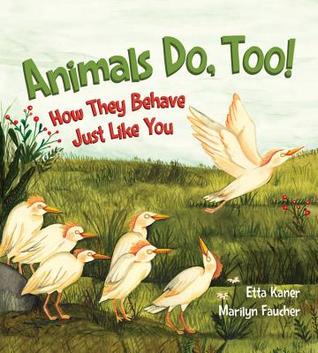 Animals Do Too! How They Behave Just Like You is a wonderful picture book that can be read on so many different levels and in many different ways. Preschoolers would enjoy the basic predictable story pattern that compares their action to that of an animal (e.g. “Do you like to dance? Honeybees do too!). The young elementary student will enjoy the scientific description of what the animal does that is like what the child does and why. The slightly older student would enjoy reading the book independently. At the end of the book is an illustrated glossary of all the animals in the book with a short description of each. No review of this book would be complete without kudos to the illustrator, Marilyn Faucher. Her illustrations of both people and animals are colorful, engaging, and fun. They will make you smile!
I would like to extend my thanks to netgalley.com and to Kids Can Press for giving me the opportunity to read this book in exchange for an honest review.
Rating: 5/5
Category: Children’s Nonfiction
Publication: May 2, 2017—Kids Can Press
Twelve Terribly Active Princesses Who Were Not Exactly Dancing–not a home run for me
Twelve Terribly Active Princesses Who Were Not Exactly Dancing
by Michael Ann Hobbs
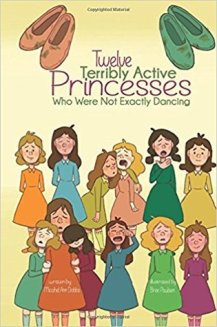 Twelve Terribly Active Princesses Who Were Not Exactly Dancing is a remake of the old fairy tale in which twelve princesses slip out every evening to dance the night away. The title got my attention and the idea was a good one. The effort unfortunately broke down in execution. The chapters are too wordy for a picture book for younger children and the interest just isn’t there for beginning chapter book readers. The reading level and number of words per chapter are also too high for those readers.
The illustrations are acceptable, but not outstanding. Two details I did enjoy are the method the princesses use to get to their nighttime world and the identity of the old woman who helps with the discovery of the princesses’ activities. I would recommend this book for young girls who are true baseball enthusiasts.
I would like to extend my thanks to netgalley.com and to Xist Publishing for giving me the opportunity to read this book in exchange for an honest review.
Rating: 3/5
Category: Children’s Fiction
Notes: Publisher recommends this book for Middle Grades
Publication: April 4, 2017—Xist Publishing
Argyle Fox–what can the little fox play on a windy day?
Argyle Fox
by Marie Letourneau
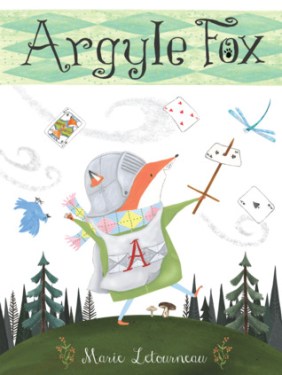 Argyle Fox is a cute children’s book about a little fox who wants to go outside to play on a windy day. He has fun, creative ideas for things to play, but other animals warn him that each activity can’t be done in the wind. Argyle Fox takes on various roles, such as spider and pirate, in his efforts at make believe, and the dialogue reflects these characters.
This story would make a good early childhood read aloud with lots of discussion opportunities. Argyle Fox has a simple, predictable story line that is reassuring to children, It encourages vocabulary development and creativity. The illustrations are fun and appropriate to the story. This picture book could be enjoyed in the classroom or at home.
I would like to extend my thanks to netgalley.com and to Tanglewood Publishing for giving me the opportunity to read this book in exchange for an honest review.
Rating: 4/5
Category: Children’s Fiction
Notes: recommended for ages 3-7
Publication: March 14, 2017—Tanglewood Publishing
Suggested Discussion Questions (Things to talk about while reading this book):
1. What fun things did Argyle Fox want to play? Have you ever pretended or played those things?
2. What animal friends gave Argyle Fox advice about the wind? Can you find them in the book?
3. What do these words mean: burrow, castle duel, pirate, plank?
4. Can you act out the story with me?
5. What other things can you play in the wind?
6. What nice thing did Argyle Fox do for his friends?
7. What is argyle? (Search the Internet for “argyle pattern” to share some great examples and for younger children contrast argyle with dots, stripes, plaid, etc.)
How can New Mexico help its students?
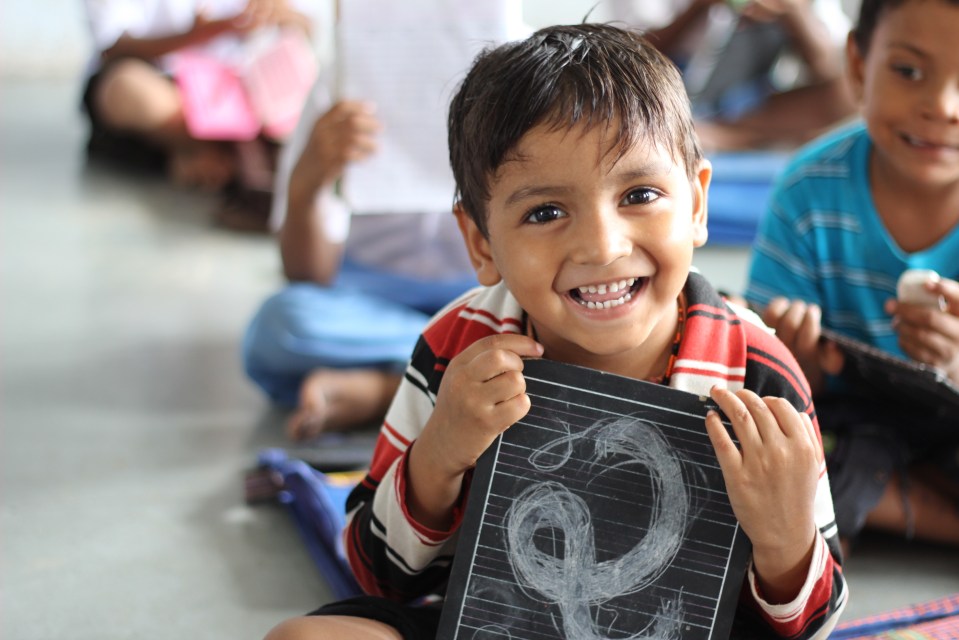 Education in New Mexico has gone from bad to worse. Teachers and, more importantly, students are suffering from bad decisions made at the state level by the Governor and her Secretary of Education, a non educator, cheered on by administrators at the school district level who fear retaliation if they stand up to the system. Teachers, in turn, fear from certain retribution (i.e. loss of job through inexplicably bad evaluations or being blackballed), if they hold their ground. The sweet children just do what they are told and suffer through overtesting and curriculum taught in a lockstep, one size fits all manner, while administrators claim that the “data driven instruction” will help students achieve higher levels. No, but it certainly wipes out individual initiative, creativity, and a love of learning. Oh, but the students do become better test takers!
Senator Tom Udall asked for my support for early childhood education on Facebook. Below is my response:

Malala: Activist for Girls’ Education
Malala: Activist for Girls’ Education
by Raphaële Frier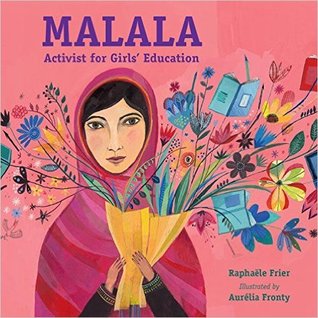
illustrated by Aurélia Fronty
The youngest recipient of the Nobel Peace Prize earned this award and world-wide acclaim through her activism in support of girls’ rights to education. Starting at age eleven, she began a courageous public battle against the Taliban and their destruction of girls’ schools in Pakistan. Malala: Activist for Girls’ Education, depicts Malala’s background and family support, her bravery in the face of Taliban violence, and her continuing efforts to bring light on rights’ issues for girls and women in particular, but including all downtrodden people.
The artwork is an essential part of this book, providing colorful symbolic images. At the end of the book there is a helpful timeline of events in Malala’s life as well as photographs of her. There is an added useful feature for parents and teachers who want to extend the study with information on Pakistan, education in Pakistan and the world, and Malala’s religion and inspiration. There are also brief discussions of other peacemakers: Gandhi, Mandela, and King. This section includes quotes from Malala as well as a listing of other sources of information about Malala including links to various important speeches she has made.
Teachers will find Malala: Activist for Girls’ Education a valuable teaching resource. It empowers both children and women to stand up for what is right and summarizes the religious and historical context in a way that is understandable and appropriate for children. This book could be used as an integral tool in many curricular units as well as to provoke thoughtful discussion by itself.
I would like to extend my thanks to netgalley.com and to Charlesbridge Publishing for giving me the opportunity to read this book in exchange for an honest review.
Rating: 5/5
Category: Younger Readers, Biography
Notes: recommended for ages 6-9
10 inches X 10 inches
48 pages
originally published in French
Publication: Charlesbridge Publishing–February 7, 2017
Memorable Lines:
One child, one teacher, one pen, and one book can change the world.
“Dear sisters and brothers, we realize the importance of light when we see darkness. We realize the importance of our voice when we are silenced. In the same way, when we were in Swat, the north of Pakistan, we realized the importance of pens and books when we saw the guns.”–Malala
“The extremists are afraid of books and pens. With guns you can kill terrorists; with education you can kill terrorism.”–Malala
 education pathways