Home » chapter books
Category Archives: chapter books
Hans Brinker, or The Silver Skates–historical look at Holland
Hans Brinker, or The Silver Skates
by Mary Mapes Dodge
illustrated by Edna Cooke
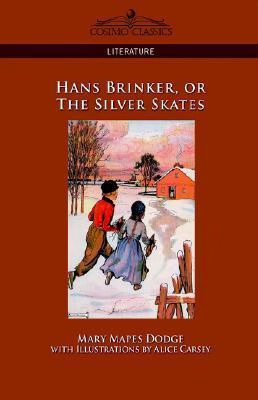
This children’s novel depicts life in Holland in the early 19th century and according to the author “aims to combine the instructive features of a book of travels with the interest of a domestic tale.” Dodge has done of lot of research so much of the book focuses on Dutch history and customs. Although Hans Brinker is the protagonist, he is not even a character in a large part of the book that describes a skating trip a small group of boys undertake traveling on frozen canals and rivers to various cities.
Hans and his family live in deep poverty because the father Raff had a work accident ten years prior that affected his brain. His wife also can not work because she has to stay home to look after her unpredictable husband. Hans and his sister Gretel are not always treated well because of their social standing. The author states that the circumstances of Raff’s situation were true.
Hans and Gretel have only inefficient wooden skates that Hans carved for them, but both are good skaters. Surprisingly, not much of the story deals with the race for silver skates. Hans is an honorable young man as is shown many times in the story.
The fictional part of Hans Brinker is interesting, even exciting, but the historical portions are less interesting. The boys visit museums on their trip and the history bounces from one item to another just as it would if you were visiting a museum. There are a lot of events referenced that students today do not have the historical background for (e.g. Prince William of Orange who freed Holland from Spain and became King of England). For further personal education on Dutch history or if working with homeschool students, Hans Brinker or the Silver Skates could be a valuable resource. Unless I were teaching a unit on Holland in a classroom, I doubt I would read this to or with Middle Grade students. I found the Preface to be a valuable introduction to what was to follow. I also liked the satisfying Conclusion which shared what happened to the characters as life moved on for them.
Rating: 4/5
Category: Children’s fiction, Historical fiction
Notes: 1. Intended for children 8-12 years old
2. I found this to be a slow read, but there were others in my book club who found the historical references very interesting.
Publication: 1865—George W. Jacobs & Co.
I obtained my copy from Gutenberg Press.
Memorable Lines:
“…the father and I saved and saved that we might have something laid by. ‘Little and often soon fills the pouch.’ ”
“We cannot say what we might have become under other circumstances. We have been bolstered up from evil, since the hour we were born. A happy home and good parents might have made that man a fine fellow instead of what he is. God grant that the law may cure and not crush him!”
Ten years dropped from a man’s life are no small loss; ten years of manhood, of household happiness and care; ten years of honest labor, of conscious enjoyment of sunshine and outdoor beauty, ten years of grateful life—One day looking forward to all this; the next, waking to find them passed, and a blank. What wonder the scalding tears dropped one by one upon your cheek!
How to Train Your Dad–the art of dumpster diving
How to Train Your Dad
by Gary Paulsen

Carl is the twelve year old narrator of this middle grade book which has a very conversational style. The vocabulary is somewhat advanced for a twelve year old, but that is because Pooder, Carl’s best friend who helps him write the story, goes through phases of interest (British, Navy seal, etc.). His various fascinations show up in his speech. Pooder admires Carl’s dad who, besides a few odd jobs, lives by bartering. Carl’s dad is very intelligent, mechanically inclined, and very kind. He trades energy (labor) for goods. He considers himself rich as he recycles from dumpsters or his neighbor Oscar’s junk piles. He built a whole truck from discarded spare parts. He prizes function over form; so if an invention works, it doesn’t matter how it looks.
His dad’s philosophy has been fine with Carl until he reaches middle grades and suddenly becomes aware of Peg as “the” girl. His summer goal is to become “lookatable” by the time school starts which is hard to do when your dad barters for XL camo T-shirts and pink bib overalls decorated with words like “juicy.”
The book explores Carl’s efforts to train his father using the methods in a puppy training pamphlet. His efforts are hilarious as are the contraptions his father builds and the objects he brings home. A lot of the dumpster diving food goes to the pigs and chickens. Carl and his dad have a rescue pit bull Carol who is an integral part of their family and, despite her stinky habit of shredding skunks, is allowed to accompany them everywhere.
How to Train Your Dad is a fun story that tweenagers will enjoy. Its casual style and over the top anecdotes are sure to appeal.
I received a complimentary copy of this book in exchange for an honest review. Opinions expressed in this review are completely my own.
Rating: 4/5
Category: Children’s Fiction, Middle Grades
Notes: Contains a very small amount of cussing
Intended ages: 10-14
Publication: October 5, 2021—Macmillan Children’s Publishing Group
Memorable Lines:
She’s in my grade at school and everyone likes her and I have never ever ever seen her be catty or crabby or phony to anyone ever which is something like a miracle in middle school, if you ask me.
Sometimes Pooder jumping from phase to phase without warning can be a little confusing. He might start things off an English lord before suddenly becoming an advertising mogul looking to make some coin and then turn into a Viking biting deep on a tomato-apple so the juice runs down into his beard-if-he-had-one while he’s thinking of pillaging a coast somewhere.
My father loved to barter. To trade, as he thought of it, energies, abilities, knowledge. Trade everything he could so as not to use money. “I have a widget,” he explained to me when I was very small, “and John Doe has an extra electric frying pan he doesn’t need, but he needs a widget and so we trade. We barter. Simple and clean. It’s the very best and purest way to do business.”
The Princess and the Goblin–multi-layered fairy tale for all ages
The Princess and the Goblin
by George MacDonald

Ready for another, good-for-all-ages fairy tale? My book club read The Princess and the Goblin by George MacDonald, a Scottish minister, poet, and novelist, who inspired and influenced many authors through the ages including C.S. Lewis, Lewis Carroll, J.R.R. Tolkien, G.K. Chesterton, and Madeleine L’Engle. Like The Chronicles of Narnia, The Princess and the Goblin is first and foremost a fun fantasy tale, beautifully written. As it progresses, layers of symbolism are added with themes of courage, honor, belief, trust, virtue, and faith. As any good fairy tale does, The Princess and the Goblin differentiates between good and evil. Children and adults are living in a rather messy world today where ethics often are blurred, but there are still truths that need to be valued. There are morals that hold us to a standard that forms a good society.
With the author’s great descriptive powers, all of the characters are detailed both physically and morally. The goblins are all evil with designs on the full destruction of the human race. The humans in the story are not perfect, but demonstrate character development based on their experiences.
Irene is a little princess who lives in a country castle. Her noble king-papa visits her regularly as he tours his kingdom staying in touch with his people. Irene discovers her great-great-grandmother living in a section of the castle. No one else has seen her or her rooms. She acts as a God figure in the story, guiding Irene to safety and to belief. A very wise woman, she helps Irene understand that not everyone is ready to believe at the same time. This is apparent in Lootie, Irene’s nurse, who has responsibility for the child’s safety and in Curdie, a clever and brave young miner who befriends and helps Princess Irene. The goblins desire the little princess as a mate for their prince.
There is a lot of adventure in this tale as Curdie works underground (literally) to discover the goblin plots and thwart them. The Princess and Curdie are at odds as he does not initially see what Irene sees because the great-great-grandmother does not actually disclose herself to him.
The settings include a castle with lots of hallways, some beautiful mountains, a small miner’s cottage, pitch black caves where miners toil away picking out ore, and goblin caverns and tunnels. These are the backdrops for the dramatic action of the goblins’ convocation, the Princess’ wanderings, and Irene and Curdie’s courageous rescues of each other. The battle scenes are well played out as Curdie defeats them with poetry and foot stomping.
This is a book that I am sorry I missed earlier in my life. I would love to have shared it with my children and grandchildren when they were younger, but I am happy to pass on the word now to new generations looking for well-written books with substance and value. I look forward to reading The Princess and Curdie, which was written eleven years later, as well as some of MacDonald’s other works (numbering over 50) which encompass a variety of genres. I believe that even reading a biography of this author’s life and influence would be quite interesting as his work did not take a straight forward path. He and his family were plagued with health issues, and despite his success and the admiration of his colleagues, he was not always financially solvent.
Rating: 5/5
Category: Fairy Tale, Fantasy
Publication: November 16, 2010—Project Gutenberg (which includes beautiful illustrations by Jessie Willcox Smith from the 1920 version.
First published by Strahan & Co. 1872
Also published by David McKay Co. 1920
Memorable Lines:
Her fear vanished: once more she was certain her grandmother’s thread could not have brought her there just to leave her there…
“But it wasn’t very good of him not to believe me when I was telling him the truth.” “People must believe what they can, and those who believe more must not be hard upon those who believe less. I doubt if you would have believed it all yourself if you hadn’t seen some of it.”
…Lootie had very foolish notions concerning the dignity of a princess, not understanding that the truest princess is just the one who loves all her brothers and sisters best, and who is most able to do them good by being humble toward them.
Out, Mouse!–cute Irish tale
Out, Mouse!
written by Valerie L. Egar
audio narration by Paul Collins

Finn, an elderly Irish man, has unwelcome visitors as a mice family makes themselves at home in his cottage. Finn takes advice from Professor Dunderbutt’s book and writes a series of kind letters to Mr. and Mrs. Mouse making suggestions of places they would probably prefer to live. Unfortunately for Finn, they always find something unsuitable about the places he suggests. I won’t spoil the ending, but I’ll say that it did make me smile.
I was referred to this book by blogging book reviewer Carla at Carla Loves to Read. She mentions in her review that she listened to the audio version while reading the printed text. I have been wanting to dip into the many audio versions of books currently offered. With an actor reading this with an Irish accent, this book seemed like the perfect one to begin my listening adventure. Although I will probably continue to prefer the written word, I did enjoy listening to this narration which was very well performed.
I would like to extend my thanks to NetGalley and to Whistle Oak for giving me the opportunity to read this book in exchange for an honest review.
Rating: 4/5
Category: Children’s Fiction, Humor, Multicultural
Notes: 1. Publisher Recommended Ages: 6-9 years
2. Includes a section that encourages students to create pictures of what they imagined as they read the story.
Publication: April 6, 2021—Whistle Oak
Memorable Lines:
Finn knew something was wrong as soon as he opened the door to his cottage. Something or someone, had made a mess of the breakfast he’d placed on the table before taking his morning walk.
If the mice don’t like your first idea, keep writing letters. Sooner or later, one of your letters will work and they will move. This method NEVER fails.
He found a scrap of red cloth and tied it around his neck. A tiny brass nail became a make-believe sword. He held it tightly in his hand, waving it back and forth.
The Wind in the Willows–endearing children’s classic for all ages
The Wind in the Willows
by Kenneth Grahame

My book club decided to read The Wind in the Willows by Kenneth Grahame, a children’s classic written in the early 1900’s by a British author. As a retired educator, I felt like this is one of those books I should have read. I downloaded a free copy from Project Gutenberg. It has some illustrations, but I found I would have liked more. The other readers in my group had various ways of reading this classic tale. One had a particularly beautifully illustrated version that I adore. Another friend listened to an audio version recorded on YouTube. At least one group member expressed disappointment that her version was an adaptation. Regardless of the version, however, we all enjoyed reading it.
The Wind in the Willows is a charming tale of a water rat, mole, badger, otter, and toad. With its exquisite language and intricate descriptions, this book is perfect for reading as a family. It was a staple in A.A. Milne’s family which I consider high praise indeed. The pace moves back and forth between quiet reflection and raucous adventure. The tale has themes of home, friendship and satisfaction. The characters move through life together with commonalities and differences that serve to make the story even more interesting.
Toad is a favorite character with moods ranging from manic to subdued and intentions to reform that often seem genuine, but sometimes are quite insincere. He has a passion for the latest and greatest “toys” and is always on the lookout for a new adventure. Fortunately, he has supportive friends who will do anything for him. He is a source of humor for the reader.
If you have never read The Wind in the Willows, I strongly recommend it, especially if you enjoy beautiful word pictures. I like researching unfamiliar words, but those who don’t will have no problems as the general meaning of words of a botanic nature, Britishisms, and words no longer in common usage are certainly easily understood from context. The Wind in the Willows is a great read, and I am so glad to have added it as part my literary heritage.
Rating: 4/5
Category: Children’s Fiction
Notes: Ages 7-14
Publication: 1908 & 1913—Charles Scribner’s Sons
Memorable Lines:
Toad talked big about all he was going to do in the days to come, while stars grew fuller and larger all around them, and a yellow moon, appearing suddenly and silently from nowhere in particular, came to keep them company and listen to their talk.
He increased his pace, and as the car devoured the street and leapt forth on the high road through the open country, he was only conscious that he was Toad once more, Toad at his best and highest, Toad the terror, the traffic-queller, the Lord of the lone trail, before whom all must give way or be smitten into nothingness and everlasting night.
Toad sat up slowly and dried his eyes. Secrets had an immense attraction for him, because he never could keep one, and he enjoyed the sort of unhallowed thrill he experienced when he went and told another animal, after having faithfully promised not to.
The Snow Bear–the old ways are disappearing
The Snow Bear
by Holly Webb
Illustrated by Artful Doodlers
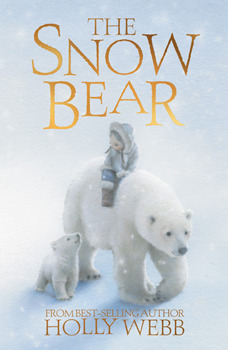 Do you want to share information about the Arctic with the children in your life in an engaging way? The Snow Bear by Holly Webb is a great way to do it. Sara goes to visit her grandfather who lives on a cliffside in Canada. As it snows, he talks with Sara about going to the Arctic when he was a boy with his father to record the life and customs of the Inuits living in the Arctic as Sara’s great-grandfather could already see the old ways disappearing.
When Sara goes to bed that night, she dreams herself into the stories Grandpa told her and has her own experiences which bring the Arctic to life for her. She rescues a cub, falls into a crevasse, and shares a warming Inuit soup.
The Snow Bear is a chapter book. I think children would benefit from reading this with an adult as they look at a map of the Arctic and discuss the terms used. An Internet search of corresponding images for items such as “Arctic tern” and “quilliq” would be helpful too. Although the story is fictional, there is much information included.
I would like to extend my thanks to netgalley.com and to Myrick Books/Tiger Tales for giving me the opportunity to read this book in exchange for an honest review.
Rating: 5/5
Category: Children’s Fiction
Notes: 1. The illustrations did not show up well in my Advanced Reader Copy, but the sample line drawings shown on Amazon were perfect for this story.
2. This is the first book I have read by Holly Webb, but I discovered she is a prolific children’s author with books suitable for all the various ages.
3. I also learned that Artful Doodlers is responsible for many of the illustrations that children’s book lovers cherish.
4. This book is part of a Wintry Tales Series.
Publication: October 1, 2019— Myrick Books/Tiger Tales
Memorable Lines:
“That’s why we went. We wanted to record it all, before it changed forever.”
…the nearest dog, who was curled up in the snow, with his tail wrapped tightly around his nose and his paws. Sara had never seen a dog curl up so small—he looked almost like a cat. “They can sleep through a blizzard like that. And they have to stay out—they’re our guard dogs, too. They let us know if there’s a polar bear around.”
“We always share what we have,” Alignak said, sounding almost surprised. “Food belongs to everyone who needs it.”
The Dog Who Lost His Bark–pet therapy works both ways
The Dog Who Lost His Bark
by Eoin Colder
illustrated by P.J. Lynch
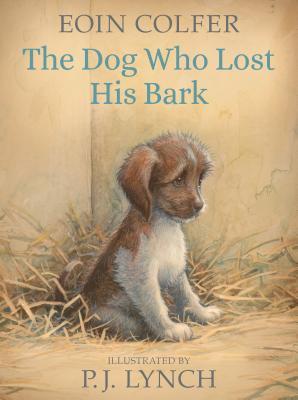 Oz is a sweet puppy traumatized by a bad experience with a mean family. He ends up in a dog shelter where Patrick discovers and adopts him. Patrick comes from a musical family, and music emerges as the key to socializing Oz who has remarkable pitch when he whines. He starts with “Ode to Joy,” but expands his repertoire quickly. After Patrick’s breakthrough with Oz, he decides he needs to teach him to bark.
In the background of the puppy drama, we can tell, as can Patrick, that something is wrong with his father who is supposedly in Australia playing with his band. Patrick decides that if he gets rid of Oz, his father, who is allergic to dogs, will return to be a part of the family again. Oz goes back to the pound, but Patrick is no happier and Oz is very sad. Patrick learns that his mother and father are separating, but that his dog loves him and will always be his best friend.
The Dog Who Lost His Bark is a sweet story, especially for dog lovers. It could be helpful for children whose family structure is in transition, providing opportunities for discussions of the feelings the various characters have. I would encourage parents to read this book to their child or for a child to read it independently. Sharing with a group is probably not the best choice. The issues could be a trigger for sensitive children and problematic depending on the family situations of the children in a group.
I would like to extend my thanks to netgalley.com and to Candlewick Press for giving me the opportunity to read this book in exchange for an honest review.
Rating: 4/5
Category: Children’s Fiction
Notes: This chapter book is intended for children:
Ages: 7-10
Grades: 2-5
Publication: September 10, 2019—Candlewick Press
Memorable Lines:
This boy seemed kind right now, but that was people’s CLEVER TRICK, to be happy until it was time to be ANGRY. Dog was not going to fall for that one again.
“…teach your dog to bark. Because when a dog barks at something, that dog isn’t so afraid of that thing anymore.”
“You have a friend, Patrick. You have the best friend a boy could ever have. And he loves you even when it looks like you don’t love him anymore.”
Juana and Lucas: Big Problemas
Juana and Lucas: Big Problemas
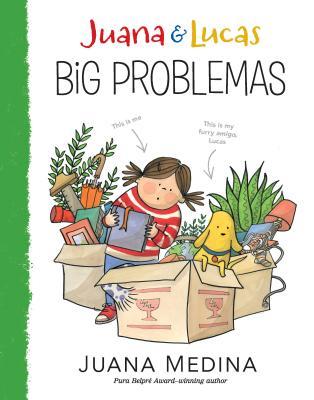
I had a blast reading Juana and Lucas: Big Problemas. Author and illustrator Juana Medina, like the main character in her book, is from Bogotá, Columbia. I know some bilingual teachers who would be uncomfortable with the code switching in this book; I love it. For me, inserting some Spanish words in places where the context or illustrations make the word meanings plain adds color and flavor to this chapter book written mainly in English.
Juana, her Mami, and her dog Lucas have an almost perfect life together. They have a routine and a support group of family and friends that keep them happy. Things start to change when Mami gets a new hairstyle and starts wearing more perfume. The new man in Mami’s life is Luis, an architect. Juana likes him but she doesn’t want things to change, and she doesn’t want Mami and Luis to get married. We learn about Juana’s dad who passed away and about the sadness of not having a father. We share in the characters’ preparations for the wedding and the move. All of this is portrayed sensitively, but also with humor. The illustrations fit the book well.
I learned about a favorite Columbian soup, ajiaco. It is creamy and made of several types of potatoes that cook to various consistencies. It has corn on the cob, capers, chicken, sour cream, and herbs, and is topped with a slice of avocado. The other unfamiliar food to me is chocolate con queso. This special treat consists of hot chocolate with chunks of cheese—chihuahua, queso fresco, or mozzarella. Evidently it is a delight of sweet and salty and is served with bread. I’m ready for a trip to Columbia!
I would like to extend my thanks to netgalley.com and to Candlewick for giving me the opportunity to read this book in exchange for an honest review.
Rating: 5/5
Category: Children’s Fiction
Notes: Age Range: 5 – 8 years
Grade Level: Kindergarten – 3
Publication: May 14, 2019—Candlewick
The Eye of the North–children’s fantasy adventure
The Eye of the North
by Sinéad O’Hart
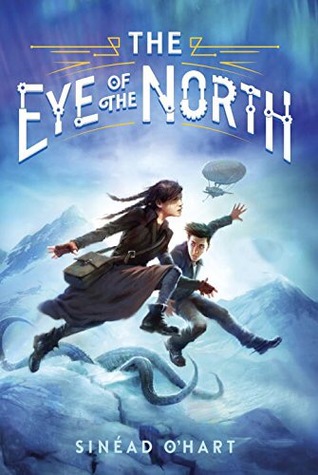 The Eye of the North is a fantasy adventure tale intended for children in grades three through seven. The interest level would be appropriate for that range and maybe a little higher, but the reading level is too high for most third graders as it contains some fairly advanced vocabulary. It would make a good read aloud with a parent. The chapters are short. Within each chapter, when the two main characters are apart, the story jumps from one character to the other in a well-defined fashion which keeps the plot moving and the reader involved in the action of both characters.
The main character is Emmeline Widget whose parents are immersed in secret scientific research which endangers both them and their daughter. The storyline follows Emmeline’s adventures through apparent abandonment, solo sea travel, kidnapping, attacks and rescues by extraordinary creatures, and near death experiences. Along the way she meets Thing, a most unusual and self-sufficient boy. She saves his life and he repays her by following her north to lands of snow and ice to rescue her.
I would like to extend my thanks to netgalley.com and to Random House (Knopf Books for Young Readers) for giving me the opportunity to read this book in exchange for an honest review.
Rating: 4/5
Category: Children’s Fiction
Notes: Age Range: 8-12 years
Grade Level: 3-7
Publication: August 22, 2017— Random House (Knopf Books for Young Readers)
Memorable Lines:
Even worse, a roaring river ran right at the end of their property, sweeping past with all the haughtiness of a diamond-encrusted duchess.
…her gaze was caught by a dusty head emerging from a grating in the wall. This head—the color of whose hair was impossible to determine—was swiftly followed by a grubby body dressed in overalls. The fingernails of this creature were clotted with dirt and oil, and his—its?—face was smeared with grease. As Emmeline watched, he slithered out of the hole he’d been hiding in, until all of him—and there wasn’t much—was standing in front of Emmeline with a hand held out in greeting.
“Mornin’,” he said “M’names’s Thing. Who’re you?”
The wind was rummaging through his clothing like a pickpocket looking for a payday.
Lemons–in search of Bigfoot and love
Lemons
by Melissa Savage
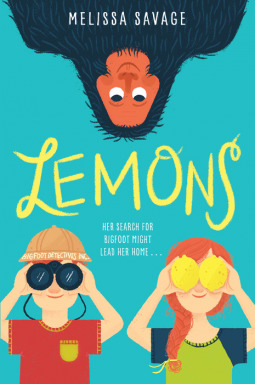 Lemons is a delightful chapter book intended for children ages 8-12. As an adult, I loved it, and I will purchase it for my grandchildren.
Lemons features Lemonade Liberty Witt, a young girl whose mother has passed away. Suddenly “Lem’s” whole life is turned upside down. She meets her grandfather, Charlie, for the first time when she moves in with him. Her first friend in her new town is Tobin who founded and is president of Bigfoot Detectives, Inc.
I laughed and cried as Lem and Tobin along with Charlie and Tobin’s mother, Debbie, live out the pain of losing their respective loved ones, at different times and in different ways. They help each other in their struggles and work to make lemonade out of lemons. The relationship of Lem and Tobin and their search for Bigfoot is both humorous and touching.
I recommend Lemons for independent reading or as a story to share in the classroom or with a parent. It explores issues of grief and the aftermath of expressions of grief for both adults and children. This book shows bullying from the perspective of a child who is socially awkward and what a friend can do to help. The tale abounds with humor as the dynamic duo spend the summer getting to know each other as they search for evidence of Bigfoot.
I would like to extend my thanks to netgalley.com and to Random House (Crown Books) for giving me the opportunity to read this book in exchange for an honest review.
Rating: 5/5
Category: Children’s Fiction (Middle Grades)
Notes: provides many opportunities for discussions about feelings and how we express them
Publication: May 2, 2017—Random House (Crown Books)
Memorable Lines:
The wrinkles are so deep and twisty, each one is like a road map to all the different stories of her life.
[Lemon, thinking about her mother:] It’s an important name. The most important name in the whole universe. I say it out loud every day so the universe remembers how important it is, and that it still matters to someone. And also so it doesn’t disappear. Like she did.
“So we let all our sad and mad feelings take over, and instead of loving and supporting each other, we hurt each other with our words.”
The most important thing to remember is to have gratitude for those we love and those who love us. Even if it’s not for the amount of time we had expected or wished for. If you don’t, you can be washed away by the sadness.
 education pathways