Home » Books
Category Archives: Books
Booktrovert?
Are you an extrovert? An introvert? Maybe a booktrovert?
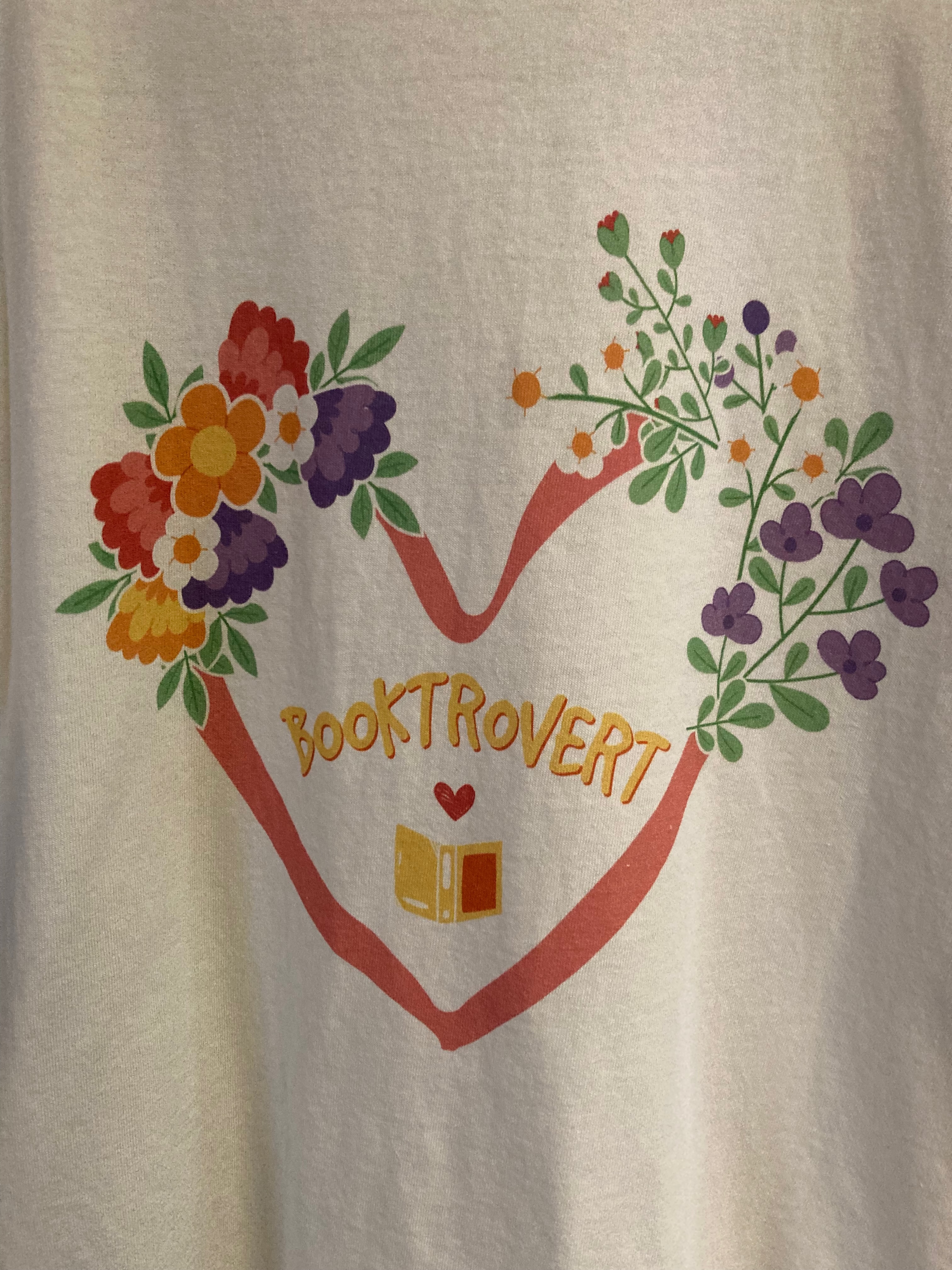
I fell in love with this t-shirt on author Melinda Curtis’ website. I rarely buy clothes for myself, but this shirt is me!
When I started looking around, I found lots of other t-shirts on the Internet with the word “booktrovert.” What??? This is a thing??? Where had I been in the last few years? (OK, that one is easy–I had my nose in a book!) I looked up the word “booktrovert.” According to the Urban Dictionary and other sources, a booktrovert is “a person who prefers the company of fictional characters to real people.” Now, I just find that weird. That is NOT who I am. Since this word is “made up” or can be considered part of our evolving English language, I am going to offer up MY definition: a booktrovert is someone who may or may not enjoy the company of real people, but enjoys spending time reading a good book. A booktrovert also enjoys all things bookish–memes, libraries, bookstores, mugs, bookmarks, book clubs, t-shirts, etc.
So, to all of you who love books, I salute you and the books you are reading. I also wish you a wonderful season of reading, whether you are sunning on the beach or snuggled up by a cozy fire!

The Keeper of Hidden Books–importance of books
The Keeper of Hidden Books
by Madeline Martin

This book is perfect for:
—lovers of books, reading, and libraries
—those who think reading is important for continuity of culture
—people who value ideas
—readers who like the notion of discussion in book clubs
—history buffs
—those interested in Poland—culture, history, role in WWII, underground resistance
—Girl Guides and Boy Scouts
—people who want to know more about the horrific treatment by the Nazis of Jews and Poles.
The Keeper of Hidden Books starts gently with Girl Guides preparing their skills for a war they assumed would never happen. Poland had lost its freedom before, and the Poles were determined it would not happen again. We gradually learn about the lives and values of several of the girls and their families. We witness the responses of the Polish citizens—both heroic and traitorous. As the story progresses we watch the destruction by the Nazis of libraries and books and the valiant efforts of librarians and volunteers who resist this extinction of knowledge. We also observe the desire of people of all ages to maintain access to books that provide escapism during times of hunger, persecution and despair.
This is a good book for me because I treasure books as many of the characters in the novel do. It is a warning to all of us to guard our freedoms, especially the freedom of speech which includes the written word. Hitler worked hard to maintain his power through censorship; we must not let history repeat itself.
I received a complimentary copy of this book in exchange for an honest review. Opinions expressed in this review are completely my own.
Rating: 4/5
Category: Historical Fiction
Notes: The author concludes with notes about her research into the history behind her story, a tale which is based on real events and people in Warsaw. Buried in her discussion of the destruction of books by the Hitler Youth is the statement “But the power of books still endured.” That is a distillation of the theme of this book.
Publication: August 1, 2023—Hanover Square Press (Harlequin)
Memorable Lines:
Now the world crumbled in on itself, burning away the beauty of Warsaw, and there was no more time for reading than there was food to eat.
More and more children were appearing at the library as time went on. Many of them were desperate for distraction, to read about faraway places they could not go, or to transport themselves to mythical lands that could still tease at their dulled imaginations. They wanted stories where villains were vanquished. But books were more than a means of escape for these children; they offered another life to live. They offered hope.
…why Hitler so feared the books he banned. There was power in literature. Brilliant and undeniable. Books inspired free thought and empathy, an overall understanding and acceptance of everyone.
Reflections on Reading
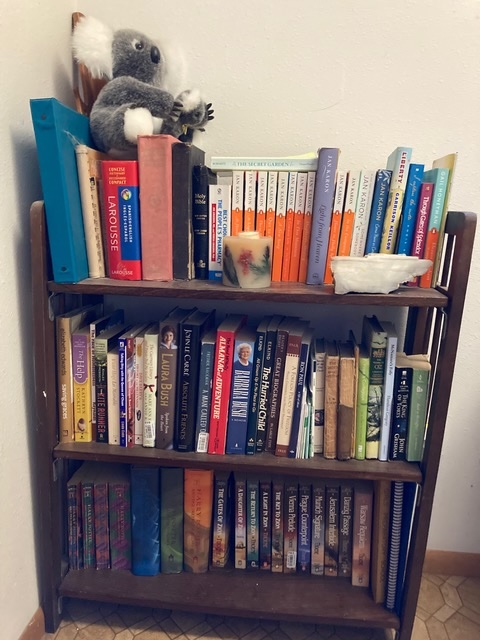
Like singer Jimmy Buffett who “took off for a weekend last month, just to try and recall the whole year,” I spent some time this week reflecting on books and reading. I had decided this year not to get so wrapped up in Advanced Reader Copies (ARCs) that I felt limited in my reading choices. To start this process I began requesting fewer ARCs thus limiting the self-imposed pressure of commitments to authors and publishers. Initially difficult to do, I can now visually see in my book lists that I have requested about half of the number of books I normally applied for in the past from ARC sources. The result is that I am enjoying my book club reads more, occasionally reading library books and books that have been waiting patiently on my physical bookshelves, and reprioritizing my non-reading time.
“To everything there is a season.” I enjoy reading as much as ever, but I am happy with the gradual rebalancing of my time as I make these subtle changes.
HAPPY READING TO ALL! 📚💜📚
Reading for the Love of God–erudite and spiritual
Reading for the Love of God
by Jessica Hooten Wilson

I thought Reading for the Love of God would be the perfect book for me, channeling my reading choices in a way that points to God and shining a light on the spiritual connection of God and a reader. It did both of those things, but I have to admit that, as a whole, it was not the right book for me. Some of this well organized book was appropriate for the average reader, but much of it was clearly written by a professor with a strong background in both literature and theology. Perhaps it would be more appropriate for study in a college level course. Here is an example from the text that demonstrates the background knowledge needed to fully benefit from this book: “In Christian tradition, the anagogic sense refers to a text’s echo or reflection of the divine. Where do we see God here? Or we might equate the anagogical with the eschatological: Knowing that all will end in our death and Christ’s second coming, what matters in what we have read? It’s the cultivation of a sight that points our eyes ever upward toward heaven.”
On the other hand, Hooten presents a lot of interesting ideas about reading. She is quite knowledgeable and gathers information from and about many authors. The footnotes cover about twenty percent of the book. She extols the virtues of reading and rereading the classics, and she asserts that learning how to read various genres helps us learn to read Scripture. If we read other books than the Bible, even secular books, through the lens of Scripture, God can teach us. Even books that some Christians avoid reading (e.g. Harry Potter) can lead to examination and discussions of evil versus good, etc. We should both enjoy and use literature, but should not put the message above the story itself. She points out that there are many current and historical opinions about how to best read the Bible addressing issues such as meditation, interpretation, the role of allegory, the depths of word meanings, and symbolism.
The author carefully places essays in the book expounding on what we can learn from examining the writing and reading of St. Augustine, Julian of Norwich, Frederick Douglass, and Dorothy L. Sayers. After her Conclusion and Acknowledgments, she guides the reader through a practice session of analysis of Flannery O’Connor’s short story “The River.” O’Connor is a much referenced author in this book so this discussion seems quite appropriate. A section of Frequently Asked Questions is very practical and useful. It is followed by “Reading Lists of Great Books” which is grouped by ages. The next list is “Great Books: The Living Tradition” which contains classics sorted by time periods and followed by a list entitled “Writers Whose Works Touch the Sacred and the Profane.” I’m not sure what her criteria are for this list, but it includes authors such as Wendell Berry, Frederick Buechner, Willa Cather, G. K. Chesterton, and Dorothy Sayers.
I received a complimentary copy of this book in exchange for an honest review. Opinions expressed in this review are completely my own.
Rating: 4/5
Category: Christian, Religion & Spirituality
Notes: As I think back over Reading for the Love of God, I find I am viewing it in a more positive light than when I was working my way through it. I am not recommending it to my book club as I initially thought I would do. I will be mulling her theses over and referring to her suggestions for reading selections as I expand my personal reading choices.
Publication: March 28,2023—Brazos Press (Baker Publishing Group)
Memorable Lines:
If we are going to read—the Bible included—we should learn how to read well. We should become readers who do not read for our own gain but who read as a spiritual practice, always open to how the Lord is planting seeds in our heart, teaching us more about him, and showing us ways of living more like Christ in the world.
But we should not read Virgil’s Aeneid in order that we may check a box on a great books list. Rather, a book such as the Aeneid is to be used—for pleasure and edification temporarily—and ultimately enjoyed in how it points us to God.
We read because without books our world shrinks, our empathy thins, and our liberty wanes. We read for the same reason that people have read—and shared poems or stories—for thousands of years because our eyes are not enough by which to see. The time and place in which we live blinds us to other perspectives and ways of being that are not of our own experience. We read because we have been given the gift of imagination and intellect, and we exhibit our gratitude by using it.
The Girl Scouts at Rocky Ledge–a gem from 1922
The Girl Scouts at Rocky Ledge
by Lilian Garis
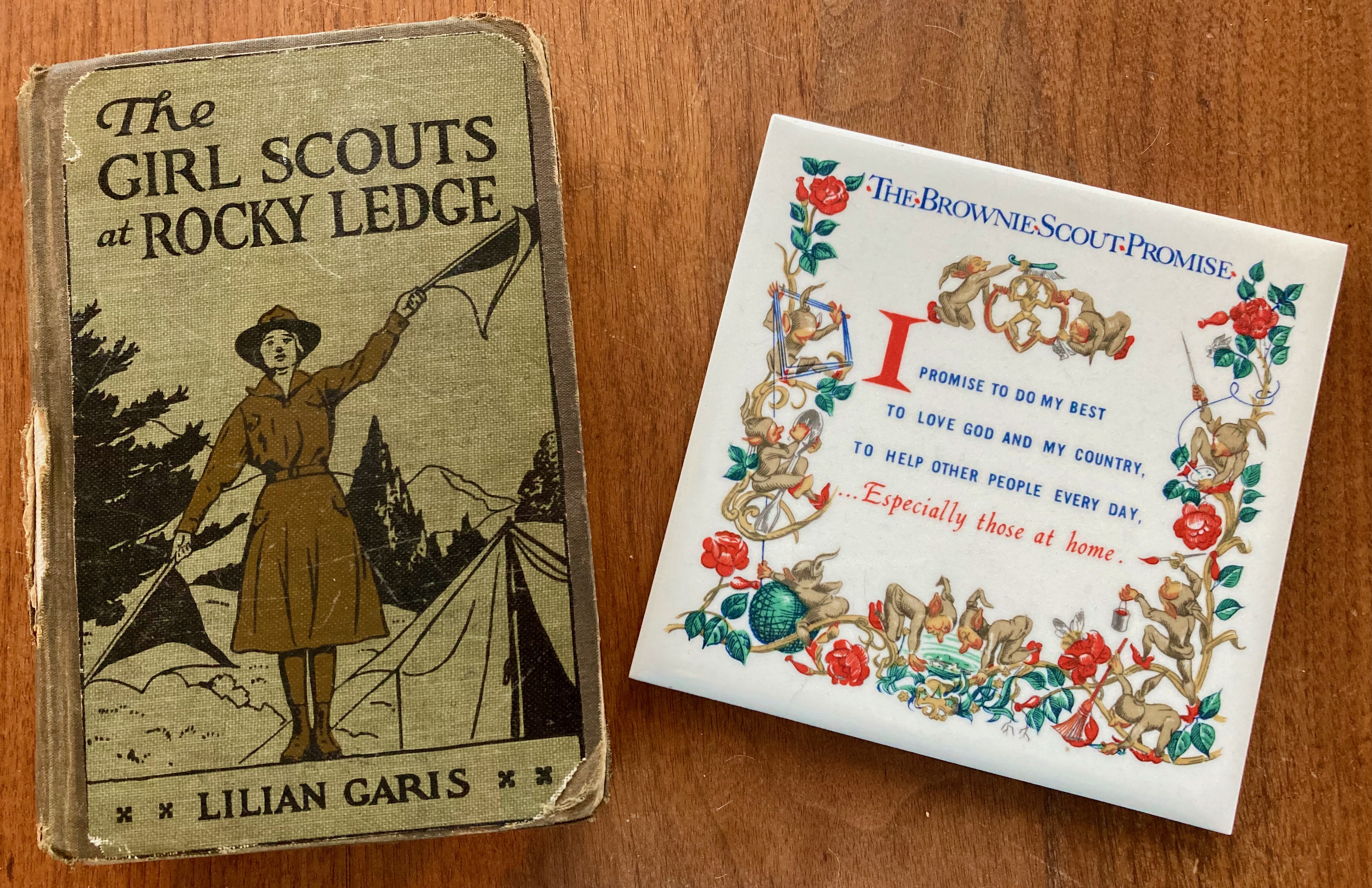
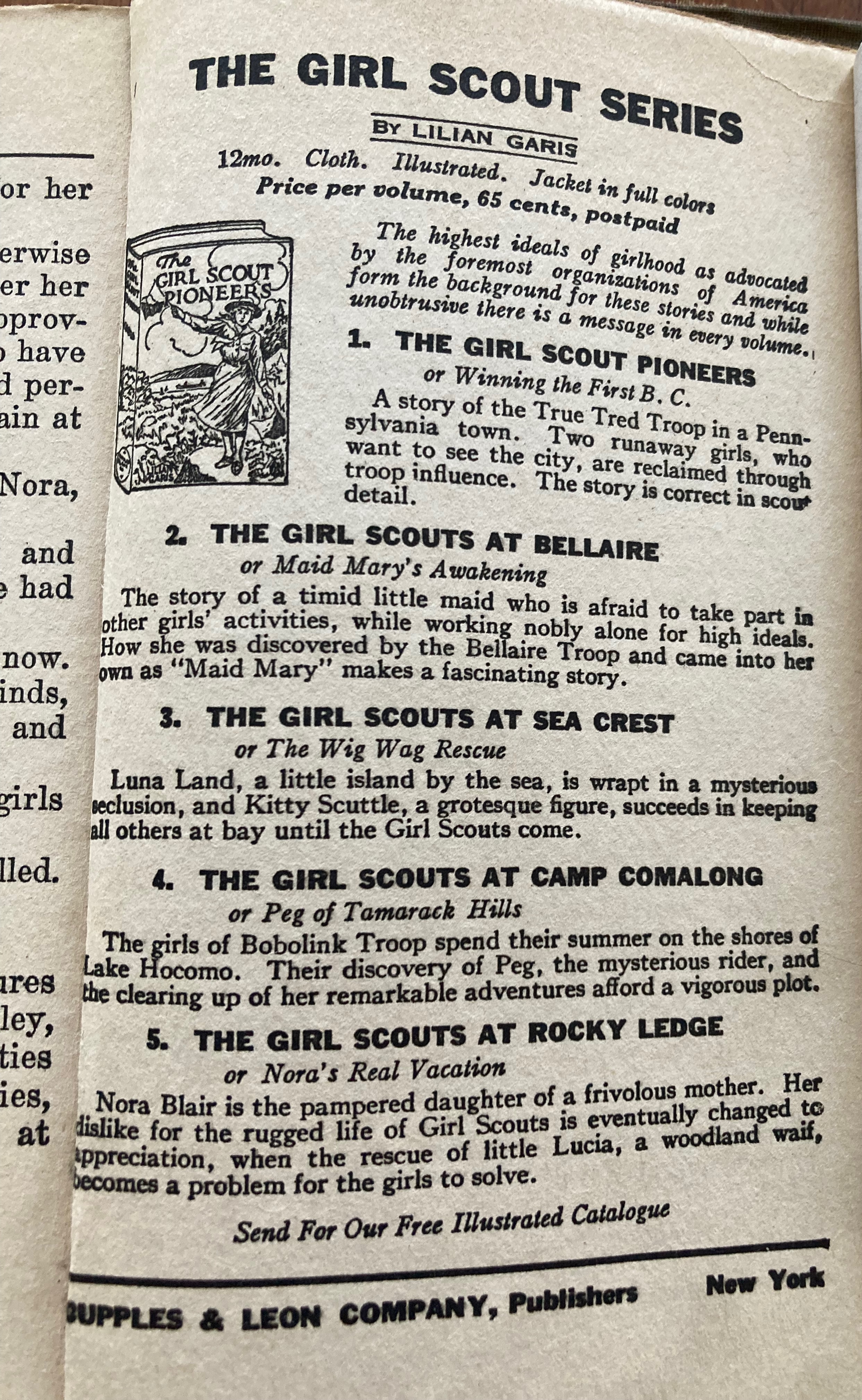
My sister-in-law, in downsizing, came across this book with my name written in the front. I was delighted when she offered to mail it to me. I remember buying it in sixth grade when the teachers opened up the book room and held a sale. From the markings, it appears that the local library had donated books to the school. This book with a copyright date of 1922 seems to have been formally checked out many times, but then informally checked out at the school in the 1948-1952 time period. I was born in 1952, so this book was sitting on a shelf, unread, for about 12 years before it landed in my hands and then literally a lifetime before it made it back to me.
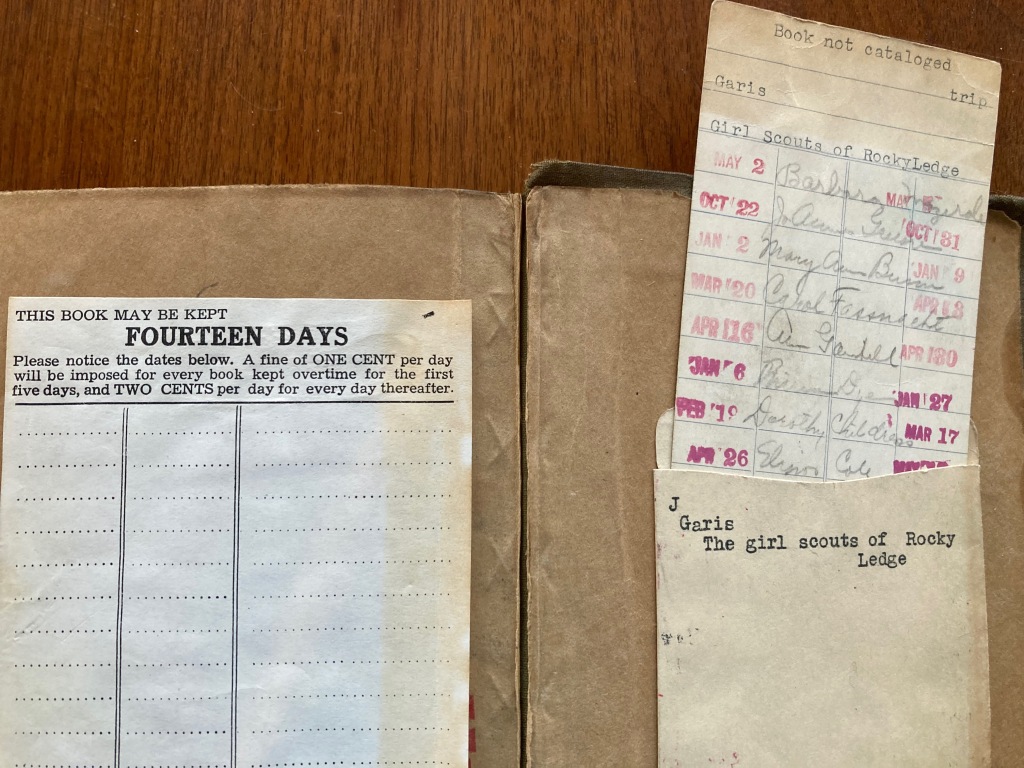
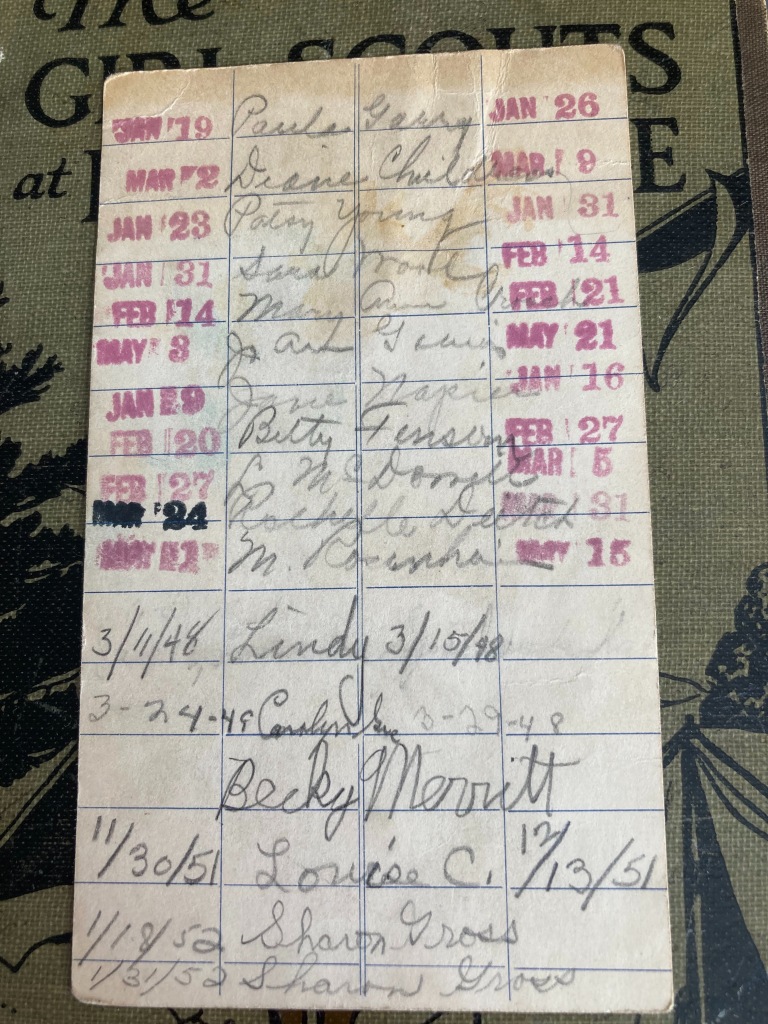
The Girl Scouts at Rocky Ledge is a delightful read. It is the tale of pretty little Nora, pampered with the best and most delicate of clothes. She has a vivid imagination that confounds most adults. She is sent for a month’s vacation with Jerry and Ted (Theodora). Jerry is a surveyor and Ted specializes in wildlife. They spend their days exploring the terrain around the house where they live. There are a group of Girl Scouts camping in their area, with khaki uniforms, rules, and lots of freedom. The Chickadee Patrol adopts Nora, and she discovers that there are many benefits to their way of passing the summer.
I would love to spend time with Jerry and Ted who are fun loving and accepting. The Girl Scouts are quite individualistic and indulge in friendly teasing. A mystery arises when Nora in her wanderings discovers Lucia, a frightened little girl and resolves to help her, leaving food for her until one day she disappears. Another mystery revolves around Vita, the Italian cook in the household. She engages in odd conversations with Nora about the attic as if she is trying to scare Nora.
I enjoyed the older but not stilted style of writing. The characters and narrator have a broader vocabulary than we are used to in children’s books, but it is quite understandable even to the modern ear. The first chapter is confusing because Nora wants to rename her hosts. They take it in good stride and then the story is in full swing. Cap (Captain) is a canine character who can be relied on to judge people well and to take care of Nora as she explores the woods.
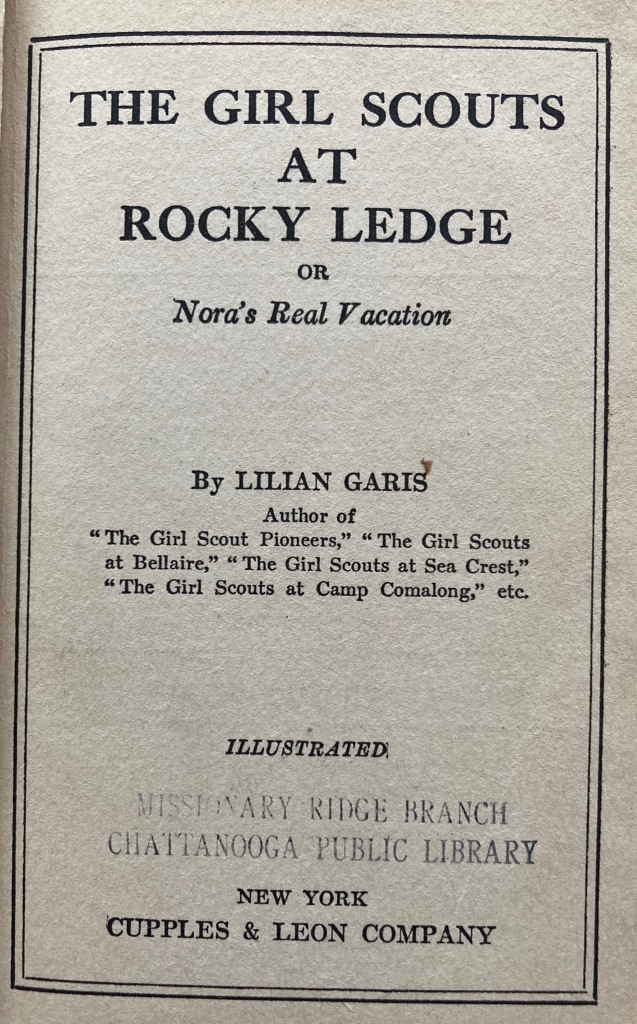
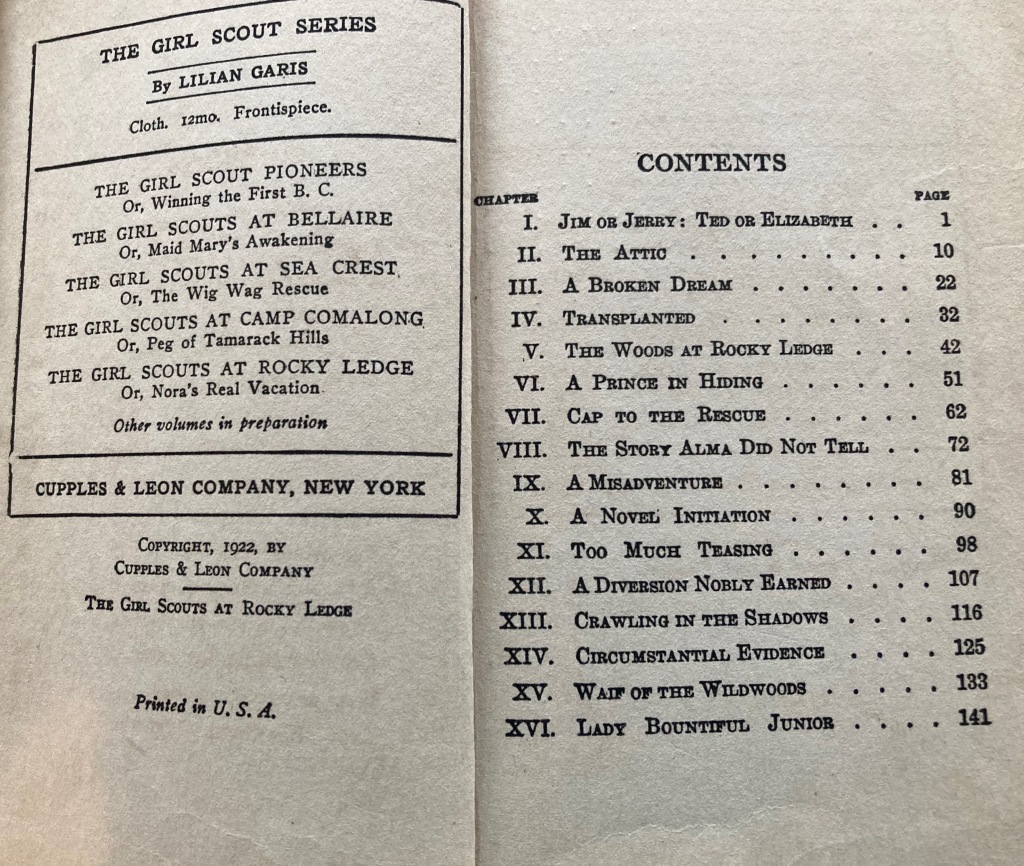
Lilian Garis (20 October 1873 – 19 April 1954) was a prolific American writer of juvenile fiction. She authored hundreds of books from 1915 to the early 1940’s. She was a newspaper reporter when she met her future husband Howard Garis, also a reporter. He was as prolific as his wife as he wrote the Uncle Wiggily Longears series. These stories first appeared daily in the newspaper, every day except Sunday, for almost 40 years—11,000 stories which were nationally syndicated and compiled into books. Both authors’ books have been reprinted over the years giving testament to their appeal and quality of writing.
Rating: 5/5
Category: Children’s Fiction
Notes: Part of the Girl Scout Series, but is a standalone. The intended audience is probably ages 8-12, but it would be fun for girls of all ages
Publication: 1922—Cupples and Leon Company
Memorable Lines:
If one could look pretty after a ducking in a strange lake, Nora did. Her curls liked nothing better, and her cheeks pinked up prettily, while her eyes—they were as blue as the violets that listened in the underbrush.
The day brings wisdom, and when Nora again dressed in the borrowed khaki suit (she had suddenly taken a dislike to her own fancy dresses), the glorious sunshine of the bright summer morning mocked the terrors of the night.
Nora was disconsolate. For two days the dainties left for Lucia had remained untouched. The bread box which Vita had given her to play with, and into which the food was deposited for Lucia, stood upon the tree stump with the sliced lamb, the piece of cake, and the big orange which comprised the last installment offered by the sympathetic Nora, just as she had left it.
Love in Harmony Valley Binge Wrap Up
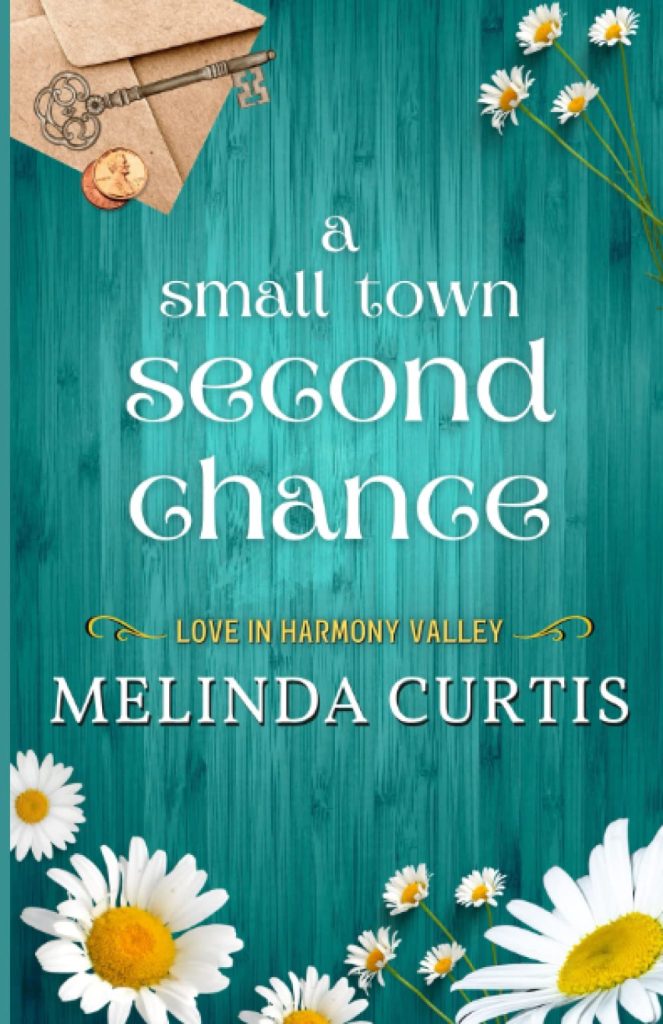
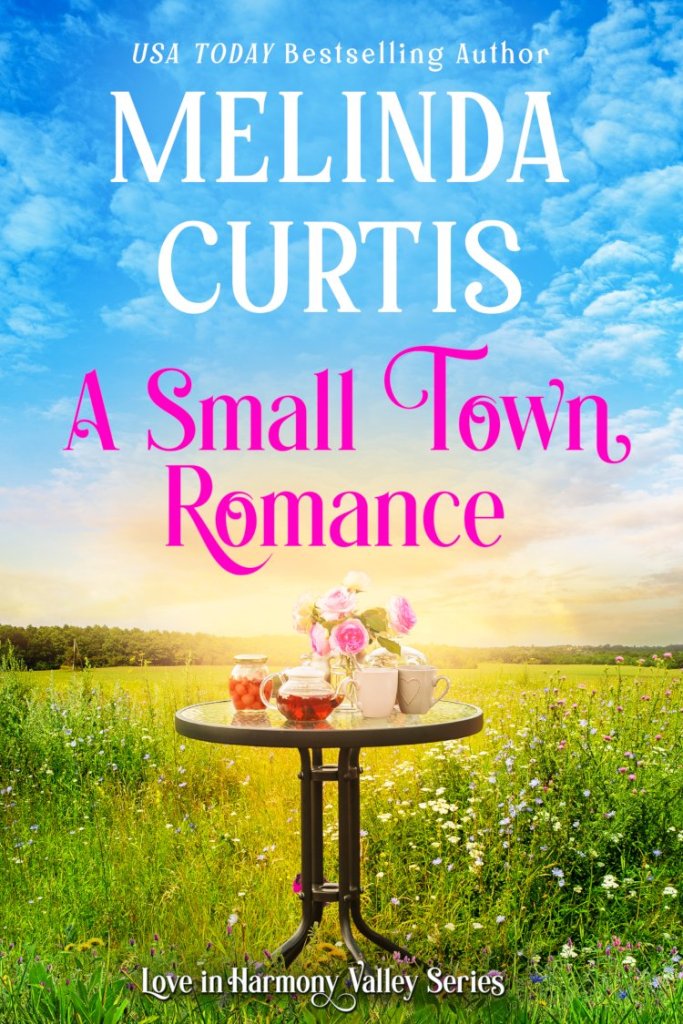
In A Small Town Romance, Melinda Curtis paints a lovely picture of Harmony Valley, the setting of her Love in Harmony Valley series:
“Harmony Valley could have served as a backdrop for a Norman Rockwell painting. Old fashioned lamps lined Main Street. The buildings had brick fronts and canvas awnings. The wind blew brown and orange leaves down the road listlessly, as if even the elements knew the pace here was slow. The jury was out on whether it was off-the-grid, enjoy-your-time-off slow or bore me to tears slow.”
While A Small Town Romance is the last book I will read during this binge of the Love in Harmony Valley series which I have enjoyed, Melinda Curtis continues to rewrite and re-edit the books in this series. She is publishing one book per month. It appears the original series had 17 books including one novella.
Currently the ones shown on Amazon and Goodreads are:
#8 Finding Family in the Small Town—August 22, 2023
#9 A Small Town Girl with a Big City Secret—September 19, 2023
Thanks to my readers for sticking with me during my unusual binge. It’s probably a lot more fun to read the books than the reviews so your interest and loyalty are appreciated. Now we return to a variety of books just waiting to be read—ARC’s, Book Club reads, and personal choices.
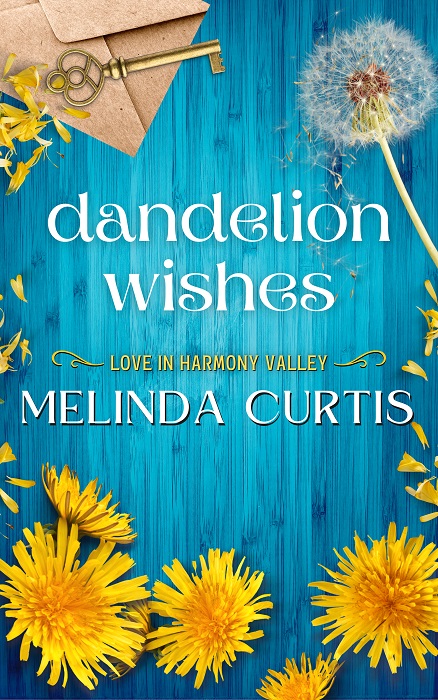
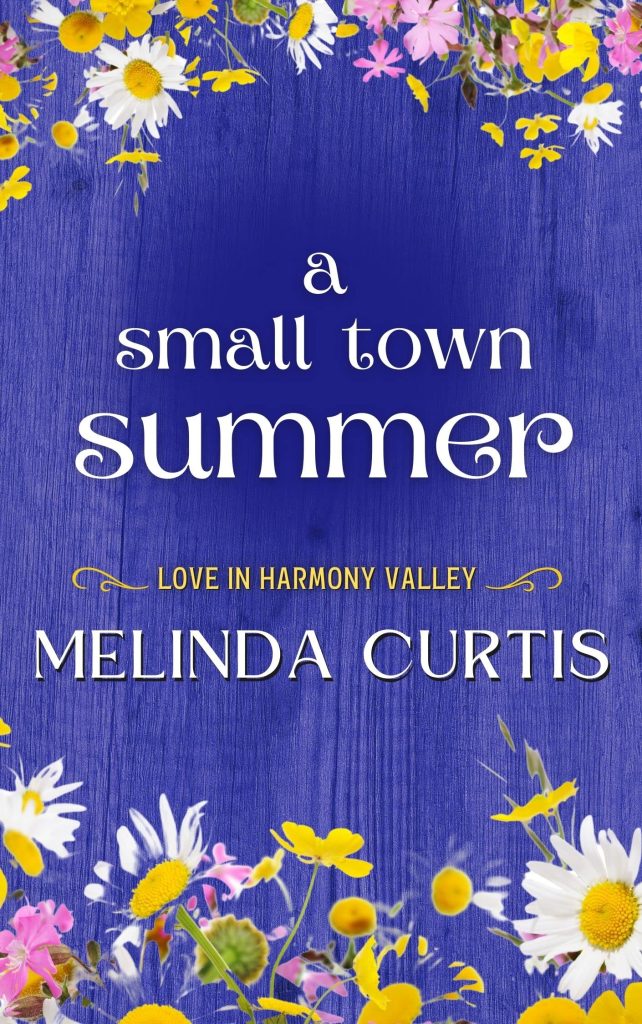
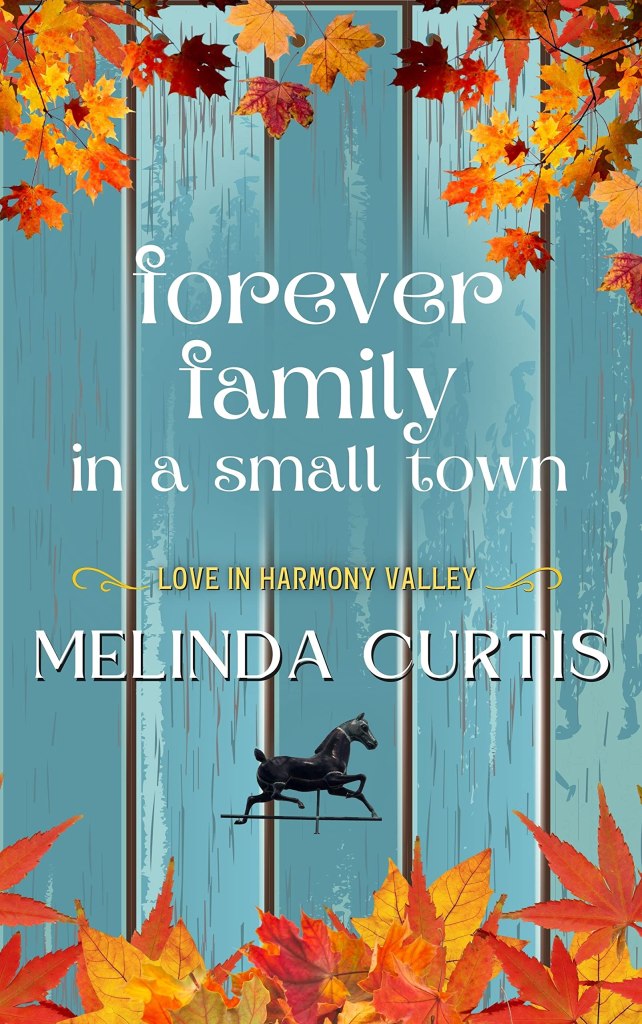
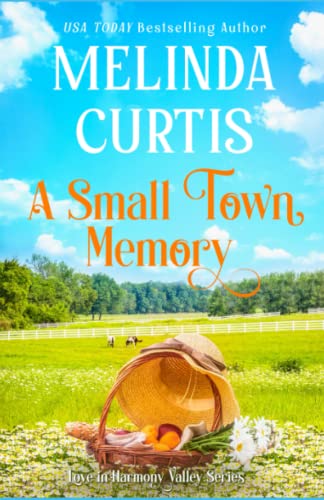
If you missed any of the reviews, you can click on the book cover below for a quick link.

Feliz Navidad! A Christmas Tree for Book Lovers!

This Christmas tree made from books is in the Biblioteca Gertrudis Bocanegra, a public library in Pátzcuaro, Michoacan, México. The library is located in Plaza Chica, officially known as Plaza Bocanegra. The library occupies a 16th-century the building that was a San Agustin church. It was built in 1574 and converted into a library in 1936. The mural in the background was created by Juan O’Gorman. It depicts Michoacán’s history beginning with the pre-Hispanic era and ending with the 1910 revolution. I visited this library when I lived in Pátzcuaro, and the mural is incredible. The building is located on a plaza with numerous small shops (tiendas) and a very large outdoor market (mercado). The plaza is always bustling with pedestrians, autos, taxis and public transportation vans (combis).
Thanks to Rick M. of Michoacán who granted permission to display his photograph.
Below is a picture of the exterior of the building.

Credit for this photo belongs to Wiper México, CC BY-SA 3.0, https://commons.wikimedia.org/w/index.php?curid=52416290
Read a Book, Help a Cowboy: Support the Justin Cowboy Crisis Fund with Shanna Hatfield #RABHAC #JCCF #rodeoromance @ShannaHatfield
Ever wonder what happens to a rodeo cowboy who is injured? It’s not like he has a boss and goes on disability for a work related injury. Author Shanna Hatfield did some research and discovered that Justin Boots in partnership with some professional rodeo associations created a fund to help. This post gives you a way to help while reading! What could be better? Between October 1 until December 24, she will donate 10% of her sales to the fund. If you are a social media fan, you can read this post to learn more about a special online event, but it is not necessary to participate in that. My thanks to Carla at carlalovestoread.wordpress.com for sharing the word!
Academic Curveball–FREE NOW AND FROM A VARIETY OF VENUES
I have enjoyed the Braxton Campus Mystery Series by James J. Cudney. The first book in the series, Academic Curveball is now free and available for a variety of e-readers/platforms. The post, available through this link, also includes an excerpt so you can sample it right now. Enjoy!

The Trouble with Reading (Part II)—Reading to Learn
I recently had some eye-opening experiences regarding reading that I want to share. I love to read, have a reading specialist credential, and am a retired educator of 34 years. I also love to learn, and I did just that this week in reading two different books. I gained a new appreciation of the struggles some readers have with reading. If you want to read Part I of The Trouble with Reading which deals with dyslexia, click here.
The other book I read that was a learning experience was a printed copy of a nonfiction book I purchased to read with my book club. It is a well-researched book that focuses on a part of my country’s history. Reading it was a great reminder of the differences in reading a fiction and a nonfiction work. “Work” is an appropriate word here, because of the extensive research effort of the author and the extra time and focus the reader needs to devote to reading the book. There are so many historical figures that play into the book along with settings of note. It is hard, but important, to keep track of them all. It is a very good and well written book and appropriate for book club discussion. I had to schedule reading it into my day so that I finished it by the time of our meeting. In other words, reading it was a chore; to do it justice, I took extensive notes and found the process tiring. Also, it did not focus on a subject that is my primary strength which makes the book intrinsically less interesting and more difficult to read. I brought less background knowledge to the table.
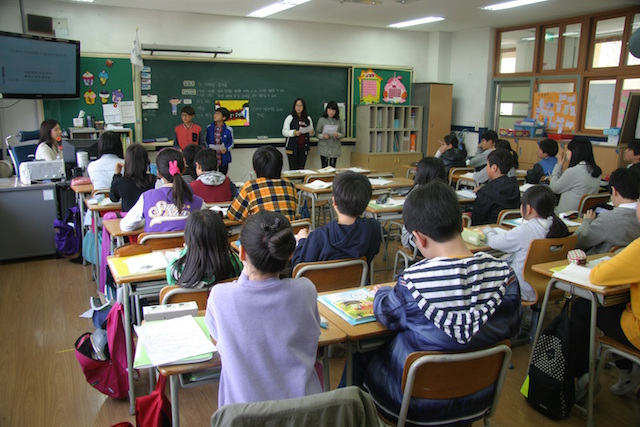
The book was not entertaining, but I am glad I read it. Although nonfiction varies widely, in general it is not my favorite genre. As all teachers should know, I was reminded that nonfiction, which is the foundation of most subject area texts, requires a different set of reading skills and those should be explicitly taught after students master the general reading process. Early elementary focuses on “learning to read” and grades above that should focus on “reading to learn.” Some middle and high school teachers believe that students leave elementary school with the skills they need for content area reading. This knowledge, however, is developmental; what is needed to process a middle grade text is not sufficient for comprehension of a high school text. Unfortunately, many students do not leave elementary school reading on grade level, making the gap even larger. To some degree, all teachers must be reading teachers.
 education pathways