Through Gates of Splendor–a call from God
Through Gates of Splendor
by Elizabeth Elliot

Five young men felt God’s call to share the good news of Jesus with an Ecuadoran Indian tribe that had never had positive encounters with outsiders. Their bad experiences date back to the ruthless rubber traders of the 1870’s—“civilized savages against unbaptized savages.” They had Stone Age technology, were feared by other Indians for their unprovoked ambushes, and had a language known only to themselves. The missionaries and their wives had a daunting task. They started by evangelizing more friendly local tribes and establishing bases, many refurbished from areas abandoned by Shell Oil Co. From these bases they did flyovers of the Auca land, first to find where in the jungle the Aucas were living and later to communicate with them by dropping gifts to demonstrate their friendly intentions.
When they felt the time was right, they finalized plans to land and meet with the Aucas in person. The book becomes very intense at that point. After an initial positive meeting, there is literally radio silence instead of the expected call back to the wives. A search and rescue team went in consisting of Ecuadorian military, volunteer missionaries and Indians, and U.S military. It was a dangerous mission.
Although the preparation and action are the basis of the story, the core of the book is faith in God. Elizabeth Elliot, the author of Through Gates of Splendor, was the wife of Jim Elliot, the first missionary of the group to respond to God’s call to contact this people group who had never heard of Him. Jim Elliot was willing to die if need be to share the good news of salvation to the Aucas. He said, “He is no fool who gives what he cannot keep to gain what he cannot lose.” The story of the lives of these young men and their dedication to God is inspiring and many of their notes and thoughts are recorded in this book. In its pages you will see a vivd picture of what God’s call can look like as well as how these missionaries and their wives responded.
Rating: 5/5
Category: History, Christian, Memoir
Notes: The 40th anniversary edition which I read included:
1. Maps
2. Photographs, many taken at great peril by a Life magazine reporter who chose to stay with the search party when he could have returned to the base and safety.
3. Two Epilogues. One was written in 1958 explaining the immediate aftermath of the first contact and one written in 1996 relating the lives of the families as they evolved over the next 40 years.
Publication: Originally 1956
40th anniversary edition in 1996—Living Books (Tyndale)
Memorable Lines:
“If that old engine had quit up there, God alone could have saved me. I might just as well admit it frankly right here; I don’t like to fly over stuff like that and I have to have a pretty good reason to be over it without a good position-check and a good river to identify my position by. But these are people for whom Christ died, and you have to find them before you can take the Gospel to them, so I was happy to have stumbled on them.”
Pete Fleming was one of those who could not be content while the Aucas remained in darkness. In his diary he wrote: “It is a grave and solemn problem; an unreachable people who murder and kill with extreme hatred. It comes to me strongly that God is leading me to do something about it, and a strong idea and impression comes into my mind that I ought to devote the majority of my time to collecting linguistic data on the tribe and making some intensive air surveys to look for Auca houses….I know that this may be the most important decision of my life, but I have a quiet peace about it.
September, 1955, was the month in which Operation Auca really started, the month in which the Lord began to weave five separate threads into a single glowing fabric for His own Glory. Five men with widely differing personalities had come to Ecuador from the eastern United States, the West Coast, and the Midwestern States. Representing three different “faith-missions,” these men and their wives were one in their common belief in the Bible as the literal and supernatural and perfect word from God to man. Christ said “Go ye”; their answer was “Lord, send me.”
A Fatal Booking–exciting book club retreat
A Fatal Booking
by Victoria Gilbert

Charlotte Reed, a former high school teacher, inherited her great-aunt Isabella’s B&B and is trying to make a success of it to honor Isabella. Isabella was a beautiful, flamboyant socialite and also a spy! Charlotte has a penchant for getting to the truth and has formed bonds with Ellen, her next door neighbor and Isabella’s former handler, joining her in several investigations surrounding local murders. She works in concert with Detective Amber Johnson of the Beaufort police force and with her new boyfriend Gavin who spends a lot of time off the grid. He is a spy and has many useful contacts.
In A Fatal Booking, Chapters B&B is hosting a book club headed by an artist and former colleague Lora Kane. When one of the guests is murdered, Charlotte is drawn into the investigation to protect her B&B’s reputation and to prevent further murders. No one liked the victim, and they all seem to have motivation to kill her. All but one had the means to obtain deadly cyanide.
The plot is further complicated by infighting among the guests. There was no harmony to be found in that group. Also, someone is rummaging around in the off-limits, locked attic, and several framed pictures are missing from the library. Not a trained professional, Charlotte’s detection skills are honed as she sorts through the possibilities. Her physical and mental capacities are tested in the latter part of the book in dangerous scenes that will have you holding your breath. The cozy concludes with a wrap-up party for Charlotte’s friends and employees who stood by her during the ordeal and helped with the investigation. They deserved to hear the details, and several have personal announcements of big upcoming changes in their lives.
I received a complimentary copy of this book in exchange for an honest review. Opinions expressed in this review are completely my own.
Rating: 4/5
Category: Mystery
Notes: #3 in the Booklover’s B&B Mystery Series, but it is acceptable as a standalone. The author jumps right into the current plot, but background details are provided as needed.
Publication: June 7, 2022—Crooked Lane Books
Memorable Lines:
Officer Warren, who looked to be all of twenty-five, offered me a smile that told me she felt the need to reassure a nervous older woman. “Thanks.” I knew better than to try to correct her assumption. To be honest, I frequently found it useful to be underestimated.
“You were eavesdropping.” Linnea’s blue eyes glittered like shards of lapis.
“I love dogs,” Caitlin said, patting his head. I’d already figured that out, since I’d learned that Shandy had a sixth sense about people. He seemed to be able to instantly tell if someone disliked dogs and would either snap at the air or bark furiously at such misguided individuals.
Food Triggers–a Godly approach to healthy eating
Food Triggers
by Amber Lia

Amber Lia writes Food Triggers from the perspective of a certified health coach and a Christian. She began her journey to develop healthy eating habits when she was sixty pounds overweight. She views the journey to health as both a physical and a spiritual battle. She began her personal changes with a “medically designed plan” in consultation with a health coach for accountability. She combined that with examining her food triggers one at a time. This book does not tell you what to eat although she clearly avoids sugars and excessive carbs. She intends her book to be read one chapter per day for 31 days. Each chapter addresses a specific motivation or food trigger, some external and some internal.
Lia backs up the information with research and with Scriptures. She encourages the reader to “exchange unhealthy patterns for God-honoring habits.” Some of her chapters resonated with me and others did not apply. She addresses how others can try to sabotage your healthy eating plan and the temptations that may arise when you are in community settings that involve food. There are many difficult areas she addresses including travel, portion control, and boredom. Food Triggers is not a diet plan, but is another tool with insights and practical tips that those struggling with weight loss and/or healthy eating can add to their toolbox.
I received a complimentary copy of this book in exchange for an honest review. Opinions expressed in this review are completely my own.
Rating: 4/5
Category: Nonfiction, Christian
Notes: Although I am in support of portion control, I did not agree with the author’s emphasis on following the serving sizes indicated on packaging. I have always viewed those as the food industry’s efforts to simplify the nutritional labeling. The FDA, however, says that the goal for their newly revised labels is to “bring serving sizes closer to what people actually eat so that when they look at calories and nutrients on the label, these numbers more closely match what they are consuming.” In other words, the serving size is not what people should eat, but what the “average” person consumes. These revised figures have gone up for ice cream, but decreased for yogurt. The government in this case is not leading consumers to healthier eating. You know the old saying, “just because he jumps off a cliff, doesn’t mean you should too.” A good example of that is the marketing of soda in huge cups. Along with that we have a huge increase in obesity and diabetes.
Publication: January 4, 2022—Bethany House (Baker Publishing)
Memorable Lines:
In many ways, our culture has brainwashed us with massive portions and helpings that are, well, NOT helping.
Your health journey will present you with hard choices, and it won’t just be saying no to onion rings—but saying no to people or jobs or places that are not moving you toward God’s best for us.
[part of a prayer from the chapter on holidays] Transform my thinking so that I learn to focus on the people and meaningfulness behind times of celebration, instead of all the things to put in my mouth.
The Tuesday Night Survivors’ Club–a new bookshop
The Tuesday Night Survivors’ Club
by Lynn Cahoon
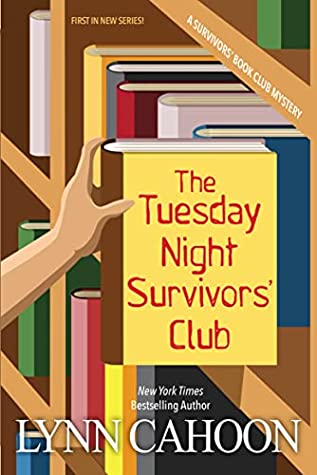
If anyone could write a cozy mystery about a book club formed to gather and support breast cancer survivors, it would be Lynn Cahoon. As survivors these women share a background that leaves some things unspoken, but understood. They are not choosing books about breast cancer, however. They select a mystery for their first read, but soon find themselves involved in a real-life murder mystery.
In The Tuesday Night Survivors’ Club, the founder of the club is Rarity who owns the new bookstore that sponsors the group. She has left her stressful, big city job for the slower pace of being her own boss in Sedona, AZ. Her best friend is Sam who owns a crystal shop and makes jewelry. There are two romantic interests: Drew, a detective, and Archer, a lawyer turned hiking guide.
The murder of one of the group members turns them all into amateur sleuths investigating potential suspects and ferreting out motivations. Not everyone is who they seem to be. Rarity also finds the original, limited membership concept for the club expanding as others pitch in to help with the investigation. I thought I had figured out the murderer from a clue mentioned early on, but I was wrong. The investigation turns dangerous and the ending is a surprise. I can’t wait for the next book in this new series.
I received a complimentary copy of this book in exchange for an honest review. Opinions expressed in this review are completely my own.
Rating: 5/5
Category: Mystery
Notes: #1 in the Survivors’ Book Club Mystery Series
Publication: June 14, 2022—Kensington
Memorable Lines:
Action was rewarded. Worrying never did anyone any favors.
Welcome to the sisterhood. The cost of joining was just living through a disease that tried to kill you. And you had to wear pink for the rest of your life. (A rule that Rarity ignored since she hated pink.)
“There have been times in my life when I questioned whether Edith and I were ‘meant to be.’ Whether or not she was my soul mate. But I always come back to the fact that our lives together are what we make of them. Don’t hold out for a fantasy when real life is more rewarding.”
This Time Around–second chance romances
This Time Around
by Denise Hunter, Melissa Ferguson, and Kathleen Fuller

This Time Around is a collation of three second chance romances by three popular romance authors. I am posting my notes on each one. If you are interested in novella length romances to mix up your reading from some other genre, this would be the perfect book for you.
Denise Hunter has written a sweet second chance romance entitled A Summer Detour. Allie is free spirited and in her late twenties. She is painfully aware that her parents view her as irresponsible. Sadly, her boyfriend Luke ditched her right before the senior prom in her high school days, and the two have not connected since. When Allie makes a commitment to drive her grandparents’ 50th anniversary gift, a refurbished classic car to their party, she encounters a major hurdle and doesn’t know anyone to call on except Luke. It looks like a reconciliation could be in their future when a totally unpredicted hurdle throws everything off course. This is a short, enjoyable read with all the loose ends tied up nicely.
Told in the third person, Pining for You by Melissa Ferguson varies its focus from chapter to chapter between the two main characters, childhood friends Theo and Skye. When Theo went off to college, it was hard to maintain their blossoming romance. Fourteen years and a few misunderstandings later, can the successful financial advisor and established artist find their way back to each other?
In Kathleen Fuller’s He Loves Me; He Loves Me Not, Sophie Morgan at age 35 finally has her floral business well established and is ready to start dating. There are only two bachelors in Maple Falls. What are the chances they would both show up on her doorstep on the same afternoon inviting her on a date? Landon is a good looking lawyer, but seems a little slick. She has known Joe since Kindergarten, but has never really noticed those football coach biceps. Is it too late for Sophie to find love?
I received a complimentary copy of this book in exchange for an honest review. Opinions expressed in this review are completely my own.
Rating: 4/5
Category: Romance
Notes: Includes discussion questions
Publication: July 13, 2021—Thomas Nelson
Memorable Lines:
Who would choose to cocoon themselves into sleeping bags like saucy enchiladas for every Lyme-disease bearing tick, leg-amputating brown recluse, rattlesnake, mountain lion, bear, or serial killing maniac to discover? Someone needed to write that condition in the book of psychological disorders.
“I once left you unattended in Dad’s toolshed and came back to find you’d reorganized the whole thing alphabetically.” “So? I like organization. Everybody like organization.” “Yeah, well, we were six,” Skye replied.
The man deathly afraid of snakes had stepped into striking distance to save her. Was willing to put himself in front of his greatest fear in order to help her escape. It was touching. Absolutely crazy and ridiculous and paranoid, but also…touching.
Fast Forward To F.A.S.T.
Unfortunately, this author is not trying to be humorous. What has “education” come to?

You know it’s time to retire when you cannot keep up with the acronyms. Florida Assessment of Student Thinking (actually a decent name that gives away the longstanding pretense that the reading test is testing reading) is an easy one for Grumpy Old Teacher (GOT) to puzzle out, but he admits B.E.S.T. keeps him googling for the B: Benchmarks for Excellence in Student Thinking.
And that tips us off that while Ringling Brothers retired the elephants and the pungent smell of elephant dung departed from the Big Top, well, that Florida smell of standardized testing remains no matter what we call it.
And yes, GOT has an attitude and is proud of it.

The first problem with F.A.S.T. is that Florida is moving too fast; it is implementing a new test before they are ready. For those…
View original post 955 more words
Prayer in the Night–for those who work or watch or weep
Prayer in the Night
by Tish Harrison Warren

“Compline” or “Night Prayer” dates back to the fourth century and is intended to be a simple, private service to end the day. It includes Psalms and other Scriptures. One of the prayers, the subject of Prayer in the Night, is:
Keep watch, dear Lord, with those who work, or watch or weep this night, and give your angels charge over those who sleep. Tend the sick, Lord Christ; give rest to the weary, bless the dying, soothe the suffering, pity the afflicted, shield the joyous; and all for your love’s sake. Amen.
Tish Harrison Warren, an Anglican priest, analyzes this prayer describing anecdotally and theologically how and why the prayer has come to mean so much to her.
Life has not been particularly easy for Warren or for many of the parishioners under her care. She is honest and real about her struggles. Most of the book is written in layman terms, but there are some theological concepts that she labels somewhat abstractly. For example, “theodicy” was not a part of my vocabulary although I am aware of the inner conflict many have wondering “why bad things happen to good people.” She used it enough times in context that I was able to adopt it.
Warren doesn’t shy away from pain, vulnerability, weariness, and grieving. She points out the differences between the suffering and the afflicted and how God brings comfort to both. While much of the book addresses the darker side of life, she also brings light on that darkness with the joy, love, and trustworthiness of God.
Rating: 5/5
Category: Christianity, Religion, Theology
Notes: Includes Discussion Questions and Suggested Practices for groups or individuals to encourage deep thinking and application.
Publication: January 26, 2021—IVP
Memorable Lines:
When we’re drowning we need a lifeline, and our lifeline in grief cannot be mere optimism that maybe our circumstances will improve because we know that may not be true. We need practices that don’t simply palliate our fears or pain, but that teach us to walk with God in the crucible of our own fragility.
The hope God offers us is this: he will keep close to us, even in darkness, in doubt, in fear and vulnerability. He does not promise to keep bad things from happening. He does not promise that night will not come, or that it will not be terrifying, or that we will immediately be tugged to shore. He promises that we will not be left alone. He will keep watch with us in the night.
In a culture that’s increasingly committed to nursing every grievance, there’s deep wisdom in being able to name what is right and whole about life, to keep moving forward despite obstacles, to have a wider perspective, to look hardship in the eye and laugh.
I Capture the Castle–class structure in mid-20th century England
I Capture the Castle
by Dodie Smith
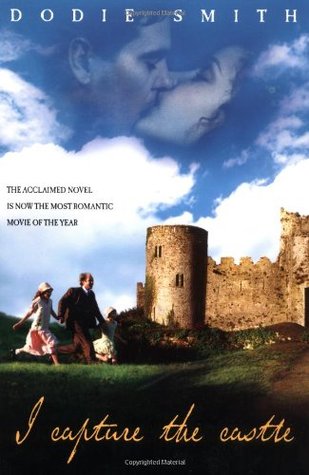
To label I Capture the Castle as a “coming of age” story is true, but the novel is so much more. It is related in her journal by Cassandra who lives in poverty under the leaky roof of a crumbling castle. Her father Mortmain is a writer with one successful book to his credit before he hit a writing desert. He secured a forty-year lease on the castle on a whim. The other residents are his son, another daughter, a boy taken in when his servant mother passed, and Topaz, the children’s stepmother. All in the family realize that the only way out of their financial straits is for at least one of the girls to marry into a rich family.
Author Dodie Smith has gifted us with a book full of nonconventional characters, a beautiful romantic background, and moral dilemmas. The plot begins with touches reminiscent of Pride and Prejudice but deviates fairly quickly. There is a similar theme of class differences, but without Austen’s use of satire. Two of the potential romantic interests grew up in America, one in the East and one in the West. Their backgrounds add another layer of social and cultural differences. Cassandra’s family is caught in the middle. They clearly had money in the past, but they have sold off most of their belongings and are reduced to very meager meals and one or two threadbare outfits per person. They have to be very creative to be acceptable in the social milieu to which they aspire.
I Capture the Castle has the depth necessary for a book to stand the test of time and appeal to a wide audience. It includes topics like women’s roles, art and sexuality, depression, literary criticism, and the laws of inheritance in Great Britain. While it addresses these issues, it remains an interesting and well-told tale with an ending that does not tie everything up neatly. Instead, it gives the reader the opportunity to speculate on the characters’ future decisions and actions which is a good way for this novel to conclude.
Rating: 5/5
Category: Romance, General Fiction
Notes: 1. There are discussion questions at the end.
2. The book has been made into a movie.
Publication: 1948—St. Martin’s Press
Memorable Lines:
I am writing this journal partly to practice my newly acquired speed-writing and partly to teach myself how to write a novel—I intend to capture all our characters and put in conversations. It ought to be good for my style to dash along without much thought, as up to now my stories have been very stiff and self-conscious.
The taxi drew up at a wonderful shop—the sort of shop I would never dare to walk through without a reason. We went in by way of the glove and stocking department, but there were things from other departments just dotted about; bottles of scent and a little glass tree with cherries on it and a piece of white branched coral on a sea-green chiffon scarf. Oh, it was an artful place—it must make people who have money want to spend it madly!
In the end, Topaz got Stephen to take the hen-house door off its hinges and make some rough trestles to put it on, and we pushed it close to the window-seat, which saved us three chairs. We used the grey brocade curtains from the hall as a table-cloth—they looked magnificent though the join showed a bit and they got in the way of our feet. All our silver and good china and glass went long ago, but the Vicar lent us his, including his silver candelabra.
Tender is the Bite–K-9 narrator
Tender is the Bite
by Spencer Quinn

The dynamic duo of the Little Detective Agency are on the case again. In fact, it seems like several cases. Bernie is the human, and Chet is his canine side-kick. The story is told from Chet’s point of view. Bernie sees Chet as an equal partner and refers to the team as “we” in talking to clients, police officers, and friends. There is a lot of humor in the tale as Chet describes his communications with Bernie and references past mishaps where he has perhaps been a little too exuberant. Most people, even some “perps,” like and respect both members of the team. One thing you can be sure of is that Chet and Bernie will always have each other’s back.
In Tender is the Bite there is lots going on. Some Ukrainians with a secretive boss try to send them on a highly paid security detail in Hawaii. Two young ladies, a standup comedian, and a ferret keep cropping up. A politician and his wife are somehow involved with the others, and a thread emerges that introduces a woman on the police force to Bernie, but is complicated by an officer who seems to have some shady connections. I had a lot of fun with Chet’s view of events and his efforts to understand figures of speech. I also enjoyed watching the pair unravel the many secrets. There is plenty of action to keep you turning the pages.
I received a complimentary copy of this book in exchange for an honest review. Opinions expressed in this review are completely my own.
Rating: 4/5
Category: Mystery, Humor
Notes: 1. Occasional foul language.
2. This is #11 in the Chet and Bernie series. I have read two others in the series. I didn’t enjoy #10 as much as I did the first or this one. This one checked the boxes for both humor and mystery, and can easily be read as a standalone.
Publication: July 6, 2021—Macmillan—Tor/Forge
Memorable Lines:
“I reckon he knows we’re talkin’ about him—tail’s a dead giveaway.” Something about my tail? Yes, I could feel it. I myself was perfectly still and calm, correct behavior in an interview. My tail is not always a team player. I got it back in line, and in no uncertain terms.
Soon I was in the shower too! Had I forgotten once again about the problem of the shower curtain and how the whole thing with all the poles and screws and rings can come crashing down? Show me the dude who can remember everything.
“On the other hand,” Bernie said, “sometimes it’s a good idea to stir up the hornet’s nest, see where they go.” I gazed at Bernie. He looked good—well rested, not hung over, certainly not sick or feverish. A joke, perhaps? Could there be anything good about hornets? Wasn’t stirring up the nest the last thing you wanted to do? As for seeing where the hornets go, they always go the same place, right at you. Take it from me.
The Warsaw Orphan–survival in the Ghetto
The Warsaw Orphan
by Kelly Rimmer
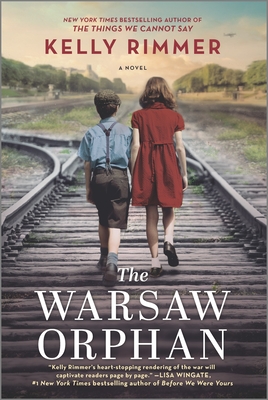
World War II is a popular subject for historical fiction. There are so many countries involved along with a variety of religions and philosophies. Lots of major political figures vie for power. Lives are turned upside down, families destroyed, and cultural icons demolished. In the midst of this upheaval, the citizens of Poland find themselves in a tug of war between Nazi Germany and the Red Army of the Soviet Union.
Roman, raised Catholic, is part Jewish. As a teenager he feels compelled to keep his Jewish family safe and later to fight from the Warsaw Ghetto with the Resistance for Poland’s freedom. Emilia (known as Elzbieta on her false identity papers) finds a way to work daily in the Ghetto under horrible conditions to help the people there who are overcrowded and sick from diseases and malnutrition. Their paths cross, and Roman and Emilia begin a friendship that lasts across the years.
In The Warsaw Orphan, Kelly Rimmer creates three dimensional characters who change and mature as a result of both growing up and experiencing the dramatic events that the war brings into their lives. They both see and endure things no one should have to—especially not teenagers. There are many characters of note and none of them see life as black and white. Many events take place in the grey area of life where one’s values and necessities do not line up perfectly. Some of the characters are Christian, some are Jewish, and others are atheists. Some are moral, decent people while others are torturing murderers.
The plot is told alternately from Roman’s and Emilia’s points of view. This is an effective way of narrating this story as it takes us on the personal journey each has to endure. There are decisions the characters have to make that affect others, not just themselves. The plot leads the reader through the many emotions that engulf the characters: grief, fear, shame, guilt, revenge. There are also moments of kindness, love, protectiveness, and generosity.
I thought The Warsaw Orphan was good, but the final fourth of the book was both surprising and riveting. You can’t expect a book about WWII to be filled with happiness and light, but I was amazed at Rimmer’s creative abilities to put her characters in desperate situations and then resolve them in a hopeful and rational way.
I received a complimentary copy of this book in exchange for an honest review. Opinions expressed in this review are completely my own.
Rating: 5/5
Category: Historical Fiction, General Fiction
Publication: June 1, 2021—Harlequin (Graydon House)
Memorable Lines:
Bystanders have allowed themselves to be convinced that the Jews are not like us, and as soon as you convince someone that a group of people is not human, they will allow you to treat them as badly as you wish.
Those agonizing weeks during the Uprising confirmed that art is not always for the viewer. Sometimes the very act of creating can mean salvation for the artist.
As punishment for our decision to rebel, our homes, our libraries, our monuments and our infrastructure would be reduced to dust. It wasn’t enough that they had taken our people and our homes—they were going to take what was left of our culture.
 education pathways