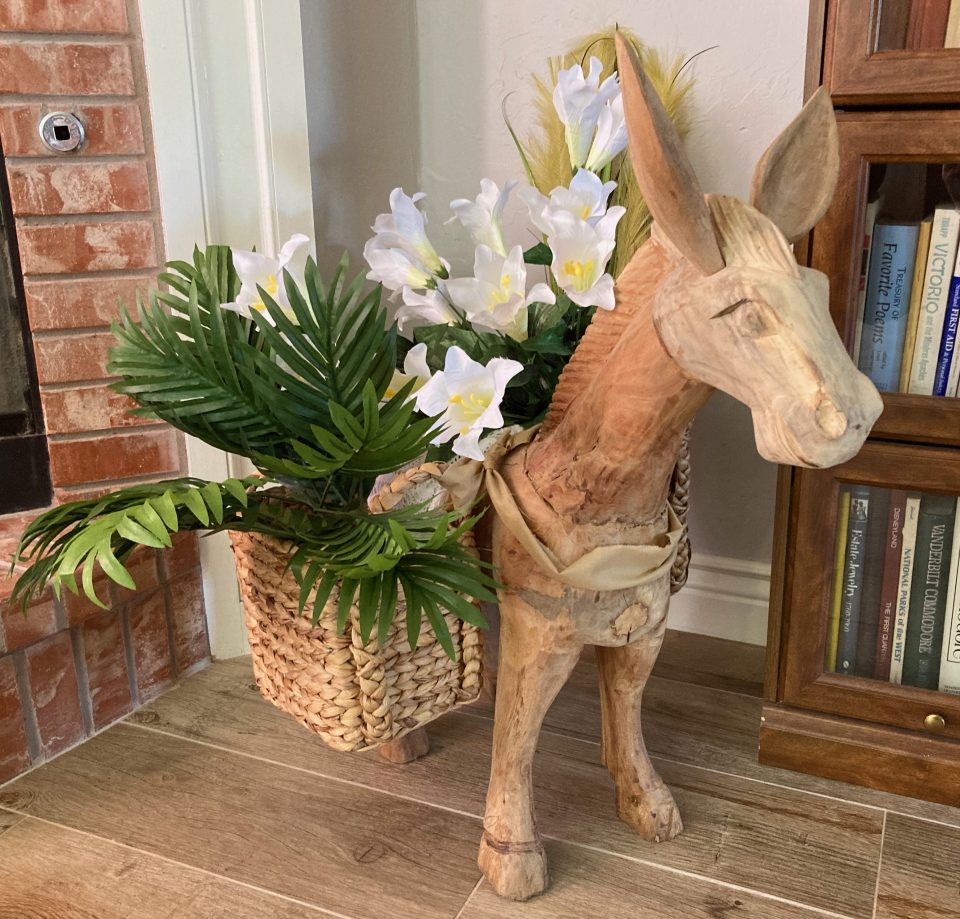
To Trust a Hero–scars of betrayal
To Trust a Hero
by Alexis Morgan

I enjoy Harlequin Heartwarming novels because they are predictably clean romances. To Trust a Hero fits that role, but it also has characters you will love and a mystery that you may figure out the whodunit of the plot before it is revealed, but not the why. I loved watching it play out. The main characters Max, a freelance writer, and Rikki, a single mom and the owner of a B&B, both have difficult backgrounds that they have not shared with others. Their pasts make trusting difficult for each of them, but when Max rents out the turret room for an extended period, he finds that he is not “just a guest anymore.” It is hard to tell who he falls in love with more, Rikki or her adorable 5 year old son Carter. Carter and Max bond over Legos.
This is Max’s return to the town of Dunbar. He has been invited to see the Trillium Nugget in the Dunbar Historical Museum. His presence and the Nugget caused quite an uproar in a previous book, but was worked out satisfactorily. On his return, the townspeople gradually warm up to him. Now he wants to write a book about his great-grandfather using resources at the town’s museum to research his ancestor’s story.
When someone breaks into Rikki’s B&B and vandalizes two rooms, Max flies into protective mode. At that point we learn more about Cade. the Chief of Police, and Titus, an excellent cook with a gruff exterior.
Interesting characters, gentle romance, a mystery without a murder, and a cute kid—I couldn’t ask for more. If you want to escape from all the craziness infused into this world, take a trip to Dunbar. I think you’ll find it an engaging and pleasant relief.
I received a complimentary copy of this book in exchange for an honest review. Opinions expressed in this review are completely my own.
Rating: 5/5
Category: Romance
Notes: # 2 in the Heroes of Dunbar Mountain series. Although To Trust a Hero is great as a standalone, now I want to read about Max’s first involvement with the town in The Lawman’s Promise. My interest has also been piqued by hints that the next book in this series, Second Chance Deputy focuses on Titus.
Publication: August 22, 2023—Harlequin Heartwarming
Memorable Lines:
Max knew firsthand what it was like when a kid couldn’t depend on anyone, and he devoutly hoped that Carter never experienced how much that kind of betrayal hurt or the scars it left behind.
“It must be something in the water supply here that makes men act stupid around strong women.”
The cruise had been fun, but it was Carter’s infectious joy that had made the day special. Every time a new whale appeared, the little guy had cheered and then run from one side of the boat to the other to get the best view.
The Keeper of Hidden Books–importance of books
The Keeper of Hidden Books
by Madeline Martin

This book is perfect for:
—lovers of books, reading, and libraries
—those who think reading is important for continuity of culture
—people who value ideas
—readers who like the notion of discussion in book clubs
—history buffs
—those interested in Poland—culture, history, role in WWII, underground resistance
—Girl Guides and Boy Scouts
—people who want to know more about the horrific treatment by the Nazis of Jews and Poles.
The Keeper of Hidden Books starts gently with Girl Guides preparing their skills for a war they assumed would never happen. Poland had lost its freedom before, and the Poles were determined it would not happen again. We gradually learn about the lives and values of several of the girls and their families. We witness the responses of the Polish citizens—both heroic and traitorous. As the story progresses we watch the destruction by the Nazis of libraries and books and the valiant efforts of librarians and volunteers who resist this extinction of knowledge. We also observe the desire of people of all ages to maintain access to books that provide escapism during times of hunger, persecution and despair.
This is a good book for me because I treasure books as many of the characters in the novel do. It is a warning to all of us to guard our freedoms, especially the freedom of speech which includes the written word. Hitler worked hard to maintain his power through censorship; we must not let history repeat itself.
I received a complimentary copy of this book in exchange for an honest review. Opinions expressed in this review are completely my own.
Rating: 4/5
Category: Historical Fiction
Notes: The author concludes with notes about her research into the history behind her story, a tale which is based on real events and people in Warsaw. Buried in her discussion of the destruction of books by the Hitler Youth is the statement “But the power of books still endured.” That is a distillation of the theme of this book.
Publication: August 1, 2023—Hanover Square Press (Harlequin)
Memorable Lines:
Now the world crumbled in on itself, burning away the beauty of Warsaw, and there was no more time for reading than there was food to eat.
More and more children were appearing at the library as time went on. Many of them were desperate for distraction, to read about faraway places they could not go, or to transport themselves to mythical lands that could still tease at their dulled imaginations. They wanted stories where villains were vanquished. But books were more than a means of escape for these children; they offered another life to live. They offered hope.
…why Hitler so feared the books he banned. There was power in literature. Brilliant and undeniable. Books inspired free thought and empathy, an overall understanding and acceptance of everyone.
The Frozen River–Remarkable midwife
The Frozen River
by Ariel Lawhon
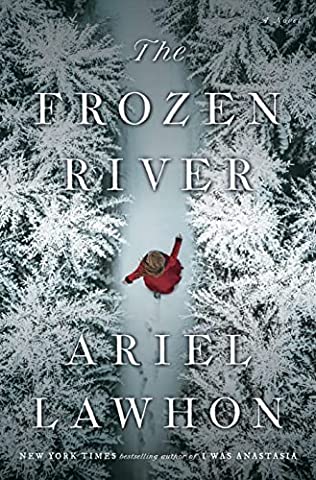
Martha Ballard is a historical figure, a midwife who also had other medical skills. She is an unusual figure for her time—literate (a rarity) and a wife and the mother of a large brood who traveled the area quite independently to deliver babies. In Ephraim, she had a strong, trusting, industrious, and helpful husband. He was a man of faith. He saw his wife’s potential and taught her how to read. He also helped her overcome trauma she had suffered as a young lady.
The setting of The Frozen River is the winter of 1789-1790 (actually 1785 in historical records) and was known as “the year of the long winter” in Hallowell, Maine. Martha is called to document a body found in the river, caught by ice. Thus begins a murder mystery that is so much more. A pastor’s young wife is the victim of multiple violent rapes. In the process of disclosing the truth of the events, the author also reveals much about women’s rights at that time. In summary, they had few. To even give testimony in court a woman had to be accompanied by a husband or father. It was clear that a man’s testimony had greater weight than a woman’s. Premarital sex was fairly common, but if a pregnancy was the result, the woman could be jailed or fined. The man incurred no consequences.
Pre-Bill of Rights, the court system was very different than what we have in America today. It was similar to what is commonly referred to as “frontier justice.” Townsfolk flocked to a local trial where the jury was composed solely of men and the judge was likely to be biased. There were other levels of courts depending on the accusations and the findings of a lower court. In some cases it was clear that justice would not be done, and so men would take action on their own following the dictum of “an eye for an eye.”
Death from natural causes, sickness, childbirth, or accidents was something the people of that time had to live with. Although expected, accepting it was still very difficult, especially for mothers. Life was not easy, and circumstances often left people bereft of material needs and emotional support.
The author, Ariel Lawhon, makes the characters come alive. Without being melodramatic, she presents the characters as real people with flaws and strengths, individuals that the reader will really like despite some weaknesses or truly detest because of the evilness they harbor in their hearts. There were many secrets to be revealed, but those were skillfully hidden until the author chose to disclose them. Even then, the motivation for the matter might remain unknown for a time. Because of the rapes and other types of violence found in the book, it is a hard book to read and certainly not a book to read right before bedtime. It is a page turner that is not for the faint of heart, but reveals so much about a remarkable woman and a time of history that required much of people.
Rating: 5/5
Category: Historical Fiction
Notes: 1. The Author’s Notes at the end delve into the historical accuracy of the book and the author’s resources. She estimates that about 75% of the book “closely follows the historical record.” The rest is “what could have happened.” As all works of historical fiction, the author had to flesh out events and characters to create a story of interest that flows.
2. I do recommend this book, but I would be remiss if I did not include a warning of violence and rape for any potential readers for whom those topics are triggers. There is also some swearing.
3. This book is excellent for book club discussion. Our group engaged in topics that covered the many themes found in the book extending past the regulars of characters and setting to symbolism of a silver fox and the all important river.
Publication: 2023—Doubleday
Memorable Lines:
Memory is a wicked thing that warps and twists. but paper and ink receive the truth without emotion, and they read it back without partiality. That, I believe, is why so few women are taught to read and write. God only knows what they would do with the power of pen and ink at their disposal.
The act of mothering is not limited to the bearing of children. This is another thing that I have learned in all my long years of midwifery. Labor may render every woman a novice, but pregnancy renders every woman a child. Scared. Vulnerable. Ill. Exhausted. Frail. A pregnant woman is, in most ways, a helpless woman. Her emotions are erratic. Her body betrays her.
“No baby is conceived apart from the will of God, May. If you are pregnant, it means that you have been touched by Providence, and you will never hear me say an ill word about the child you carry. Nor will I let anyone do so in my presence.”
This is a new thing I’ve discovered about myself in recent years. The noises. Stand and groan. Sit and grunt. Some days it seems that I can hardly take a step without some part of my body creaking or cracking and this—even more than the gray hairs and the crow’s-feet at my eyes—makes me feel as though I am racing down the final stretch of middle age.
The Heart’s Bidding–Amish special education students
The Heart’s Bidding
by Kelly Irvin
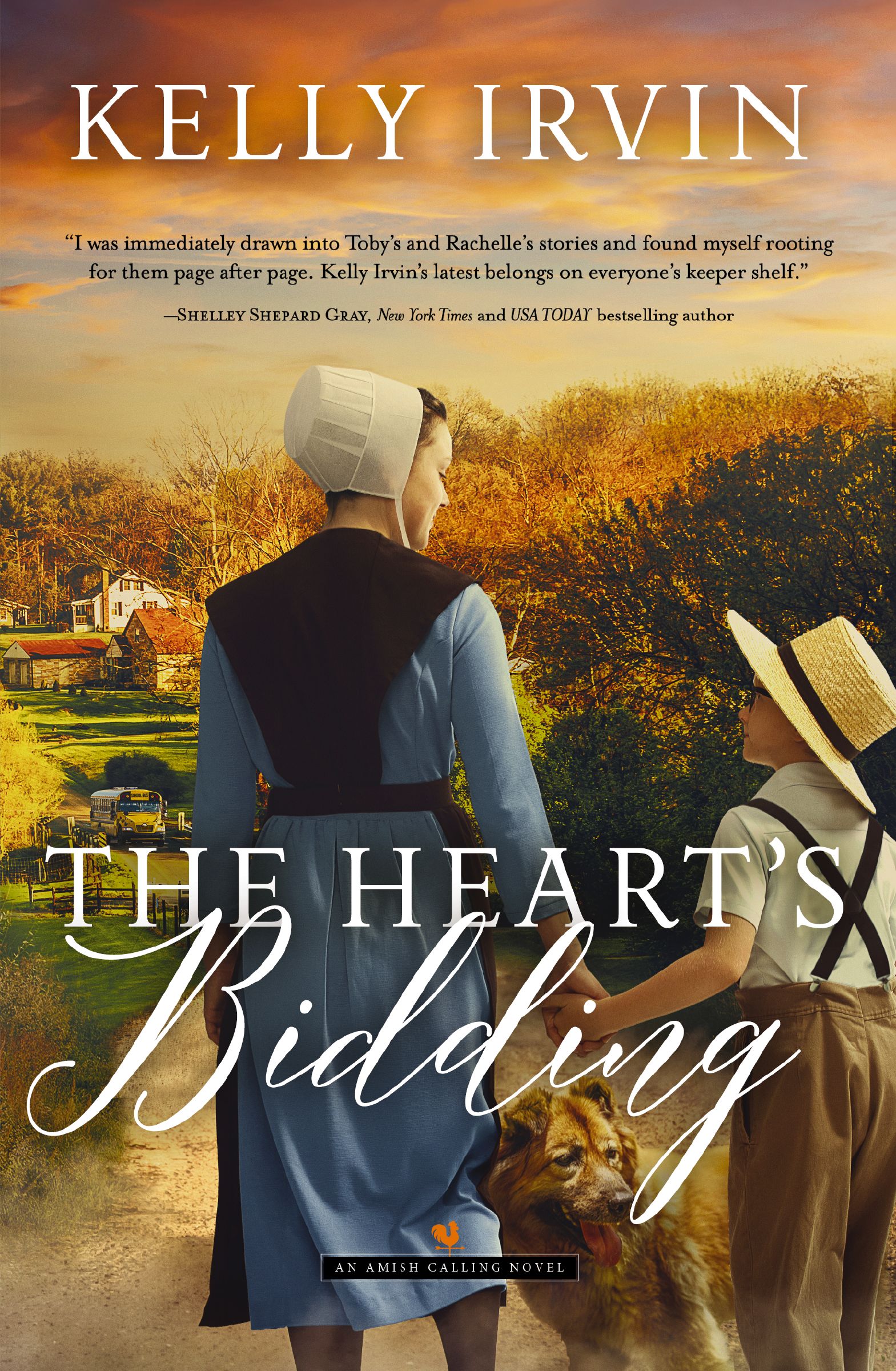
Although this book is an Amish romance, its strongest theme is the acceptance and education of children who are labelled as different, educationally challenged, developmentally delayed, disabled, mentally or physically handicapped, or as the Amish prefer to call them “special.” They see these children as gifts from God. In The Heart’s Bidding, Rachelle is a dedicated teacher, but as a Plain (Amish) woman she knows that although she loves teaching and has a talent in that area, her future will be to get married and have children. When the governing educational committee in her community decide that the special children should be transported daily to a town that offers more specialized services than the little community has available and at no cost to the Amish, Rachelle finds her last day of teaching coming more quickly than she could have imagined or desired.
Toby is a handsome bachelor who has been hurt in a past experience in courting and is haunted by the thought that no woman would want to be married to an auctioneer who spends many days and months on the road crisscrossing 5 states. Could an attraction between Toby and Rachelle come to anything? Both of their mothers would like to see it happen and have to be reminded to rein in their matchmaking. Both Toby and Rachelle have special siblings and common love and understanding for them.
There are other plot threads within this book about the large Amish families, the head of a family business stepping down, and an adult with dyslexia that has never been addressed. If you are interested in the Amish way of life and how both education and technology are addressed on an everyday level, this would be a good book to read. It gives the reader a different point of view from an author who is sensitive to both Amish and English cultures. The many children in the book provide both humor and excitement. In particular Jonah, Rachelle’s little brother, and Sadie, Toby’s little sister, both of whom will need lifelong support, will make you smile and tug on your heartstrings.
I received a complimentary copy of this book in exchange for an honest review. Opinions expressed in this review are completely my own.
Rating: 5/5
Category: Religion, Romance,
Notes: 1. The author includes a listing of characters by family and a glossary of Amish/Pennsylvania Dutch words at the beginning. She ends with author’s notes and discussion questions.
2. This is #1 in the series The Amish Calling. There are two in the series available now and one more that will be published in January 2025. All have characters who deal with disabilities of various types.
Publication: August 1, 2023—Zondervan Publishing
Memorable Lines:
Plain women liked their appliances the way some English women loved their jewelry or a roomy SUV for carting around their children—all two of them.
Their education was intended to help them be successful in their Plain communities, to be hard workers and good people, with the skills they would need to sustain to work with their families, to thrive, but to do so in a godly way.
“Sadie’s soul is innocent. It always will be.” Rachelle sought out the little girl. She found her on a swing, her legs pumping, her head thrown back, laughter spilling from her lips. “She knows what is gut and right and fair. Nothing will change that.” “Do you really believe that?” “Gott made her special. I believe His plan is for us to learn as much from her as she learns from us—more really.”
Positively, Penelope–theater and community
Positively, Penelope
by Pepper Basham
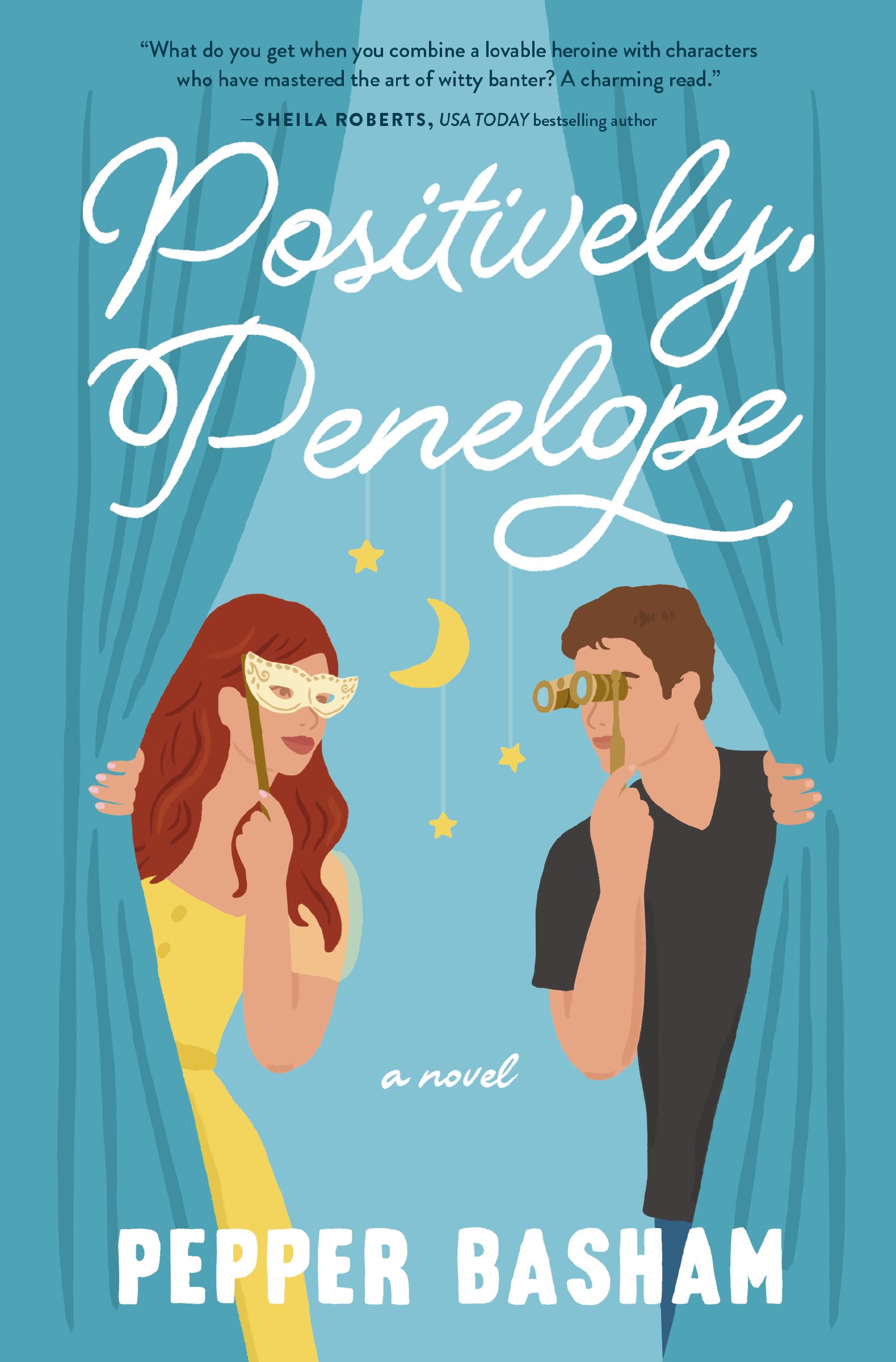
I wondered if Pepper Basham would follow up the very bookish epistolary novel Authentically, Izzy with another epistolary novel. If so, could it be as good, as fun, as the first? How do you write an epistolary novel in the twenty-first century anyway, a time when letter writing for personal reasons is rare? Basham continues her humorous style with Positively, Penelope told mainly in emails and text messages between Penelope who has taken a job as an intern helping the marketing team in the country of Skymar and her brother and two sisters who live in the Appalachians. There is also some third person narration thrown in. As a drama major, a very dramatic teacher of elementary age children, and a lover of storytelling and princesses, I can identify so much with Penelope who attacks life with more gusto than I can dream of mustering!
Penelope is trying to rescue the dying Darling House, a theater whose owners and managers lost their spirit with the deaths of the mother and grandmother over a short span of time. Penelope with her positive attitude spreads joy wherever she goes with her smiles, singing, and creativity. Two brothers, Matt and Alec, are grumpy but could make romantic heroes in the story as they fall under Penelope’s spell along with their father, Grandpa Gray. Matt’s daughter Iris who has not been allowed to enjoy fairy tales blooms under Penelope’s friendship as they share a love of pink and princesses. While Penelope seems like cotton candy fluff, she is actually quite bright. Unfortunately, every idea she comes up with is stolen by a rival theater; it seems a mole has invaded the Darling House team.
Silliness, suspicion, fear of sea monsters, a cute seven year old, costumes, royalty, creativity, and clean romance make Positively, Penelope a fun novel; I’m packing my bag for Skymar right now.
I received a complimentary copy of this book in exchange for an honest review. Opinions expressed in this review are completely my own.
Rating: 5/5
Category: Romance, Fiction, Christian
Notes: 1. #2 in the Skymar series. It could be read as a standalone, but I wouldn’t want you to pass up the very bookish first novel, Authentically, Izzy.
2. a lot of humor as the siblings banter with each other
3. Christian undertones woven subtly into the book
4. #3 has already been published about the flannel wearing, bachelor brother in the family, Loyally, Luke
Publication: August 1,2023—Thomas Nelson
Memorable Lines:
But no wonder he’s grumpy. Anyone who is against fairy-tale talk, singing in public, dancing on the sidewalk, and general hat-wearing has to be a sad sort of person.
Because story is the key to what we bring to the stage, how we present ourselves online, and even how we engage with one another. We all have stories, but in our hearts, we all LOVE stories (even if it takes some of us longer to admit it…kind of like a smile. Some people need more encouragement to smile than others, but you should really know a smile makes all the difference).
He came up to me, dismounted, and shot me this dazzling smile before saying, “I’ve always wanted to rescue a damsel in distress, but I never realized one would be so lovely in the rain.” Heaven HELP ME! Who says stuff like that? Only Skymarian men who ride on white horses in the rain????
Letters of Comfort–grieving and depression
Letters of Comfort
by Wanda E. Brunstetter
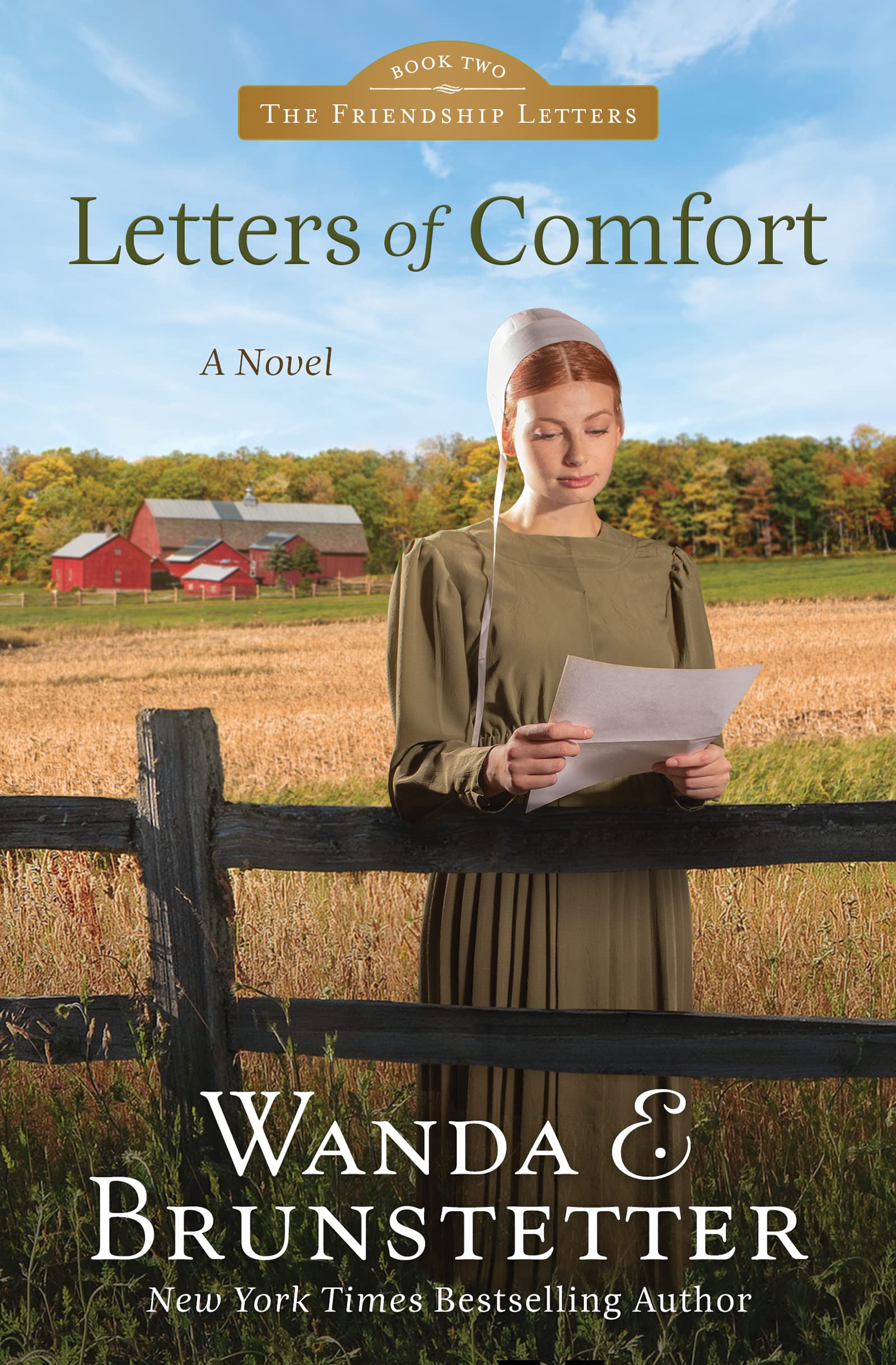
In Letters of Trust, Doretta encouraged her friend Eleanor through a difficult time in Eleanor’s marriage when her husband Vic sought relief from grief and guilt by turning to alcohol. In Letters of Comfort, Eleanor tries to support Doretta when her fiancé William passes away shortly before their marriage from an accident in which Doretta is also very badly injured. In her grief, Doretta draws away from God, friends, and family.
In her first book in the Friendship Letters Series, author Wanda E. Brunstetter addresses a more serious subject than is typical of her novels—alcoholism. In this second book, Letters of Comfort, Brunstetter attacks another difficult issue, depression. In a letter to the reader at the end of the book, she explains that her own mother suffered from bipolar disorder. Thus Brunstetter is all too familiar with depression and its symptoms. She encourages readers to seek help in a variety of ways from lifestyle changes to professional guidance.
In this book, Doretta’s life is complicated by a promise to her fiancé to never love anyone else. Will she change her resolve to keep that promise? Can William’s identical twin brother Warren move on from his grief? Both Warren’s and Doretta’s families have known each other since their children were little and all of them are grieving. Eleanor, pregnant with a second child, wants to help Doretta and encourages her as best she can from afar while Doretta is rejecting any efforts of help. Along the way there are complications as Warren tries to open the nutritional supplements store he and William were establishing and as Margaret, Warren’s girlfriend, struggles with priorities as her attachment to horses with behavioral problems increases.
This book is a little slow at times, perhaps to demonstrate that one does not “snap out” of grief and depression. It takes time. There are some key events towards the end that propel the plot forward more quickly. I did not have a strong emotional attachment to any of the characters, but I did appreciate the author’s conclusion. She provides appropriate and satisfactory closure for all. This is not a page turner, but I enjoyed it; and I do look forward to the next book in the series, Letters of Wisdom.
I received a complimentary copy of this book in exchange for an honest review. Opinions expressed in this review are completely my own.
Rating: 3/5
Category: Christian, Romance
Notes: The book concludes with a recipe for apple muffins and a very well-written and thought provoking set of discussion questions.
Publication: August 1, 2023—Barbour Publishing
Memorable Lines:
“To be honest, I do not appreciate it when someone says a bunch of positive things that are supposed to cheer me up. It makes me feel like I don’t have the right to grieve.”
…since she didn’t have a job anymore and had been replaced by another school teacher, Doretta had no purpose in life—no reason to get up in the morning—and nothing to look forward to doing each day. She did not want to feel like this or entertain such negative thoughts, but thinking positive thoughts seemed to be an impossible task.
Doretta’s hope for marriage had been snatched away, as easily as a hawk pouncing on some poor unsuspecting little bird.
 education pathways