The Secret Garden–delightful classic
The Secret Garden
by Frances Hodgson Burnett
Illustrated by Tasha Tudor
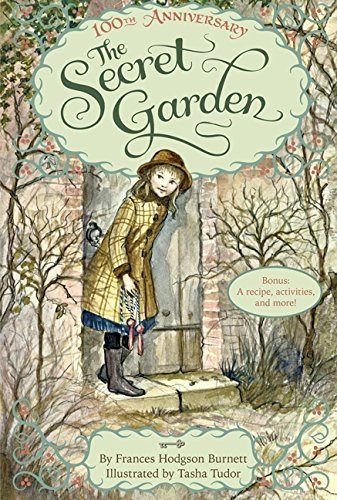
An avid reader as a child, I am surprised that I somehow missed out on the classic children’s tale The Secret Garden written by Frances Hodgson Burnett. For this reading with my book club, I chose an edition with delightful illustrations added to this 1911 book by Tasha Tudor in 1962. The Secret Garden is recommended by the publisher for ages nine and up, but I strongly recommend it for all readers. Please don’t relegate it to the “kiddie lit” genre.
The Secret Garden is the kind of book that instructs the reader in positivity without being preachy. Ten year old Mistress Mary (as in “quite contrary”) is a child who is both spoiled and neglected in her upbringing in India where she does not experience love. Things are not much better for her when her parents die, and she is shipped to Yorkshire to be under the care of her uncle. There she is still not loved as her uncle, Mr. Craven, has not dealt well with the death of his wife ten years prior and the illness of his son Colin who is physically cared for but also is not loved.
When Mary discovers that the mysterious crier in the night is Colin, she gradually creates a bond with her cousin. She is a curious girl who is given little freedom in the house, but almost total freedom in the gardens. She discovers the benefits of fresh air, sunshine, and natural exercise, and she explores the grounds looking for a secret garden that has been hidden away since Colin’s mother died.
Mary and Colin meet so many interesting people during the spring and summer. Dickon is a twelve year old who can converse with animals and plants. His older sister Martha is a sweet young lady who works at Misselthwaite Manor as a housemaid and helps take care of Mary. She has one day a month off, and she travels home by foot to help her kindly mother with laundry and baking. She gladly gives her mother her earnings to help support her large family of twelve happy siblings. Ben Weatherstaff is an elderly gardener who knew Colin’s mother and is eager to help restore the secret garden. While this tale is not full of goody two-shoes, it does have characters the reader will enjoy getting to know and in the cases of Mary and Colin watching their physical and emotional growth.
The Secret Garden is a pleasant read that begins with difficulties for the characters but progresses to a magical time in their lives. The author’s descriptions are wonderful to read as spring approaches in the garden. It is a book I would reread for the pleasure of the story and the language of the author.
Rating: 5/5
Category: Children, Fiction, Classics
Publication: 1911—Harper Collins
Memorable Lines:
The rainstorm had ended and the gray mist and clouds had been swept away in the night by the wind. The wind itself had ceased and a brilliant, deep blue sky arched high over the moorland. Never, never had Mary dreamed of a sky so blue. In India skies were hot and blazing; this was of a deep cool blue which almost seemed to sparkle like the waters of some lovely bottomless lake, and here and there, high, high in the arched blueness floated small clouds of snow-white fleece. The far-reaching world of the moor itself looked softly blue instead of gloomy purple-black or awful dreary gray.
“Half-witted!” said Colin angrily. “Who thought that?” “Lots o’ fools,” said Ben. “Th’ world’s full o’ jackasses brayin’ an’ they never bray nowt but lies.”
He had made himself believe that he was going to get well, which was really more than half the battle, if he had been aware of it.
Pentecost: A Day of Power for All People
Pentecost
by Emilio Alvarez
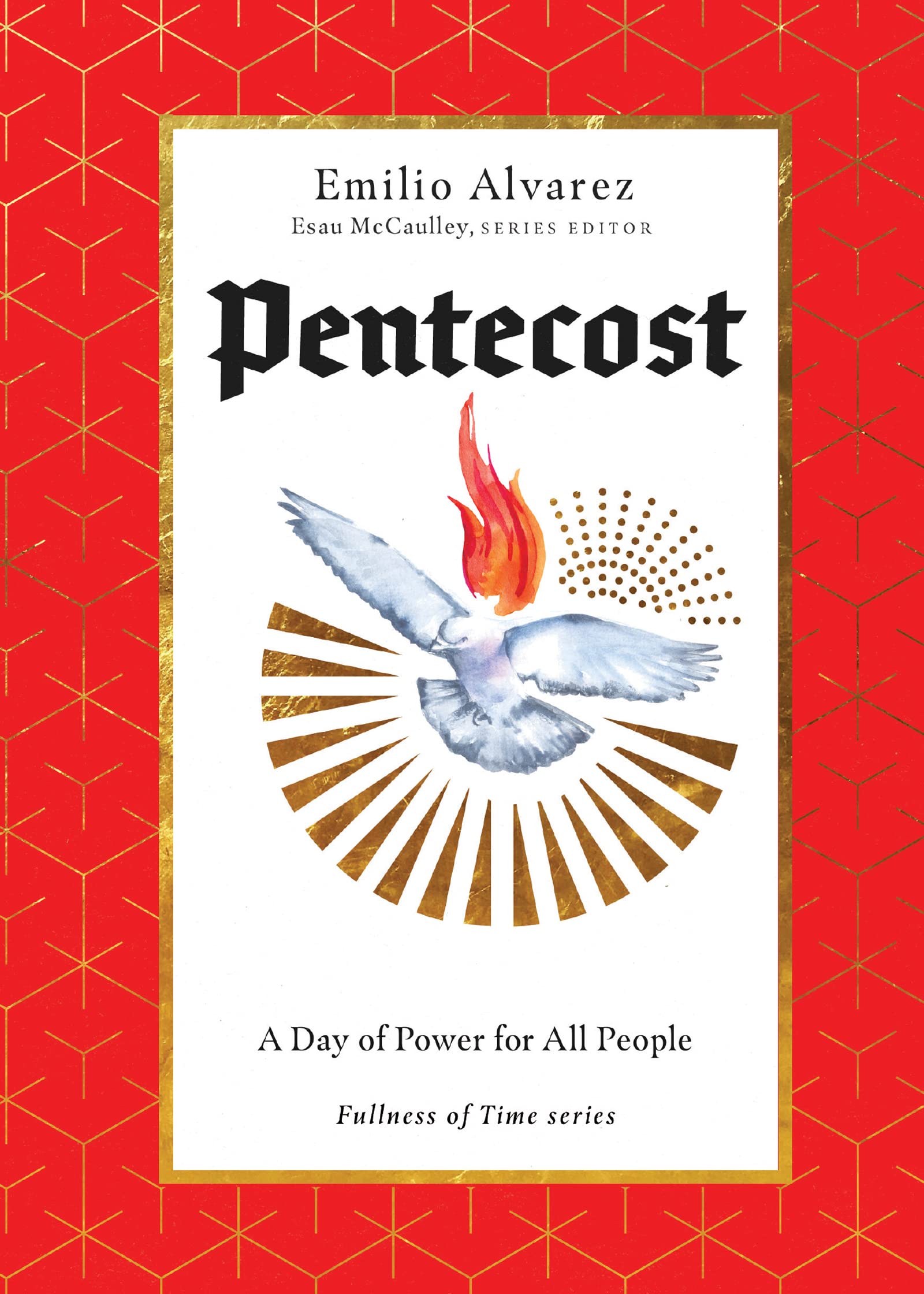
Pentecost is celebrated by Christians as the day when the Holy Spirit came to the early Christian church empowering Jesus’ followers to evangelize the world with the good news of salvation to all who believe that Jesus Christ died for their sins and was resurrected on the third day as He foretold. The writer Luke in Acts 2:1 sets the stage for the narrative with “when the day of Pentecost was fully come.” Jesus’ followers had been waiting for the prophecy to be fulfilled but were not told exactly when that would be. Pentecost is celebrated 50 days after the Jewish Passover. The author of Pentecost, Emilio Alvarez, writes that this season of waiting is a time to prepare our hearts. Fittingly, this book is part of the Fullness of Time series.
This little book begins with a discussion of the concepts of power and of pilgrimage. Next Alvarez devotes a chapter to various Jewish feasts that are the roots of the Pentecost celebration. Then a chapter is devoted to the speaking in other tongues as the Holy Spirit on that day of Pentecost enabled the Jews gathered from many nations to speak in each others’ languages. He relates this phenomenon to a reunion of peoples and a reversal of what happened at the Tower of Babel.
A large part of the book Pentecost is devoted to the rituals and liturgy related to the celebration of Pentecost ranging from the dates of remembrance to the custom of specific colors used for decorations and clothing and on to practices of kneeling or standing. Within the unity of Christian worshipers, there is a diversity of groups who celebrate in many different ways. Alvarez chooses to discuss the Christian tradition found in these five churches: Eastern Orthodox, Roman Catholic, Syrian Orthodox, Anglican, and Pentecostal. From this discussion you can extrapolate that there are a number of ways to celebrate Pentecost. They vary by culture, tradition, and understanding of Scriptures. The hymns, prayers, and Scriptures of these five traditions are just samples of the many available to Christians, and this theological scholar invites Christians to draw from other groups’ practices to enrich, not dilute their own. He ends this section with an interesting testimony of his own spiritual background as a Pentecostal Christian which differs greatly from the liturgies in the other church groups examined in this book. It is a personal spiritual journey which neither discredits nor confirms the formal liturgies found in the other churches mentioned. There are truths and blessings to be found in all of these traditions.
Upon a first reading of the Conclusion, I found it to be beautifully written, helping the reader to imagine the first Pentecost. Upon a second reading I realized I was in disagreement with the author. While I, also, want all people to overcome the “differences in race, culture, and religion,” I do not connect that as a necessity upon which the coming of the Holy Spirit depends. In Acts 1:4-8, Jesus told his followers that they should wait in Jerusalem until they received baptism of the Holy Spirit which would empower them as witnesses. Jesus had said that he would send the Holy Spirit. Just like salvation, this empowerment is a gift of God, not something we can earn.
Overall, I profited from reading this book. It gave me much to think about, and I had my view of the practices within many Christian churches widened.
Rating: 4/5
Category: Religion, Christianity, Theology, Nonfiction
Notes: 1. This is probably not an appropriate book for someone new to Christianity, but might be helpful to someone looking to understand formal liturgical church services.
2. I have read three other books in the Fullness of Time series, and this is my least favorite. I personally battle between it being highly edifying and overly pedantic.
3. I read this for my book club, and it was full of topics for discussion. My understanding of the book profited from hearing other viewpoints.
Publication: 2023—InterVarsity Press
Memorable Lines:
…no matter where we are in the world, and no matter what Christian tradition we belong to, at Pentecost all those who believe in the coming of the Holy Spirit sing and glorify the Most Holy Spirit, and God hears it as if it was coming from one voice.
At Pentecost we are awakened from the delusion that only our race, ethnicity, culture, political party, or language matters, is important, or is even truly Christian. This is one of the great errors of postmodernity, this division through delusion. In remembering Pentecost, however, we once again call on the Spirit to illuminate the dark areas of our lives and confront our delusion with godly wisdom and truth.
There is nothing we can successfully rationalize or theologize about Pentecost that would cause all Christian parties to nod with complete approval, yet there is nothing we can do or say against it that discredits its success in evangelizing the nations.
The Guest House by the Sea–difficult situations
The Guest House by the Sea
by Faith Hogan

Esme, with the help of Marta, an energetic Basque woman, operates the Willows, a 200 year old guest house, following the tradition of the women in her family. The Guest House by the Sea focuses on several weeks during “the season” and the guests who abide there.
Esme is in a high state of frustration because she broke her leg and is mostly blind. So she spends her days in a dome chair welcoming guests and sharing wisdom with those who stop to chat with her. Some of the wisdom comes from the guest register that starts each page with a handwritten quote. When Esme has a guest read a quote, it always seems to apply to that person even though they were written in the book prior to the season’s start.
The cast of characters is diverse and each will tug at your heartstrings as they arrive at Ballycove hoping for space and peace in which to get a grip on their problems. Joel is a lonely engineer staying for weeks to help on expensive repairs to the church’s roof. Cora is a homemaker and teaching assistant with a husband set in routines. After thirty years together, she wonders if she has only staleness left in her future. Phyllis is watching her husband slip away in the same dementia that stole his father. Their son Rob, a widower, and his son Josh join them. As the result of a pregnancy test, Niamh comes to the Willows by herself with a pill to “take care of it” in the words of Jeremy. She is his long-time mistress and co-worker, but she learns a lot about Jeremy, herself, and their relationship through this process.
All of these guests are people you would want to know; they will pull you into their stories. Not all of them will have happily ever afters, but they are all seeking fulfilling lives and you will want that for them. Nothing in this book says that life is easy, but it doesn’t moan and whine while the characters deal with their problems either. Ballycove and the Willows are a great backdrop for their stories and their growth.
Faith Hogan is an Irish writer with lots of books to her credit. I plan on reading more by this author.
I received a complimentary copy of this book in exchange for an honest review. Opinions expressed in this review are completely my own.
Rating: 5/5
Category: Fiction, Romance, Women’s Fiction
Publication: June 8, 2023—Aria
Memorable Lines:
Her heart had missed a beat, in the way it does when you’re young and it feels as if the simple things are absolutely momentous.
She was blessed to have a husband like him. Michael was a true blue. He’d be sleeping in that same bed until the day he died, if he had a choice. So why did she feel this heavy weight of emptiness instead, as if her marriage was some black hole and she was in danger of falling in and suffocating while life went on without her? Perhaps being out here in Ballycove would do her good, give her some perspective on things.
“Maybe, but I think you’ve attracted good people to you because you’re kind and you have a generous spirit. You have probably helped more people than you know over the years, with your wise words.”
Where Lilacs Still Bloom–a talent with plants
Where Lilacs Still Bloom
by Jane Kirkpatrick
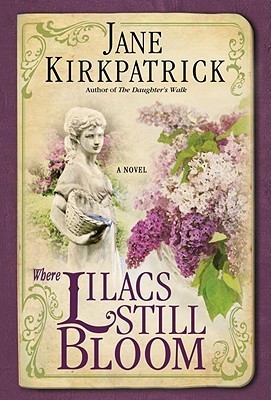
Hulda Klager was a hardworking German immigrant with an eighth grade education and a burning desire to implement changes in plants. She started with wanting a crisper, easier to peel apple for her apple pies. Her father had inspired her to follow her dreams, so while taking care of a large family and garden, she began exploring plant hybridization. She was successful and expanded her efforts to other plants. Her passion was lilacs, and her goal was to develop a creamy white lilac with 12 petals. In the process she developed over 250 varieties of lilacs. Her husband supported her interest in growing hybrids even in the face of those who initially condemned her for wanting to change nature as God had created it or for overstepping bounds as a housewife.
Although Kirkpatrick did a thorough job of researching the life of Hulda Klager, she had to rely on second hand sources. Despite Kirkpatrick being a very talented writer, Hulda Klager did not emerge from the pages as someone the reader could identify with. She was strong, persistent, and resilient but not portrayed as personable. Based on the number of people that committed to helping her with her lilacs throughout her life, however, she must have been an admirable and likable woman. In her almost 97 years, she influenced a lot of people and gave away many of her lilac starts. When the house and gardens were in disrepair and the famous Lilacs Days at the house had gone by the wayside, dedicated volunteers restored it all using contributions of Klager starts donated from gardens all over the country.
Where Lilacs Still Bloom is not a page turner in the traditional sense, but it did hold my interest as I watched Hulda Klager overcome many personal tragedies and fight against the flood waters time and time again that threatened her family, her garden and farm, and her huge collection of lilac plants. Kirkpatrick fills this book with descriptive passages that help the reader visualize the setting and circumstances. There are also many selections that can be read multiple times for the sheer beauty of the writing.
Rating: 4/5
Category: Historical Fiction
Notes: 1. The book includes a Reader’s Guide of discussion questions and notes from the author.
2. Klager kept detailed notes about her work, but most were lost in the various floods.
Publication: 2012—Waterbrook
Memorable Lines:
Melancholy seeped in like water filling footprints on a soggy lawn. It was always there beneath the surface that year but didn’t assert itself until pressure was applied…Maybe the sadness began with thinking of my parents too much. They were everywhere in that house, memories like cobwebs catching me unsuspecting.
“Beauty matters, Bertha; it does. God gave us flowers for a reason. I think so we’d pay attention to the details of creation and remember to trust Him in all things big or little, no matter what the challenge. Flowers remind us to put away fear, to stop our rushing and running and worrying about this and that, and for a moment have a piece of paradise right here on earth. God offers healing through flowers and brings us closer to Him.
“Yes, I pamper my lilacs. They remind me of the woman who kept them blooming and how she dug them up when high water came and floated them on rafts tied to trees so they weren’t ruined by standing river water. She taught me about persevering and trusting that providence would provide.”
The Paris Daughter–a story of art, women, and children in WWII
The Paris Daughter
by Kristin Harmel

World War II brings death, horror, and destruction to the civilians of Paris in this tension filled story of three women who have to make difficult decisions. They are never relieved of the agony of questioning their own judgements and actions: what would a good mother do?
Elise is the belittled wife of a famous painter whose actions put his family in danger. Juliette has the perfect charmed family life until the bombs begin to fall. Ruth Levy is a widowed mother whose Jewish religion and heritage endangers her children. As you read this novel, you will get to know these women and see how each reacts to hardships and trials. You can decide for yourself what it takes to be a good mother and whether any of these ladies are good mothers.
Alongside the main plot in The Paris Daughter, there is another that emerges; it interweaves and is essential to the first. It deals with artists at the time, how they interacted and how they were affected by the war. Elise was a wood sculptor and a painter. Art helped her through the emotional trauma of the war. Art also helped Juliette’s daughter deal with her mother’s increasing mental distress. Alongside these therapeutic benefits, we also witness the personal devastation that occurs when Elise returns home to discover her apartment has been looted of the valuable artwork she and her husband had created.
There are hints along the way as to what may have occurred personally during the war to these families. Eventually the characters and the reader learn the truth, and with the truth there is a way forward. Some of the characters are despicable, while others are noble and honorable. Some crumble morally under the stresses.
This book was a page turner for me, but was also a novel I found upsetting. The depiction of the characters is realistic so watching bad things happen to them was hard. As this book is set in World War II, not everyone is going to have a happily ever after. It is a book I recommend if you enjoy historical fiction, particularly about WWII.
I received a complimentary copy of this book in exchange for an honest review. Opinions expressed in this review are completely my own.
Rating: 5/5
Category: Historical Fiction
Notes: In the author’s notes she responds to questions about why she is drawn to history as her subject matter: “My reasons are numerous, but perhaps the most important one is that if we don’t learn from history, we run the risk of repeating it. Too often in recent years, those of us who read frequently about World War II have seen shadows of that long-ago war in current events and it’s difficult seeing versions of past horrors happening again.”
Publication: June 6, 2023—Gallery Books
Memorable Lines:
Later, Olivier snored peacefully beside Elise while she wiped tears of despair away. He only seemed to see her these days when he wanted the closeness of her; at all other times, his indifference cut her to the core. She owed Olivier everything, and perhaps that was what made it so difficult when it felt to her, sometimes, that he was trying to erase her.
“This isn’t a decision I make lightly, but being a parent is not about dong what is right for ourselves, is it? It’s about sacrificing all we can, big and small, to give our children their best chance at life.”
“There must be something we can do.” “There is,” Madame Levy said. “You can pray for my children. And you can talk to yours about never turning their back on their fellow man. Maybe one day, we’ll all live in a batter world.”
 education pathways