Home » 2022 (Page 7)
Yearly Archives: 2022
Made to Crave–not a diet plan
Made to Crave: Satisfying Your Deepest Desire with God, Not Food
by Lysa TerKeurst

When Lysa TerKeurst decided to get serious about losing weight and keeping it off, she consulted a nutritionist, was given a food plan, had weekly weigh-ins for accountability, and learned a lot about food choices and portions, but all of that is not what her book, Made to Crave, is really about. TerKeurst uses the weight loss challenge as an opportunity to reexamine her relationship with God; what she learned can be applied to other addictions as well. In her introduction she says, “God made us capable of craving so we’d have an unquenchable desire for more of Him, and Him alone. Nothing changes until we make the choice to redirect our misguided cravings to the only one capable of satisfying them. Getting healthy isn’t just about losing weight. It’s not limited to adjusting our diet and hoping for good physical results. It’s about recalibrating our souls so that we want to change—spiritually, physically, and mentally.”
This book is not going to be right for everyone as it tells of TerKeurst’s personal journey. She addresses the problems she confronts like stress eating, being comfortable with your body regardless of your size, and overindulgence. She ties her thoughts into appropriate Scripture references and includes sections at the end that collate the verses into one area according to subject. She also has “Healthy Eating Go-To Scripts” that are self-talk and Scriptures you can use to encourage yourself to stay the course. Each chapter ends with Personal Reflections that reiterate TerKeurst’s theme in that chapter and has questions for thought.
Is this the right book for you? That is a question only you can answer for yourself. As anyone who has ever tried to break the pattern of yo-yo dieting knows, it is not an easy or simple task. I would suggest that it would be one more tool in a Christian’s toolbox when trying to address the complex problem of losing weight. It is not an eating plan or a book that will “fix” your problem. To really work through this process requires soul-searching and hard work.
Rating: 4/5
Category: Christian, Nonfiction, Health
Notes: There is some humor sprinkled through the book. My favorite is her reference to removing her ponytail holder in a desperate attempt to make those scales go down. I can identify in my attempt to attain “data collection consistency,” right?
Publication: 2010—Zondervan
Memorable Lines:
We need a power beyond our frail attempts and fragile resolve. A power greater than our taste buds, hormones, temptations, and our inborn female demand for chocolate. Yes, the truth of who we are and the power to live out that truth—that’s what we need.
But I’ve realized when the desire for treats is triggered by difficult emotions, it’s not really a desire for treats—it’s a thinly veiled attempt at self-medication.
But pity parties are a cruel way to entertain, for they leave behind a deeper emptiness than we started with in the first place.
Love in Plain Sight–learning to trust again
Love in Plain Sight
by Kathleen Fuller
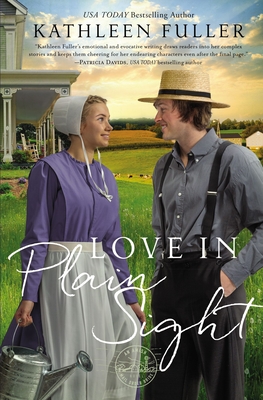
Although Love in Plain Sight is an Amish romance, it is not a sugar coated love story. It addresses two cases of physical and verbal abuse in two different Amish communities—how it affected the victims and how they reacted to it. Along the way though, the reader meets some noble and likable characters. They are people with standards, people you would want to meet. The book does not address abuse from a community standpoint, but from an individual one. The abusers have other character flaws or sins that are intertwined with their abuse—a hunger for money and power. They abound in self-interest and don’t care who gets hurt.
The plot is complex as Katharine decides to flee her abusing fiancée and lies to everyone to protect herself and her parents. She is Amish and finds a job at an Amish inn in a distant town where she is surrounded by loving people. One of them was abused by her husband who has been missing for nine years and is presumed dead. The two women recognize the backgrounds they see in each other. It is difficult for both to move on with their lives. Rhoda is still legally married, and Katharine has major self-esteem issues compounded by the stress of never being able to do anything the way her fiancée wants it done. As a result, she gains weight and her acne worsens causing even more criticism from him.
I started the book one evening and couldn’t wait to resume it the next day. The plot moves quickly, and both plot lines have dramatic conclusions. One of the major themes is forgiveness. Another is trusting God to work out things for good.
There is an amusing thread in the story. An ad has appeared in a number of Amish newspapers inviting young Amish women looking for bachelors to come to the little town of Birch Creek. Katharine chooses to “disappear” in that town, not because she wants a husband, but because there will be so many Amish women arriving that no one will question why she is there. The big question locally is the identity of the ad writer, and the surprising answer emerges at the end of the book.
Kathleen Fuller is not a new author, but this book is a first of her works for me. I recommend this book and look forward to reading more in this series and others by this author.
I received a complimentary copy of this book in exchange for an honest review. Opinions expressed in this review are completely my own.
Rating: 5/5
Category: Romance, Christian
Notes: 1. #3 in the Amish Mail-Order Brides of Birch Creek Series. Although I have not read the first books in the series, I had no problem reading this as a standalone.
- The abuse is not described graphically.
Publication: May 3, 2022—Zondervan Fiction
Memorable Lines:
Despite decades of practice stuffing down her thoughts and feelings to the point where she was numb, fighting the bitterness edging her heart was getting harder.
To cope with his verbal abuse she disappeared into herself until there was nothing but silence in her head replacing his voice. Blissful silence—
“Make sure that the man you marry is gut, kind, and true. Don’t let love blind you to his faults, and don’t compromise yourself to please him. If you do, you’ll lose the person you are, and you’ll live to regret it.”
Seabiscuit–racehorse with a heart
Seabiscuit: An American Legend
by Laura Hillenbrand

Seabiscuit is the story of an incredible racehorse who took the nation by storm at a time when people needed something positive. He lacked perfect conformation. It seemed like he never got a lucky break when it came to weather or rulings about the amount of extra weight added to his saddle for the races. What he had, however, was strength, speed, competitiveness, and the ability to give all that was asked of him. He also had a supportive team that never gave up on him.
Laura Hillenbrand had been writing about horses and racing in periodicals for years. In Seabiscuit she took that writing to a whole new level, researching, interviewing, delving into archives and corroborating the facts. Then she worked her magic as an outstanding writer to organize the information and make it come alive in word pictures that capture the reader’s heart and imagination.
Hillenbrand doesn’t just help the reader understand and come to love Seabiscuit as his fans did. She takes us into the life of Red Pollard, the jockey who knew Seabiscuit and his ways best. She introduces us to owner Charles Howard and trainer Tom Smith who were as unlikely to be part of his success story as Seabiscuit himself. We are treated to mini-biographies of those around Seabiscuit and the general nature of racing and betting in the 1930’s.
As a complete novice in the world of horse racing, I had to labor a little initially to follow the details, but I soon caught on and began chasing the powerful horse across the pages of this well written book. Hillenbrand’s words are chosen with care and create images in the mind and stir emotions in the heart making this a truly unforgettable piece of nonfiction.
Rating: 5/5
Category: Nonfiction, History
Notes: I purchased the Special Illustrated Collector’s Edition which contains more photographs than the original publication. I highly recommend this edition.
Publication: 2003—Random House
Memorable Lines:
Red Pollard and George Woolf had signed on to a life that used men up. But for all its miseries, there was an unmistakable allure to the jockey’s craft, one that both found irresistible….When a horse and a jockey flew over the track together, there were moments in which the man’s mind wedded itself to the animal’s body to form something greater than the sum of both parts….At the bottom of the Depression, when wrenching need narrowed the parameters of experience as never before, the liberation offered by the racehorse was, to young men like Pollard and Woolf, a siren song.
Seabiscuit seemed a cumbersome giant in comparison. At 1,040 pounds, he outweighed War Admiral by 80 pounds, with six feet of girth and a markedly wider chest. But the big body was perched on legs a full two inches shorter. His neck was thick, his head heavy, his tail stubby, his boxing-glove knees crouched….the mane plaits didn’t lie right and stuck out like quills. the horse stood straddle-legged, as if perpetually bracing himself against a strong wind.
A mournful hush fell over the barn, broken only by the long, low moans of a saddle pony who missed his absent stable companion. All evening long, the deep sad sound drifted out from the shed rows.
Murder with Darjeeling Tea–the man no one liked
Murder with Darjeeling Tea
by Karen Rose Smith
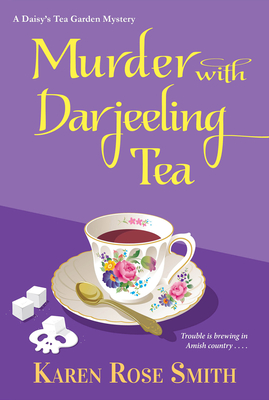
Daisy, owner of a tearoom in Willow Creek, sets out to buy a dog statue for her boyfriend Jonas’ birthday. Unfortunately, the odd man she bought it from is murdered soon after. While trying to keep her business running successfully, she is drawn into the investigation because she has an easy way with people and they find themselves confiding in her. She and the reader are drawn into the world of local secrets, teenage mistakes, catering for the wealthy, rescue dogs, homeless shelters, and Amish customs. It is a wild ride whenever Daisy is around whether she’s on her bike or driving an Amish buggy for her friend. On the side, she is dealing with the deepening of her relationship with Jonas and the realization that her children are moving closer to leaving the nest.
If you are new to this series, you really could jump into it with the eighth book. Author Karen Rose Smith has your back, serving up needed background information as you dive into the story. She is also talented in providing detailed descriptions of the characters and what they are wearing. From the pen of a less skilled writer, this might seem like overkill, but Smith does it in such a way that the characters stand out. Because the background is the tearoom, there is a lot of food talk but it is never repetitive or seems like it is included just to increase the word count. There are many plot threads and a number of suspects. The conclusion of Murder with Darjeeling Tea is dramatic, and the identity of the murderer is a surprise.
I received a complimentary copy of this book in exchange for an honest review. Opinions expressed in this review are completely my own.
Rating: 5/5
Category: Mystery
Notes: 1. #8 in the Daisy’s Tea Garden Mystery Series, but can be read as a standalone.
2. Recipes are included: Chicken Chili, Cheese Biscuits, and Mild Peach Salsa.
Publication: May 24, 2022—Kensington Books
Memorable Lines:
Fiona already had more color in her cheeks and a smile on her face. That’s what the tea garden could do for Daisy’s customers. That’s what her customers could do for her.
Amish buggies in Lancaster County taught everyone in the community an important lesson—slow down and enjoy the scenery.
“What are you thinking about?” he asked. “You look preoccupied.” “Too much to sort out, I’m afraid. Mainly, that life is one big succession of changes. At my age, you’d think I’d be used to it.” “I’m not sure we’re ever used to change.”
The Princess and the Goblin–multi-layered fairy tale for all ages
The Princess and the Goblin
by George MacDonald

Ready for another, good-for-all-ages fairy tale? My book club read The Princess and the Goblin by George MacDonald, a Scottish minister, poet, and novelist, who inspired and influenced many authors through the ages including C.S. Lewis, Lewis Carroll, J.R.R. Tolkien, G.K. Chesterton, and Madeleine L’Engle. Like The Chronicles of Narnia, The Princess and the Goblin is first and foremost a fun fantasy tale, beautifully written. As it progresses, layers of symbolism are added with themes of courage, honor, belief, trust, virtue, and faith. As any good fairy tale does, The Princess and the Goblin differentiates between good and evil. Children and adults are living in a rather messy world today where ethics often are blurred, but there are still truths that need to be valued. There are morals that hold us to a standard that forms a good society.
With the author’s great descriptive powers, all of the characters are detailed both physically and morally. The goblins are all evil with designs on the full destruction of the human race. The humans in the story are not perfect, but demonstrate character development based on their experiences.
Irene is a little princess who lives in a country castle. Her noble king-papa visits her regularly as he tours his kingdom staying in touch with his people. Irene discovers her great-great-grandmother living in a section of the castle. No one else has seen her or her rooms. She acts as a God figure in the story, guiding Irene to safety and to belief. A very wise woman, she helps Irene understand that not everyone is ready to believe at the same time. This is apparent in Lootie, Irene’s nurse, who has responsibility for the child’s safety and in Curdie, a clever and brave young miner who befriends and helps Princess Irene. The goblins desire the little princess as a mate for their prince.
There is a lot of adventure in this tale as Curdie works underground (literally) to discover the goblin plots and thwart them. The Princess and Curdie are at odds as he does not initially see what Irene sees because the great-great-grandmother does not actually disclose herself to him.
The settings include a castle with lots of hallways, some beautiful mountains, a small miner’s cottage, pitch black caves where miners toil away picking out ore, and goblin caverns and tunnels. These are the backdrops for the dramatic action of the goblins’ convocation, the Princess’ wanderings, and Irene and Curdie’s courageous rescues of each other. The battle scenes are well played out as Curdie defeats them with poetry and foot stomping.
This is a book that I am sorry I missed earlier in my life. I would love to have shared it with my children and grandchildren when they were younger, but I am happy to pass on the word now to new generations looking for well-written books with substance and value. I look forward to reading The Princess and Curdie, which was written eleven years later, as well as some of MacDonald’s other works (numbering over 50) which encompass a variety of genres. I believe that even reading a biography of this author’s life and influence would be quite interesting as his work did not take a straight forward path. He and his family were plagued with health issues, and despite his success and the admiration of his colleagues, he was not always financially solvent.
Rating: 5/5
Category: Fairy Tale, Fantasy
Publication: November 16, 2010—Project Gutenberg (which includes beautiful illustrations by Jessie Willcox Smith from the 1920 version.
First published by Strahan & Co. 1872
Also published by David McKay Co. 1920
Memorable Lines:
Her fear vanished: once more she was certain her grandmother’s thread could not have brought her there just to leave her there…
“But it wasn’t very good of him not to believe me when I was telling him the truth.” “People must believe what they can, and those who believe more must not be hard upon those who believe less. I doubt if you would have believed it all yourself if you hadn’t seen some of it.”
…Lootie had very foolish notions concerning the dignity of a princess, not understanding that the truest princess is just the one who loves all her brothers and sisters best, and who is most able to do them good by being humble toward them.
The Nine–despair and courage
The Nine
by Gwen Strauss

Five years of research and writing went into the creation of The Nine, a nonfiction work that focuses on a group of nine women, most in their twenties, who joined the Resistance movement in World War II at various times and places. Six were French, two Dutch, and one Spanish. They were individually captured and sent to worse than horrible Nazi internment camps.
The author was able to interview her great aunt Helène who spoke five languages and was the leader of this band who joined together to survive and escape. Strauss followed quite a maze of information and was aided by many including families of “The Nine.” The book begins with Helène’s story which for me was emotionally difficult as she provides some details of her capture and torture. There were some types of torture, however, that Helène would not discuss or even name. The rest of the account moved more quickly as we learn more about each of the young ladies in the first nine chapters along with descriptions of life in a labor camp. Each chapter moves them closer to either death or escape. Most of the rest of the book lays out their last days together and concludes with what happens after the war is over.
The ladies did not share their stories with very many people for a variety of reasons which the author relates. Several wrote about their experiences in unpublished formats to be discovered after their deaths. Many former prisoners of World War II suffered again after their presumed return to safety—homes and loved ones were gone, their bodies were physically ruined, and society turned against them. Statistically they were lucky to survive, but they bore visible and invisible scars. Most returnees were reluctant to discuss their imprisonment with even those closest to them and found that, in general, people did not want to hear about their experiences.
I highly recommend this book for the author’s insightful and thorough reporting about the brave women of the Resistance and the cruel and evil system that treated them as vermin. One of the policies that I sadly see repeated currently is those in power inciting division to weaken and control those under them. In the camps, the Poles received the best treatment from the Nazis, followed by the Reds. Every group looked down on another in the camps with the Roma (Gypsies), criminals, and homosexuals regarded as the bottom of humanity.
I received a complimentary copy of this book in exchange for an honest review. Opinions expressed in this review are completely my own.
Rating: 5/5
Category: History, Nonfiction (Adult)
Notes: 1. Subtitled: The True Story of a Band of Women Who Survived the Worst of Nazi Germany
2. At the first of the book there is a list of the women with their nicknames and a brief description
3. At the end of the book are notes about the author’s journey into the past, a bibliography, notes on each chapter, and a list of the illustrations (which sound interesting, but were not included in my Advance Reader Copy).
Publication: May 4, 2021—St. Martin’s Press
Memorable Lines:
The Jewish prisoners were given the worst rations, worst living conditions, and the hardest jobs. They were already the most traumatized group, having suffered pogroms, witnessed mass murders, and narrowly escaped the gas chambers. All of them had probably seen their loved ones die, and they may or may not have counted themselves lucky to be alive.
They were proud of how they served each other, divided food equally, and maintained their civility in such an uncivil place. It had kept them strong when others become more and more like animals, lost their sense of themselves, and fell into dark despair.
In the sea of people who seemed to have been tossed up like pebbles on a beach, the prospect of finding their loved ones felt nearly impossible.
Under the Italian Sun–looking for family
Under the Italian Sun
by Sue Moorcroft

Zia is a young English woman in search of a family after her grandparents pass away and she finds herself without a job. She knows her father, who is not listed on her birth certificate, was from Italy. She does some sleuthing and decides to go to Italy to hopefully discover some family ties and perhaps persuade her father to legally acknowledge her, thus easing the pathway to Italian citizenship.
Along her journey, Zia uncovers long buried secrets, meets some family, and falls in love. The road to happiness even under the Italian sun and overlooking a vineyard and winery is not an easy one. Not everyone is welcoming in Montelibertá, and Zia’s ex-boyfriend morphs from an insulting cheater into a vengeful stalker.
Sue Moorcroft’s Under the Italian Sun is an interesting romance with a great setting. Zia’s past is dismal as she gradually loses those close to her, but she is an intelligent young woman, a good friend, and full of hope. She falls quickly and hard for her handsome Italian neighbor. Can they really settle for a summer fling knowing Zia can not legally stay in the country indefinitely?
I received a complimentary copy of this book in exchange for an honest review. Opinions expressed in this review are completely my own.
Rating: 4/5
Category: General Fiction (Adult), Romance, Women’s Fiction
Notes: Rather disappointing for me, this really nice story has an “open door” bedroom scene and a lot of expletives.
Publication: May 13, 2021—Harper Collins (Avon Books)
Memorable Lines:
The oven timer continued to ping in counterpoint to the gull’s plaintive calls but Zia heard the shush-shush of her heartbeat louder than both. As spooked as a child at a horror film, she had to force her breathing to be even.
Church steeples poked up between terracotta-tiled roofs, buildings were painted cream, ochre or apricot, the major structures gracing the town centre while houses huddled on the slopes like children hatching mischief.
At some point this afternoon she’d made the decision never to identify herself to Gerardo. It had come from an instinct to protect herself from disappointment rather than from structured reasoning but the decision was a relief. Couldn’t trust him. Could do without him.
Under the Magnolias–a darkness of the mind
Under the Magnolias
by T. I. Lowe

Dave Foster is a tobacco farmer and the pastor of the church he fondly refers to as the First Riffraff of Magnolia. He has a large family including two sets of twins, a mentally challenged son, and another who is physically disabled. His wife Edith is a loving mother who somehow manages her husband’s dark times and keeps the family happy. The main character is the oldest daughter Austin, and the story is related from her point of view as she finds herself at the age of fourteen having to become a mother to her six siblings and walk the fine line of respect for her father while acting as a buffer between him and the other children. She works to maintain his standing in the community and keep the tobacco farm running.
Under the Magnolias is very much a character driven story as Austin struggles and sacrifices for others. She is a very intelligent young lady who puts aside her dreams to help her family survive. Unfortunately her father’s dark times become deeper and more frequent and his outbursts more violent. A teenager, Austin doesn’t really know how to deal with her father’s mental issues or get assistance.
Help does come in the form of the mayor’s handsome son. Although Austin won’t let him get close because she is driven to maintain family secrets, he continues to stand by her. Others in their little church and her siblings are important to the story as they all suffer from the occasions when Dave’s mental illness surfaces and bubbles over.
This book is very well-written. In terms of emotional impact, it is hard at times to read. The author, T. I. Lowe, puts the reader right in the middle of the struggles waiting, as Austin does, in the good times for the other shoe to drop. “It was too good. Too shiny. Too normal. No matter how much I wished, prayed, begged, I knew this season wouldn’t last.”
The story takes place from 1980 through 1988. There is a final chapter that relates how life works out for all of the characters. It makes a fitting conclusion because over the course of the book the reader has gotten to know each of them, understanding why they are the way they are. The pacing is excellent with about two chapters per year presenting cumulative snapshots rather than blow-by-blow descriptions. There is an authentic South Carolina flavor in both plot and language. I highly recommend Under the Magnolias as a tale whose characters resonate and linger long after the final page.
I received a complimentary copy of this book in exchange for an honest review. Opinions expressed in this review are completely my own.
Rating: 5/5
Category: General Fiction (Adult), Women’s Fiction
Notes: Clean—no inappropriate language, sex, or violence
Publication: May 4, 2021—Tyndale House Publishers
Memorable Lines:
Looking through the innocent lens of adolescence, those happier days were perfection. Sadly, they had an expiration date just like those snack cakes. Happiness staled and nothing was pleasing after that. But just like the expired cakes in a meager season, we had no other choice but to stomach whatever life tossed our way next.
I figured it was a blessing that she could pretend something didn’t happen, but we would both learn later in life that pretending something away was no better than constantly dwelling on it. Both produced impactful wounds that tended to fester in other parts of living.
“Honey, the living creep me out. Not the dead.” He picked up a cosmetic brush and touched it to Mrs. Fannie’s pink cheek. “The living can be cruel, judgmental, quick to complain, and slow to please. The dead never yell or cuss you out. Or call you ugly names.” There was such a sadness to his gentle voice.
The Woman with the Blue Star–refuge in a sewer
The Woman with the Blue Star
by Pam Jenoff

If you are an aficionado of World War II novels, you will probably like The Woman with the Blue Star, the story of Sadie and her family who are forced into a Polish ghetto and later avoid a roundup of Jews for deportation by fleeing to the dark stench and filth of the sewers. Their survival depends on the mercy of the sewer worker who leads them there and provides them with what food could be had in Krakow in 1942. The Germans leave little for the local population and ration cards are required.
Sadie’s path crosses with Ella’s at a chance glance down through a sewer grate. Ella lives with her stepmother who maintains a fairly good standard of living by acting as a mistress to various German officers.
The author describes in detail both the disgustingly putrid conditions for the Jewish family in the sewer and the better, but still precarious, lives of the Polish citizens above ground. The characters and their reactions are generally believable. There are a number of dramatic twists in the story along with some romantic threads and a look at those involved in the Polish Home Army underground movement.
Most of the story seems realistic. I do wonder about the many occasions when Ella ventures out after the government imposed curfew, once even with Sadie above ground. Given the enormous threat of German soldiers and Polish police patrolling the streets, their adventures seem foolhardy and unlikely.
I love the epilogue which confirms something I suspected, but its revelation makes a great twist. Although it is difficult to read about the enormous hardships, this book is an important reminder of a piece of history we should never forget so we will not allow it to be repeated.
I received a complimentary copy of this book in exchange for an honest review. Opinions expressed in this review are completely my own.
Rating: 4/5
Category: Historical Fiction, Women’s Fiction
Publication: May 4, 2021—Harlequin
Memorable Lines:
We had almost nothing by the end; it had all been sold or left behind when we moved to the ghetto. Still, the idea that people could go through our property, that we had no right to anything of our own anymore, made me feel violated, less human.
Once I could not have imagined staying in the sewer for so long. But there was simply nowhere to go. The ghetto had been emptied, all of the Jews who lived there killed or taken to the camps. If we went onto the street, we would be shot on sight or arrested.
Saul talked on and on through his tears, telling stories of his brother, as if pressing the memories of his brother between pages to preserve like dry flowers.
50th Wedding Anniversary in Branson, MO


Showboat Branson Belle

Cabin in the Woods


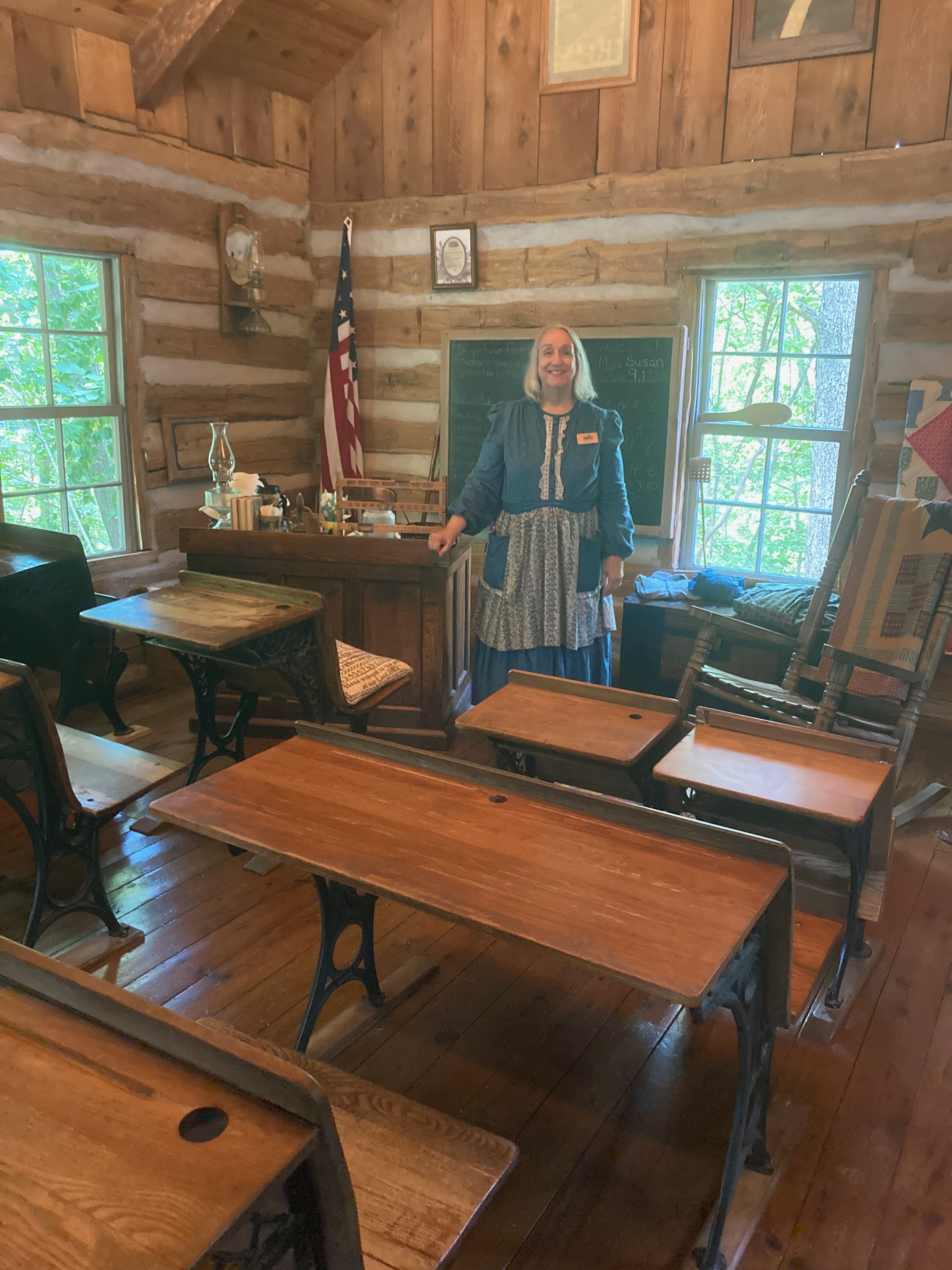


Silver Dollar City

WonderWorks

Performance of “Jesus” at the Sight and Sound Theater



 education pathways